
Ghassan Kanafani: Life, Novels and Assassination
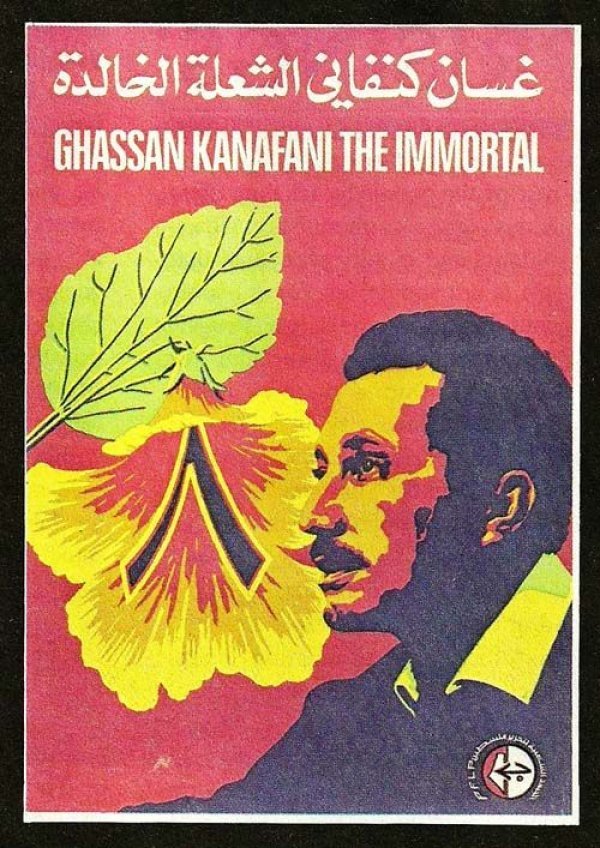
Ghassan Kanafani (1936–1972) was a Palestinian novelist, short-story writer, journalist and fighter, a son of Acre and Jaffa uprooted as a boy in the Nakba, who became the foremost voice of Palestinian literature after it, author of Men in the Sun and Returning to Haifa, and the man who coined the term “resistance literature.” Israel’s Mossad killed him with a car bomb in Beirut on the morning of 8 July 1972, together with his seventeen-year-old niece Lamees. [1] [2] [3]
This is the third article in the series “Assassinated leaders of the Palestinian revolution,” after the articles on Abu Iyad and Abu Jihad.
Who was Ghassan Kanafani?
Ghassan Kanafani was a Palestinian writer who produced some 18 books of novels, short stories, plays and studies, along with hundreds of political and cultural articles; his works have been translated into many languages [1] [4] [5]. He was editor-in-chief of al-Hadaf magazine and a member of the Political Bureau and spokesman of the Popular Front for the Liberation of Palestine [1] [3] [2]. Lebanon’s Daily Star called him, in its obituary, a “commando who never fired a gun, whose weapon was a ballpoint pen” [3].
Ghassan Kanafani at a glance
| Item | Details |
|---|---|
| Name | Ghassan Fayez Kanafani [2] |
| Born | 9 April 1936, Acre [2] [4] |
| Displaced | 1948, from Acre and Jaffa to Lebanon, then Damascus [2] [3] |
| Work | Teacher, journalist, novelist, short-story writer, playwright, critic, painter [3] [1] |
| Affiliation | Arab Nationalists Movement, then the PFLP Political Bureau [1] [5] |
| Best-known works | Men in the Sun (1963), All That’s Left to You (1966), Umm Saad and Returning to Haifa (1969) [2] |
| Family | Danish wife Anni and children Fayez and Laila [3] |
| Assassinated | 8 July 1972, car bomb in Hazmieh, Beirut, by the Mossad [2] [3] [5] |
| Killed with him | His niece Lamees Najim, 17 [2] [3] |
From Acre and Jaffa into exile
Ghassan Fayez Kanafani was born in Acre on 9 April 1936, the third son of lawyer Fayez Abdul Razzaq Kanafani and one of eight children [2] [3]. The family moved to Jaffa, where he attended the French Catholic Frères school until March 1948 [2] [3].
As Zionist militias advanced in spring 1948, the family’s life collapsed: they fled as refugees to Lebanon and then settled in Damascus, when Ghassan was twelve [2] [3]. There his father opened a modest law office and the boy worked in a printing press to help support the family [2] [3]. Exile and the refugee camps became the raw material of everything he later wrote.
Damascus and Kuwait: teacher and storyteller
He earned his certificate in 1953, qualified as an art teacher, taught in UNRWA schools for refugees in Damascus and studied Arabic literature at Damascus University [2] [3] [1]. There he met George Habash, was drawn to his ideas, joined the Arab Nationalists Movement and wrote for its papers in Damascus and Kuwait [3] [5].
In 1956 he moved to Kuwait as a teacher and stayed about four years; there he published his first stories and won the Kuwaiti short-story prize for “The Stolen Shirt” [2] [3]. There too he was diagnosed with diabetes, which stayed with him until his death [2].
Beirut: the journalist and al-Hadaf
In 1960 he came to Beirut at George Habash’s invitation to work at al-Hurriya, the Arab Nationalists Movement’s paper; he became editor-in-chief of al-Muharrir in 1963 and, after the June 1967 defeat, moved to the daily al-Anwar [2] [1]. On 26 July 1969 he founded al-Hadaf, the PFLP’s weekly, and edited it until his death [2]. He also wrote under pen names, among them “Fares Fares” [1].
In Ain al-Hilweh camp he discovered a young man drawing on the camp’s walls and published his first drawings: it was Naji al-Ali [1]. In Beirut he married Danish teacher Anni, and they had two children, Fayez and Laila [3] [2].
Fighter and PFLP spokesman
After 1969 his political activity intensified: he joined the PFLP Political Bureau and helped shape its political strategy built on fedayeen action, though he was uneasy with day-to-day organisational work [1] [5]. He coined the slogan of the Union of Palestinian Writers and Journalists: “With blood we write for Palestine” [5].
In September 1970, when the PFLP hijacked planes and landed them at a desert airstrip in Jordan to demand the release of Leila Khaled and Palestinian prisoners, Kanafani was at the forefront as the Front’s spokesman [1]. That same year journalist Richard Carleton conducted his famous interview with him in Beirut, in which he called negotiations with the occupation capitulation rather than peace talks [6] [7]. He is reported to have described such talks as “a kind of conversation between the sword and the neck” [4].
Ghassan Kanafani’s novels and works
Kanafani began writing short stories before he was twenty, publishing his first, “A New Sun,” in 1957 [1] [3]. In under fifteen years he left some 18 books, plus three unfinished novels published after his death [1]:
| Work | Genre | Year |
|---|---|---|
| The Land of Sad Oranges | Short stories | 1963 |
| Men in the Sun | Novel | 1963 |
| The Door | Play | 1964 |
| A World Not Ours | Short stories | 1965 |
| All That’s Left to You | Novel | 1966 |
| Resistance Literature in Occupied Palestine 1948–1966 | Study | 1966 |
| Of Men and Rifles | Short stories | 1968 |
| Palestinian Resistance Literature under Occupation 1948–1968 | Study | 1968 |
| Umm Saad | Novel/stories | 1969 |
| Returning to Haifa | Novel | 1969 |
| On Zionist Literature | Study | 1970 |
| The Little Lantern | Children’s story | 1975 (posthumous) |
| The Lover, The Blind and the Deaf, April Plums | Unfinished novels | Posthumous |
Men in the Sun: why didn’t they knock on the tank?
Men in the Sun (1963), Kanafani’s best-known novel, follows three Palestinian refugees of different generations trying to smuggle themselves into Kuwait for work, hidden in the tank of a water truck under the desert sun; they suffocate without knocking on the tank’s walls [1] [3]. The driver’s cry at the end, “Why didn’t you knock on the walls of the tank?”, became one of the most famous lines in modern Arabic literature, a symbol of the silence of Palestinians in exile and the deafness of the Arab world around them.
Returning to Haifa: what is a homeland?
In Returning to Haifa (1969) a Palestinian couple return after the 1967 war to the Haifa home they fled in 1948, to find the baby son they lost that day grown into a soldier of the occupation army, raised by a settler family [1]. The novel asks what a homeland is: blood, memory or action? One of its best-known lines: “Do you know what a homeland is, Safiyya? A homeland is where none of this can happen” [4]. It was adapted into two films that won international awards [1] [8].
“Resistance literature”: the term Kanafani coined
In 1966 Kanafani published his study “Resistance Literature in Occupied Palestine 1948–1966,” introducing the Arab world to the poets who had remained in their homeland after the Nakba and coining the term “resistance literature,” which entered the Arab cultural lexicon [1] [6]. A second study, “Palestinian Resistance Literature under Occupation 1948–1968,” argued that cultural resistance matters no less than armed resistance [1]. As he put it: “To write a successful short story is resistance literature” [1].
In On Zionist Literature (1970) he dissected Zionist fiction written in or translated into English, exposing how literature was harnessed to the colonial project [1] [2].
His works on screen
Kanafani’s works have been adapted into many films, the best known being The Dupes by Egyptian director Tawfiq Saleh, based on Men in the Sun [8]:
| Film | Director | Year | Based on |
|---|---|---|---|
| The Dupes (al-Makhdu’un) | Tawfiq Saleh | 1972 | Men in the Sun |
| The Knife | Khaled Hamada | 1971 | All That’s Left to You |
| The Sad Oranges | Kawergis Awad | 1976 | The Land of Sad Oranges |
| Returning to Haifa | Qassem Hawal | 1982 | Returning to Haifa |
| The Survivor | Seifollah Dad | 1995 | Returning to Haifa |
Source: [8]
Ghassan Kanafani quotes
- “They steal your bread, then give you a crumb of it, then order you to thank them for their generosity. How shameless they are” [4]
- “All the tears in the world cannot float a small boat big enough for two parents searching for their lost child” [4]
- “To write a successful short story is resistance literature” [1]
Two other sayings are widely attributed to him: “Do not die before you are an equal,” and “If we are failed defenders of the cause, we should change the defenders, not the cause.”
The assassination of Ghassan Kanafani: Hazmieh, 8 July 1972
On the morning of Saturday 8 July 1972, in Hazmieh on the outskirts of Beirut, Ghassan Kanafani started his Austin 1100 and a bomb planted under the seat exploded, killing him instantly along with his seventeen-year-old niece, Lamees Najim [2] [3] [5]. The PFLP’s investigation committee found that the device weighed nine kilograms [5].
The assassination came weeks after the Lod Airport attack of 30 May 1972, carried out by Japanese Red Army fighters working with the PFLP; an early study of his life found “little doubt” that his killing was retaliation for it [2] [3]. Israel’s Mossad later claimed responsibility [3]. Kanafani carried no weapon, but the occupation saw his pen as a threat worth killing, as it would months later with the leaders killed in the Verdun operation in Beirut.
His funeral became “the largest political demonstration in Beirut since Nasser’s death” [2], and he was buried in the Palestinian Martyrs’ Cemetery in Beirut, with Lamees beside him.
Legacy
Half a century after his assassination, Kanafani’s works are still read, translated and taught, and schools and cultural institutions across the region bear his name [3]. The Palestine Forum for the Arab Novel opens on his anniversary [1], and new generations return to his writing with every assault on Gaza, as if it were written today [7]. His letters, the subject of Al Jazeera Documentary’s film “Kanafani’s Letters,” reveal another side of him, between love and war [9].
Videos about Ghassan Kanafani
Ghassan Kanafani’s interview with Australian journalist Richard Carleton, Beirut 1970 [10]
“Ghassan Kanafani: A Life and a Journey” (in Arabic) [11]
“What Remains for Us: Ghassan Kanafani” (in Arabic) [12]
The documentary “Kanafani’s Letters” can be watched in full on the Al Jazeera website (in Arabic) [9].
Conclusion
Ghassan Kanafani lived only thirty-six years, yet he left a literature that turned the Nakba, exile and resistance into an open question for every reader. The occupation killed him believing dynamite could silence a pen; his question still knocks on the walls of the tank today.
Also in this series: Abu Iyad, Abu Jihad.
Frequently asked questions about Ghassan Kanafani
Who was Ghassan Kanafani?
A Palestinian novelist, journalist and fighter born in Acre in 1936, author of Men in the Sun and Returning to Haifa, and a member of the PFLP Political Bureau.
How did Ghassan Kanafani die?
He was assassinated by Israel’s Mossad with a bomb planted in his car in Hazmieh, Beirut, on 8 July 1972.
Who was killed with Ghassan Kanafani?
His niece Lamees Najim, who was seventeen.
What are Ghassan Kanafani’s best-known novels?
Men in the Sun (1963), All That’s Left to You (1966), and Umm Saad and Returning to Haifa (1969).
What does “Why didn’t you knock on the walls of the tank?” mean?
It is the closing line of Men in the Sun, a symbol of the silence of Palestinians in exile in the face of slow death.
Who coined the term “resistance literature”?
Ghassan Kanafani, in his study “Resistance Literature in Occupied Palestine 1948–1966.”
Where is Ghassan Kanafani buried?
In the Palestinian Martyrs’ Cemetery in Beirut.
Sources and references
Arabic-language sources are listed with translated titles.
- “On the 47th Anniversary of His Assassination: Kanafani and the Palestinian Resistance Narrative,” Al Jazeera Net, 10 July 2019.
- “Ghassan Kanafani 1936–1972,” An-Najah National University Encyclopedia (translated study, 1975).
- Indlieb Farazi Saber, Nadda Osman and Haroon James, “Ghassan Kanafani: The Life of a Palestinian Writer,” Middle East Eye, 8 July 2022.
- “Ghassan Kanafani, Man of Naked Language,” Arabi21, July 2020.
- “Beirut: Palestinian Media and Rights Groups Mark the 51st Anniversary of Writer Ghassan Kanafani’s Assassination,” Al-Quds Al-Arabi, July 2023.
- Diana Alghoul, “Palestinians Remember Ghassan Kanafani 46 Years On,” The New Arab, 8 July 2018.
- Ramona Wadi, “Ghassan Kanafani and Gaza’s Resistance: What Do His Writings Say Today?” Noon Post, 14 April 2025.
- “Ghassan Kanafani and Cinema,” Al Jazeera Documentary, 21 July 2013.
- “Kanafani’s Letters” (documentary), Al Jazeera Documentary, 23 August 2016.
- “Rare interview with Ghassan Kanafani by Australian journalist Richard Carleton, Beirut 1970,” YouTube.
- “Ghassan Kanafani: A Life and a Journey,” YouTube.
- “What Remains for Us: Ghassan Kanafani,” YouTube.
Video clips
Photo gallery

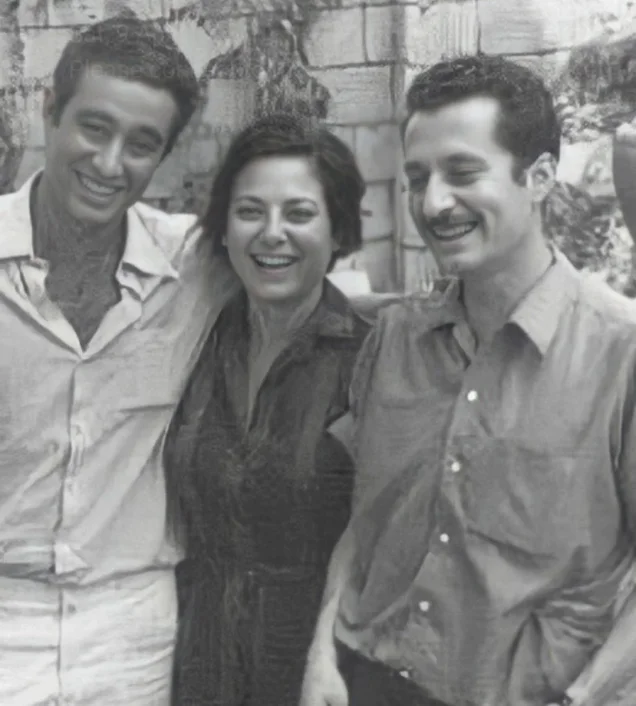

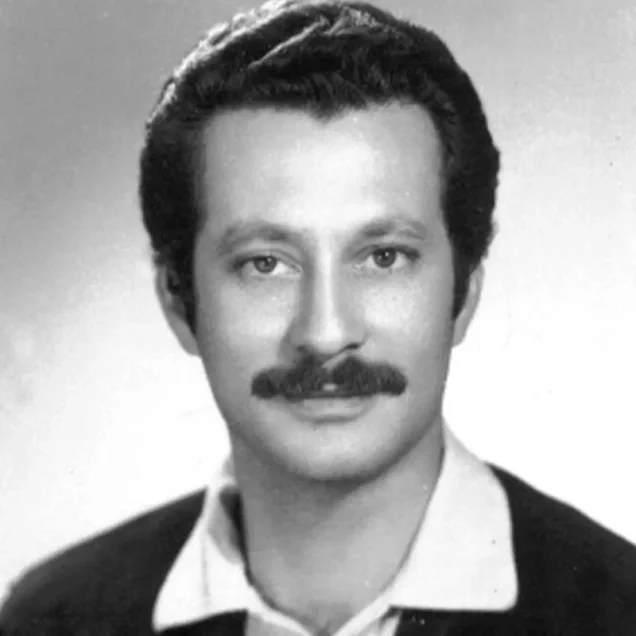
More from the archive
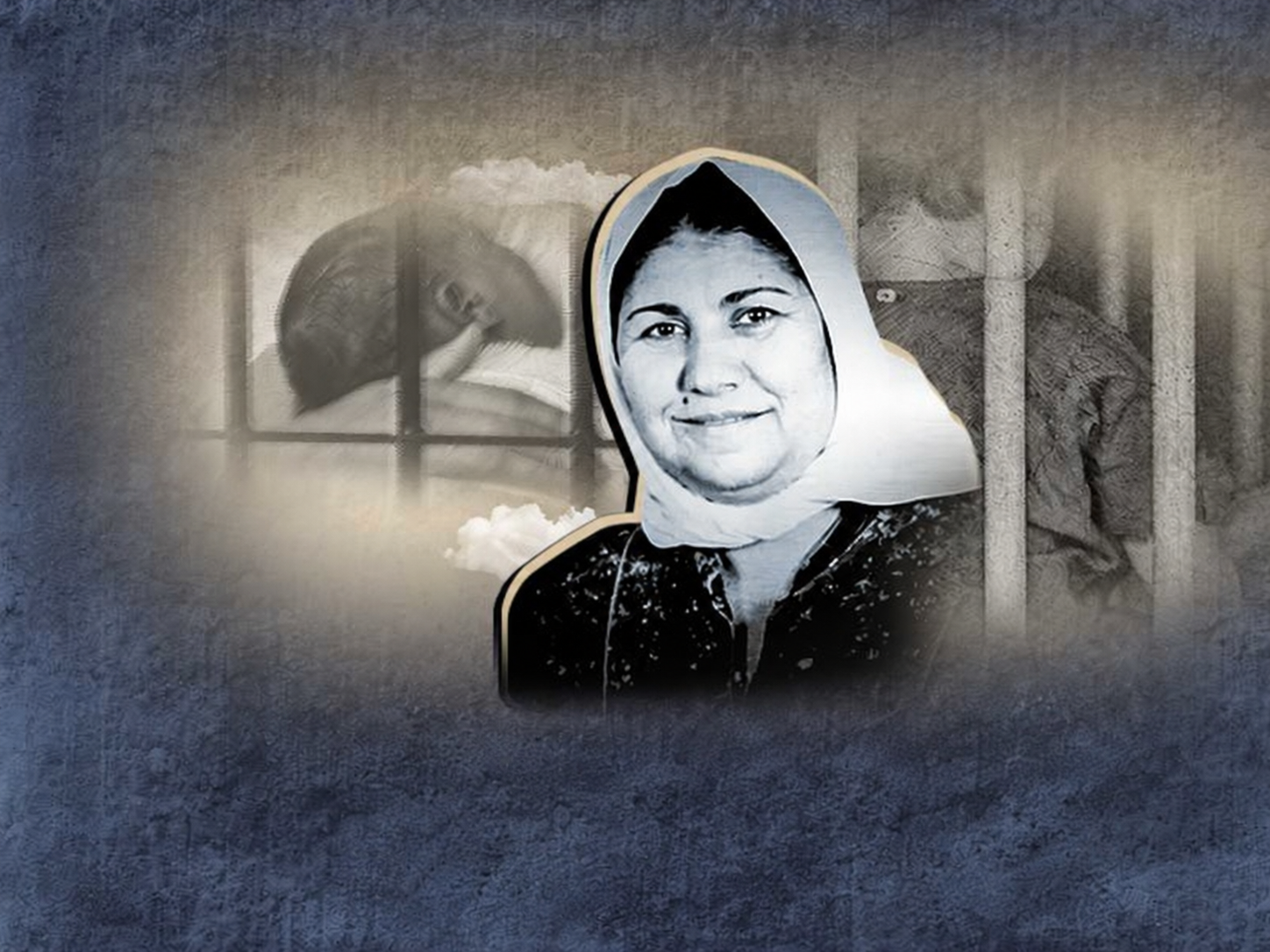
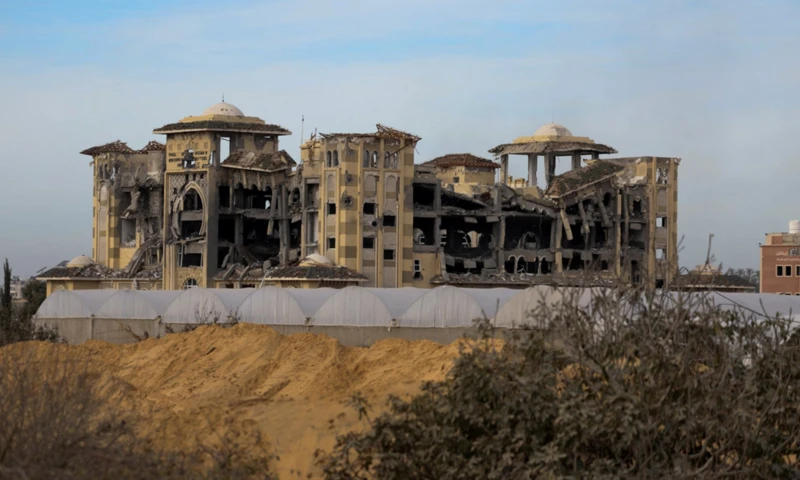
 Download Our Palestine App
The whole archive in the palm of your hand: depopulated villages, the Nakba, the massacres and Al-Aqsa — free, with no ads to erase the story.



Comments
No comments yet — be the first to write one.
Add your comment
Name and email are optional. Comments appear after review.