
Burj al-Barajneh Refugee Camp

Burj al-Barajneh Refugee Camp in Beirut: History, Galilee Villages, Wars and Life Today
Burj al-Barajneh Camp lies in Beirut's southern suburbs, about 2 km from the international airport, and is the largest and most crowded Palestinian camp in the Beirut area. It was set up in by the League of Red Cross Societies for refugees from the villages of the Galilee, among them Tarshiha, Kuwaykat, al-Kabri, al-Ghabisiyya and Sa'sa'. The camp survived the Lebanese civil war, the 1982 invasion and the long siege of the War of the Camps, and in 2026 it was caught again in Israel's war on Lebanon. Home to more than 17,900 registered refugees and thousands of Syrian refugees, it struggles with overcrowding, deadly electrical wiring and salty water. This guide covers its history, origins, population, services and its situation today.
Quick Facts About Burj al-Barajneh Camp
| Arabic name | مخيم برج البراجنة |
|---|---|
| Country | Lebanon |
| Location | Southern suburbs of Beirut, about 2 km from Beirut International Airport |
| Year established | , by the League of Red Cross Societies |
| Registered refugees (UNRWA) | More than 17,945 |
| Residents (2017 census) | 18,351, of whom 47% were Syrian refugees |
| Origin of residents | Villages of the Galilee, especially in the Acre and Safed districts |
| Rank | Largest and most crowded Palestinian camp in the Beirut area |
| Deaths from electrocution | 87, more than anywhere else in Lebanon |
The Nakba: Why Burj al-Barajneh Camp Exists
Burj al-Barajneh was born from the Nakba (Arabic for "catastrophe"): the mass expulsion of Palestinians during the occupation of Palestine in , when roughly 750,000 Palestinians were driven from their homes. In the autumn of 1948, the villages of the Upper and Western Galilee, close to the Lebanese border, were emptied, among them Tarshiha, Suhmata and Sa'sa'. Their people crossed into Lebanon, and many made their way to Beirut.
On the edge of the capital, on land offered by a local landowner, the League of Red Cross Societies pitched the first tents in 1948. The first site was known as Jawrat al-Tarashha, "the hollow of the people of Tarshiha". In 1950 UNRWA took over responsibility for the camp.
The Right of Return
Families from the same village settled side by side, so that Burj al-Barajneh grew into a cluster of small Palestinian villages, with quarters such as Jawrat al-Tarashha and the square of the people of al-Ghabisiyya. The right of return rests on several foundations in international law:
- UN General Assembly Resolution 194 (), paragraph 11, resolved that refugees wishing to return to their homes and live at peace with their neighbours should be permitted to do so at the earliest practicable date, and that compensation should be paid to those choosing not to return and for loss of or damage to property.
- The Universal Declaration of Human Rights (Article 13) affirms everyone's right to leave any country, including their own, and to return to it.
- UN General Assembly Resolution 3236 () reaffirmed the "inalienable right" of Palestinians to return to their homes and property.
History of the Camp (1948–1975)
Early life was harsh: families shared tents, toilets were communal and water had to be carried from far away. Over time residents moved to individual tents, then to sheet-metal shelters and finally to permanent houses. Many worked in Lebanese orchards nearby, and the construction of Beirut's airport in the 1950s brought more jobs.
For years the camps were tightly controlled by Lebanon's military intelligence, the Deuxième Bureau, which required police permits for repairs and approval even for weddings and funerals, and imposed curfews and travel permits. When this control ended, the Palestine Liberation Organization took charge of the camp, which became densely populated and politically active.
The War Years (1975–2006)
- 1975–1990, the Lebanese civil war: the camp suffered heavy damage, refugees' property was destroyed and nearly a quarter of its population was displaced, according to UNRWA.
- 1982, the Israeli invasion: the camp was hit by shelling and air raids, followed by the siege of Beirut. Residents saw the Sabra and Shatila massacre unfold nearby and long believed they had narrowly escaped the same fate.
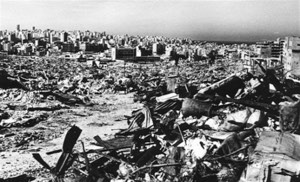
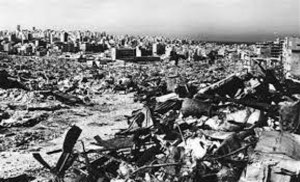
- 1985–1988, the War of the Camps: Burj al-Barajneh endured a long and severe siege. Food became almost impossible to obtain, many buildings were destroyed and many people were killed.
- 2006: during Israel's war on Lebanon, the southern suburbs were heavily bombed and many residents were forced to flee.
Weapons, Crisis and War (2011–2026)
After 2011, the camp took in large numbers of Palestinians displaced from Yarmouk and other camps in Syria, along with Syrian families, transforming its population. Lebanon's economic collapse from 2019 deepened poverty and pushed up the cost of electricity and water.
On , the handover of Palestinian weapons in Lebanon's camps to the Lebanese army began in Burj al-Barajneh, where Fatah delivered a first batch in a step described as largely symbolic and meant to encourage other factions to follow.
On , Israel launched an intensified war on Lebanon. Mass evacuation orders covered Beirut's southern suburbs, and Burj al-Barajneh was among the Palestinian camps affected. Strikes on the suburbs damaged many homes in the camp. Some families left, while others from the surrounding suburbs moved into the camp to stay with relatives, and many daily wage workers lost their income.
The Current Situation (2026)
By the summer of 2026, residents described the war as having made a difficult life even harder. Rents have risen, unemployment and living costs have climbed, and UNRWA's services, especially health care, have been reduced by the agency's funding crisis. Residents live in fear of further escalation and cannot afford to move elsewhere. They have called on UNRWA and the Palestinian factions to secure dignified living conditions, fair job opportunities and essential services. Internal security incidents also persist: in July 2026 an armed clash inside the camp left several people injured.
Origin of the Name
The camp takes its name from the Lebanese town of Burj al-Barajneh in Beirut's southern suburbs, on whose land it was built. Within the camp, its oldest area is still known as Jawrat al-Tarashha after the families from Tarshiha who pitched the first tents there.
Location and Geography
Burj al-Barajneh lies in the southern suburbs of Beirut, about 2 km from Beirut International Airport and about 90 km from the border with Palestine at Naqoura. It is surrounded by the neighbourhoods of al-Raml al-Aali, Haret Hreik, Baajour and Ain al-Sikka, and has seven entrances. Ties with neighbouring Lebanese communities are described as good, with joint committees handling local issues.
Area and Layout
The camp grew without planning, leaving extremely narrow lanes and dense housing; UNRWA describes its overcrowding as the most severe of any camp around Beirut. Lebanese authorities restrict the entry of building materials, which residents say ignores natural population growth. Its quarters include Jawrat al-Tarashha, Kuwaykat, the Haifa Hospital area, Jaysh al-Tahrir, al-Haydos and al-Wazzan.
Villages of Origin
Most of the camp's families come from the villages of the Galilee. According to the Interactive Encyclopedia of the Palestine Question:
Population and Demographics
UNRWA counts registered refugees, while the 2017 census counted everyone living in the camp, including Syrians and Lebanese. The two are not the same, and the camp's popular committee disputes the census, estimating more than 50,000 residents.
| Group | Number | Share |
|---|---|---|
| Palestinian refugees from Lebanon | 8,219 | 44.8% |
| Syrian refugees | 8,790 | 47% |
| Palestinian refugees from Syria | 687 | 3.7% |
| Lebanese | 528 | 2.9% |
| Others | 126 | 0.7% |
| Total | 18,351 | 100% |
UNRWA lists more than 17,945 registered Palestine refugees in the camp. Many original residents left over the decades because of insecurity, emigration or moving elsewhere in Lebanon.
Housing and Infrastructure
The camp's tangled overhead cables are notorious: 87 people have died from electrocution, more than anywhere else in Lebanon, and the state utility has refused requests for more supply. Residents depend on costly private generators. Water from the camp's 19 wells is irregular and salty, causing skin and hair problems, and families buy fresh water every few days at $100 or more a month. The sewage network is old, pipes risk contamination, the lanes flood every winter, and UNRWA's 20 sanitation workers are far too few. In December 2009, an EU-funded project began to install a new water supply, replace the sewage network, manage stormwater and repair alleys. The cemetery is so small that graves are often stacked on top of one another.
Economic Life and Legal Restrictions
Most workers are employed in construction and related trades, and some work for UNRWA, the Red Crescent, political organisations and NGOs or run small shops and carts. Lebanese law bars Palestinians from more than 70 trades and professions, pushing many into jobs below their qualifications. Unemployment is very high, especially among young people, and drug use has grown; a local treatment centre works on addiction.
Health Situation
UNRWA runs one health centre, which sees about 115 patients a day, and an active ageing house. The Palestine Red Crescent Society's Haifa Hospital and other NGOs provide additional care. UNRWA's funding crisis has reduced its health services, a loss residents feel most acutely amid war and economic collapse.
Education
UNRWA runs seven schools serving the camp, including primary and preparatory schools and one secondary school, as well as a job counselling and placement centre and a women's centre. Education remains one of the few paths open to young people facing legal restrictions on work.
Frequently Asked Questions About Burj al-Barajneh Camp
Where is Burj al-Barajneh camp located?
In the southern suburbs of Beirut, Lebanon, about 2 km from Beirut International Airport.
When was Burj al-Barajneh camp established?
In 1948, by the League of Red Cross Societies, for refugees from the Galilee. UNRWA took over in 1950.
Where do Burj al-Barajneh's refugees come from?
Mainly from Galilee villages such as Tarshiha, Kuwaykat, al-Kabri, al-Ghabisiyya, Suhmata, al-Sha'b, Sa'sa' and Fara.
How many people live in Burj al-Barajneh camp?
UNRWA counts more than 17,945 registered refugees. The 2017 census counted 18,351 residents, almost half of them Syrian refugees, while the popular committee estimates more than 50,000.
How was Burj al-Barajneh affected by the 2026 war?
Israeli evacuation orders covered Beirut's southern suburbs from March 2026, strikes damaged many homes in the camp, and families were displaced while others sheltered there with relatives.
Conclusion
Burj al-Barajneh began with a few tents in a hollow on the edge of Beirut, pitched by families from Tarshiha. It grew into a dense web of alleys that survived civil war, invasion and a siege that left its people hungry, and in 2026 it was caught once more in the bombing of Beirut's suburbs. Its people live under tangled wires that have killed dozens and laws that close most professions to them, yet the camp still keeps the names of al-Ghabisiyya, Kuwaykat and Tarshiha in its quarters, and the hope of returning to them.
More from the archive

 Download Our Palestine App
The whole archive in the palm of your hand: depopulated villages, the Nakba, the massacres and Al-Aqsa — free, with no ads to erase the story.
Download Our Palestine App
The whole archive in the palm of your hand: depopulated villages, the Nakba, the massacres and Al-Aqsa — free, with no ads to erase the story.



Comments
No comments yet — be the first to write one.
Add your comment
Name and email are optional. Comments appear after review.