
Dbayeh Refugee Camp
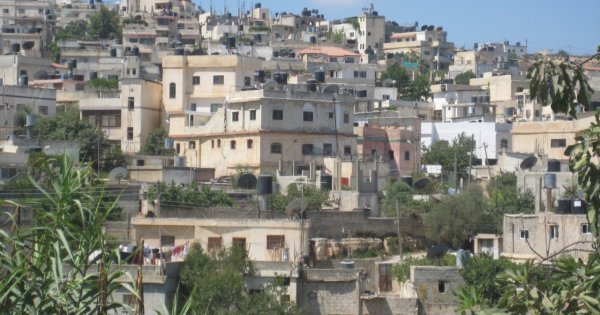
Dbayeh Refugee Camp in Lebanon: The Last Palestinian Camp East of Beirut
Dbayeh Camp stands on a hill about 12 km from Beirut, overlooking the Beirut–Tripoli highway, beneath the Maronite monastery of Deir Mar Yusuf that owns its land. Founded in the mid-1950s, it is the only Palestinian camp left in the eastern suburbs of Beirut and the only Christian-majority camp in Lebanon. Most of its families come from al-Bassa in the Galilee, with others from Kafr Bir'im, Iqrit, Haifa and Acre. About 70 of its people were killed when it fell in 1976, and it was shelled again in 1990. This guide covers its history, origins, population, services and situation today.
Quick Facts About Dbayeh Camp
| Arabic name | مخيم ضبية |
|---|---|
| Country | Lebanon |
| Location | About 12 km from Beirut, on a hill above the Beirut–Tripoli highway |
| Established | (some sources say 1952 or 1955) |
| Land | Rented by UNRWA from the Deir Mar Yusuf monastery |
| Registered refugees (UNRWA) | 4,591 |
| Origin of residents | Mainly al-Bassa; also Kafr Bir'im, Iqrit, Haifa and Acre |
| Community | Christian-majority, mostly Catholic |
| UNRWA facilities | 1 health clinic; no UNRWA school since 2013 |
| Status | The only remaining Palestinian camp in Beirut's eastern suburbs |
The Nakba: Why Dbayeh Camp Exists
Dbayeh was born from the Nakba (Arabic for "catastrophe"): the mass expulsion of Palestinians during the occupation of Palestine in , when roughly 750,000 Palestinians were driven from their homes. The village of al-Bassa, a large mixed Christian and Muslim village on the Lebanese border in the Acre district, was occupied in May 1948. The Christian villages of Kafr Bir'im and Iqrit were emptied later that year, their people promised they could return within days; they never were allowed back.
Before reaching Dbayeh, many families passed through several stops: border towns of south Lebanon such as Bint Jbeil, Maroun al-Ras and Marjayoun, then the Neirab camp near Aleppo and Jarablus in northern Syria, and in 1952 a former French barracks at Choueifat near Beirut. In the mid-1950s, after coordination between the Maronite monastic order, the Pontifical Mission and UNRWA, the agency rented a hillside from the monastery at Dbayeh and the camp was founded. The first families lived in barracks with shared bathrooms.
The Right of Return
The people of Kafr Bir'im and Iqrit are among the clearest cases in the Palestinian story: villagers told to leave "for two weeks" in 1948, whose homes were later demolished. Their descendants in Dbayeh still hold that promise. The right of return rests on several foundations in international law:
- UN General Assembly Resolution 194 (), paragraph 11, resolved that refugees wishing to return to their homes and live at peace with their neighbours should be permitted to do so at the earliest practicable date, and that compensation should be paid to those choosing not to return and for loss of or damage to property.
- The Universal Declaration of Human Rights (Article 13) affirms everyone's right to leave any country, including their own, and to return to it.
- UN General Assembly Resolution 3236 () reaffirmed the "inalienable right" of Palestinians to return to their homes and property.
History of the Camp (1950s–1975)
UNRWA began with about 61,450 m² of land and added a second plot in 1963. The camp was once known as the "Martyr Hanna Eid Camp", after a Palestinian fighter from its ranks. In 1973 clashes between Palestinian factions and the Lebanese army reached the camp. As Lebanon slid towards civil war, Dbayeh, together with Tel al-Zaatar and Jisr al-Basha, found itself inside the Christian-majority areas east and north of Beirut.
The Civil War: 1976 and 1990
In early , fighting broke out between camp residents and right-wing Lebanese parties: the Kataeb Party, the National Liberal Party and the Guardians of the Cedars. The camp fell after five days. According to the Mokhayyam encyclopedia, residents were gathered in the camp's sports ground, the men were taken away and beaten, and about 70 people were killed, among them 12 boys under 15 taken from an evangelical school. About half the camp was destroyed during the war of the 1970s, and many families left for West Beirut, Canada and the United States. Unlike Tel al-Zaatar and Jisr al-Basha, which were razed, Dbayeh survived as a camp.
In , fighting between rival Christian forces in East Beirut hit the camp again. About a quarter of its homes were destroyed or badly damaged, and more than 100 families, most of them Palestinian Christians, were displaced. In 1983 the camp had also taken in Lebanese families displaced from Deir al-Qamar, some of whom still live there.
The Current Situation (2026)
Dbayeh has long felt forgotten, isolated by sectarian divisions from other Palestinians and marginalised by service providers. Residents have repeatedly complained of neglect and a lack of services, and since 2016 a camp committee has represented them to UNRWA, the Palestinian embassy and the factions, which have no active presence in the camp. UNRWA's deepening funding crisis has cut relief further. The camp lies north of Beirut, away from the main front of Israel's intensified war on Lebanon since , but its residents share the economic collapse and the restrictions faced by all Palestinians in Lebanon, who are barred from more than 70 professions and from owning property.
Origin of the Name
The camp is named after the neighbouring Lebanese town of Dbayeh, in the Metn district north of Beirut.
Location and Geography
The camp lies on a hill about 12 km from Beirut, overlooking the coastal Beirut–Tripoli highway, below the Maronite monastery of Deir Mar Yusuf. After the destruction of Tel al-Zaatar and Jisr al-Basha in 1976, it became the only Palestinian camp left in the eastern suburbs of Beirut.
Area, Land and Layout
UNRWA rented about 61,450 m² from the monastery at the camp's founding and added a second plot in 1963, which UNRWA's own page gives as either 22,850 or 222,850 m²; the Mokhayyam encyclopedia puts the total at about 0.5 km². The camp is divided into four main blocks separated by roads, the densest being the eastern fourth block. The land and, according to Mokhayyam, the houses belong to the Maronite order: refugees need the monastery's permission to repair or build, and if a family leaves, the monastery decides what happens to the house.
Villages and Cities of Origin
Most families come from villages of the Galilee and the cities of the coast:
- Acre district: al-Bassa (the largest group) and Iqrit
- Safed district: Kafr Bir'im
- Cities: Haifa, Acre and Jaffa
About 40% of the camp's families have received Lebanese citizenship since 1994, according to the Mokhayyam encyclopedia, and intermarriage with Lebanese neighbours is common.
Population and Demographics
UNRWA's register of refugees is much larger than the number actually living in the camp, since many registered families have emigrated, and the camp is also home to Lebanese and Syrian families.
Population of Dbayeh Camp
- June 20044,211 registered refugeesUNRWA, via Mokhayyam
- UndatedAbout 4,000–6,000 residents (about 500 families)Mokhayyam
- 2022About 2,000 residents in about 530 families, about 230 of them PalestinianAssociated Press
- Current4,591 registered refugeesUNRWA
Housing and Infrastructure
Residents pay the state for water and electricity, but tests have found the tap water contaminated, so families buy drinking water. According to Mokhayyam, about 70% of homes still relied on cesspits; the camp's infrastructure has since been undergoing rehabilitation. Repairs depend on the permission of the monastery that owns the land.
Economic Life
Unemployment in Dbayeh has been estimated at more than 80%, and many families rely on remittances from relatives abroad. Common trades include ironwork, car mechanics, fishing, construction and food retail. UNRWA provides quarterly Social Safety Net aid to more than 64 families (147 people).
Health Services
UNRWA runs a clinic in the camp, and a dentist is available, but there is no hospital; serious cases are referred to hospitals elsewhere. Caritas runs a programme for the elderly.
Education and Community
The camp's UNRWA elementary school closed in 1991. Students then went to UNRWA's Carmel School in Burj Hammoud until it closed in 2013 because of low enrolment, and no UNRWA school now serves the camp. Organisations working in the camp include Caritas, the Norwegian People's Aid and Beit Atfal Assumoud, and youth sports programmes run by groups from other camps have strengthened ties with the wider Palestinian community.
Frequently Asked Questions About Dbayeh Camp
Where is Dbayeh camp located?
On a hill about 12 km from Beirut, overlooking the Beirut–Tripoli highway, below the Deir Mar Yusuf monastery.
Is Dbayeh a Christian Palestinian camp?
Yes. It is the only Christian-majority Palestinian camp in Lebanon, with most residents Catholic, and the only Palestinian camp left in Beirut's eastern suburbs.
Where do Dbayeh's refugees come from?
Mainly from al-Bassa in the Galilee, with others from Kafr Bir'im, Iqrit, Haifa, Acre and Jaffa.
What happened in Dbayeh in 1976?
The camp fell to right-wing Lebanese militias after five days of fighting, and about 70 residents were killed, according to the Mokhayyam encyclopedia. Unlike Tel al-Zaatar and Jisr al-Basha, it was not razed.
How many people live in Dbayeh camp?
UNRWA lists 4,591 registered refugees, but only about 2,000 people actually lived in the camp in 2022, including Lebanese and Syrians.
Conclusion
Dbayeh is the camp that survived when its neighbours were wiped out. Its Christian families from al-Bassa, Kafr Bir'im and Iqrit live on a monastery's hillside, in homes they cannot own, a short drive from the ruins of Tel al-Zaatar and Jisr al-Basha. Small, aging and often forgotten, it remains a reminder that the Nakba uprooted Palestinians of every faith, and that their right to return is the same.
More from the archive
 Download Our Palestine App
The whole archive in the palm of your hand: depopulated villages, the Nakba, the massacres and Al-Aqsa — free, with no ads to erase the story.
Download Our Palestine App
The whole archive in the palm of your hand: depopulated villages, the Nakba, the massacres and Al-Aqsa — free, with no ads to erase the story.



Comments
No comments yet — be the first to write one.
Add your comment
Name and email are optional. Comments appear after review.