
Rashidieh Refugee Camp

Rashidieh Refugee Camp
Rashidieh Refugee Camp in Lebanon: History, Galilee Villages, Wars and Life Today
Rashidieh Camp lies on the Mediterranean coast about 5 km south of Tyre and is the closest Palestinian camp in Lebanon to Palestine. Its old section was built by the French in 1936 for Armenian refugees; Palestinians arrived from 1950, and UNRWA built the new camp in 1963. Its families come from Galilee villages such as Deir al-Qassi, Alma, Suhmata, Kuwaykat and al-Ghabisiyya, each with its own neighbourhood. Heavily destroyed in 1982 and besieged in the War of the Camps, it was struck and partly displaced again in the wars of 2024 and 2026. This guide covers its history, origins, population, services and situation today.
Quick Facts About Rashidieh Camp
| Arabic name | مخيم الرشيدية |
|---|---|
| Country | Lebanon |
| Location | Mediterranean coast, about 5 km south of Tyre |
| Established | Old section (Armenians); Palestinians from ; new camp |
| Area | About 0.25 km² (248 dunums) |
| Registered refugees (UNRWA) | More than 31,478 |
| Origin of residents | Villages of the Acre and Safed districts, Upper Galilee |
| UNRWA facilities | 4 schools (1 secondary), 1 health centre |
| Rank | One of the largest camps in Lebanon; the closest to Palestine |
| Access | A single entrance controlled by the Lebanese army |
The Nakba: Why Rashidieh Camp Exists
Rashidieh's Palestinian community was born from the Nakba (Arabic for "catastrophe"): the mass expulsion of Palestinians during the occupation of Palestine in , when roughly 750,000 Palestinians were driven from their homes. The villages of the Upper Galilee and the Acre district, a few kilometres from the Lebanese border, were emptied in 1948, and their people crossed into south Lebanon.
In 1950 the Lebanese authorities set up a tented camp for Palestinians next to an existing Armenian refugee camp at Rashidieh. As most Armenians left over the following decade, Palestinians moved into their homes, about 200 of which survive as the "old camp". In 1963 UNRWA built the new section for refugees moved from the Gouraud barracks camp in Baalbek, from al-Buss and from the al-Qasimiyeh gathering.
The Right of Return
Each of the camp's neighbourhoods carries the name of a Galilee village, and no camp in Lebanon lies closer to the border. The right of return rests on several foundations in international law:
- UN General Assembly Resolution 194 (), paragraph 11, resolved that refugees wishing to return to their homes and live at peace with their neighbours should be permitted to do so at the earliest practicable date, and that compensation should be paid to those choosing not to return and for loss of or damage to property.
- The Universal Declaration of Human Rights (Article 13) affirms everyone's right to leave any country, including their own, and to return to it.
- UN General Assembly Resolution 3236 () reaffirmed the "inalienable right" of Palestinians to return to their homes and property.
History of the Camp (1936–1981)
The French Mandate authorities began building the old camp in 1936 for Armenian refugees fleeing the massacres in Cilicia. After the Palestinians arrived and UNRWA built the new camp, Rashidieh became one of the main camps of the south. From 1967 Palestinian fighters had a presence there, and after the 1969 Cairo Agreement recognised the PLO's role in the camps, it became a training and recruitment centre for Palestinian factions. After the events of 1970–71 in Jordan, more refugees arrived. Israeli naval shelling and air raids hit the camp repeatedly in the 1970s, killing and injuring residents.
Invasion and Siege (1982–1987)
When Israel invaded Lebanon in June , Rashidieh was among the first targets. Heavy bombardment left much of the camp in ruins; one estimate at the time put the destruction at about 60%, and mass arrests followed. The camp's children who fought during the invasion became known in the media as the "RPG children". Many families fled and never returned.
During the War of the Camps in 1986–1987, the Amal movement besieged and attacked Rashidieh. UNRWA recorded nearly 600 shelters fully or partly destroyed between 1982 and 1987 and more than 5,000 refugees displaced. Since the mid-1980s the Lebanese authorities have banned basic building materials from entering the camp without an army permit.
From 2006 to the Wars of 2024–2026
During the July 2006 war, about 18,000 people lived in the camp and it sheltered more than 1,000 displaced Lebanese; Israeli shells hit its al-Iman Mosque. In 2008–2009 a series of earthquakes cracked hundreds of homes. After 2011 the camp took in Palestinian and Syrian families fleeing the war in Syria.
From late 2023 the camp lived through the war on south Lebanon. According to the Mokhayyam encyclopedia, about 40 of its people were killed between November 2023 and early 2025, most of them between November 2024 and February 2025. When Israel intensified its war on Lebanon on , Rashidieh again came under fire. Israeli threats to evacuate Tyre and its camps in March 2026 set off a new wave of displacement, and heavy shelling around the camp in April 2026 pushed more families north. On , after an evacuation order for one of its neighbourhoods, an Israeli air strike hit a building in the camp housing a water well and the solar panels that powered it, which supplied the northern part of the camp. In June 2026 Israel ordered the evacuation of the whole of Tyre, and many families left for the camps of Sidon and Beirut.
The Current Situation (2026)
Months of war have closed workshops and halted construction and farm work, leaving most families without income. Health centres have closed at times, chronic patients struggle to get medicine, and UNRWA, in a deep funding crisis, has had no clear emergency plan, according to residents quoted by Al Jazeera. The camp has no sewerage network, its electricity grid is worn out, and building materials still need army permits. Palestinians in Lebanon remain barred from more than 70 professions.
Origin of the Name
The land is named after the Ottoman statesman Mustafa Reşid Pasha, who is said to have owned it in the 1850s.
Location and Geography
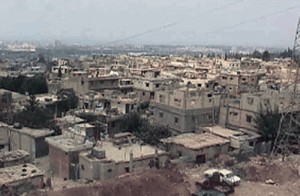
The camp lies on the coast about 5 km south of Tyre, bordering the Tyre Coast Nature Reserve to the north and surrounded by citrus and banana orchards. It is the closest of Lebanon's twelve camps to the Palestinian border and one of three UNRWA camps in the Tyre area, alongside al-Buss and Burj al-Shemali. The springs of Ras al-Ain historically supplied its water.
Area and Layout
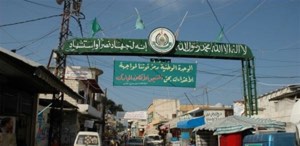
The camp covers about 248,400 m² (248 dunums) of land leased to UNRWA. It is divided into the "old camp" of former Armenian houses and the "new camp" built in 1963, with neighbourhoods named after villages such as Nahf, Kuwaykat and Alma. In 2017 it had 1,510 buildings and 2,417 households. Its single entrance is controlled by a Lebanese army checkpoint.
Villages of Origin
Most families come from villages of the Acre and Safed districts. Among the villages named in the sources:
- Acre district: Deir al-Qassi, Suhmata, Kuwaykat, al-Ghabisiyya, Umm al-Faraj, al-Shaykh Dawud, al-Sha'b, and Nahf (a village still inhabited)
- Safed district: Alma and Fara
Population and Demographics
UNRWA counts registered refugees, while other figures count residents, including unregistered Palestinians and others.
Population of Rashidieh Camp over time
- 200325,081 registered refugeesUNRWA, via Mokhayyam
- 2006About 18,000 residents during the July warWikipedia
- 2010–2017More than 27,500 registered refugeesUNRWA, via Mokhayyam
- 20171,510 buildings, 2,417 householdsLebanese-Palestinian Dialogue Committee census
- 201834,584Wikipedia
- CurrentMore than 31,478 registered refugeesUNRWA
- UnofficialUp to about 40,000Mokhayyam
Housing and Infrastructure
Almost all shelters have water and electricity, but the camp has no sewerage network: homes still rely on cesspits dug at the camp's founding, polluting groundwater. Tap water is not drinkable, and families increasingly buy filtered water. The electricity grid is old and transformers often fail. Many shelters need major repairs, some still have zinc roofs, and the ban on building materials makes repairs difficult. The state also refused UNRWA's request to build a sea wall to protect coastal homes from the waves.
Economic Life
Almost half of employed residents work in low-paid, seasonal or occasional jobs, in construction or as farm labourers in the nearby banana, lemon and orange orchards. Others load lorries in vegetable markets or work in crafts such as car repair. After 1969 farmers cultivated public land around the camp, but were barred from planting fruit trees. Unemployment is widespread, and the wars of 2024–2026 halted much of the farm and construction work the camp depends on.
Health Services
UNRWA runs one health centre in the camp. The Palestinian Red Crescent's Balsam Hospital has 28 beds, though it suffers shortages of staff, medicine and equipment. There are also al-Quds and al-Ataa clinics, private clinics, pharmacies and two small laboratories. Diabetes, high blood pressure, asthma, heart disease and kidney disease are among the most common conditions.
Education and Community
UNRWA runs four schools: Ein al-Asal (boys' elementary), al-Qadisiyya (girls' elementary), al-Naqab (intermediate) and al-Aqsa Secondary School. Seven kindergartens are run by local associations. Community groups include the Galilee Development Association, founded in 2011, which opened the camp's first sports hall in 2018 and runs a public library in Rashidieh Park with UNRWA, as well as several sports clubs, youth centres and four mosques. Popular Committees affiliated with the PLO and a camp improvement committee represent residents.
Frequently Asked Questions About Rashidieh Camp
Where is Rashidieh camp located?
On the Mediterranean coast about 5 km south of Tyre in south Lebanon. It is the closest Palestinian camp in Lebanon to the Palestinian border.
When was Rashidieh camp established?
The old section was built in 1936 for Armenian refugees. Palestinians arrived from 1950, and UNRWA built the new camp in 1963.
Where do Rashidieh's refugees come from?
Mainly from villages of the Acre and Safed districts, including Deir al-Qassi, Alma, Suhmata, Kuwaykat, al-Ghabisiyya, Nahf and Fara.
How many people live in Rashidieh camp?
UNRWA counts more than 31,478 registered refugees; other estimates put the population at up to about 40,000.
How was Rashidieh affected by the 2026 war?
Evacuation threats and shelling caused waves of displacement from March 2026. On 25 May 2026 an Israeli strike hit a building with the water well serving the northern camp, and in June Israel ordered the evacuation of all of Tyre.
Conclusion
Rashidieh is a camp by the sea at the edge of Lebanon, closer to Palestine than any other. Built on the homes of Armenian refugees and named after an Ottoman pasha, it became home to the villages of the Galilee, each with its own lane, fig tree and vine. It was flattened in 1982, besieged in the 1980s and bombed again in 2024 and 2026, yet its people stay, waiting for the road south to open.
More from the archive

 Download Our Palestine App
The whole archive in the palm of your hand: depopulated villages, the Nakba, the massacres and Al-Aqsa — free, with no ads to erase the story.
Download Our Palestine App
The whole archive in the palm of your hand: depopulated villages, the Nakba, the massacres and Al-Aqsa — free, with no ads to erase the story.



Comments
No comments yet — be the first to write one.
Add your comment
Name and email are optional. Comments appear after review.