
Mar Elias Refugee Camp
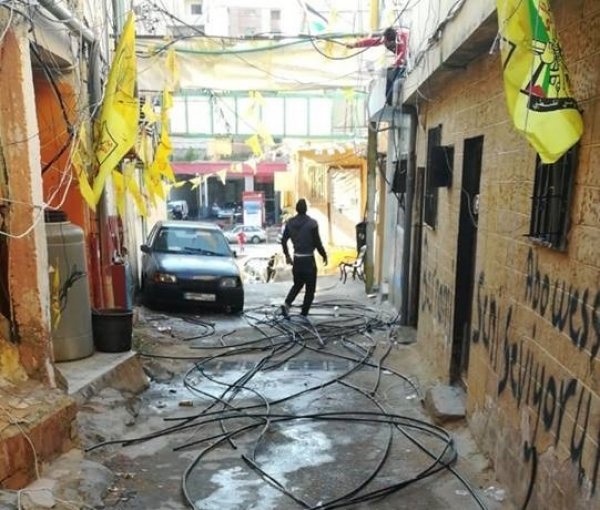
Mar Elias Refugee Camp
Mar Elias Refugee Camp in Beirut: History, Population and Life in Lebanon's Smallest Camp
Mar Elias Camp is the smallest Palestinian refugee camp in Lebanon, a few lanes in south-west Beirut beside the Church of Mar Elias. It was founded in 1952 by the Greek Orthodox Monastery of Mar Elias for Orthodox Christian refugees from the Galilee, who had first lived in tents in the monastery's grove. Over the decades it took in Palestinians displaced from Tel al-Zaatar and other camps, Lebanese and Syrians, and today only a few Christian families remain. In 2026 it sheltered families fleeing the bombing of Beirut's southern suburbs, while dozens of its own families lived under roofs at risk of collapse. This guide covers its history, population, services and situation today.
Quick Facts About Mar Elias Camp
| Arabic name | مخيم مار إلياس |
|---|---|
| Country | Lebanon |
| Location | South-west Beirut, beside the Church of Mar Elias |
| Established | |
| Founded by | The Greek Orthodox Monastery of Mar Elias |
| Area | About 5,000–5,500 m² (about 5.4 dunums) |
| Population | Estimates range from about 450 to 2,000 |
| Origin of first residents | Orthodox Christian refugees from the Galilee |
| UNRWA facilities | 1 school (al-Kabri Elementary), 1 health centre |
| Rank | The smallest Palestinian camp in Lebanon |
The Nakba: Why Mar Elias Camp Exists
Mar Elias was born from the Nakba (Arabic for "catastrophe"): the mass expulsion of Palestinians during the occupation of Palestine in , when roughly 750,000 Palestinians were driven from their homes. In the summer of 1948, Greek Orthodox refugees from the Galilee reached Beirut. The Monastery of Mar Elias Btina took them in, pitching tents in the pine grove beside it, including a tent for a school and another for a clinic, in the hope that their return would be quick.
When return did not come, the monastery founded the camp in , on church endowment land later leased to UNRWA. What had been a small village area became a maze of lanes as more refugees arrived.
The Right of Return
The first tents at Mar Elias were pitched in the belief that the exile would last weeks, not generations. The right of return rests on several foundations in international law:
- UN General Assembly Resolution 194 (), paragraph 11, resolved that refugees wishing to return to their homes and live at peace with their neighbours should be permitted to do so at the earliest practicable date, and that compensation should be paid to those choosing not to return and for loss of or damage to property.
- The Universal Declaration of Human Rights (Article 13) affirms everyone's right to leave any country, including their own, and to return to it.
- UN General Assembly Resolution 3236 () reaffirmed the "inalienable right" of Palestinians to return to their homes and property.
History of the Camp
Mar Elias began as a Christian camp, but the wars that swept Lebanon changed it. In 1976 it took in families who survived the fall of Tel al-Zaatar and the Tel al-Zaatar massacre. New waves followed after the Israeli invasion of 1982 and during the War of the Camps in 1985–1987, bringing many Muslim families, while many of the original Christian families left. During the Lebanese civil war the Palestinian National Salvation Front, an alliance opposed to the PLO leadership, had its headquarters in the camp. Today it is run by Popular Committees and the Palestinian factions, and its central location has made it a base for many civil-society and human-rights organisations.
The Current Situation (2026)
When Israel intensified its war on Lebanon on and issued evacuation orders for Beirut's southern suburbs, Mar Elias became a refuge for families fleeing Shatila and Burj al-Barajneh. By mid-March 2026 the camp was hosting between 70 and 100 displaced families, according to its Popular Committee and local activists, with rents rising and in some cases more than four families sharing one home. The committee set up a crisis cell and cooked about 1,000 meals a day, with support from Médecins Sans Frontières, while describing UNRWA as "completely absent".
In September 2026 Al Jazeera reported that about 70 Palestinian families in the camp were living under roofs at risk of collapse, with eroded concrete and rusted steel; in one home a kitchen ceiling fell while the family slept. Restrictions on construction make repairs difficult, and Popular Committees have relied on donations for temporary fixes ahead of the winter rains. Palestinians in Lebanon remain barred from more than 70 professions.
Origin of the Name
The camp is named after the Monastery of Mar Elias (Saint Elijah) that founded it, and the Church of Mar Elias still stands on its northern edge.
Location and Geography
Mar Elias lies in south-west Beirut, close to the city centre. It is bordered by Watta al-Musaytbeh to the east, the Habib Abi Chahla highway to the west, the Church of Mar Elias to the north and Bir Hassan to the south. Its two main quarters are known as the upper and lower neighbourhoods.
Area and Land
The camp covers only about 5,000–5,500 m² (about 5.4 dunums), according to the Mokhayyam encyclopedia, making it the smallest camp in Lebanon; UNRWA's own page gives a much smaller figure that appears to be an error. The land belongs to the Greek Orthodox endowment and is leased to UNRWA for 99 years.
Origins and Community
The first residents were Greek Orthodox refugees from the Galilee. The sources consulted do not name their villages; the camp's UNRWA school is named after al-Kabri, a village of the Acre district. Only about 21 Christian Palestinian families remain, according to Mokhayyam, though Christmas is still celebrated in the camp, as at a tree-lighting in December 2025. Today's residents also include Palestinians from Tel al-Zaatar, Rashidieh and other camps, Lebanese displaced from the south, Sudanese and Iraqi refugees, Syrians and Palestinian refugees from Syria.
Population and Demographics
Figures vary widely, and UNRWA counts registered refugees rather than all residents.
Population of Mar Elias Camp
- 20031,414UNRWA, via Mokhayyam
- 2005612UNRWA, via Mokhayyam
- VariousAbout 450–2,000Mokhayyam (range of sources)
- 2026About 70 Palestinian families in buildings at risk; 70–100 displaced families hostedAl Jazeera; Palestinian Refugees Portal
Housing and Infrastructure
Homes are tightly packed, rising two or three storeys over lanes too narrow for cars. Most are small, dark, poorly ventilated and damp. Residents say conditions are better than in larger camps such as Shatila, thanks to the camp's small size, but many buildings are now structurally unsafe.
Economic Life
Poverty in the camp has been estimated at 60–73% and unemployment at up to 55%. Residents work in crafts, small trade and construction, and many of the available jobs are with UNRWA and Palestinian institutions. Lebanese law bars Palestinians from dozens of professions, pushing many young people to emigrate. UNRWA provides quarterly Social Safety Net aid to more than 28 families (118 people).
Health Services
UNRWA runs a health centre that sees about 50 patients a day. There is also a Palestinian Red Crescent centre, dental clinics, two pharmacies and the Musawa association, which provides physiotherapy and care for people with disabilities. Patients are referred to hospitals including Haifa Hospital in Burj al-Barajneh and Rafik Hariri University Hospital. Since UNRWA's 2016 health reforms, patients pay part of the cost of hospital care.
Education and Community
UNRWA runs one school in the camp, the co-educational al-Kabri Elementary School, with more than 230 pupils in grades one to six; older students attend UNRWA schools in Bir Hassan. The Ghassan Kanafani kindergarten serves younger children, and UNRWA runs a youth activity centre. Organisations in the camp include the Palestinian Red Crescent, Shahed (the Palestinian Human Rights Organisation), Musawa, Popular Aid for Relief and Development and Save the Children.
Frequently Asked Questions About Mar Elias Camp
Where is Mar Elias camp located?
In south-west Beirut, near the city centre, between Watta al-Musaytbeh and Bir Hassan, beside the Church of Mar Elias.
Why is it called Mar Elias camp?
It is named after the Greek Orthodox Monastery of Mar Elias (Saint Elijah), which sheltered the first refugees in 1948 and founded the camp in 1952.
Is Mar Elias the smallest Palestinian camp in Lebanon?
Yes. It covers only about 5,000–5,500 m² and has the smallest population of Lebanon's twelve official camps.
Is Mar Elias a Christian camp?
It was founded for Orthodox Christian refugees from the Galilee, but after the wars of 1976–1987 many Muslim families arrived. Only about 21 Christian Palestinian families remain.
How was Mar Elias affected by the 2026 war?
It took in 70–100 displaced families from Shatila and Burj al-Barajneh in March 2026, and in September about 70 of its families were reported living under roofs at risk of collapse.
Conclusion
Mar Elias began as a few tents in a monastery's pine grove, pitched for Galilee Christians who expected to go home within weeks. Seventy years later it is a crowded quarter of Beirut where Christians and Muslims, survivors of Tel al-Zaatar and newcomers from Syria live side by side. The smallest camp in Lebanon still carries the largest promise: that its people will one day return.
More from the archive

 Download Our Palestine App
The whole archive in the palm of your hand: depopulated villages, the Nakba, the massacres and Al-Aqsa — free, with no ads to erase the story.
Download Our Palestine App
The whole archive in the palm of your hand: depopulated villages, the Nakba, the massacres and Al-Aqsa — free, with no ads to erase the story.



Comments
No comments yet — be the first to write one.
Add your comment
Name and email are optional. Comments appear after review.