
Nahr al-Bared Refugee Camp
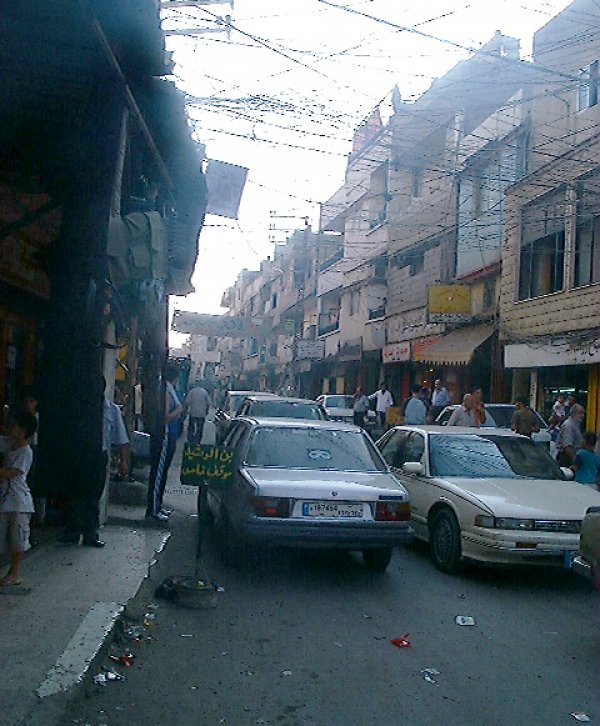
Nahr al-Bared Refugee Camp
Nahr al-Bared Refugee Camp in Lebanon: History, Galilee Villages, the 2007 Destruction and Reconstruction
Nahr al-Bared Camp lies on the Mediterranean coast about 16 km north of Tripoli in northern Lebanon. Established in December for refugees from the Upper Galilee and the northern coast, among them Sa'sa', Saffuriyya, al-Damun and al-Ghabisiyya, it grew into a thriving market town for the Akkar region. In 2007 fighting between the Lebanese army and the Fatah al-Islam group almost completely destroyed it and displaced about 27,000 Palestinians. Nearly two decades later, its reconstruction is still unfinished. This guide covers the camp's history, origins, population, the 2007 war, rebuilding and its situation today.
Quick Facts About Nahr al-Bared Camp
| Arabic name | مخيم نهر البارد |
|---|---|
| Country | Lebanon |
| Location | Mediterranean coast, about 16 km north of Tripoli, North Governorate |
| Year established | December , by the League of Red Cross Societies |
| Area | Old camp about 195,000 m²; new camp (extension) about 700,000 m² |
| Population at founding | About 9,000 |
| Displaced in 2007 | About 27,000 Palestinians and 1,600 Lebanese |
| Origin of residents | Villages of the Upper Galilee and the northern coast |
| Reconstruction | About 82% of the old camp rebuilt (2023); five blocks (about 8% of the area) still awaited funding in 2025 |
| Rank | Second-largest Palestinian camp in Lebanon before 2007 |
The Nakba: Why Nahr al-Bared Camp Exists
Nahr al-Bared was born from the Nakba (Arabic for "catastrophe"): the mass expulsion of Palestinians during the occupation of Palestine in , when roughly 750,000 Palestinians were driven from their homes. The villages of the Upper and Western Galilee, from Saffuriyya near Nazareth to Sa'sa' near the Lebanese border, were emptied, and their people crossed into Lebanon.
The refugees were first scattered in temporary shelters: some near Anjar in the Bekaa Valley, others in Khan al-Askar in old Tripoli, and some had returned from Syria after it closed its borders to new arrivals. In December 1949, the League of Red Cross Societies gathered them on leased farmland by the Nahr al-Bared river north of Tripoli, and in 1950 UNRWA took over the camp.
The Right of Return
The camp's neighbourhoods were named after the villages its families came from, a daily statement of their attachment to their homes in Palestine. On 15 May 2026, residents marked the 78th anniversary of the Nakba and 19 years since the camp's destruction with a sit-in affirming the right of return. That right rests on several foundations in international law:
- UN General Assembly Resolution 194 (), paragraph 11, resolved that refugees wishing to return to their homes and live at peace with their neighbours should be permitted to do so at the earliest practicable date, and that compensation should be paid to those choosing not to return and for loss of or damage to property.
- The Universal Declaration of Human Rights (Article 13) affirms everyone's right to leave any country, including their own, and to return to it.
- UN General Assembly Resolution 3236 () reaffirmed the "inalienable right" of Palestinians to return to their homes and property.
History of the Camp (1949–2007)
The camp began as hundreds of tents on agricultural land leased from more than sixty Lebanese owners, home to about 9,000 people. Over the decades tents gave way to houses of two to four storeys, and in the 1970s the camp expanded into a "new camp" alongside the original. During the Lebanese civil war, families displaced from Tel al-Zaatar camp were housed in a sector that became known as the "quarter of the displaced".
Sitting at the crossroads of Tripoli, Akkar and the coastal highway to the Syrian border, Nahr al-Bared became one of the most prosperous camps in Lebanon and a commercial hub for the towns and villages of Akkar. Lebanese neighbours came to shop in its markets, strengthening ties between the camp and its surroundings. By the early 2000s, about 20,000 people lived in the old camp and roughly as many in the new camp.
The 2007 War and the Destruction of the Camp
On , fighting broke out between the Lebanese army and Fatah al-Islam, an armed group that had entrenched itself in the camp's new extension. The battle lasted more than three months, until the army declared victory on . Between 168 and 179 Lebanese soldiers and more than 220 militants were killed, along with dozens of civilians, 47 of them Palestinians.
The old camp was almost completely destroyed and the new camp heavily damaged. Nearly 6,000 homes and businesses were destroyed or severely damaged, along with shops, mosques, schools, community buildings and the water and sewage networks. About 27,000 Palestinians and 1,600 Lebanese fled; many took refuge in nearby Beddawi camp, in Tripoli and in other camps. After the fighting, UNRWA set up metal container shelters around Nahr al-Bared and Beddawi, while other families lived in garages or rented rooms.
Nineteen Years of Reconstruction (2008–2026)
At a donor conference in Vienna on 23 June 2008, the Lebanese government, UNRWA and the PLO committed to rebuilding the camp within three years. The process soon stalled. In February 2009 archaeological remains, possibly of an ancient town called Artozia, were found beneath the rubble; they were documented and backfilled, and the site was returned to UNRWA in November 2009, when the first concrete was poured. More than 500,000 cubic metres of rubble and over 12,500 pieces of unexploded ordnance had to be cleared.
Funding fell after 2011 as donors turned to the Syrian crisis. By April 2021, 72% of the camp had been rebuilt and 3,550 families had returned, with the cost estimated at $329 million. By 2023 about 82% of the old camp had been rebuilt and 1,277 units in the new camp restored. In October 2025, UNRWA began rebuilding blocks N64 and N66 and preparing block N45, which would allow 210 displaced families to return, leaving five blocks, about 8% of the camp's area, still awaiting funding.
The Current Situation (2025–2026)
A May 2026 report found reconstruction still stalled in several blocks of the old camp, some delayed by archaeological and engineering problems and unclear funding. Residents estimate that 30–35% of the camp's people still live in rented housing, some displaced for 19 years, as rents rise and the economy declines. In the new camp, about 30% of units have not received compensation, and many families repaired their damaged, burned or looted homes at their own expense; residents say a Kuwaiti grant for compensation has not been delivered.
UNRWA's funding crisis has added to the pressure. At their May 2026 sit-in, residents demanded the reopening of the camp's clinic as before, regular aid payments, higher rent allowances, an end to cuts in services and salaries, the reinstatement of suspended teachers, faster reconstruction and solutions to brackish water and damaged buildings. Since 2007 the Lebanese army has controlled the camp's entrances, and Nahr al-Bared remains the only Palestinian camp in Lebanon under direct state security control.
Origin of the Name
The camp takes its name from the Nahr al-Bared, "the Cold River", which flows into the Mediterranean beside it north of Tripoli.
Location and Geography
Nahr al-Bared lies on the Mediterranean coast about 16 km north of Tripoli, near the coastal highway in northern Lebanon, at the gateway to the Akkar region. Beddawi camp, which sheltered many of its people in 2007, lies closer to Tripoli, on the city's northern outskirts.
Area and Layout: Old and New Camp
The camp has two parts. The old camp, about 195,000 m², held roughly 1,700 buildings of two to four storeys before 2007 and is being rebuilt by UNRWA in numbered blocks. The new camp, an extension of about 700,000 m² that grew from the 1970s, falls under Lebanese municipal authorities. Neighbourhoods are named after the Galilee villages of their residents.
Villages of Origin
Most of the camp's families come from the Upper Galilee and the northern coast. According to the Interactive Encyclopedia of the Palestine Question, they include:
- Safed district: Sa'sa' and al-Sammu'i
- Nazareth district: Saffuriyya
- Acre district: al-Damun, al-Ghabisiyya and neighbouring al-Shaykh Dawud, and Amqa
Population and Demographics
UNRWA counts registered refugees, while the 2017 census counted all residents, including Syrians and Lebanese. The numbers are not directly comparable, and many former residents still live outside the camp.
Population of Nahr al-Bared Camp over time
- 1949About 9,000Interactive Encyclopedia of the Palestine Question
- Early 2000sAbout 20,000 in the old camp and roughly as many in the new campInteractive Encyclopedia of the Palestine Question
- 2007About 27,000 Palestinians (6,000 families) displacedUNRWA
- 20179,470 in the camp (8,091 Palestinian refugees from Lebanon, 1,015 from Syria, 208 Syrians, 147 Lebanese); more than 17,000 in the new camp2017 census, via the Interactive Encyclopedia
- 20213,550 families returned; about 1,470 families still displacedUNRWA
Housing and Infrastructure
The rebuilt old camp has new homes, roads and water and sewage networks, but thousands of residents are still waiting. In 2021 about 270 families lived in cramped, substandard temporary shelters built as short-term emergency housing, and emergency relief, including rent subsidies, ended in 2015. Residents complain of brackish water and damaged buildings, and parts of the new camp remain unrepaired or uncompensated.
Economic Life
Before 2007, the camp's markets served all of Akkar. The war destroyed that economy, and army checkpoints and a permit system that lasted for years cut the camp off from its Lebanese customers. By 2021, 958 of 1,213 shops had been rebuilt, but the economy has not recovered. Youth unemployment is high, and many young people have emigrated, some by sea; in September 2022, residents of the camp were among those who died when a migrant boat sank off the Syrian coast. Lebanese law also bars Palestinians from many professions.
Health Situation
UNRWA's rebuilt health centre saw about 400 patients a day. Since the agency's funding crisis, residents say its services have been cut, and in 2026 they demanded that the clinic be reopened as it was before. Brackish water and years of displacement and overcrowding have also affected residents' health.
Education and Culture
The UNRWA school compound was destroyed in 2007, and for years children studied in overcrowded prefabricated classrooms, sweltering in summer and freezing in winter. Five schools were rebuilt between 2011 and 2013, and the Megiddo and Mazar schools opened in 2023. UNRWA runs seven schools, three elementary, three preparatory and one secondary, with about 7,000 students, and the north campus of the Siblin Training Centre offers vocational training. The camp had eighteen kindergartens in 2023. Libraries and cultural venues destroyed in the war are slowly being revived, and a stadium has been built with donations.
Frequently Asked Questions About Nahr al-Bared Camp
Where is Nahr al-Bared camp located?
On the Mediterranean coast about 16 km north of Tripoli in northern Lebanon.
When was Nahr al-Bared camp established?
In December 1949, by the League of Red Cross Societies, for refugees from the Galilee. UNRWA took over in 1950.
What happened to Nahr al-Bared in 2007?
From 20 May to 7 September 2007, fighting between the Lebanese army and Fatah al-Islam almost completely destroyed the old camp and displaced about 27,000 Palestinians.
Has Nahr al-Bared been rebuilt?
Only partly. About 82% of the old camp had been rebuilt by 2023, and in 2025 five blocks, about 8% of its area, were still awaiting funding, while many families remain displaced.
Where do Nahr al-Bared's refugees come from?
Mainly from Galilee villages such as Sa'sa', al-Sammu'i, Saffuriyya, al-Damun, al-Ghabisiyya, al-Shaykh Dawud and Amqa.
Conclusion
Nahr al-Bared was once the busiest market in northern Lebanon, built by families from Sa'sa', Saffuriyya and al-Damun beside a cold river by the sea. In the summer of 2007 it was reduced to rubble in a battle fought in its streets, and nineteen years later many of them are still waiting to go home to the camp itself. Their struggle for reconstruction, compensation and services is also a reminder of the first return they still demand: to the villages of the Galilee.
More from the archive



 Download Our Palestine App
The whole archive in the palm of your hand: depopulated villages, the Nakba, the massacres and Al-Aqsa — free, with no ads to erase the story.
Download Our Palestine App
The whole archive in the palm of your hand: depopulated villages, the Nakba, the massacres and Al-Aqsa — free, with no ads to erase the story.



Comments
No comments yet — be the first to write one.
Add your comment
Name and email are optional. Comments appear after review.