
Birzeit Refugee Camp
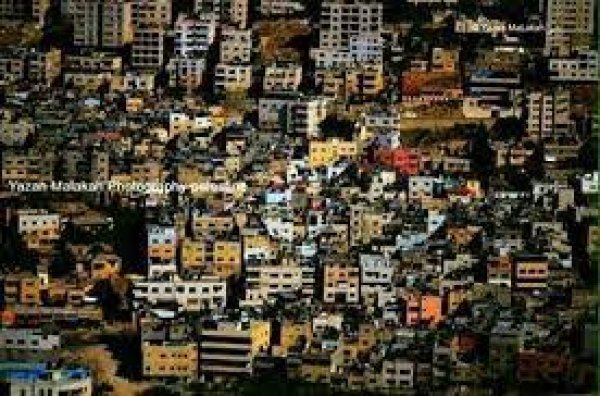
Birzeit Refugee Camp in Ramallah: History, Villages of Origin, Unofficial Status and Living Conditions
Birzeit Camp lies in the heart of the town of Birzeit, about 7 km north of Ramallah. It was established in on 23 dunums on both sides of a street in the town centre, for refugees from villages such as Kafr 'Ana, al-'Abbasiyya, Salama, Bayt Nabala and Abu Shusha. Never recognised by UNRWA, it has shrunk to just 6 dunums and about 600 refugees, struggling against gradual disappearance. This guide covers its history, origins, population, legal status and living conditions.
Quick Facts About Birzeit Camp
| Arabic name | مخيم بيرزيت |
|---|---|
| Country / Region | Palestine, central West Bank |
| Governorate | Ramallah and al-Bireh, in the centre of Birzeit town |
| Year established | |
| Area | 23 dunums at founding; about 6 dunums today |
| Population | About 8,000 at founding (estimate); about 600 refugees today |
| Buildings | 45 buildings with 65 apartments |
| Origin of residents | Villages of the Jaffa, Ramla, Lydda and Gaza districts |
| Status | Unofficial camp, not recognised by UNRWA; recognised by the PLO Department of Refugee Affairs |
The Nakba: Why Birzeit Camp Exists
Birzeit Camp was born from the Nakba (Arabic for "catastrophe"): the mass expulsion of Palestinians during the occupation of Palestine in . Roughly 750,000 Palestinians were driven from their homes. In the spring and summer of 1948, the villages around Jaffa, Lydda and Ramla were emptied of their people, who fled east into the hills north of Ramallah. Thousands found shelter in Birzeit.
The Right of Return
The right of return is the central demand of Birzeit's refugees. It rests on several foundations in international law:
- UN General Assembly Resolution 194 (), paragraph 11, resolved that refugees wishing to return to their homes and live at peace with their neighbours should be permitted to do so at the earliest practicable date, and that compensation should be paid to those choosing not to return and for loss of or damage to property.
- The Universal Declaration of Human Rights (Article 13) affirms everyone's right to leave any country, including their own, and to return to it.
- UN General Assembly Resolution 3236 () reaffirmed the "inalienable right" of Palestinians to return to their homes and property.
History of the Camp
From tents to stone shelters (1948–1950s)
The camp was set up in 1948 on 23 dunums on both sides of a street in the centre of Birzeit. Refugees first lived in tents, then built small shelters of stone and mud, roofed with tarpaulins and zinc sheets. The landowner collected a symbolic rent from them for the use of the land. In its early years, UNRWA treated Birzeit like any other camp, and in the 1950s it opened a girls' school there.
Shrinking and dispersal
As families grew and land ran short, most refugees rented homes outside the camp, while others moved to official camps such as Am'ari, Jalazone and Aqabat Jabr, and some emigrated to Jordan. By 1967, only 86 people remained in the camp. Many of those who stayed in the town integrated into Birzeit's community, working and trading alongside its original residents.
The 2008 eviction
The Greek Orthodox Church, which owned land in the eastern part of the camp known as Harat al-Saqayif, sought the eviction of its residents. In 2008, the area was cleared under an agreement between representatives of the Palestinian Authority, Birzeit municipality, the church and the refugees.
Unofficial Status and Legal Struggles
Birzeit Camp is not recognised by UNRWA, which cites its small population and the fact that it never leased the land, which belongs to residents of Birzeit. Nor is it listed by Palestinian Authority ministries, making accurate official data on the camp scarce. It is, however, recognised by the PLO's Department of Refugee Affairs as one of the unofficial refugee camps of the West Bank.
Since the 1960s, landowners have filed lawsuits demanding the refugees' removal:
- Under Jordanian rule, courts usually rejected or postponed these cases, ruling that the refugees were there as part of a wider political issue and could not be removed without a political solution.
- Under Israeli occupation after 1967, courts also declined to rule on a problem dating back to 1948 and involving dozens of families.
- In 1998, a decree by the late Palestinian President instructed the Ministry of Justice that courts should not hear cases seeking to evict residents of unofficial camps, which largely halted the lawsuits.
The Current Situation
The camp and the town around it are not spared Israeli raids. Israeli forces regularly enter Birzeit town, and have repeatedly stormed the campus of Birzeit University next to it:
- 9 December 2025: Israeli forces stormed the university campus, causing extensive damage.
- 6 January 2026: A daytime raid on the campus while lectures were under way and students were in classrooms.
- 29 June 2026: A dawn raid, the 27th on the campus since 2002.
- Autumn 2026: Israeli forces raided the campus during exams, then about ten days later, on the eve of the 2026–2027 academic year, stormed it again and demolished the university's Martyrs' Memorial.
At the same time, UNRWA's financial crisis and cuts to services have deepened the hardship of the camp's refugees, who depend on overcrowded UNRWA clinics in nearby camps.
Origin of the Name
The camp takes its name from the town of Birzeit, in whose centre it lies. The town is best known for Birzeit University, one of the leading Palestinian universities.
Location and Geography
Birzeit Camp lies in the heart of the town of Birzeit, in the Ramallah and al-Bireh Governorate, about 7 km north of Ramallah. Jalazone camp lies about 3 km to the south.
Area
The camp began on 23 dunums. Over the decades, through lawsuits, evictions and the dispersal of its residents, it has shrunk to only about 6 dunums.
Villages of Origin
Birzeit's refugees come from villages depopulated in 1948, including:
- Jaffa district: Kafr 'Ana, Al-'Abbasiyya and Salama
- Ramla district: Bayt Nabala, Abu Shusha and Qula
- Gaza district: Al-Masmiyya
- Cities: Lydda
Population and Demographics
Population of Birzeit Camp over time
- 1948About 8,000 (estimate)Encyclopedia of Palestinian Camps
- 196786Encyclopedia of Palestinian Camps
- 2010About 180Palestinian Central Bureau of Statistics
- RecentAbout 600 refugeesCamp Popular Committee
Note: Because the camp is not recognised by UNRWA, there are no UNRWA registration figures for it. In addition to the camp's own residents, about 2,500 refugees live elsewhere in Birzeit town, making up a large share of its population.
Housing and Services
The camp today consists of about 45 buildings with 65 apartments. Some of the original mud-and-stone shelters with zinc roofs still stand, along with narrow alleys between closely packed houses that bear witness to the camp's story. Residents use the services of Birzeit town: water comes from the Jerusalem Water Undertaking, and while most homes have electricity, a few still do not. Waste collection is provided, and there was once a refugee feeding centre about 200 metres from the camp.
Health and Education
There are no health services inside the camp. Residents must travel to the UNRWA clinics in Jalazone or Am'ari camps, which are overcrowded and short of medicines. A Palestinian Ministry of Health clinic in Birzeit serves only those with health insurance. The camp's popular committee has repeatedly asked UNRWA to build a clinic, without success.
In the 1950s, UNRWA ran a two-room girls' school rented from camp residents, later replaced by a girls' school in Birzeit town that serves the camp and other refugees in the town. Boys attend government schools.
Frequently Asked Questions About Birzeit Camp
Where is Birzeit Camp located?
In the centre of the town of Birzeit, about 7 km north of Ramallah in the central West Bank.
Is Birzeit Camp recognised by UNRWA?
No. UNRWA does not recognise it, citing its small population and the fact that it never leased the land. It is recognised by the PLO's Department of Refugee Affairs.
Why has the camp shrunk so much?
Lack of space, lawsuits by landowners, an eviction in 2008, and the lack of UNRWA recognition pushed most refugees to rent homes elsewhere, move to other camps or emigrate. The camp shrank from 23 to about 6 dunums.
Where do Birzeit Camp's refugees come from?
From villages depopulated in 1948, including Kafr 'Ana, al-'Abbasiyya, Salama, Bayt Nabala, al-Masmiyya, Abu Shusha, Qula and the city of Lydda.
Where do the camp's residents get health care?
There is no clinic in the camp, so residents travel to the UNRWA clinics in Jalazone or Am'ari camps, or use a Ministry of Health clinic in Birzeit if they have insurance.
Conclusion
Birzeit Camp once sheltered thousands of refugees from Jaffa, Lydda and Ramla. Without UNRWA recognition, it has shrunk to a few dunums and a few hundred people, and has fought decades of lawsuits to survive. Yet its mud-and-zinc shelters still stand in the heart of Birzeit, a living witness to the Nakba and to its people's right to return.
More from the archive
 Download Our Palestine App
The whole archive in the palm of your hand: depopulated villages, the Nakba, the massacres and Al-Aqsa — free, with no ads to erase the story.
Download Our Palestine App
The whole archive in the palm of your hand: depopulated villages, the Nakba, the massacres and Al-Aqsa — free, with no ads to erase the story.



Comments
No comments yet — be the first to write one.
Add your comment
Name and email are optional. Comments appear after review.