
Bureij Refugee Camp in Gaza
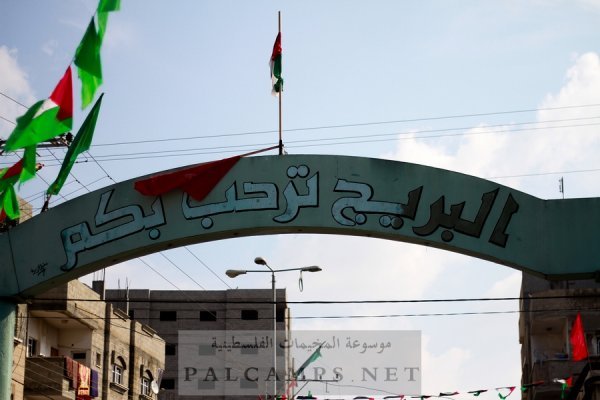
Bureij Refugee Camp in Gaza
Bureij Refugee Camp in Gaza: History, Population, the Genocide in Gaza and the Right of Return
Bureij Camp is a Palestine refugee camp in the middle of the Gaza Strip, between Nuseirat and Maghazi camps. It was set up in on the site of a former British army camp for about 13,000 refugees driven from al-Faluja, Hamama, al-Majdal, Isdud, Jaffa, Beersheba and other places during the occupation of Palestine in 1948. Today 46,629 refugees are registered in the camp, which covers only about half a square kilometre. Bureij has a long history of massacres, from the night raid of 1953 to the genocide in Gaza since October 2023, and as of 2026 its eastern edge lies along the Israeli-controlled "Yellow Line". This guide covers its history, origins, population, living conditions and current situation.
Quick Facts About Bureij Camp
| Arabic name | مخيم البريج (Mukhayyam al-Bureij) |
|---|---|
| Country / Region | Palestine, central Gaza Strip |
| Governorate | Deir al-Balah (Middle Area) |
| Year established | |
| Area | About 0.5 km² (UNRWA); originally 528 dunums |
| Registered refugees | 46,629 (UNRWA, ) |
| Original population | About 13,000 refugees |
| UNRWA installations (before October 2023) | 13, including 12 schools in 9 buildings and 1 health centre |
| Origin of residents | Al-Faluja, Hamama, Kawkaba, al-Majdal, Isdud, Jaffa and Beersheba |
| Known for | The 1953 massacre; its basketball club, Palestine champions |
| Current status | Heavily damaged since October 2023; its eastern edge borders the "Yellow Line" as of 2026 |
Note: UNRWA counts refer to refugees registered in the camp, not necessarily the number of people living there at any given time.
The Nakba: Why Bureij Camp Exists
Bureij Camp was born from the Nakba (Arabic for "catastrophe"): the mass expulsion of Palestinians during the occupation of Palestine in . Roughly 750,000 Palestinians were driven from their homes, and more than 200,000 of them poured into the narrow Gaza Strip, almost tripling its population.
Among them were the people of the towns and villages east and north of Gaza, from al-Faluja and Kawkaba to Hamama, al-Majdal and Isdud on the coast, as well as families from Jaffa and the Beersheba region. Some found shelter in the abandoned barracks of a British army camp in central Gaza; most lived in tents around it. That site became Bureij Camp.
The Right of Return
The right of return is the central demand of Bureij's refugees. It rests on several foundations in international law:
- UN General Assembly Resolution 194 (), paragraph 11, resolved that refugees wishing to return to their homes and live at peace with their neighbours should be permitted to do so at the earliest practicable date, and that compensation should be paid to those choosing not to return and for loss of or damage to property.
- The Universal Declaration of Human Rights (Article 13) affirms everyone's right to leave any country, including their own, and to return to it.
- UN General Assembly Resolution 3236 () reaffirmed the "inalienable right" of Palestinians to return to their homes and property.
Bureij lies only a few kilometres from the armistice line, and the lands of al-Faluja and the villages of origin lie just beyond it. A well-known story from 1966 tells of a visiting philosopher who met a boy from the camp; asked how he knew his village if he had never seen it, the boy replied that his father had told him about it and that they would return. The visitor concluded that such a people would never die.
History of the Camp
Founding on a British army camp (1949–1950s)
Bureij was established in 1949 on the site of a former British army camp, on about 528 dunums. A small number of refugees lived in the old barracks, but most lived in tents. In the early 1950s, UNRWA began building simple housing units of brick, tiles and corrugated metal, and the camp expanded as its population grew. UNRWA also ran a chest diseases hospital in the camp, which was later turned into a government secondary school.
Under Egyptian administration and occupation (1949–1993)
From 1948 to 1967 the Gaza Strip was under Egyptian administration, except for a few months of Israeli occupation in 1956–1957. Bureij's position close to the armistice line made it a target of cross-border raids, the most notorious being the massacre of 1953. With the occupation of the West Bank and Gaza Strip in , the camp came under Israeli military rule. A local committee formed in 1978 to manage electricity and water later became a village council and, in 1996, the Bureij municipality.
The Second Intifada and siege (2000–2023)
During the Second Intifada, Israeli forces repeatedly invaded the camp. On 6 December 2002, a raid with tanks and helicopters killed 10 people; a UN investigation found that at least eight of them were unarmed civilians, two of them UN staff members. After the blockade imposed on Gaza in 2007, unemployment soared, construction materials were banned, and the camp was struck again in the wars of 2008–2009, 2012, 2014 and 2021.
The Bureij Massacre of 1953
On the night of 28 August 1953, an Israeli commando unit (Unit 101) crossed the armistice line through Wadi Gaza and entered Bureij from three directions. According to a UN report, bombs were thrown through the windows of huts where refugees were sleeping, and those who fled were attacked with small arms and automatic weapons.
The attackers converged on the area near the camp's public bathhouse, killing children, women and elderly people who could not escape, before withdrawing about half an hour later. The death toll is disputed: Israeli accounts acknowledged around 20 killed and 62 wounded, while camp residents speak of around 50 martyrs. The next morning, angry demonstrations broke out as residents demanded weapons to defend the camp. The massacre remains a painful memory passed from generation to generation in Bureij.
Bureij and the Genocide in Gaza (2023 onward)
Since October 2023, Bureij has been one of the central Gaza camps hit hardest in the genocide in Gaza. In September 2025, the UN Independent International Commission of Inquiry concluded that Israel has committed genocide against Palestinians in Gaza, finding that four of the five acts defined in the 1948 Genocide Convention had been committed. A genocide case brought by South Africa against Israel is also before the International Court of Justice. Israel rejects these findings. By mid-2026, Gaza's health ministry reported more than 72,000 Palestinians killed since October 2023.
Massacres and invasion (2023–2024)
- 2 November 2023: Israeli warplanes struck a residential area of the camp; Gaza's civil defence recovered at least 15 bodies from the rubble.
- December 2023: a residential block in eastern Bureij was destroyed with heavy bombs. Civil defence estimated that more than 50 people were trapped under the rubble, reported that entire families had been wiped from the civil registry, and said rescue teams were themselves fired upon. Israeli ground forces then invaded Bureij and the neighbouring central camps.
- July 2024: evacuation orders for parts of Bureij displaced about 12,600 people to Maghazi and Nuseirat camps in just a few days, according to OCHA.
Living along the "Yellow Line" (2025–2026)
After the ceasefire agreement of October 2025, Israeli forces withdrew to a boundary known as the "Yellow Line", which runs along the eastern edge of Bureij. Life on the camp's eastern side has remained dangerous:
- In February 2026, artillery shelled areas east of the camp, and families lived in tents surrounded by mud and floodwater.
- In March 2026, people east of the camp were wounded by fire from Israeli drones.
- In July 2026, an airstrike on a home east of the camp killed a child, minutes after residents received a phone order to evacuate a block containing homes and schools sheltering displaced people.
- In July 2026, the UN visited a school-turned-shelter in Bureij located about 50 yards from the "Yellow Line", where displaced families had been living for more than a year and a half, with access restrictions hampering aid.
- In August 2026, Israeli vehicles stationed inside the "Yellow Line" northeast of the camp opened fire on areas west of the line.
For the people of Bureij, these events continue a long line of massacres that began with the Nakba and the raid of 1953: the grandchildren of the refugees of 1948 are once again being killed, starved and displaced.
Origin of the Name
"Bureij" (البريج) is the Arabic diminutive of burj, meaning "small tower". According to the Encyclopedia of Palestinian Camps, the camp is named after a tower that stood next to it. The name is also spelled Breij or al-Burayj.
Location and Geography
Bureij Camp lies in the Deir al-Balah Governorate (Middle Area) of the Gaza Strip, about 9 km south of Gaza City and east of the main Salah al-Din Road. Its boundaries are:
- North: Wadi Gaza
- South: Maghazi Camp
- West: Nuseirat Camp
- East: the 1949 armistice line, and since October 2025 the Israeli-controlled "Yellow Line"
The camp sits on a slight rise about 4 km from the Mediterranean. Its proximity to Wadi Gaza, which has long carried untreated sewage to the sea, has caused serious environmental health risks.
Area and Land
The camp was established on about 528 dunums, later reduced to about 478 dunums. UNRWA gives its current area as about 0.5 square kilometres. With tens of thousands of residents, it is extremely crowded, and many families have added floors to their homes to make room for new generations.
Villages of Origin
Most of Bureij's refugees came from towns and villages east and north of Gaza, in the Gaza district, as well as from Jaffa and Beersheba. They include:
- Al-Faluja, the town most closely associated with the camp
- Kawkaba
- Hamama
- Al-Majdal
- Isdud
- Jaffa and the Beersheba region
Many of Bureij's families still organise their social life around the family councils (diwans) of their home villages.
Population and Demographics
| Year | Population | Source |
|---|---|---|
| 1949–1950 | About 13,000 refugees | UNRWA |
| 1967 | About 12,800 | Encyclopedia of Palestinian Camps |
| 1987 | About 16,700 | Encyclopedia of Palestinian Camps |
| 2005 | About 34,951 | Encyclopedia of Palestinian Camps |
| 2017 | 28,024 residents inside the camp | Palestinian Central Bureau of Statistics (PCBS) |
| 2023 | 46,629 registered refugees | UNRWA |
| 2023–2026 | Residents repeatedly displaced; the camp also shelters people displaced from other areas | UN agencies |
The difference between UNRWA and PCBS figures reflects different methods: UNRWA counts refugees registered to the camp, many of whom live in the surrounding area and the Bureij municipality, while the PCBS counts people resident inside the camp's boundaries.
Housing and Infrastructure
Before October 2023, homes in Bureij were built close together, often with extra floors added without proper design. Electricity cuts were frequent, about 90% of the water was unfit for drinking, parts of the water network were damaged, and most streets were simple concrete paths. The ban on construction materials under the blockade made it impossible to build or repair adequately.
Since 2023, large parts of the camp's housing and infrastructure have been destroyed, especially in its eastern areas. Many residents now live in damaged buildings, tents or school shelters, with building materials still barred from entering Gaza.
Health Situation
Before the war, the camp was served by an UNRWA health centre (operating since 1964), Ministry of Health clinics and community health centres, including a women's health centre. Since 2023:
- Hospitals and clinics in central Gaza have been overwhelmed by mass casualties.
- Famine and malnutrition have spread, especially during periods of total siege.
- Sewage from Wadi Gaza, destroyed water networks and overcrowded shelters have led to the spread of disease.
- Children and families suffer severe psychological trauma.
Economic Situation
Before the war, the camp's central market near the Abu Rasas roundabout held dozens of shops and hundreds of stalls, and residents ran small workshops and businesses. Unemployment rose dramatically after the blockade of 2007, and a large share of families came to depend on UNRWA food assistance, distributed from a centre shared with Nuseirat camp.
Since 2023, the economy has been almost entirely destroyed, and nearly all families depend on humanitarian aid, which has itself been severely restricted.
Education
Before October 2023, UNRWA ran 12 schools in 9 buildings in the camp, six on a single shift and six on double shifts, and the Ministry of Education ran secondary schools for boys and girls. Two private universities operated in the nearby area. Since 2023, schools have been turned into shelters for displaced families, many have been damaged or destroyed, and the camp's children have lost years of education.
Frequently Asked Questions About Bureij Camp
Where is Bureij refugee camp located?
Bureij is in the Deir al-Balah Governorate in the central Gaza Strip, about 9 km south of Gaza City, between Nuseirat and Maghazi camps, with Wadi Gaza to the north.
How many refugees live in Bureij camp?
UNRWA reports 46,629 registered refugees in 2023, on an area of about 0.5 square kilometres.
When was Bureij camp established?
It was established in 1949 on the site of a former British army camp, for about 13,000 refugees who had been living in barracks and tents.
What was the Bureij massacre of 1953?
On the night of 28 August 1953, an Israeli commando unit raided the camp, throwing bombs into huts where refugees slept and firing on those who fled. Israeli accounts acknowledged around 20 killed and 62 wounded; residents speak of around 50 martyrs.
Where do Bureij's refugees come from?
Mainly from al-Faluja, Kawkaba, Hamama, al-Majdal, Isdud, Jaffa and the Beersheba region.
What happened to Bureij camp since October 2023?
Bureij has suffered massacres, a ground invasion and mass displacement in the genocide in Gaza. As of 2026, its eastern edge borders the Israeli-controlled "Yellow Line", and residents there continue to face shelling and gunfire.
Conclusion
Bureij Camp grew from the barracks and tents of 1949 into a crowded, tightly knit community within sight of the land its people lost. From the night raid of 1953 to the genocide in Gaza, it has endured repeated massacres, invasions and displacement. Today its eastern edge faces the "Yellow Line", yet its families remain, rebuilding what they can and holding onto the right to return to al-Faluja, Hamama, al-Majdal and the other towns and villages of their ancestors.
More from the archive
 Download Our Palestine App
The whole archive in the palm of your hand: depopulated villages, the Nakba, the massacres and Al-Aqsa — free, with no ads to erase the story.
Download Our Palestine App
The whole archive in the palm of your hand: depopulated villages, the Nakba, the massacres and Al-Aqsa — free, with no ads to erase the story.



Comments
No comments yet — be the first to write one.
Add your comment
Name and email are optional. Comments appear after review.
Social Life and Sports
Bureij has a strong community life built around family councils, mosques, women's centres and many charitable associations caring for orphans, people with disabilities and children. The camp is known as a camp of resistance and steadfastness.
Khadamat al-Bureij Club, founded in 1951, is one of the best-known sports clubs in Gaza. Its basketball team has been champion of Palestine, and it also competes in the top divisions of handball, volleyball and tennis. The club's sports hall, with seating for 4,000 spectators, was one of the best-equipped in Palestine.
The genocide has torn this social fabric apart, wiping out entire families and displacing survivors again and again.