
Balata Refugee Camp
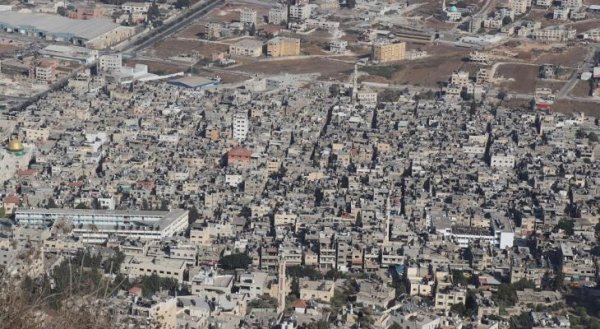
Balata Refugee Camp
Balata Refugee Camp: History, Location, Population and Living Conditions
Balata Camp in Nablus is the largest Palestine refugee camp in the West Bank. Built in for about 5,000 refugees, it is now home to more than 32,000 registered refugees crowded onto a quarter of a square kilometre. Its people descend from dozens of villages around Jaffa, Lydda and Ramla that were depopulated during the occupation of Palestine in 1948. This guide covers the camp's history, the origin of its name, its geography and size, its population, and its health, economic, social and educational situation.
Quick Facts About Balata Camp
| Country / Region | Palestine, northern West Bank |
|---|---|
| Governorate | Nablus (within Nablus municipality) |
| Year established | |
| Area | About 0.25 km² (250 dunums) |
| Registered refugees | 32,561 (UNRWA, ), the largest camp in the West Bank |
| Original planned capacity | About 5,000 refugees |
| Population density | About 108,000 people per km² (UNRWA) |
| Young population | Almost 60% of residents are under 25 |
| Schools | 4 UNRWA schools (2 for girls, 2 for boys) with 2,601 pupils |
| Health facilities | 1 UNRWA health clinic serving almost 50,000 refugees inside and outside the camp |
| Origin of residents | About 60 villages, mainly in the Jaffa, Lydda and Ramla districts |
Note: UNRWA counts refer to refugees registered in the camp, not necessarily the number of people living there at any given time.
The Nakba: Why Balata Camp Exists
The story of Balata Camp begins with the Nakba (Arabic for "catastrophe"): the mass expulsion of Palestinians during the occupation of Palestine in . Roughly 750,000 Palestinians, more than half of the Arab population of the country, were driven from their homes, and hundreds of towns and villages were emptied and later destroyed or resettled.
The villages of the coastal plain around Jaffa were among the first to be depopulated, many of them between March and May 1948, months before the end of the British Mandate. Their people fled east into the hills, many of them toward Nablus. With no way back after the 1949 armistice lines were drawn, they became permanent refugees, and Balata Camp was created to shelter them. Today, a large share of all refugees originating from the Jaffa area live in Balata.
For the people of the camp, the Nakba is not a closed chapter. Every child born there is registered as a refugee and carries the name of a coastal village they have never seen.
The Right of Return
The right of return is the central demand of Balata's residents and of Palestine refugees everywhere. It rests on several foundations in international law:
- UN General Assembly Resolution 194 (), paragraph 11, resolved that refugees wishing to return to their homes and live at peace with their neighbours should be permitted to do so at the earliest practicable date, and that compensation should be paid to those choosing not to return and for loss of or damage to property.
- The Universal Declaration of Human Rights (Article 13) affirms everyone's right to leave any country, including their own, and to return to it.
- UN General Assembly Resolution 3236 () reaffirmed the "inalienable right" of Palestinians to return to their homes and property.
Balata has long been at the forefront of defending this right. In early 1994, during the Oslo negotiations, the first committee in the West Bank dedicated to defending refugee rights was founded in Balata, and the camp has remained one of the most active centres of refugee advocacy ever since.
History and Establishment of the Camp
From tents to concrete (1950s)
Balata Camp was established by UNRWA in , on land east of Nablus belonging to the neighbouring village of Balata, leased from the Jordanian government that ruled the West Bank at the time. It was planned for about 5,000 refugees. For its first years it was a large tent city; during the 1950s the tents were replaced with small concrete shelters, and over the decades families added rooms and upper floors.
Because the camp was built on farmland close to Nablus, some refugees found work in agriculture on the Balata plain, either for wages or by renting land, while others worked in Nablus or in UNRWA's schools, clinics and services.
Under occupation (1967 onward)
The camp came under Israeli military rule with the occupation of the West Bank and Gaza Strip in .
The First Intifada (1987–1993)
Balata was among the first places in the West Bank to join the First Intifada in December 1987, and it became known as one of its main centres. The camp was subjected to long curfews, mass arrests and frequent raids throughout the uprising.
After the Oslo Accords (1995 onward)
As part of Nablus municipality, the camp came under Palestinian Authority control (Area A) in 1995. This has not stopped Israeli military raids into the camp.
The Second Intifada (2000–2005)
Balata was again at the heart of the uprising. In late February 2002 it was stormed by a large Israeli force backed by helicopters, in one of the biggest raids on any refugee camp at the time; reports from then recorded more than a dozen people killed and scores wounded, many of them children. Weeks later, Nablus and its camps were hit again in the large-scale military invasion of West Bank cities in spring 2002.
Recent years
Since 2022, raids on Balata, as on other camps in the northern West Bank, have intensified, causing deaths, injuries, arrests and damage to homes and infrastructure.
Origin of the Name "Balata"
The camp takes its name from the neighbouring Palestinian village of Balata (also known as Balata al-Balad), on whose land it was built. The village name is ancient: the nearby archaeological mound of Tell Balata is the site of the ancient city of Shechem, the forerunner of Nablus.
The name is written Balata or Balatah in English sources; in Arabic it is مخيم بلاطة.
Location and Geography
Balata Camp lies in the Nablus Governorate in the northern West Bank, within the municipal boundaries of Nablus, on the city's eastern edge. Key features of its location:
- It lies in the valley between Mount Gerizim (south) and Mount Ebal (north), at the eastern entrance to Nablus.
- It borders the village of Balata al-Balad and lies close to the main road leading south toward Huwwara.
- Joseph's Tomb and the archaeological site of Tell Balata are nearby.
- Nablus has two other refugee camps: Askar and Camp No. 1 (Al-Ain).
The camp sits at roughly 500–550 metres above sea level on the edge of the fertile Balata plain. The climate is Mediterranean, with cool, rainy winters and hot, dry summers.
Area and Land
The camp covers about 0.25 square kilometres (250 dunums), an area that has not grown since 1950 even though the population has risen more than sixfold. The land is leased, and UNRWA has no authority to expand camp boundaries, which lie under the jurisdiction of the host authorities.
As a result, construction has spread over almost every free space. Many streets have become narrow alleys with barely enough room for two people to pass. Much of the natural growth of the camp has spilled over into surrounding neighbourhoods of Nablus and nearby villages.
Villages of Origin
The residents of Balata descend from refugees of about 60 villages, most of them in the Jaffa, Lydda and Ramla districts. They include:
- Jaffa district: Al-Sawalima (Arab al-Sawalima), Al-Jammasin al-Gharbi, Al-Jammasin al-Sharqi, Salama, Abu Kishk (Arab Abu Kishk), Al-Shaykh Muwannis
- Ramla district: Tira Dandan (al-Tira)
- Tulkarm district: Kafr Saba
- And many other villages of the coastal plain
The camp also includes families of Bedouin origin from the tribes that lived on the coastal plain before 1948. The memory of these villages is kept alive through family names, village associations and annual commemorations of Nakba Day (15 May).
Population and Demographics
As of , UNRWA records 32,561 registered Palestine refugees in Balata Camp, with an estimated density of 108,000 people per square kilometre, making it the most populous camp in the West Bank and one of the most crowded places in the world.
Population of Balata Camp over time
- 1950Planned for about 5,000UNRWA
- 2002About 20,000 registered refugeesContemporary reports
- 2013About 23,600 registered refugeesUNRWA
- 201526,911 registered refugeesUNRWA
- 202232,561 registered refugeesUNRWA
Population characteristics
- A very young population: almost 60% of residents are under 25.
- Large families sharing multi-storey buildings, with each generation adding a floor.
- Outward movement: families who can afford it move to Nablus and neighbouring villages because of overcrowding, while keeping their ties to the camp.
Housing and Infrastructure
Overcrowding and poor infrastructure are found throughout the camp:
- Narrow alleys: over the years, new construction has taken over public spaces, and many streets have become alleys barely wide enough for one person.
- Lack of privacy: many families live without adequate living space or privacy.
- Light and air: closely packed buildings leave many homes with little sunlight or ventilation.
- Water, sewage and electricity networks are under severe strain from the density of the population.
- Raid damage: repeated military raids damage homes, roads and water and sewage networks.
- Play space: UNRWA facilities are among the few safe places where children can play outdoors.
Health Situation
The UNRWA health clinic in Balata serves almost 50,000 refugees from both inside and outside the camp, offering primary health care including maternal and child health, immunisations, treatment of chronic diseases such as diabetes and hypertension, and psychosocial counselling. Several other non-UNRWA clinics also operate in and around the camp, and hospital care is available in Nablus.
Key health challenges
- Heavy pressure on a single UNRWA clinic serving a very large population
- Injuries from live ammunition and other weapons during raids
- Tear gas exposure, especially harmful to children, older people and those with respiratory illness
- Mental health: night-time raids create fear and anxiety, especially among young children
- Food insecurity, which is among the highest in the West Bank camps and affects nutrition and health
- Environmental health risks from overcrowded, poorly ventilated homes
Economic Situation
Residents consider high unemployment to be one of the main challenges of their lives, and levels of poverty and food insecurity in Balata are among the highest in the West Bank camps. With almost 60% of residents under 25, young people are especially affected.
Main sources of income
- Wage labour in Nablus, the commercial centre of the northern West Bank
- Small shops and workshops in and around the camp
- Public-sector jobs with the Palestinian Authority and UNRWA
- Work inside Israel, historically important but heavily restricted, especially since late 2023, when work permits for most West Bank workers were suspended
Closures and checkpoints around Nablus, delayed public salaries and cuts to UNRWA funding add to the economic pressure. UNRWA's social safety-net programme supports the poorest families, but cannot meet the scale of need.
Education
UNRWA runs four schools in Balata Camp, two for girls and two for boys, with a total of 2,601 pupils. Secondary students attend government schools in Nablus, and many graduates continue to An-Najah National University and other universities in the region.
Educational challenges
- Overcrowded classrooms
- Disruption caused by raids and closures
- The psychological impact of violence on pupils' concentration and achievement
- Arrests of students, which cut their education short
- Strikes and funding shortfalls at UNRWA and in public schools
Military Raids and Security Situation
Life in Balata is shaped by regular Israeli military search and arrest operations, which often take place at night, damage residents' homes and spread fear, especially among young children. Residents also report that the Israeli army uses the camp for training and regularly enters it when escorting Israeli settlers visiting nearby Joseph's Tomb.
Landmarks Near the Camp
- Tell Balata: an archaeological mound next to the camp, the site of ancient Shechem, with remains dating back thousands of years. It is now an archaeological park.
- Joseph's Tomb: a shrine on the eastern edge of Nablus, a frequent flashpoint because of settler visits under military escort.
- Jacob's Well: an ancient well and church in the Balata area, revered by Christians.
- The Old City of Nablus: a few kilometres west, with Roman, Byzantine, Mamluk and Ottoman heritage.
Frequently Asked Questions About Balata Camp
Where is Balata refugee camp located?
Balata Camp is in the northern West Bank, on the eastern edge of Nablus within the city's municipal boundaries, between Mount Gerizim and Mount Ebal.
Is Balata the largest refugee camp in the West Bank?
Yes. With 32,561 registered refugees in 2022, Balata is the largest refugee camp in the West Bank.
When was Balata camp established?
It was established by UNRWA in 1950, after the Nakba of 1948, and was originally planned for about 5,000 refugees.
How big is Balata camp?
The camp covers about 0.25 square kilometres (250 dunums), with a density of about 108,000 people per square kilometre.
Why is it called Balata?
It is named after the neighbouring village of Balata, on whose land it was built. The nearby mound of Tell Balata is the site of ancient Shechem.
Where do Balata's residents come from?
They descend from refugees of about 60 villages, mainly in the Jaffa, Lydda and Ramla districts, including Al-Sawalima, Al-Jammasin al-Gharbi, Al-Jammasin al-Sharqi, Salama, Abu Kishk, Al-Shaykh Muwannis, Tira Dandan and Kafr Saba, as well as families of Bedouin origin.
What services does UNRWA provide in Balata?
UNRWA runs four schools with 2,601 pupils and a health clinic serving almost 50,000 refugees, and provides sanitation, social safety-net assistance and psychosocial support.
Conclusion
Balata Camp was built as a temporary shelter for 5,000 people and has become a dense urban quarter of more than 32,000 refugees, the largest camp in the West Bank. It carries the memory of dozens of coastal villages around Jaffa and has stood at the centre of every Palestinian uprising. Overcrowding, poverty, youth unemployment and constant raids shape daily life, yet Balata remains known for its vibrant civil society and its unwavering commitment to the right of return.
More from the archive


 Download Our Palestine App
The whole archive in the palm of your hand: depopulated villages, the Nakba, the massacres and Al-Aqsa — free, with no ads to erase the story.
Download Our Palestine App
The whole archive in the palm of your hand: depopulated villages, the Nakba, the massacres and Al-Aqsa — free, with no ads to erase the story.



Comments
No comments yet — be the first to write one.
Add your comment
Name and email are optional. Comments appear after review.
Social Situation and Civil Society
Despite the hardships, Balata is known for its strong civil society and a large number of active community organisations, including:
Social challenges