The Ibrahimi Mosque Massacre in Hebron, February 25, 1994
At dawn on Friday, February 25, 1994, corresponding to 15 Ramadan 1414 AH, extremist Israeli settler Baruch Goldstein carried out a massacre inside the Ibrahimi Mosque in the occupied city of Hebron, opening fire with an automatic weapon on Palestinian worshippers during the dawn prayer.
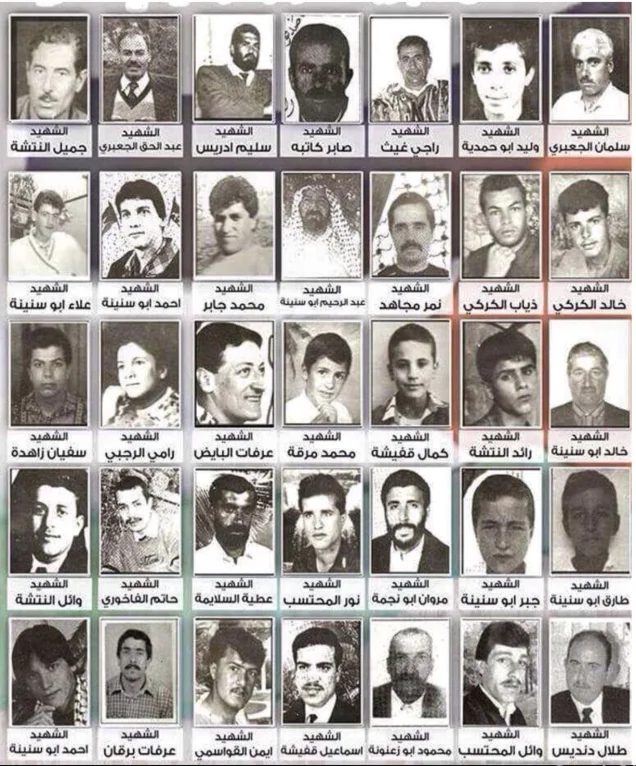
According to figures adopted by the Palestinian News and Information Agency, WAFA, 29 Palestinian worshippers were killed inside the mosque and approximately 150 others were wounded.
In the hours and days that followed, Israeli occupation forces killed additional Palestinians during protests, confrontations, and funeral processions in Hebron and other areas of the Occupied Palestinian Territory, bringing the Palestinian death toll cited by WAFA to 50 martyrs.
The massacre became one of the most serious acts of settler violence during the period following the signing of the Oslo I Accord. It triggered a severe crisis in the political process and left lasting consequences for the city of Hebron and the Ibrahimi Mosque itself.
Hebron After the Oslo Accord
The massacre occurred less than six months after the signing of the Palestinian-Israeli Declaration of Principles, known as the Oslo I Accord, in September 1993.
The issue of Israeli settlements had been postponed under the agreement to permanent-status negotiations, generating intense tension among extremist Israeli settlers who opposed any withdrawal or territorial settlement with the Palestinians.
Hebron was in an especially sensitive situation, as a small Israeli settler community was located in the heart of a large Palestinian city, alongside the nearby settlement of Kiryat Arba.
United Nations reports from 1994 indicated that Hebron had a population of approximately 110,000 Palestinians, while the city center contained approximately 400 Israeli settlers living among around 15,000 Palestinians.
Baruch Goldstein
Baruch Goldstein was an American-born Israeli physician who lived in the settlement of Kiryat Arba, established next to Hebron.
He was a follower of the Kach movement founded by Rabbi Meir Kahane, an extremist religious-nationalist movement known for its racist positions toward Palestinians and Arabs and its calls for their expulsion.
Dawn of February 25, 1994
Goldstein entered the Ibrahimi Mosque in the early morning hours wearing a military uniform and carrying an automatic rifle and a quantity of ammunition.
Hundreds of Palestinians were performing the dawn prayer inside the mosque during the month of Ramadan.
Goldstein opened continuous fire on the worshippers, targeting a densely gathered group of men while they were praying.
Investigations cited in United Nations documents indicate that he reloaded his weapon several times and fired at least 111 rounds.
The shooting continued until surviving worshippers managed to reach him, overpower him, and kill him.
29 Martyrs Inside the Ibrahimi Mosque
The most widely accepted later death toll established that 29 Palestinians were killed inside the Ibrahimi Mosque.
WAFA reports that approximately 150 worshippers were wounded.
Initial reports issued in the hours following the massacre gave higher figures, with some early Palestinian and United Nations communications reporting more than fifty or sixty deaths.
Part of this discrepancy resulted from the chaos that followed the shooting and from early reports combining those killed inside the mosque with Palestinians later killed by Israeli occupation forces during protests and confrontations.
What Did the Israeli Occupation Forces at the Mosque Do?
The circumstances that allowed Goldstein to enter the site while armed raised widespread questions regarding the conduct of the Israeli occupation forces responsible for guarding the Ibrahimi Mosque.
Palestinian reports stated that Israeli occupation soldiers closed doors inside the mosque during the massacre and prevented Palestinians outside from reaching the wounded.
United Nations documents also cited the findings of an investigation by the International Commission of Jurists, which reported that only four of the usual nine guards were present at the site, that soldiers closed the eastern gate during the massacre, and that efforts to evacuate some of the wounded were obstructed.
Did More Than One Gunman Participate?
In the first hours after the massacre, Palestinian testimonies and reports raised the possibility that more than one gunman had participated or that Goldstein had received assistance.
This possibility was also mentioned in the first Palestinian communication submitted to the United Nations on the day of the massacre.
However, the Israeli commission of inquiry headed by Supreme Court President Meir Shamgar concluded in its final report issued in June 1994 that Goldstein had planned the attack in advance and carried out the shooting alone, and that it had found no evidence it considered credible of a direct accomplice.
Palestinians Killed After the Massacre
Palestinian casualties did not end when the shooting inside the mosque stopped.
Large demonstrations and confrontations erupted in Hebron, Jerusalem, the Gaza Strip, and other Palestinian cities and refugee camps in protest against the massacre.
Israeli occupation forces used live ammunition against demonstrators in several areas.
According to WAFA, 21 additional Palestinians were killed outside the mosque and during the events that followed the massacre, bringing the overall death toll to 50 martyrs.
United Nations Security Council Resolution 904 also described “the massacre and its aftermath” as having taken the lives of more than fifty Palestinian civilians and injured several hundred others.
Curfew Imposed on Palestinians
One of the most widely criticized consequences of the massacre was the prolonged curfew imposed by the Israeli occupation authorities on Palestinians in central Hebron.
UNRWA documented that the central area of the city remained under a twenty-four-hour curfew from February 25 until April 11, 1994.
Approximately 15,000 Palestinians and around 400 Israeli settlers lived in that area.
During periods of curfew, Israeli settlers were permitted to move freely while restrictions were imposed on Palestinian residents.
For Palestinians, this policy became a symbol of the contradiction that followed the crime: a settler had committed the massacre, yet sweeping restrictions on movement were imposed on the Palestinian population.
United Nations Security Council Resolution 904
The massacre provoked widespread international condemnation and led to action by the United Nations Security Council.
On March 18, 1994, the Council adopted Resolution 904.
The resolution strongly condemned the massacre and its aftermath and called upon Israel, as the occupying Power, to take measures to prevent illegal acts of violence by settlers.
It called for measures to guarantee the safety and protection of Palestinians in the occupied territories, including the establishment of a temporary international or foreign presence.
The resolution also referred to the need for measures concerning weapons carried by settlers.
The Temporary International Presence in Hebron
The massacre led to Palestinian demands for an international presence to protect the population of Hebron.
On March 31, 1994, Israel and the Palestine Liberation Organization reached an agreement on the establishment of the Temporary International Presence in Hebron – TIPH.
This presence later developed into an international civilian monitoring mission intended to contribute to a sense of security among Palestinians and monitor conditions in the city.
Different forms of the mission continued until 2019, when the Israeli government declined to renew its mandate.
The Division of the Ibrahimi Mosque After the Massacre
One of the most serious and lasting consequences of the massacre was the change imposed by the Israeli occupation authorities on worship arrangements inside the Ibrahimi Mosque.
The mosque was closed for more than eight months after the massacre.
When it reopened in November 1994, Israeli occupation authorities imposed a new system separating Muslims and Jews inside the building.
Separate prayer halls and entrances were established, along with arrangements determining the use of the site during religious holidays.
Since then, the Ibrahimi Mosque has been divided spatially and temporally, to varying degrees, between Muslim and Jewish worshippers.
Instead of removing the armed settler presence surrounding the site, the aftermath of the attack resulted in new restrictions and divisions imposed on the mosque and on the Palestinian population.
The Massacre and the Oslo Process
The massacre took place at an extremely sensitive moment in the Oslo negotiations.
The Palestinian leadership temporarily suspended its participation in the negotiations and demanded guarantees for the protection of Palestinians and the disarmament of settlers.
The Delayed Redeployment in Hebron
The redeployment of Israeli occupation forces in Hebron was delayed compared with other Palestinian cities.
A special protocol concerning Hebron was not reached until January 17, 1997.
Under the Hebron Protocol, the city was divided into two areas:
- H1: approximately 80% of the city, where responsibilities were transferred to the Palestinian Authority.
- H2: approximately 20%, including the Old City, the Ibrahimi Mosque, and Israeli settlement enclaves, which remained under Israeli security control.
Tens of thousands of Palestinians lived in H2 alongside several hundred Israeli settlers.
This system resulted in the historic center of Hebron remaining under an extensive Israeli military presence connected to the protection of the settlement enclaves.
Settler Terrorism in Hebron
The Ibrahimi Mosque massacre was not an isolated event detached from the broader settlement context in the city.
United Nations reports from that period documented repeated attacks by settlers from Hebron and Kiryat Arba against Palestinians and their property, including beatings, shootings, stone throwing at homes and shops, and vandalism.
United Nations committees also noted that settlers were widely armed and that the presence of settlement enclaves inside the city remained a constant source of tension and violence.
For this reason, the Palestinian leadership demanded after the massacre that settlers be disarmed and that settlements be removed from Palestinian populated areas.
The Legacy of the Massacre
The significance of the Ibrahimi Mosque massacre extends beyond the number of its victims.
At an early stage of the Oslo process, the massacre exposed the contradiction between discussions of peace and the continued presence of armed settlements inside Palestinian cities.
It also highlighted the responsibility of the occupying Power to protect the Palestinian population from settler violence.
Although the Israeli government condemned the massacre and banned the Kach and Kahane Chai movements, the event did not lead to the dismantling of settlement enclaves in Hebron.
Instead, settlers remained in the heart of the city, the redeployment of Israeli occupation forces was delayed, and the Ibrahimi Mosque itself was divided after the massacre.
From a Palestinian perspective, one of the bitterest contradictions lies in the fact that Palestinians were the victims of the massacre, yet the measures imposed afterward resulted in significant additional restrictions on them and on their access to the heart of their city and to the Ibrahimi Mosque.
Martyrs of the Ibrahimi Mosque Massacre
| N | Name of Martyr | Place of Birth | Year of Birth | Nationality | Place of Martyrdom |
| 1 | Raed Abdul Muttalib Hassan al-Natsheh | Hebron | 1974 | Palestinian | Ibrahimi Mosque |
| 2 | Ala Badr Abdul Halim Taha Abu Sneineh | Hebron | 1977 | Palestinian | Hebron |
| 3 | Marwan Mutlaq Hamed Abu Najma | Hebron | 1962 | Palestinian | Hebron |
| 4 | Dhiab Abdul Latif Harbawi al-Karki | Hebron | 1970 | Palestinian | Ibrahimi Mosque |
| 5 | Khaled Khalwi Abu Hussein Abu Sneineh | Hebron | 1936 | Palestinian | Ibrahimi Mosque |
| 6 | Nour al-Din Ibrahim Obeid al-Muhtaseb | Hebron | 1972 | Palestinian | Hebron |
| 7 | Saber Mousa Hosni Katibeh Badr | Hebron | 1957 | Palestinian | Ibrahimi Mosque |
| 8 | Nimr Mohammad Nimr Mujahid | Hebron | 1960 | Palestinian | Ibrahimi Mosque |
| 9 | Kamal Jamal Abdul Ghani Qafisheh | Hebron | 1981 | Palestinian | Ibrahimi Mosque |
| 10 | Arafat Mousa Yousef Barqan | Hebron | 1966 | Palestinian | Ibrahimi Mosque |
| 11 | Raji al-Zein Abdul Khaleq Ghaith | Hebron | 1947 | Palestinian | Ibrahimi Mosque |
| 12 | Walid Zuhair Mahfouz Abu Hamdiyeh | Hebron | 1981 | Palestinian | Ibrahimi Mosque |
| 13 | Sufyan Barakat Awad Zahda | Hebron | 1973 | Palestinian | Ibrahimi Mosque |
| 14 | Jamil Ayed Abdul Fattah al-Natsheh | Hebron | 1946 | Palestinian | Ibrahimi Mosque |
| 15 | Abdul Haq Ibrahim Abdul Haq al-Jabari | Hebron | 1939 | Palestinian | Ibrahimi Mosque |
| 16 | Salman Awad Aliyan al-Jabari | Hebron | 1957 | Palestinian | Ibrahimi Mosque |
| 17 | Tariq Adnan Mohammad Ashour Abu Sneineh | Hebron | 1980 | Palestinian | Ibrahimi Mosque |
| 18 | Abdul Rahim Abdul Rahman Salameh | Hebron | 1946 | Palestinian | Ibrahimi Mosque |
| 19 | Jabr Aref Abu Hadid Abu Sneineh | Hebron | 1983 | Palestinian | Ibrahimi Mosque |
| 20 | Hatem Khader Nimr al-Fakhouri | Hebron | 1968 | Palestinian | Ibrahimi Mosque |
| 21 | Salim Idris Fallah Idris | Hebron | 1967 | Palestinian | Ibrahimi Mosque |
| 22 | Rami Arafat Ali al-Rajabi | Hebron | 1983 | Palestinian | Ibrahimi Mosque |
| 23 | Khaled Mohammad Hamza Abdul Rahman al-Karki | Hebron | 1976 | Palestinian | Ibrahimi Mosque |
| 24 | Wael Salah Yaqoub al-Muhtaseb | Hebron | 1966 | Palestinian | Ibrahimi Mosque |
| 25 | Zaidan Hamouda Abdul Majid Hamed | Hebron | 1968 | Palestinian | Ibrahimi Mosque |
| 26 | Ahmad Abdullah Mohammad Taha Abu Sneineh | Hebron | 1969 | Palestinian | Ibrahimi Mosque |
| 27 | Talal Mohammad Dawoud Mahmoud Dandis | Hebron | 1968 | Palestinian | Ibrahimi Mosque |
| 28 | Atiyah Mohammad Atiyah al-Salaymeh | Hebron | 1961 | Palestinian | Ibrahimi Mosque |
| 29 | Ismail Fayez Ismail Qafisheh | Hebron | 1966 | Palestinian | Ibrahimi Mosque |
| 30 | Nader Salem Mohammad Saleh Zahda | Hebron | 1975 | Palestinian | Ibrahimi Mosque |
| 31 | Ayman Ayoub Mohammad al-Qawasmi | Hebron | 1973 | Palestinian | Ibrahimi Mosque |
| 32 | Arafat Mahmoud Ahmad al-Bayid | Hebron | 1966 | Palestinian | Ibrahimi Mosque |
| 33 | Mahmoud Sadiq Mohammad Abu Zanouneh | Hebron | 1945 | Palestinian | Ibrahimi Mosque |
Photo gallery

More from the archive
 Download Our Palestine App
The whole archive in the palm of your hand: depopulated villages, the Nakba, the massacres and Al-Aqsa — free, with no ads to erase the story.
Download Our Palestine App
The whole archive in the palm of your hand: depopulated villages, the Nakba, the massacres and Al-Aqsa — free, with no ads to erase the story.
Comments
No comments yet — be the first to write one.
Add your comment
Name and email are optional. Comments appear after review.