
Haifa Massacres 1938–1948: Market Bombings, the Refinery and the Fall of Haifa

Between 1938 and 1948, Haifa lived through a decade of massacres. During the Great Palestinian Revolt, the Zionist Irgun (Etzel) gang planted bombs again and again in Haifa’s Arab markets, crowded with shoppers, killing more than a hundred Palestinians. After the partition resolution of 1947 the bombs returned to the city, from the gate of the oil refinery to the homes of Balad al-Sheikh, until Haifa fell under bombardment on 22 April 1948 and most of its Arab inhabitants were driven out. [1] [2]
This article brings the Haifa massacres together in one place and gives each massacre its own section: its date, place, perpetrator and death toll, along with the differences between sources over dates and figures. It opens with a timeline of all the massacres, with links to their sections.
The Haifa massacres at a glance
| Item | Details |
|---|---|
| Period | 1938 to 1948 [1] |
| Massacres in this article | Nine major massacres and bombings in Haifa and its outskirts, plus massacres in the Haifa district |
| Perpetrators | The Irgun (Etzel), the Haganah and its strike force the Palmach, and the Stern Gang (Lehi) [1] [3] [4] |
| Most targeted places | Haifa’s Arab markets, especially the vegetable market [1] [5] |
| Largest massacre of the Great Revolt years | The vegetable market, 25–26 July 1938: between 35 and 47 killed [1] [6] [5] |
| Fall of the city | 22 April 1948, after the Haganah assault in Operation “Scissors” [2] |
| Arabs in Haifa | About 65,000–70,000 before the war; only about 4,000 by mid-May 1948 [7] |
Timeline of the Haifa massacres
| Date | Massacre | Perpetrator | Killed (according to sources) |
|---|---|---|---|
| 6 March 1938 | Haifa market massacre | Irgun | 18 |
| 6 July 1938 | Melon market massacre | Irgun | 18–23 |
| 25–26 July 1938 | Vegetable market massacre | Irgun | 35–47 |
| 27 March 1939 | Haifa market massacre, 1939 | Irgun | 24–27 |
| 12 and 19 June 1939 | Balad al-Sheikh and Haifa market | Haganah / Zionists | 5; 9–20 |
| 30 December 1947 | Haifa refinery workers massacre | Irgun | 6 (15 in one account) |
| 31 December 1947 | Balad al-Sheikh massacre | Haganah (Palmach) | 60–70 (600 in other accounts) |
| 31 March 1948 | Cairo–Haifa train bombing | Stern Gang (Lehi) | 40 |
| 21–22 April 1948 | The fall of Haifa massacre | Haganah | 100–150 or more |
Figures are according to the sources cited in each massacre’s section. [1] [5] [8]
Context: the Great Revolt and the market bombings
Between 1936 and 1939 Palestinians waged their Great Revolt against the British Mandate and Zionist immigration. In those years the Irgun (the National Military Organization, or Etzel) turned to planting bombs in crowded Arab places, especially markets, bus stations and cafés, in Haifa, Jerusalem and Jaffa. [1] [5]
Haifa, with its port, railways and oil refinery, was one of the largest and fastest-growing Arab cities in Palestine, and its markets drew the people of the city and of the surrounding villages. [9] That made its markets a favored target for anyone seeking to kill as many civilians as possible and spread fear into every home. A Masrawy report describes how the people of Haifa felt that the danger had moved from the streets into the market, where no one was safe any longer. [10]
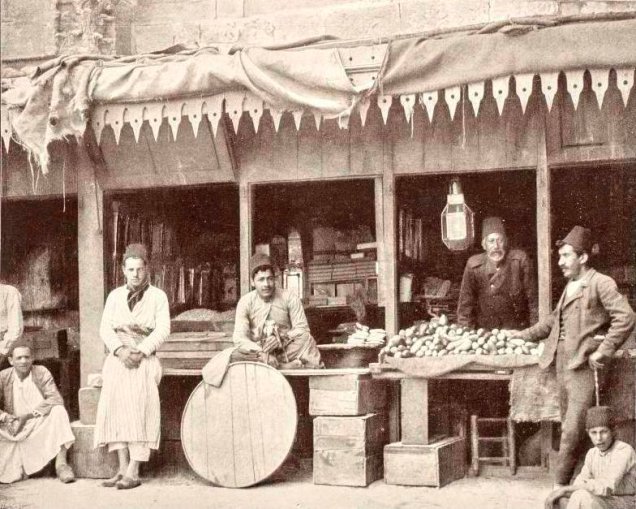
The Haifa market massacre (6 March 1938)
| Item | Details |
|---|---|
| Date | 6 March 1938, according to Palestinian lists [1] |
| Place | The Arab market in Haifa |
| Perpetrator | The Irgun |
| Killed | 18 Palestinians [1] |
| Wounded | 38 according to the circulating account; 24 according to other sources [5] |
Palestinian and Arab lists of Zionist massacres record that on 6 March 1938, members of the Irgun threw a bomb into Haifa market, killing 18 Palestinians. [1] The circulating account adds that 38 others were wounded.
Some accounts attribute this massacre to the Etzel and Lehi together, but the Lehi gang (known as the Stern Gang) was only founded in 1940, when Avraham Stern split from the Etzel; the massacre was therefore the work of the Etzel alone. [11]
Differing accounts: Other lists record a bomb thrown into Haifa’s crowded Arab market on 19 June 1938 that killed 18 Palestinians, among them six women and three children, and wounded 24. [5] The identical toll suggests these are the same incident under two different dates.
The melon market massacre (6 July 1938)
| Item | Details |
|---|---|
| Date | 6 July 1938 [1] [12] |
| Place | The Arab melon and vegetable market in Haifa [12] [6] |
| Perpetrator | The Irgun [1] [6] |
| Method | Two simultaneous bombs, or booby-trapped devices [12] [6] [10] |
| Killed | Between 18 and 23, depending on the source [1] [6] [12] |
| Wounded | Between 52 and 79, depending on the source [6] [12] [10] |
A few days after the Mandate authorities executed an Irgun member, Shlomo Ben-Yosef, on 29 June 1938, the July wave of bombings began. [12] On 6 July two simultaneous bombs exploded in Haifa’s Arab melon market. [12]
The Al Jazeera Net Encyclopedia relates that an Irgun member disguised in Arab dress planted several booby-trapped baby-milk cans in a vegetable market in Haifa, killing 23 people and wounding 75. [6] Masrawy speaks of two booby-trapped cars near the vegetable market that killed 21 Palestinians and wounded about 52. [10]
Differing accounts: The Al Jazeera Net list (2004) gives 21 killed [1], the Al Jazeera Net Encyclopedia (2024) 23 killed and 75 wounded [6], and other sources 18 Arabs killed and more than 60 wounded. [5]
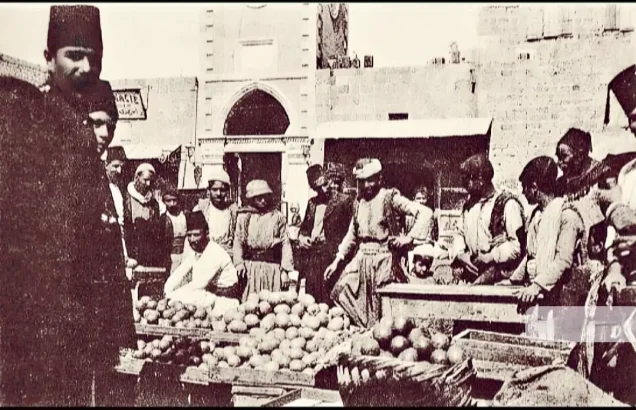
The vegetable market massacre (25–26 July 1938)
| Item | Details |
|---|---|
| Date | 25 July 1938; circulating lists date it to 26 July [1] [6] [12] |
| Place | The Arab vegetable market in Haifa [12] |
| Perpetrator | The Irgun [1] [6] |
| Killed | Between 35 and 47, depending on the source, most of them women and children [1] [6] [5] |
| Wounded | 46 according to Al Jazeera Net; more than 60 according to other sources [6] [12] |
| Significance | The deadliest of the Haifa market bombings during the Great Revolt |
Less than three weeks after the 6 July bombing, the Irgun struck Haifa’s vegetable market a second time, with its deadliest bombing in the city. On 25 July 1938 a second bomb exploded in the market, killing 39 Arabs and wounding more than 60. [12] The Al Jazeera Net Encyclopedia states that Irgun members carried out a terrorist attack in Haifa that day that killed 39 people and wounded 46, most of them women and children. [6]
Circulating Palestinian lists, for their part, relate that on 26 July 1938 an Irgun member threw a hand grenade into one of Haifa’s markets, killing 47 Arabs. [1] The high proportion of women and children among the victims reflects what the market looked like at that hour: women out buying what their households needed, and children with them.
25 or 26 July? The Al Jazeera Net list records two massacres on consecutive days: 25 July (35 killed) and 26 July (47 killed) [1], but every other source speaks of a single bombing on 25 July, with a toll of 39 or 43. [6] [12] [5] We found no source describing a second bombing on 26 July, so most likely this was a single bombing that entered the lists twice: once with its initial toll, and once with its final toll after some of the wounded died.
This was the peak of a “bloody July” that also saw a bomb in a Jerusalem market in mid-month that killed ten Palestinians. [12] [6] According to Masrawy, that month’s bombings left about 103 Palestinians dead and 122 wounded. [10]
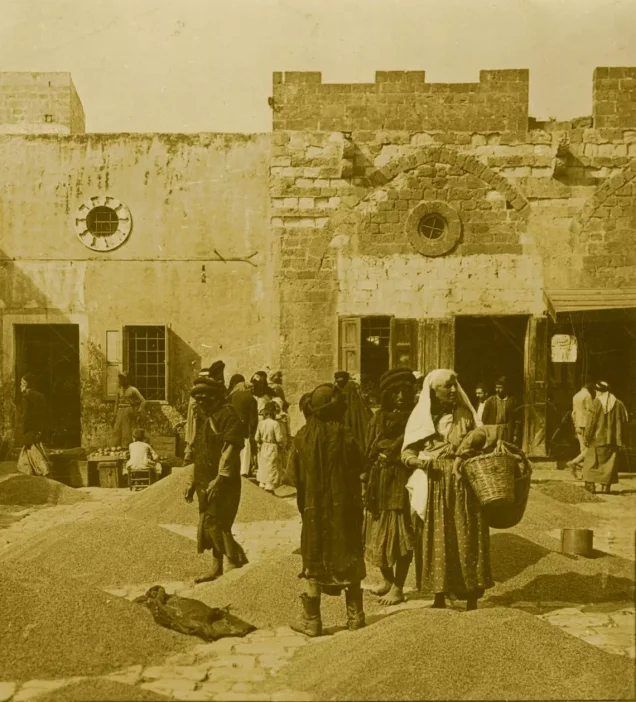
The Haifa market massacre (27 March 1939)
| Item | Details |
|---|---|
| Date | 27 March 1939 according to Palestinian lists; 27 February 1939 according to other sources [1] [5] |
| Place | The Arab market in the Suq quarter of Haifa [5] |
| Perpetrator | The Irgun [1] |
| Killed | 27 according to Palestinian lists; 24 according to other sources [1] [5] |
Months after the July massacres, the bombs returned to Haifa’s markets. Palestinian lists record that on 27 March 1939 the Irgun detonated two bombs in Haifa, killing 27 Arabs. [1] Other sources date this bombing to 27 February 1939, as part of a day of attacks in which 33 Arabs were killed across Palestine, 24 of them by a bomb in the Arab market in Haifa’s Suq quarter. [5] [8]
By then the Great Revolt was beginning to subside under the weight of British repression, but the Irgun’s bombings of Arab markets did not stop.
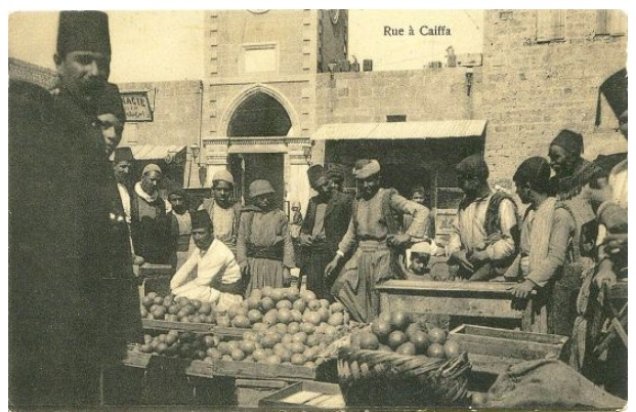
Balad al-Sheikh and Haifa market (June 1939)
The Al Jazeera Net list records two incidents in June 1939: [1]
- 12 June 1939, Balad al-Sheikh: a Haganah attack on the village, about 7 kilometers southeast of Haifa, in which 5 Palestinians were killed. [1]
- 19 June 1939, Haifa market: a bombing the list attributes to “Zionists,” in which 9 were killed. [1] Other sources state that 20 Arabs were killed that day by explosives mounted on a donkey at a marketplace in Haifa. [5] [8]
Sources also record another bomb at a marketplace in Haifa on 3 July 1939 that killed one Arab, [5] the last recorded Haifa market bombing of that period.
After the partition resolution: Haifa under fire
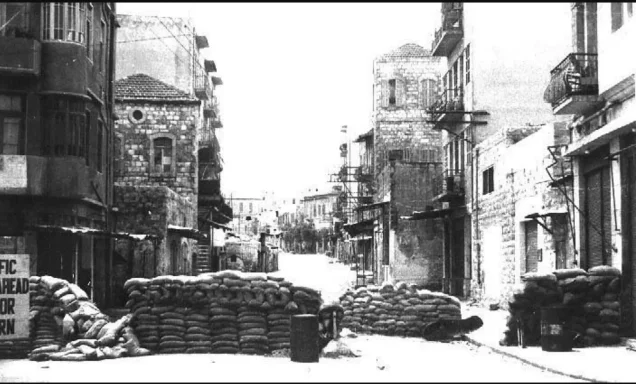
After the UN resolution to partition Palestine on 29 November 1947, which placed Haifa within the borders of the proposed Jewish state, the city became a battleground again. [13] Walid Khalidi relates that on 29 December 1947 the Zionists rolled a barrel bomb down from the Hadar neighborhood onto the Arab quarters below, and that flaming barrels stuffed with kerosene-soaked rags were sent down into the Arab quarters, alongside car bombs, some carrying about 700 kilograms of explosives. [2]
On 11 December 1947, sources record an Irgun attack on the village of al-Tira near Haifa in which 13 Palestinians were killed. [5] al-Tira (Tirat Haifa) was one of the most important villages in the Haifa district, on the lower western slopes of Mount Carmel, about 7 kilometers south of the city; it fell on 16 July 1948.
The Haifa refinery workers massacre (30 December 1947)
| Item | Details |
|---|---|
| Date | 30 December 1947 [3] |
| Place | The gate of the Haifa oil refinery [3] |
| Perpetrator | The Irgun [3] [5] |
| Victims | Arab workers waiting at the gate |
| Killed | 6 according to most sources; about 15 according to Safa News Agency [3] [14] |
| Wounded | 42 [3] |
The Haifa oil refinery was one of the largest industrial plants in Palestine, employing hundreds of Arab workers, many of them from neighboring Balad al-Sheikh and Hawassa. [3] [14] On the morning of 30 December 1947, Irgun members threw two bombs from a speeding car into about a hundred Arab workers gathered at the bus stop near the refinery’s main gate, killing 6 and wounding 42. [3] [5] Safa News Agency states that about 15 workers were killed. [14]
Immediately after the explosion, Arab workers inside the refinery rose up and attacked their Jewish co-workers, killing 39 of them. [3] The Haganah used this as the pretext for a larger massacre the following night.
The Balad al-Sheikh massacre (31 December 1947)
| Item | Details |
|---|---|
| Date | The night of 31 December 1947 – 1 January 1948 [4] [15] |
| Place | Balad al-Sheikh and Hawassa, southeast of Haifa [3] |
| Perpetrator | The Haganah, with a Palmach force of about 170 men [4] |
| Killed | 60–70 according to Walid Khalidi; about 600 according to other Arab sources [4] [13] [14] |
| Wounded | About 40 [4] |
Balad al-Sheikh was a village on the Haifa plain at the foot of the northwestern extension of Mount Carmel, about 7 kilometers southeast of Haifa. In 1945 it was the second-largest village in Palestine by population, and it held the tomb of Sheikh Izz al-Din al-Qassam. [4]
On New Year’s Eve, while the villagers slept, a Palmach force stormed the village and neighboring Hawassa, firing into homes and blowing up dozens of them. [4] [15] According to Walid Khalidi’s book All That Remains, between 60 and 70 Palestinians were killed; the Haganah General Staff’s own reports acknowledge that two women and five children were among the dead, and about 40 were wounded. [4]
Differing accounts: Al Jazeera Net (2004) and Safa News Agency put the toll at about 600 killed, among them women and children [13] [14], while the Al Jazeera Net list of massacres gives 60 [1], and Palestine Remembered gives about 30 killed and wounded. [16] This article adopts Khalidi’s figure of 60–70.
After the massacre, many families left the village on 7 January 1948. The Haganah occupied it on 24–25 April 1948, and the settlement of Nesher was built on its land, while its cemetery, which holds al-Qassam’s tomb, lies neglected. [4] [14]
Haifa in the first months of 1948
In the first months of 1948 Haifa became a city divided by lines of fire between its Arab quarters below and the Jewish neighborhoods on the slopes of Mount Carmel, and attacks and bombings followed one another. Among the attacks on Haifa’s Arabs in those months:
- 3 March 1948: a car bomb in Haifa killed 11 Arabs. [8]
- Incidents recorded by the Al Jazeera Net list: 16 January 1948 (31 killed), 28 January 1948 (20) and 20 February 1948 (6), all attributed to “Zionists.” [1] We found no details of these incidents in other sources.
The Cairo–Haifa train bombing (31 March 1948)
On 31 March 1948 the Stern Gang (Lehi) blew up the Cairo–Haifa train, killing 40 Arabs and wounding 60. [1] [8] The bombing did not take place in Haifa itself, but the train was on its way there.
The fall of Haifa massacre (21–22 April 1948)
| Item | Details |
|---|---|
| Date | 21–22 April 1948 [2] |
| Operation | Operation “Scissors” (Misparayim), later renamed “Bi’ur Hametz,” part of Plan Dalet [2] |
| Perpetrator | The Haganah’s Carmeli Brigade [2] |
| Killed | About 100 according to British estimates; 100 according to the Al Jazeera Net list; more than 150 according to Palestine Remembered; about 300 according to other estimates [2] [1] [16] [7] |
| Wounded | About 200 according to British estimates [2] |
| Outcome | The fall of Haifa and the expulsion of most of its Arab inhabitants [2] [7] |
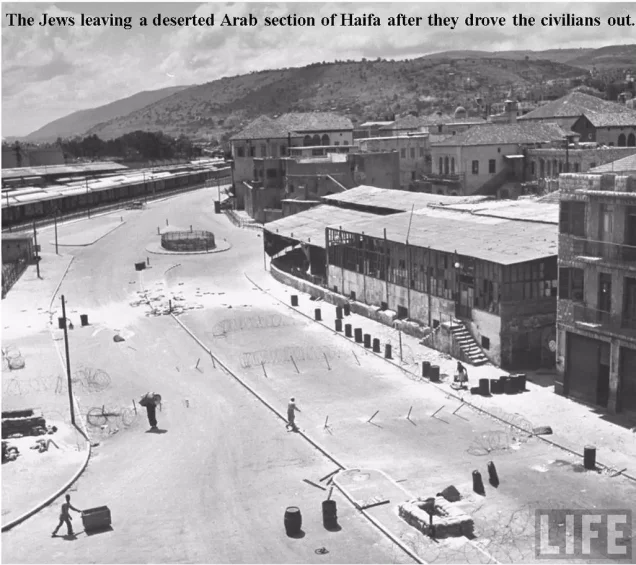
Before the war, Haifa was home to about 65,000–70,000 Arabs. [7] On 21 April 1948, as the British began withdrawing from their positions in the city, the Haganah’s Carmeli Brigade launched its all-out assault on the Arab quarters, in an operation first named “Scissors” and later renamed “Bi’ur Hametz,” meaning “removal of leaven,” because it coincided with the Jewish Passover. [2]
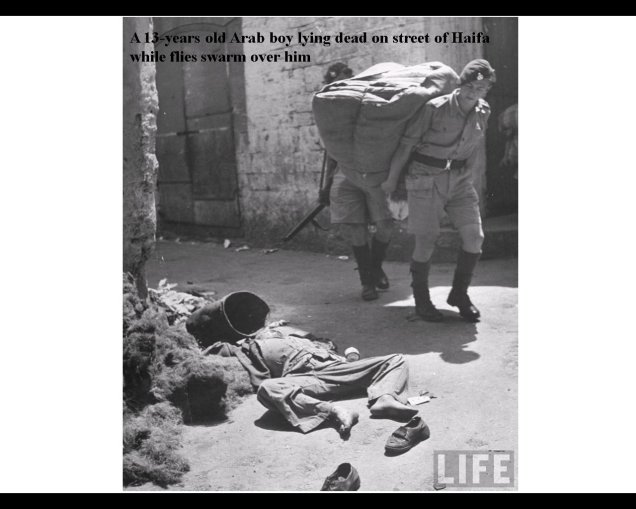
According to Walid Khalidi, the Haganah shelled the Arab town with batteries of twelve mortars firing simultaneously, and the shelling continued on 22 April while some 50,000 Arabs were crammed into the Old Town. [2] British reports describe how Zionist forces were continually shooting at every Arab who moved in Wadi Nisnas and the Old Town, including women and children sheltering in churches, and how the Arab hospitals filled with dead and wounded. [7]
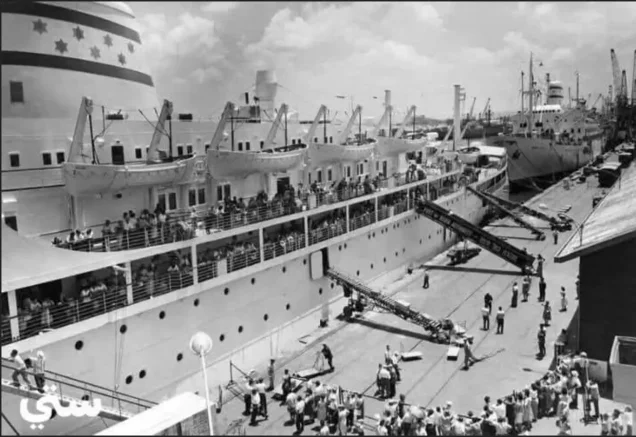
Terrified crowds surged toward the port, still under British control, and the gunfire followed them. [16] By about six in the morning of 22 April, Arab casualties had reached about 300, and British figures put the Arab dead at about 100 and the wounded at about 200. [2] Within a week some 50,000 of Haifa’s Arabs had been expelled, many of them leaving through the port, and by mid-May only about 4,000 remained in the city. [2] [7]
Massacres in the Haifa district
The massacres were not confined to the city of Haifa but extended to the villages of its district during the Nakba. Among the most prominent:
- The Tantura massacre: the night of 22–23 May 1948, in the coastal village south of Haifa; one of the largest massacres of the Nakba.
- The Umm al-Shouf massacre: a village in the Haifa district where seven of its young men were executed.
- Abu Zureiq: a village in the Haifa district about 24 kilometers from the city, finally occupied on 12 April 1948; the Al Jazeera Net list records a massacre there in 1948 with no known toll. [1]
Read about Haifa and its depopulated villages and the Zionist massacres against the Palestinian people.
Why do the figures differ?
Readers will notice that the dates and death tolls of the Haifa massacres vary from one source to another, for several reasons:
- The number and closeness of the bombings: in July 1938 alone the vegetable market was hit twice, which led to dates and figures being mixed up between bombings.
- Initial and final tolls: figures rise in the following days as some of the wounded die, so a single bombing sometimes entered the lists twice, as happened with 25 and 26 July 1938.
- Lost records: Haifa’s people were expelled in 1948, and many records and testimonies were lost with them, leaving estimates that vary between Arab and British sources.
Yet all sources agree on the essentials: Zionist gangs deliberately targeted Palestinian civilians in Haifa, in their markets, workplaces and homes, over ten years that ended with their expulsion from their city.
Conclusion
From the bomb in Haifa market in March 1938 to the mortar shells that rained down on the Old Town in April 1948, Haifa lived through a full decade of massacres. It began with bombs thrown into markets to spread terror, turned into attacks on workers and villages, and ended with an all-out military assault that emptied the city of its people. What began in the vegetable market during the Great Revolt was completed at Haifa port, when tens of thousands of its people left through it and never returned.
Frequently asked questions about the Haifa massacres
What are the main Haifa massacres?
The main ones are the Irgun bombings of Haifa’s markets during the Great Revolt (March and July 1938 and March 1939), the Haifa refinery workers massacre and the Balad al-Sheikh massacre in December 1947, and the fall of Haifa massacre on 21–22 April 1948.
What was the largest massacre in Haifa’s markets?
The largest was the vegetable market massacre of 25 July 1938 (dated 26 July in some lists), in which between 35 and 47 Palestinians were killed, most of them women and children.
Who carried out the Haifa massacres?
The Irgun (Etzel) carried out the market bombings and the refinery workers massacre; the Haganah and its Palmach strike force carried out the Balad al-Sheikh massacre and the 1948 assault on Haifa; and the Stern Gang carried out the Cairo–Haifa train bombing.
When did Haifa fall?
Haifa fell on 22 April 1948 after an assault by the Haganah’s Carmeli Brigade on 21–22 April, and most of its Arab inhabitants were expelled within days.
How is the Haifa refinery massacre linked to the Balad al-Sheikh massacre?
On 30 December 1947 the Irgun threw two bombs at Arab workers at the gate of the Haifa refinery, killing 6 and wounding 42; Arab workers then rose up and killed 39 of their Jewish co-workers. The following night the Haganah attacked Balad al-Sheikh and Hawassa, where many refinery workers lived, killing between 60 and 70 Palestinians.
How many Arabs lived in Haifa before and after the Nakba?
About 65,000–70,000 Arabs lived in Haifa before the war; by mid-May 1948 only about 4,000 remained.
Sources and references
Arabic-language sources are listed with translated titles.
- “Israeli Massacres against the Palestinian People,” Al Jazeera Net, 3 October 2004.
- Walid Khalidi, “The Fall of Haifa Revisited,” Journal of Palestine Studies 37, no. 3 (Spring 2008): 30–58.
- “Haifa Oil Refinery massacre,” English Wikipedia (for comparison).
- “The Nakba: Five Palestinian Towns Massacred 75 Years Ago,” Al Jazeera English, 15 May 2023.
- “List of Irgun attacks,” English Wikipedia (for comparison).
- “Irgun: An Armed Zionist Organization Merged into the Israeli Army,” Al Jazeera Net Encyclopedia, 2 March 2024.
- “Battle of Haifa (1948),” English Wikipedia (for comparison).
- “List of killings and massacres in Mandatory Palestine,” English Wikipedia (for comparison).
- “Haifa,” Depopulated Villages section, Palestinina.
- “Do I See You? (3): The Mine-Layers of Haifa Market,” Masrawy, 3 July 2020.
- “Stern Gang (Lehi),” Jerusalem Story.
- “1938 in Mandatory Palestine,” English Wikipedia (for comparison).
- “Israeli Massacres in Palestine,” Al Jazeera Net, 3 October 2004.
- “73 Years since the Balad al-Sheikh Massacre and the Displacement of Its People,” Safa News Agency, 31 December 2020.
- “Balad al-Shaykh massacre,” English Wikipedia (for comparison).
- “Zionist Massacres between 1947 and 1996,” Palestine Remembered.
More from the archive
 Download Our Palestine App
The whole archive in the palm of your hand: depopulated villages, the Nakba, the massacres and Al-Aqsa — free, with no ads to erase the story.



Comments
No comments yet — be the first to write one.
Add your comment
Name and email are optional. Comments appear after review.