
The Jewish State – Theodor Herzl and the Beginning of the Zionist Project
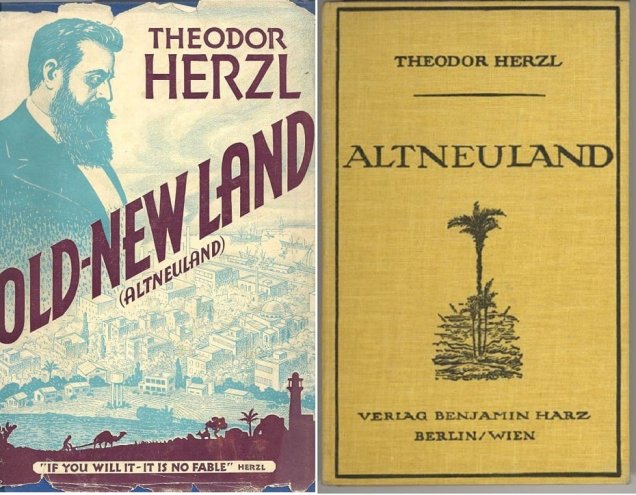
In 1896, the Austro-Hungarian journalist and writer Theodor Herzl published his famous work Der Judenstaat, known in English as The Jewish State. The book became one of the most important foundational texts of modern political Zionism, moving the idea of establishing a political entity for Jews from the realm of intellectual debate and scattered settlement initiatives toward a program aimed at securing international recognition, organizing immigration and settlement, and building the institutions necessary for establishing a state.
The Content of The Jewish State
In the book, Herzl proposed a vision based on organizing the collective and systematic transfer of Jews to a territory in which the project would first obtain internationally recognized political and legal rights. He was not advocating spontaneous individual immigration, but rather an organized project overseen by political and economic institutions that would negotiate with governments and manage the movement of people, capital, and property.
Herzl did not definitively determine the location of the proposed state in the book. Instead, he discussed two principal options under the heading “Palestine or Argentina?” He wrote that the movement would take what was made available to it and what Jewish public opinion would choose. Nevertheless, he gave Palestine particular symbolic importance, describing it as “our ever-memorable historic home” and arguing that the very name of Palestine alone would exert a powerful attraction upon Jews.
Herzl’s vision of Palestine, however, was not limited to its historical and religious significance. He also placed the project within a European geopolitical framework, writing that if Palestine were obtained, the proposed Jewish state could form part of “a rampart of Europe against Asia” and serve as “an outpost of civilization.” Such language clearly reflects the European intellectual and colonial environment in which the text was written in the late nineteenth century.
Institutions to Organize the Project
Herzl did not limit himself to a general call for establishing a state. He also developed a vision for institutions that would carry out the project. He proposed the creation of two principal bodies: the “Society of Jews”, a political and diplomatic body responsible for negotiating with governments and securing the recognition and legal rights necessary for establishing the state; and the “Jewish Company”, an economic institution responsible for organizing the financial, commercial, and practical aspects of immigration and settlement.
Herzl envisioned the Jewish Company as a massive joint-stock corporation governed by English law and headquartered in London. Its responsibilities would include managing the property of Jews wishing to emigrate, organizing the transfer of capital and trade, contributing to land purchases, and preparing the economic conditions for new settlers in the proposed territory.
Palestine and Its Inhabitants in Herzl’s Vision
Herzl explicitly referred to the existence of “native inhabitants” who might feel threatened by increasing immigration. Yet these inhabitants did not appear in the project he outlined as a people possessing an equal political and national right to determine the future of Palestine. The book focused on how to obtain territory, secure international recognition, organize immigration, and establish the state, while the existing Palestinian Arab society remained outside the political framework Herzl developed for the project.
From the Book to the Basel Congress
The book did not remain merely a theoretical vision. The following year, in 1897, Herzl convened the First Zionist Congress in Basel, which established the Zionist Organization and formulated a more clearly defined political program for the project.
The Basel Program declared that Zionism sought to establish a home for the Jewish people in Palestine secured under public law. The Congress identified several means for achieving this goal, including encouraging the settlement of Palestine by Jewish farmers, artisans, and tradesmen; organizing Jews through local and international institutions; strengthening Jewish national consciousness; and working to obtain the governmental consent necessary to achieve the movement’s objectives.
In the years that followed, practical institutions began to emerge to transform these goals into organized activity on the ground. The Jewish Colonial Trust was established to provide financial instruments for the project, followed by the Jewish National Fund in 1901, which was created to raise funds and purchase land in Palestine, alongside other banking, settlement, and organizational institutions.
From the Political Project to the Struggle over Palestine
From a Palestinian perspective, the significance of The Jewish State lies in the fact that it was not merely a text discussing the persecution of Jews in Europe. It also presented a political and institutional vision for establishing a new state through the acquisition of territory, international guarantees, organized immigration, and financial and political institutions capable of transferring populations and building a new society.
As the Zionist movement moved from Herzl’s ideas toward institutions and actual settlement, Palestine increasingly became the center of the project. Immigration expanded, along with land purchases and the establishment of settlements, while Palestinian opposition to these transformations grew, particularly as Palestinians increasingly understood that the issue no longer concerned the immigration of individuals alone, but rather a political project seeking to reshape the future of the country.
This process gained even greater significance after the Balfour Declaration of 1917, and later during the British Mandate, when the Zionist movement obtained a broader political and international framework that enabled its institutions to expand their activities in immigration, land acquisition, settlement, economic development, and political organization.
From The Jewish State to the Palestinian Nakba
The Palestinian Nakba of 1948 cannot be reduced to a single book published more than half a century earlier, nor can all subsequent developments be regarded as a literal implementation of Herzl’s plan. Nevertheless, the book represents a key stage in the process that transformed Zionism into an organized international political movement and then into a network of institutions working to establish a Jewish national and settler presence in Palestine.
Over the following decades, immigration, settlement, land acquisition, and the construction of political, economic, and military institutions accumulated, alongside growing international support for the project.
Between 1947 and 1949, the Zionist project entered a decisive phase marked by the occupation of large parts of Palestine and the Palestinian Nakba. Around three-quarters of a million Palestinians were displaced from their towns and villages, hundreds of Palestinian communities were destroyed or emptied of their inhabitants, and the State of Israel was established in 1948 over most of Mandatory Palestine. The Nakba was not merely a temporary military outcome; it represented a profound transformation of Palestine’s demographic and political landscape, as the majority of Palestinians from the areas that came under Israeli control were uprooted and turned into refugees and displaced persons.
In this way, The Jewish State acquired a meaning in Palestinian historical memory that extends beyond its intellectual place within the history of Zionism. It represents one of the moments in which the project moved from a European nationalist idea toward an organized political vision involving statehood, immigration, land, and institutions. The Nakba, more than fifty years later, represented the moment in which Palestinians experienced the greatest transformation in their national life: the loss of most of their homeland, the displacement of the majority of Palestinians from the territories on which Israel was established, and the emergence of the refugee question and the right of return as two of the central issues of the Palestinian cause.
More from the archive



 Download Our Palestine App
The whole archive in the palm of your hand: depopulated villages, the Nakba, the massacres and Al-Aqsa — free, with no ads to erase the story.
Download Our Palestine App
The whole archive in the palm of your hand: depopulated villages, the Nakba, the massacres and Al-Aqsa — free, with no ads to erase the story.

Comments
No comments yet — be the first to write one.
Add your comment
Name and email are optional. Comments appear after review.