The Israeli War on the Gaza Strip 2012: Operation Pillar of Defense and the Battle of Hijarat al-Sijjil
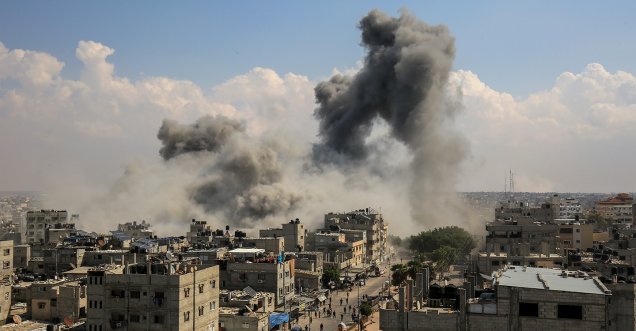
On November 14, 2012, Israeli occupation forces launched a large-scale military assault on the Gaza Strip that lasted eight days. Israel called the operation “Operation Pillar of Defense”, while Hamas and the Izz al-Din al-Qassam Brigades referred to the confrontation as the “Battle of Hijarat al-Sijjil.”
The assault began with the assassination of Ahmed al-Jabari, a senior military commander in the Izz al-Din al-Qassam Brigades, when an Israeli aircraft targeted the vehicle in which he was traveling in Gaza City on the afternoon of November 14.
His assassination marked the beginning of a broad Israeli military campaign that included hundreds of airstrikes, as well as shelling from naval forces and tanks positioned near the borders of the Gaza Strip. Palestinian resistance factions responded with intensive rocket and mortar fire toward military positions, towns, and cities inside Israel (occupied Palestine), with some rockets reaching the Tel Aviv and Jerusalem areas.
The confrontation continued until the evening of November 21, 2012, when an Egyptian-mediated ceasefire agreement came into effect, ending eight days of bombardment and fighting without Israel launching the ground invasion it had threatened during the war.
The Gaza Strip After Operation Cast Lead
The 2012 war came less than four years after the large-scale Israeli war on the Gaza Strip in 2008–2009, known by Israel as “Operation Cast Lead” and by Palestinians as the “Battle of al-Furqan.”
During the years that followed that war, the Gaza Strip remained under a severe Israeli blockade, with extensive restrictions on the movement of people and goods and on the crossings, alongside repeated rounds of Israeli bombardment and Palestinian rocket fire.
Between the end of the 2008–2009 war and November 2012, the United Nations Office for the Coordination of Humanitarian Affairs recorded repeated rounds of military escalation, usually lasting several days before ending through an informal ceasefire or Egyptian mediation.
Over time, the rocket capabilities of Palestinian resistance factions increased, and weapons with a longer range than the locally manufactured Qassam rockets that had been used primarily in earlier years began to appear.
The Escalation Before the War
The escalation of November 2012 did not begin solely with the assassination of Ahmed al-Jabari. It was preceded by weeks of confrontations, airstrikes, and rocket fire.
United Nations data indicated that four major rounds of escalation took place between the beginning of October and November 14, involving Israeli airstrikes and military operations inside the Gaza Strip.
During that period, 23 Palestinians were killed, including seven civilians, while dozens of Palestinians and Israelis were wounded.
The situation escalated significantly on November 10, when a Palestinian group targeted an Israeli military vehicle near the fence surrounding the Gaza Strip with an anti-tank missile, wounding four Israeli soldiers.
Israeli occupation forces responded by shelling locations and areas inside the Gaza Strip. In one incident that same day, four Palestinian civilians, including two children, were killed and more than forty people were wounded. Israeli airstrikes and Palestinian rocket fire continued over the following days, increasing the likelihood of a broader confrontation.
November 14: The Assassination of Ahmed al-Jabari
At approximately 3:45 p.m. on November 14, 2012, an Israeli aircraft targeted a vehicle traveling through Gaza City, killing Ahmed al-Jabari and one of his companions.
Al-Jabari was one of the most prominent commanders of the Izz al-Din al-Qassam Brigades and had played a central role in developing its military structure over many years. He was also one of the key figures associated with the case of Israeli soldier Gilad Shalit and the prisoner exchange carried out in 2011.
Israel regarded his assassination as the official beginning of a military operation it called “Pillar of Defense”, stating that its objectives included weakening the rocket capabilities of Palestinian factions, strengthening Israeli deterrence, and stopping rocket fire from the Gaza Strip.
Hamas and the al-Qassam Brigades, however, regarded al-Jabari’s assassination as a declaration of war, and Palestinian resistance factions began launching intensive waves of rockets and mortar shells within hours.
“Hijarat al-Sijjil”
Hamas and the Izz al-Din al-Qassam Brigades called the confrontation the “Battle of Hijarat al-Sijjil”, a name derived from the Qur’an and presented by the movement in a symbolic context expressing resistance to and response against the assault.
A Large-Scale Air Campaign on the Gaza Strip
From the first hours of the assault, Israeli aircraft carried out dozens of strikes against locations across the Gaza Strip.
During the following days, the campaign expanded to include military positions belonging to Palestinian factions, rocket launch sites, weapons depots, and tunnels, as well as government headquarters, police stations, homes, and civilian residential buildings.
According to the United Nations Office for the Coordination of Humanitarian Affairs, Israeli forces targeted more than 1,500 locations in the Gaza Strip during the eight days, primarily through airstrikes, in addition to shelling by tanks and naval vessels.
Unlike the Israeli war on Gaza in 2008–2009, Israeli occupation forces did not launch a large-scale ground invasion of the Gaza Strip during Operation Pillar of Defense, despite deploying troops around Gaza and threatening to expand the operation into a ground offensive.
Targeting Homes and Residential Areas
The final days of the war witnessed a noticeable increase in attacks on residential buildings, leading to a rise in the proportion of civilian casualties.
The United Nations Office for the Coordination of Humanitarian Affairs documented that the proportion of civilians among those killed increased as the operations continued, while Israeli airstrikes targeted homes in densely populated areas.
One of the most prominent incidents was the bombing of the al-Dalou family home in the al-Nasr neighborhood of Gaza City on November 18.
The strike killed 12 people, including five children and four women. Ten of those killed belonged to the same family, while the other two were neighbors. The Office of the United Nations High Commissioner for Human Rights noted that the home was located in a densely populated area and that the strike occurred without prior warning.
The Resistance Expands the Range of Its Rockets
Palestinian rocket capabilities were one of the most prominent features of the 2012 confrontation.
Alongside continued launches of short-range rockets toward settlements and towns surrounding the Gaza Strip, Palestinian resistance factions used longer-range rockets capable of reaching areas in central occupied Palestine.
During the war, rockets were launched toward Tel Aviv, while others were fired toward the Jerusalem area, with some falling near settlement blocs in the West Bank.
The United Nations reported that one rocket struck Tel Aviv, while another was fired toward Jerusalem and landed in the area of the “Gush Etzion” settlement bloc in the West Bank. Several long-range rockets were also launched toward the Tel Aviv and Jerusalem areas during the war.
This represented a significant development in the rocket capabilities of the Palestinian resistance, as central areas that had previously been relatively beyond the range of rockets launched from Gaza entered the regular range of fire during this period.
Palestinian Casualties
Figures concerning the number of Palestinian martyrs vary depending on the organization collecting the data, the date on which the figures were updated, and the methodology used to determine the cause of death and classify civilians and fighters.
The United Nations Office for the Coordination of Humanitarian Affairs documented 165 Palestinians killed as a result of Israeli attacks during the eight days and stated that 99 of them were civilians, including 33 children and 13 women. The Ministry of Health in Gaza also reported approximately 1,399 Palestinians wounded.
In a later review, the Office of the United Nations High Commissioner for Human Rights recorded 174 Palestinian deaths during the assault and stated that at least 168 were killed as a result of Israeli military operations, including 101 civilians, among them 33 children and 13 women.
The World Health Organization later recorded 182 deaths and 1,399 injuries associated with the events of November, including 47 children among those killed, explaining the differences between casualty figures cited by various sources and during different periods of data collection.
The Threat of a Ground Invasion
As rocket fire continued, Israel deployed troops and armored forces near the borders of the Gaza Strip and prepared for the possibility of launching a large-scale ground invasion.
The possibility of a ground offensive remained prominent during the final days of the confrontation, particularly after warning leaflets were dropped over areas of Gaza and residents were ordered to evacuate certain locations.
However, negotiations led by Egypt succeeded in reaching a ceasefire before a ground invasion similar to the one carried out during the 2008–2009 war could begin. United Nations reports confirm that the eight days of operations remained primarily aerial, naval, and artillery-based and did not include a large-scale Israeli ground invasion.
The Role of Egypt and Mohamed Morsi
Egypt, then led by President Mohamed Morsi, played a central role in mediating between the Israeli occupation, Hamas, and the Palestinian factions.
Intensive negotiations took place in Cairo involving Egyptian, Palestinian, Israeli, and international parties, alongside diplomatic efforts by United Nations Secretary-General Ban Ki-moon and U.S. efforts aimed at supporting a ceasefire agreement.
The Ceasefire Agreement
On the evening of November 21, 2012, a ceasefire agreement was announced in Cairo and entered into force at 9:00 p.m. local time.
The understanding stipulated that Israel would cease all military operations against the Gaza Strip by land, sea, and air, including incursions and the targeting of individuals.
In return, all Palestinian factions were to cease military operations from the Gaza Strip, including rocket fire and attacks along the border.
The agreement also addressed the opening of crossings and facilitation of the movement of people and goods, as well as restrictions on residents’ movement and targeting in border areas, with discussions on the implementation mechanisms for these provisions scheduled to begin twenty-four hours after the ceasefire took effect.
Egypt undertook to obtain guarantees from both sides concerning compliance with the agreement and to follow up on any violations.
November 21: The End of Eight Days of War
At 9:00 p.m. on November 21, the ceasefire came into effect.
Israeli airstrikes and Palestinian rocket fire largely ceased after eight days during which Gaza had been subjected to continuous aerial, naval, and artillery bombardment, while areas inside Israel (occupied Palestine) had come under intensive rocket fire.
The war ended without an Israeli ground invasion and without Israel completely stopping the rocket capabilities of Palestinian factions before the agreement was reached.
The Impact of the Ceasefire on the Blockade
The inclusion of crossings and movement in the November ceasefire agreement was one of the most significant differences from the end of the previous war in 2009, which had concluded through separate unilateral ceasefire declarations without a written agreement between the parties.
Following the 2012 agreement, some areas near the border fence witnessed a limited easing of restrictions on Palestinian access to agricultural land, while certain aspects of the movement of goods were also expanded.
However, the agreement did not bring a complete end to the Israeli blockade, and the crossings, trade, movement of people, and maritime restrictions remained central issues in the years that followed.
Destruction and Displacement
Although the war was shorter than Operation Cast Lead and did not include a ground invasion, eight days of bombardment caused extensive destruction in parts of the Gaza Strip.
An initial United Nations assessment estimated that approximately 450 housing units were destroyed or severely damaged, while around 8,000 homes sustained lighter damage.
At the height of the confrontation, approximately 15,000 people were displaced, including around 12,000 residents of Gaza City and northern Gaza who sought refuge in schools operated by UNRWA and the government.
More from the archive


 Download Our Palestine App
The whole archive in the palm of your hand: depopulated villages, the Nakba, the massacres and Al-Aqsa — free, with no ads to erase the story.
Download Our Palestine App
The whole archive in the palm of your hand: depopulated villages, the Nakba, the massacres and Al-Aqsa — free, with no ads to erase the story.

Comments
No comments yet — be the first to write one.
Add your comment
Name and email are optional. Comments appear after review.