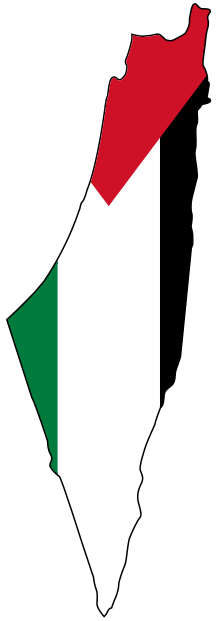
The Israeli War on the Gaza Strip 2008–2009: Operation Cast Lead and the Battle of al-Furqan
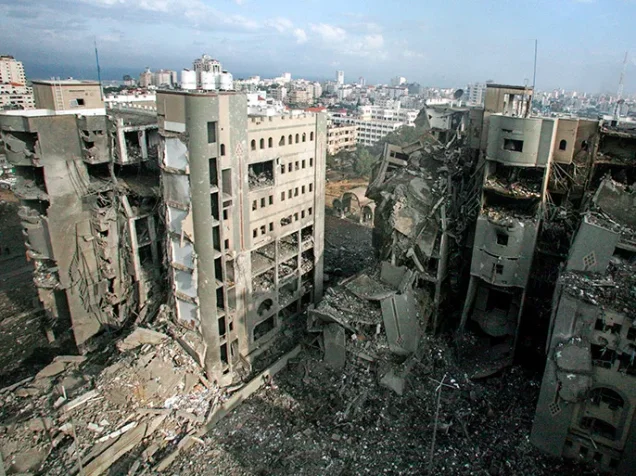
On the morning of December 27, 2008, Israeli occupation forces launched a large-scale military assault on the Gaza Strip, which Israel called “Operation Cast Lead”, while Hamas and the Izz al-Din al-Qassam Brigades referred to the confrontation as the “Battle of al-Furqan.”
The main military operations lasted 23 days, from December 27, 2008, until January 18, 2009. The assault began with an intensive air campaign and developed on January 3 into a large-scale ground invasion supported by tanks, artillery, aircraft, and naval bombardment.
The assault killed more than 1,300 Palestinian martyrs according to United Nations figures, while other Palestinian and UN sources recorded a toll exceeding 1,400 martyrs, in addition to more than 5,000 wounded and widespread destruction of homes, schools, health and economic facilities, and the Gaza Strip’s infrastructure.
The war took place in a territory that had already been under a severe blockade since 2007, meaning that the population, health facilities, and essential services entered the war already suffering shortages of fuel, medicine, construction materials, and basic goods.
From the Israeli Withdrawal to the Blockade
After Israeli settlers and permanent Israeli military forces withdrew from inside the Gaza Strip in 2005, Israel continued to control key aspects of the movement of people and goods, as well as Gaza’s airspace and surrounding waters.
Israel subsequently tightened restrictions on the Strip and imposed a broad blockade on the movement of people and goods, while military confrontations, Palestinian rocket fire, Israeli airstrikes, and assassinations continued.
The United Nations described the blockade and its effects on the civilian population as a form of collective punishment and noted that it had severely weakened Gaza’s economy, health services, water systems, and education sector before the outbreak of the 2008–2009 war.
The June 2008 Ceasefire
On June 19, 2008, an Egyptian-mediated ceasefire came into effect between the Israeli occupation state, Hamas, and Palestinian factions in the Gaza Strip.
The ceasefire resulted in a significant decline in confrontations and rocket fire during the following months. United Nations data recorded a sharp reduction in rockets and mortar shells between July and October.
However, the ceasefire did not end the blockade on the Gaza Strip in the manner Palestinians had demanded, and the crossings and the flow of supplies remained among the principal points of dispute between the parties.
November 4: The Beginning of the Collapse of the Ceasefire
On the night of November 4–5, 2008, Israeli occupation forces carried out a military operation inside the Gaza Strip, stating that its objective was to destroy a tunnel they believed had been prepared for the capture of Israeli soldiers.
Six Palestinians were killed in the operation and seven others were wounded, including two civilians according to a report by the United Nations Office for the Coordination of Humanitarian Affairs.
It was the first major Israeli military operation inside the Gaza Strip since the June ceasefire began, and it was followed by a renewed and increasing launch of rockets and mortar shells by Palestinian factions.
During the following weeks, the period of relative calm gradually collapsed until the ceasefire formally expired on December 19, 2008, amid mutual accusations over responsibility for its failure to be renewed.
December 27: The Beginning of the Assault
At approximately 11:30 a.m. on December 27, 2008, Israeli aircraft launched a sudden and coordinated air campaign against dozens of locations throughout the Gaza Strip.
The strikes targeted police and security facilities, government sites, Hamas headquarters, and other locations and areas throughout the Strip.
The intensity of the attacks during the first hour was unprecedented in the Gaza Strip at the time.
By the afternoon of the following day, Ministry of Health figures cited by the United Nations indicated that approximately 280 Palestinians had been killed and around 900 wounded, making the opening days of the assault among the deadliest in the Palestinian-Israeli conflict in years.
Targeting the Palestinian Police
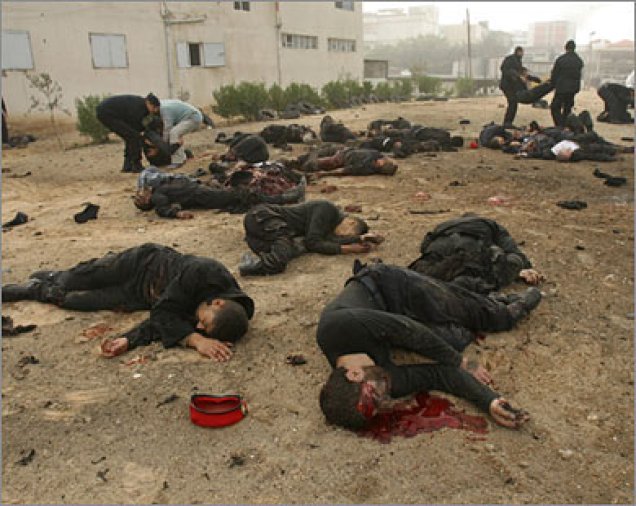
Members of the Palestinian police were among the principal targets of the initial assault.
Israeli occupation forces bombed police headquarters, training centers, and police gatherings, killing large numbers of police officers during the first minutes and hours of the war.
The classification of the police officers who were killed later became a major point of dispute in casualty statistics. Israel classified them as part of Hamas’s military apparatus, while the United Nations Fact-Finding Mission concluded that civilian police officers could not automatically be considered combatants unless evidence demonstrated their direct participation in hostilities.
A Week of Aerial Bombardment
The first phase of the operation lasted approximately one week and relied primarily on airstrikes, artillery fire, and naval bombardment.
During this phase, government buildings, security facilities, homes, mosques, university buildings, factories, tunnels, and sites that Israel said were used by Palestinian factions were targeted.
The bombardment also struck densely populated civilian areas, and the number of civilian casualties and displaced people began to rise rapidly because of the extremely high population density of the Gaza Strip.
January 3: The Ground Invasion Begins
On the evening of January 3, 2009, Israeli occupation forces launched the ground phase of the war and entered the Gaza Strip along several axes in the north and east.
Units from the Golani and Givati Brigades and the Paratroopers Brigade participated in the operations, alongside armored formations, while the air force, attack helicopters, artillery, and navy continued to provide fire support.
Fighting was concentrated in northern and eastern Gaza, the Zeitoun neighborhood, Jabalia, Beit Lahia, and other areas on the outskirts of cities and refugee camps.
Palestinian Resistance During the War
Palestinian resistance factions continued fighting throughout the invasion, led by the Izz al-Din al-Qassam Brigades, the al-Quds Brigades, the Al-Aqsa Martyrs Brigades, the Popular Front for the Liberation of Palestine, and other factions.
The factions used explosive devices, anti-tank weapons, projectiles, and small arms, and engaged Israeli occupation forces along several axes of advance.
Rockets and mortar shells also continued to be launched from the Gaza Strip toward military positions, towns, and cities inside Israel (occupied Palestine) throughout the war.
Some rockets reached areas beyond their previous range, including Beersheba, Ashdod, and other locations, demonstrating the development of the resistance’s rocket capabilities compared with earlier periods.
Reliable international sources did not establish that the Palestinian resistance captured an Israeli soldier during the operation, and therefore this account cannot be presented as a confirmed event.
The Shelling of al-Fakhoura School in Jabalia
On January 6, 2009, Israeli forces shelled an area immediately outside UNRWA’s al-Fakhoura School in Jabalia refugee camp, where hundreds of Palestinians had sought refuge in the school and the surrounding area from the fighting.
Several shells landed around the school and among civilians gathered outside, killing dozens of Palestinians and wounding others.
Initial estimates of the number of martyrs ranged from approximately 30 to more than 40.
Israel initially claimed that its forces had come under mortar fire from the area, while UNRWA stated that no shells had been fired from inside the school itself and that it had previously provided the Israeli army with the coordinates of its facilities.
The Use of White Phosphorus
International human rights organizations documented the use of white phosphorus shells by Israeli occupation forces during the war, including their use over populated areas.
White phosphorus is not absolutely prohibited under international law and may be used for purposes such as creating smoke screens. However, using it in a manner that exposes civilians to disproportionate danger, or firing it indiscriminately over densely populated areas, can constitute a violation of the laws of war.
Human Rights Watch concluded that Israeli forces repeatedly and unlawfully used white phosphorus shells over densely populated civilian areas in Gaza.
Among the most prominent cases documented by the organization was the shelling of the UNRWA headquarters in Gaza City on January 15, where white phosphorus shells caused fires that destroyed warehouses, humanitarian supplies, and medicines while hundreds of civilians were sheltering inside the compound.
The organization also documented white phosphorus falling on an UNRWA school in Beit Lahia on January 17, where approximately 1,600 displaced Palestinians were sheltering. Two children were killed and a number of civilians were wounded.
What About Depleted Uranium?
After the war, allegations emerged that Israeli occupation forces had used munitions containing depleted uranium or other heavy metals.
The United Nations Fact-Finding Mission received reports and allegations concerning such weapons but stated that it was unable to conduct a sufficiently thorough investigation to conclusively confirm or deny their use.
The Attack on the UNRWA Headquarters
On January 15, 2009, UNRWA’s main headquarters in Gaza City came under attack while hundreds of civilians and large quantities of humanitarian aid were inside the compound.
Shells containing white phosphorus caused fires inside the compound and destroyed warehouses containing food, medicines, and humanitarian supplies.
UNRWA stated that its officials were in contact with Israeli forces during the attack and had warned them of the danger posed to civilians and humanitarian stores inside the compound.
The incident became one of the most prominent examples cited by human rights organizations in their criticism of Israel’s use of white phosphorus in civilian areas.
Targeting the Foundations of Civilian Life
The destruction was not limited to homes or areas where fighting was taking place.
Economic and agricultural facilities, factories, water wells, sewage networks, schools, universities, and health facilities suffered extensive damage.
The United Nations Fact-Finding Mission concluded that several important civilian facilities had been destroyed without sufficient military justification in the cases it investigated.
One of the most prominent examples examined by the Mission was the al-Bader flour mill, which was the only operating flour mill in the Gaza Strip at the time. The Mission concluded that its destruction was not justified by military necessity and could amount to a war crime.
The Scale of Destruction
The assault caused widespread destruction of housing and infrastructure.
United Nations assessments after the war indicated that more than 3,400 homes were completely destroyed, while initial Palestinian estimates recorded more than 4,000 housing units destroyed and thousands more damaged.
Hundreds of schools and kindergartens were also damaged. The United Nations documented damage to 280 schools and kindergartens to varying degrees, including 18 educational facilities that were completely destroyed.
Hospitals, primary healthcare centers, industrial and commercial facilities, mosques, government institutions, and water, electricity, and sewage networks were also damaged.
United Nations Security Council Resolution 1860
As the war continued and the number of casualties increased, the United Nations Security Council adopted Resolution 1860 on January 8, 2009.
The resolution called for an immediate, durable, and fully respected ceasefire leading to the full withdrawal of Israeli forces from the Gaza Strip, as well as ensuring the delivery of humanitarian assistance, including food, fuel, and medical treatment, and the sustained reopening of the crossings.
The resolution was adopted by 14 votes in favor, with no votes against, while the United States abstained.
Fighting nevertheless continued for approximately another ten days after the resolution was adopted.
The Goldstone Report and the Investigation of War Crimes
Following the war, the United Nations Human Rights Council established an international fact-finding mission headed by South African judge Richard Goldstone.
The Mission published its report in September 2009 after investigating dozens of incidents and reviewing thousands of documents, testimonies, photographs, and other material.
The report concluded that there was evidence of serious violations of international humanitarian law and international human rights law during Israeli military operations, and that some of the incidents it investigated could amount to war crimes.
The report also examined the firing of unguided rockets by Palestinian factions toward Israeli civilian areas and considered deliberate or indiscriminate attacks against civilians to be violations of international humanitarian law.
Palestinian Casualties
The number of Palestinian martyrs varies according to the organization compiling the data and the methodology used to classify civilians and fighters.
According to the database of the United Nations Office for the Coordination of Humanitarian Affairs, which reviewed the names of victims and cross-checked multiple sources, 1,383 Palestinians were killed, including 333 children and 114 women.
The report of the United Nations Fact-Finding Mission gave a higher figure of 1,434 Palestinians, including approximately 960 civilians.
Palestinian reports and figures from the Ministry of Health in Gaza gave totals of approximately 1,400–1,440 martyrs. For this reason, Palestinian accounts commonly refer to “around 1,400 martyrs” or more, depending on the source and the period in which the figures were compiled.
The number of wounded exceeded 5,300 Palestinians according to the United Nations, including large numbers of children and women, while some of the injured suffered long-term disabilities.
Israeli Casualties
The United Nations documented the deaths of 13 Israelis, including 10 Israeli soldiers killed during the military operations, several of whom were killed by Israeli friendly fire.
January 18: The Ceasefire
On January 17, 2009, the Israeli occupation government announced a unilateral ceasefire that would take effect at 2:00 a.m. on January 18.
Israeli occupation forces remained in positions inside the Gaza Strip during the first hours following the ceasefire.
Later on January 18, Hamas and other Palestinian factions announced a ceasefire of their own and demanded the withdrawal of Israeli forces, the reopening of the crossings, and an end to the restrictions imposed on the Gaza Strip.
The main phase of the war therefore ended after twenty-three days of aerial, ground, and naval bombardment and invasion.
January 21: Completion of the Military Withdrawal
Israeli occupation forces began withdrawing from areas they had entered inside the Gaza Strip following the ceasefire.
In the early hours of January 21, 2009, the United Nations announced that the last Israeli forces had left the interior of the Gaza Strip and redeployed along its borders.
When Palestinians returned to the areas that had been the scene of ground operations, the enormous scale of destruction became clearer in northern and eastern Gaza and in areas of Beit Lahia, Jabalia, Zeitoun, and elsewhere.
The Blockade Prevented Reconstruction
The humanitarian crisis did not end with the conclusion of the military operations.
The Israeli blockade of the Gaza Strip remained in place, and the entry of construction and reconstruction materials continued to be severely restricted.
Months after the war, the United Nations reported that thousands of homes, schools, and facilities that had been destroyed or damaged could not be rebuilt because of restrictions on the entry of cement, steel, and other construction materials.
The destruction caused by the war therefore became part of a longer humanitarian crisis: the direct bombardment had ended, but its consequences remained trapped inside a territory that could not easily rebuild what had been destroyed.
From Operation Cast Lead to Later Wars
The 2008–2009 war represented an important transformation in the nature of the confrontation between Israel and the Gaza Strip following the Israeli withdrawal from inside Gaza in 2005 and Hamas’s takeover of the Strip in 2007.
The war demonstrated that the withdrawal of troops and settlements from inside Gaza had not ended the confrontation or Israeli control over key aspects of life in the Strip, and that blockade, Palestinian rocket fire, Israeli airstrikes, and military operations had become recurring elements of the new relationship between Gaza and Israel.
Operation Cast Lead also became a model for later wars on the Gaza Strip: extensive aerial bombardment, ground operations of varying scale, Palestinian rocket fire, large civilian casualties, widespread destruction of infrastructure, and eventually a ceasefire without a political settlement addressing the underlying causes of the conflict.
Photo gallery
More from the archive


 Download Our Palestine App
The whole archive in the palm of your hand: depopulated villages, the Nakba, the massacres and Al-Aqsa — free, with no ads to erase the story.
Download Our Palestine App
The whole archive in the palm of your hand: depopulated villages, the Nakba, the massacres and Al-Aqsa — free, with no ads to erase the story.

Comments
No comments yet — be the first to write one.
Add your comment
Name and email are optional. Comments appear after review.