The July War of 2006: Israel’s War on Lebanon and Hezbollah
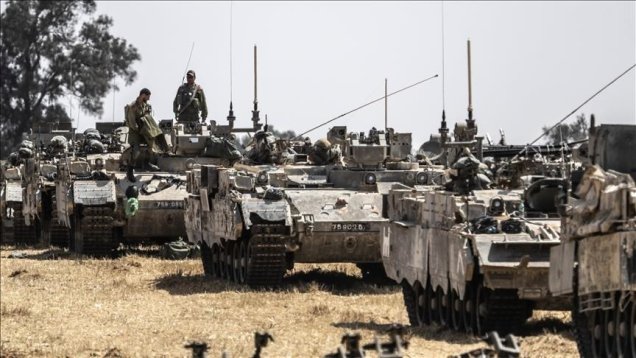
On July 12, 2006, a war lasting thirty-four days erupted between Israel and Hezbollah in Lebanon. Within hours, what had begun as a limited confrontation along the border developed into a large-scale Israeli military campaign involving air, naval, and ground bombardment, a blockade, and attacks across wide areas of Lebanon. Hezbollah responded by firing thousands of rockets at northern Israel (occupied Palestine) and engaging Israeli occupation forces in intense ground battles in southern Lebanon.
In Lebanon and across the Arab world, the conflict became known as the “July War”, while Israel later referred to it as the “Second Lebanon War.” The main combat operations continued from July 12 until the cessation of hostilities came into effect on the morning of August 14, 2006, pursuant to United Nations Security Council Resolution 1701.
From the Israeli Withdrawal of 2000 to the July War
The roots of the 2006 confrontation were connected to the situation that emerged after Israeli occupation forces withdrew from most of southern Lebanon in May 2000, following more than two decades of occupation and confrontation with the Lebanese resistance.
In June 2000, the United Nations confirmed that Israel had fulfilled the withdrawal requirements of Resolutions 425 and 426 according to the line known as the Blue Line. Lebanon and Hezbollah, however, continued to regard the Shebaa Farms as occupied Lebanese territory, while the United Nations treated the area, within the framework of the Blue Line demarcation, as lying outside the Lebanese territory covered by the Israeli withdrawal.
The issue of Lebanese prisoners held in Israeli prisons also remained central to Hezbollah, while limited operations, exchanges of fire, and attempts to capture Israeli soldiers continued after 2000 along the border and in the Shebaa Farms area.
The summer of 2006 therefore began under a fragile calm along the border, while unresolved disputes remained over prisoners, the Shebaa Farms, Hezbollah’s weapons, and the security situation in southern Lebanon.
July 12: The Capture of Two Israeli Soldiers
At approximately nine o’clock on the morning of July 12, 2006, Hezbollah fired rockets and shells toward Israeli positions near the border. At the same time, Hezbollah fighters crossed the Blue Line and attacked an Israeli military patrol.
The attack resulted in the deaths of three Israeli soldiers and the capture of two others, Ehud Goldwasser and Eldad Regev, who were taken into Lebanon.
Israeli occupation forces immediately attempted to pursue the group and recover the two soldiers. An Israeli force entered Lebanese territory, but an explosive device detonated beneath an Israeli tank, killing four soldiers. An eighth soldier was later killed during an attempt to recover the bodies. In total, eight Israeli soldiers were killed during the events of the first day and two were captured.
Hezbollah’s declared objective in capturing the two soldiers was to use them in negotiations for a prisoner exchange that would secure the release of Lebanese prisoners held in Israeli prisons.
From an Attempt to Recover the Soldiers to a Full-Scale War
Israel did not limit its response to the border area or to attempts to recover the captured soldiers.
Within hours, it launched a large-scale military campaign against Lebanon involving its air, naval, and ground forces. The campaign targeted Hezbollah positions as well as an extensive network of Lebanese roads, bridges, facilities, and infrastructure.
A study by the Institute for Palestine Studies indicates that Israel’s strategy during the first stage of the war relied primarily on a large-scale air campaign intended to target Hezbollah’s leadership, military resources, and rocket-launching capabilities, while also applying pressure on the political and social environment surrounding the movement and on the Lebanese government.
The Air War Against Lebanon
On the night of July 12–13, Israeli aircraft expanded their operations, targeting Hezbollah-linked positions, command structures, and facilities in southern Lebanon, Beirut’s southern suburbs, and other areas.
The bombing, however, was not limited to military targets associated with Hezbollah. It struck a wide range of Lebanese infrastructure, including roads, bridges, airports, ports, fuel facilities, and electricity installations.
On July 13, Israeli aircraft bombed the runways of Beirut–Rafic Hariri International Airport, bringing air traffic to a halt. Israel also imposed an air and naval blockade on Lebanon and struck major roads linking Beirut with southern Lebanon and Syria. United Nations reports documented continued large-scale strikes against infrastructure, the airport, roads, and ports during the first days of the war.
The Bombing of the Jiyeh Power Plant and the Oil Disaster
On July 13 and 15, 2006, Israel bombed fuel storage tanks at the Jiyeh power plant south of Beirut.
The attacks caused between 12,000 and 15,000 tons of heavy fuel oil to spill into the Mediterranean Sea, while large additional quantities of fuel burned.
The pollution spread along approximately 150 kilometers of the Lebanese coastline and reached the Syrian coast, creating one of the most serious environmental disasters ever recorded in the eastern Mediterranean.
Hezbollah Responds with Rockets
Hezbollah responded to the Israeli bombardment by increasingly firing rockets at military positions, cities, and towns in northern Israel.
From the first days of the war, the rockets reached areas beyond the immediate border towns. A rocket struck Haifa on July 13, and the city later became a repeated target throughout the conflict.
As Israeli attacks on Lebanon continued, Hezbollah increased both the range and intensity of its rocket fire, reaching Haifa, Tiberias, Afula, and other areas.
According to a United Nations report, approximately 3,970 rockets landed inside Israel during the war, including 901 in urban areas. Rocket attacks and other events of the war killed dozens of Israeli civilians and forced large numbers of residents in northern Israel to leave their homes or spend extended periods in shelters.
The Attack on an Israeli Warship off Beirut
On July 14, 2006, Hezbollah announced that it had targeted an Israeli warship operating off the Lebanese coast.
The Israeli vessel INS Hanit was struck by an anti-ship missile, in a significant military development that demonstrated that Hezbollah possessed capabilities whose extent Israel had not fully assessed before the war.
The strike on the vessel became one of the most prominent events of the first days of the war, alongside Hezbollah’s continued rocket fire on northern Israel.
Air Power Fails to Decide the War
The Israeli leadership initially relied heavily on air power to weaken Hezbollah, destroy its rocket capabilities, and compel it to accept Israeli and international conditions.
However, the continued launching of rockets from southern Lebanon demonstrated that the air campaign alone had failed to stop Hezbollah’s rocket capabilities or destroy its military structure.
As the war continued, Israeli occupation forces gradually expanded their ground operations inside southern Lebanon. The Institute for Palestine Studies has noted that the transition toward a broader ground invasion followed the growing realization that air power alone could not achieve Israel’s military objectives.
Maroun al-Ras and Bint Jbeil
Border towns in southern Lebanon witnessed some of the fiercest battles of the war, particularly Maroun al-Ras and Bint Jbeil.
Israeli forces attempted to seize Hezbollah positions and push its fighters away from the border, but encountered intense resistance inside the towns and on the surrounding hills.
The battles demonstrated the difficulty of translating Israel’s aerial and technological superiority into rapid territorial control, while Hezbollah continued firing rockets toward northern Israel throughout the ground operations.
Qana: Civilians at the Center of the War
On July 30, 2006, Israeli aircraft bombed a residential building in the southern Lebanese town of Qana where civilians had taken shelter.
Initial reports gave higher casualty figures, but subsequent investigations by Human Rights Watch confirmed that 28 people were killed, including 16 children. The attack, known in Lebanon as the “Second Qana Massacre”, became one of the most widely condemned events of the war.
The United Nations Secretary-General and the Security Council called for an end to the violence and the protection of civilians, while the bombing of Qana intensified international pressure for a cessation of hostilities.
Human Losses and Destruction in Lebanon
Lebanon bore the greatest human and material cost of the war.
According to official Lebanese figures cited by the United Nations through the end of August 2006, approximately 1,187 people were killed and more than 4,000 were wounded, while the number of people displaced during the war was estimated at around one million.
Lebanese infrastructure also suffered extensive destruction. The United Nations estimated material damage at approximately $3.6 billion, including the destruction or damage of dozens of bridges, hundreds of kilometers of roads, thousands of homes, factories, electricity and water facilities, and ports.
Following extensive field investigations, Human Rights Watch concluded that the overwhelming majority of Lebanese killed were civilians and documented numerous cases in which it found no clear military objective that could justify the Israeli attacks, concluding that Israel had committed serious violations of the laws of war in a number of operations.
Losses Inside Israel
On the Israeli side, a United Nations report recorded the deaths of 43 Israeli civilians and 117 Israeli soldiers between July 12 and August 14, 2006.
Rocket fire also displaced approximately 300,000 people from northern Israel, while more than one million others were forced to spend periods of time in shelters.
Human rights organizations also documented that some of Hezbollah’s unguided rockets landed indiscriminately or were used against civilian areas, and concluded that deliberate or indiscriminate attacks against civilians violated international humanitarian law.
The Ground Battle and the Attempt to Reach the Litani River
During the final weeks of the war, Israel expanded its ground operations in southern Lebanon and deployed additional forces along several axes in an attempt to control the area extending toward the Litani River and reduce Hezbollah’s ability to launch short-range rockets.
This stage witnessed intense fighting and losses on both sides, particularly around Bint Jbeil, Wadi al-Hujair, and other areas of southern Lebanon.
Fighting continued until the final hours before the cessation of hostilities, while Hezbollah remained capable of launching rockets through the final days of the war.
The Lebanese Government’s Seven-Point Plan
As the war continued, Lebanese Prime Minister Fouad Siniora presented a seven-point plan aimed at resolving the crisis.
The plan included addressing the issue of Lebanese and Israeli prisoners, the withdrawal of Israeli forces behind the Blue Line, the extension of Lebanese state authority over the south through the Lebanese Armed Forces, the strengthening of the United Nations Interim Force in Lebanon (UNIFIL), and addressing the Shebaa Farms issue within an international framework.
Elements of the plan became an important basis for the international negotiations that later led to United Nations Security Council Resolution 1701.
United Nations Security Council Resolution 1701
On August 11, 2006, the United Nations Security Council unanimously adopted Resolution 1701.
The resolution called for a full cessation of hostilities, based particularly on Hezbollah ending all attacks and Israel ending all offensive military operations.
It also called for the deployment of the Lebanese Armed Forces and an expanded UNIFIL force in southern Lebanon in parallel with the withdrawal of Israeli forces, and increased the maximum authorized strength of UNIFIL to 15,000 troops.
The resolution also called for there to be no armed personnel, assets, or weapons in the area between the Blue Line and the Litani River other than those of the Lebanese government and UNIFIL, and called for outstanding issues, including prisoners and the Shebaa Farms, to be addressed.
August 14: The Cessation of Hostilities
The cessation of hostilities came into effect on the morning of August 14, 2006, after thirty-four days of war.
The Lebanese Armed Forces began deploying extensively in southern Lebanon for the first time in decades, alongside the reinforcement of UNIFIL and the gradual withdrawal of Israeli forces to positions behind the Blue Line.
Hundreds of thousands of Lebanese returned within days to the towns and villages from which they had been displaced, despite widespread destruction and the presence of unexploded ordnance across southern Lebanon.
Did Israel Achieve Its War Objectives?
Recovering the two captured soldiers, weakening Hezbollah, and pushing it away from the border were among Israel’s principal stated objectives during the war.
Israel, however, failed to recover the two soldiers through military force, and Hezbollah’s rocket fire did not cease completely before the cessation of hostilities.
At the same time, Resolution 1701 changed the security arrangement in southern Lebanon through the deployment of the Lebanese Armed Forces and an expanded UNIFIL presence south of the Litani River, while Hezbollah’s overt military presence near the Blue Line was reduced compared with the situation before the war.
The outcome therefore remained contested. Hezbollah presented its survival, Israel’s failure to destroy its military capabilities, and Israel’s inability to recover the captured soldiers as a “victory”, while Israel emphasized the removal of Hezbollah’s overt military infrastructure from the immediate border area and the new security arrangements established under Resolution 1701.
The Two Captured Soldiers After the War
The fate of Ehud Goldwasser and Eldad Regev was not resolved during the July War.
Nearly two years later, on July 16, 2008, Hezbollah handed over their bodies to the International Committee of the Red Cross as part of a prisoner exchange with Israel. Under the agreement, Lebanese prisoners, including Samir Kuntar, were released, while the remains of a large number of Lebanese and Palestinians were also returned.
The issue that had begun with the capture of the two soldiers on July 12, 2006, and served as the immediate trigger for the war therefore ended through a prisoner exchange after Israeli military operations had failed to recover them.
More from the archive


 Download Our Palestine App
The whole archive in the palm of your hand: depopulated villages, the Nakba, the massacres and Al-Aqsa — free, with no ads to erase the story.
Download Our Palestine App
The whole archive in the palm of your hand: depopulated villages, the Nakba, the massacres and Al-Aqsa — free, with no ads to erase the story.
Comments
No comments yet — be the first to write one.
Add your comment
Name and email are optional. Comments appear after review.