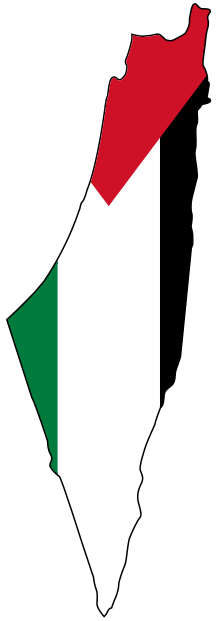
The Withdrawal of Israeli Occupation Forces from the Gaza Strip in 2005
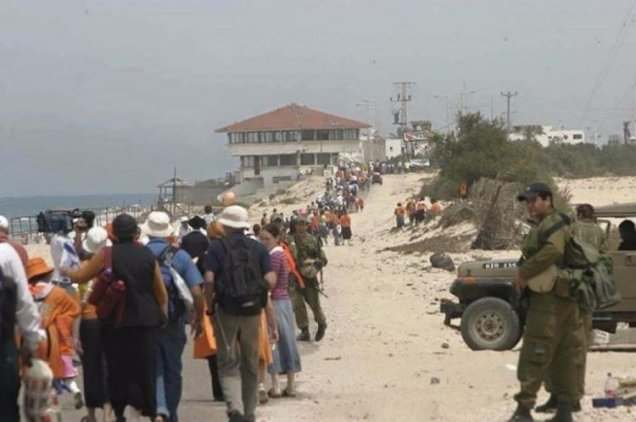
At dawn on September 12, 2005, the last Israeli occupation soldiers left the Gaza Strip, ending the permanent Israeli military and settlement presence inside the Strip after 38 years of occupation that began in 1967.
The withdrawal came several weeks after the evacuation of all Israeli settlements established inside the Gaza Strip, marking the first complete evacuation of settlements and permanent Israeli military forces from part of the Palestinian territory occupied in 1967.
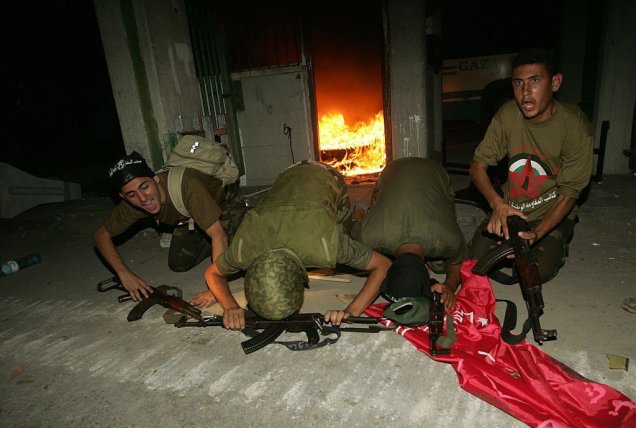
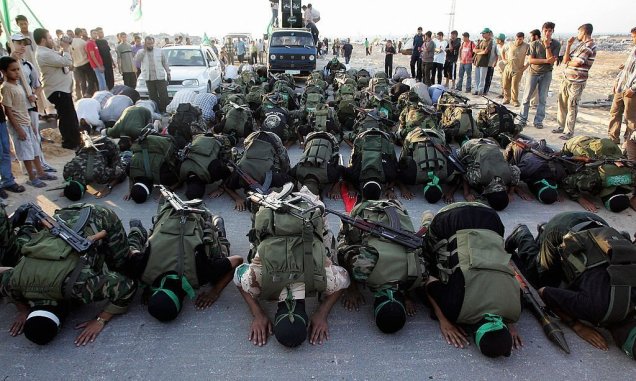
In Palestinian memory and narrative, the withdrawal became closely associated with the steadfastness and resistance of the Palestinian people during the Al-Aqsa Intifada, which lasted approximately five years and witnessed a major development in Palestinian resistance methods—from popular confrontations, armed clashes, martyrdom operations, and other specialized operations, to attacks on military positions and settlements, ambushes against Israeli occupation forces, and eventually the development of local Palestinian military manufacturing and locally produced rockets in the Gaza Strip.
The Israeli government headed by Ariel Sharon, however, officially presented the move as a “Disengagement Plan”, a unilateral initiative that was not implemented as part of a final peace agreement with the Palestinians.
The Gaza Strip Under Occupation and Settlement
Israel occupied the Gaza Strip in June 1967 and, over the following decades, established a network of settlements, military positions, and roads that divided the territory and directly affected the lives of its Palestinian population.
The largest settlement bloc inside the Gaza Strip was Gush Katif in the southern part of the Strip, alongside other settlements in central and northern Gaza.
By 2005, approximately 8,000 settlers lived in 21 Israeli settlements inside the Gaza Strip, amid a Palestinian population of more than 1.3 million.
The settlements occupied extensive areas of land and were connected by roads and Israeli military positions that imposed severe restrictions on Palestinian movement, particularly in areas such as al-Mawasi and the southern Gaza Strip.
The Al-Aqsa Intifada and the Development of Resistance in Gaza
The Al-Aqsa Intifada erupted in September 2000 following the visit of then Israeli opposition leader Ariel Sharon to the Haram al-Sharif, and the subsequent use of force and live ammunition by Israeli occupation forces against Palestinian demonstrators.
The Gaza Strip quickly became one of the main arenas of the Intifada.
The Strip witnessed repeated confrontations around Israeli settlements and military positions, as well as armed operations carried out by Palestinian resistance factions against Israeli occupation forces and settlers.
During the years of the Intifada, the military capabilities of Palestinian factions gradually developed, moving from direct armed clashes, light weapons, and explosive devices to raids on military positions and settlements, tunnel operations, ambushes, and the development of locally manufactured Palestinian rockets.
Israeli military positions and settlements spread throughout the Gaza Strip became an increasing security burden, requiring extensive military deployment to protect a relatively small settler population amid a densely populated Palestinian territory.
Resistance and the Withdrawal
Palestinian factions and broad sectors of Palestinian society viewed the decision to withdraw as a practical acknowledgment of the occupation’s failure to consolidate its settlement and military presence inside the Gaza Strip.
Palestinian resistance movements presented the withdrawal as a direct result of the years of the Al-Aqsa Intifada and military operations that increased the cost of protecting Israeli settlements and occupation forces inside the Strip.
The assertion that “the resistance forced the occupation to withdraw from Gaza” became one of the most prominent Palestinian narratives accompanying the withdrawal and the celebrations of September 2005.
The Israeli decision, however, had multiple explanations. Alongside the impact of Palestinian resistance and the deteriorating security situation, Israeli political, demographic, and military considerations also concerned the cost of maintaining a relatively small settler population inside an extremely densely populated Palestinian area.
Sharon: From the Al-Aqsa Visit to the Decision to Withdraw
Ariel Sharon, whose September 2000 visit to the Haram al-Sharif was associated with the immediate spark of the Al-Aqsa Intifada, later became the Israeli prime minister who decided to implement the unilateral withdrawal from the Gaza Strip.
After being elected prime minister in February 2001, Sharon led one of the most violent phases of the military confrontation. His years in office witnessed incursions, assassinations, sieges, the reoccupation of Palestinian cities in the West Bank, and the construction of the wall.
In 2003, however, Sharon began publicly advancing the idea of “disengagement” from the Palestinians, and during 2004 the idea developed into a formal plan to evacuate all Israeli settlements inside the Gaza Strip and four settlements in the northern West Bank.
The Unilateral Disengagement Plan
The Disengagement Plan was not the result of Palestinian-Israeli negotiations toward a final agreement.
Rather, the Sharon government announced it unilaterally and officially justified it as a means of changing the security and political reality and reducing direct friction with the Palestinian population.
The plan called for the evacuation of all Israeli settlements inside the Gaza Strip and the withdrawal of the permanent military forces protecting them, along with the evacuation of four small settlements in the northern West Bank.
At the same time, the Israeli plan stated that Israel would continue to maintain security control over the external perimeter of the Gaza Strip, its airspace, and its territorial waters, while also maintaining settlement activity in other parts of the West Bank.
For this reason, Palestinians did not view the plan as an alternative to ending the occupation or establishing a Palestinian state, but rather as a partial withdrawal from one area while occupation and Israeli control continued across the rest of the Palestinian territories.
The Evacuation of 21 Settlements
Israel evacuated all 21 settlements it had established inside the Gaza Strip.
Approximately 8,000 settlers lived in these settlements before the withdrawal, in addition to thousands of Israeli activists, some of whom entered the Gaza Strip during the evacuation period to protest the plan.
The evacuated settlements included the Gush Katif bloc in the southern Gaza Strip, as well as settlements such as Netzarim, Kfar Darom, Morag, Nissanit, and Dugit, among others.
At the same time, four Israeli settlements in the northern West Bank were evacuated: Ganim, Kadim, Homesh, and Sa-Nur.
The Demolition of Settlement Buildings
After the settlers were evacuated, Israeli forces began dismantling and demolishing most of the residential buildings inside the settlements.
Israeli bulldozers were used to remove thousands of buildings and homes before the forces withdrew.
Not all structures were demolished. Some public and commercial facilities and agricultural greenhouses remained, while synagogues were left standing after the Israeli government decided not to demolish them.
International institutions and Palestinians later dealt with the enormous quantities of rubble left behind by the demolition of the settlements.
September 12, 2005: The Departure of the Last Soldier
After the evacuation of the settlers and the demolition of most settlement structures had been completed, Israeli occupation forces began their gradual withdrawal from military positions inside the Gaza Strip.
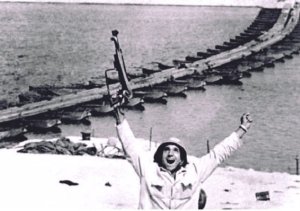
In the early hours of September 12, 2005, the last Israeli soldiers left the Gaza Strip through the Kissufim crossing.
At approximately seven in the morning, Israel announced that the withdrawal of its military forces and equipment from inside the Gaza Strip had been completed.
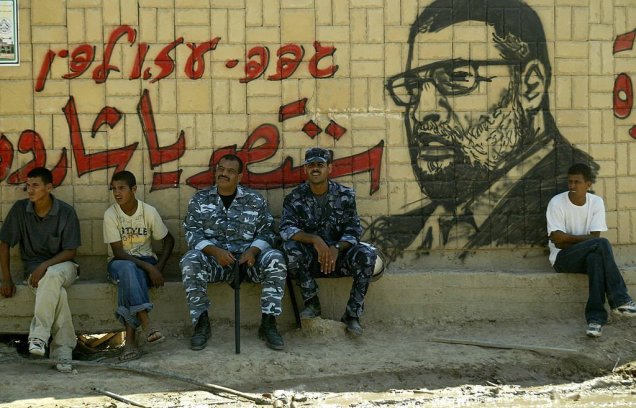
Palestinian security forces began entering the areas and former settlements evacuated by the occupation, followed by tens of thousands of Palestinian civilians who came out to celebrate the end of the permanent Israeli military and settlement presence inside Gaza.
Palestinian Celebrations
The Gaza Strip witnessed widespread popular celebrations that day.
Palestinian flags and the flags of Palestinian factions were raised at sites that had for years been Israeli settlements and military bases, while Palestinians entered areas that had previously been forbidden to them or accessible only through Israeli military checkpoints.
The moment acquired enormous symbolic significance, as Palestinians witnessed for the first time the removal of all settlements and the withdrawal of permanent Israeli military forces from an entire part of the Palestinian territory occupied in 1967.
For the Palestinian resistance factions, the images of Israeli soldiers and settlers leaving became evidence that the occupation could be forced to retreat under the pressure of steadfastness and resistance.
Changes to Daily Life Inside the Gaza Strip
The withdrawal produced an immediate and tangible change in freedom of movement within the Gaza Strip.
Internal checkpoints and military positions that had divided the Strip and obstructed Palestinian movement between its northern and southern areas were removed, while areas such as al-Mawasi and the former settlement zones became more widely accessible to the Palestinian population.
United Nations reports indicated that the end of the permanent Israeli military presence inside the Strip resulted in a significant improvement in Palestinians’ internal freedom of movement during the first days after the withdrawal.
Was the Gaza Strip Fully Liberated?
Despite the withdrawal of the settlers and permanent Israeli ground forces from inside the Gaza Strip, the legal and political status of the territory remained disputed.
Israel declared that the withdrawal had ended its occupation of the Gaza Strip and argued that there was no longer a basis for considering Gaza occupied after the removal of the settlements and permanent military forces from inside the territory.
This position, however, was not accepted by the United Nations, the International Committee of the Red Cross, or many experts in international law.
Israel continued to exercise control over Gaza’s airspace, territorial waters, most crossings, and the movement of people and goods. It also retained decisive influence over the population registry, infrastructure networks, and its ability to conduct military operations inside the Strip.
For this reason, international institutions continued to regard the Gaza Strip as part of the Occupied Palestinian Territory, applying the criterion of effective control rather than relying solely on the permanent physical presence of military forces inside the territory.
A distinction must therefore be made between the end of Israeli settlement and the permanent Israeli military presence inside Gaza in September 2005 and the achievement of full Palestinian sovereignty, which the withdrawal did not bring about.
The Rafah Crossing and Control of the Borders
The Rafah Crossing with Egypt became one of the most important issues following the withdrawal.
In November 2005, a Palestinian-Israeli Agreement on Movement and Access was reached, allowing the Rafah Crossing to reopen under Palestinian Authority management with European Union monitors and special security arrangements.
Movement into and out of the Gaza Strip nevertheless remained subject to external restrictions and arrangements, and Gaza did not acquire full and independent sovereignty over its borders, airspace, or territorial waters.
The Gaza Withdrawal and the Continuation of Settlements in the West Bank
While Israel evacuated 21 settlements from the Gaza Strip and four settlements from the northern West Bank, the overwhelming majority of Israeli settlements in the West Bank and occupied East Jerusalem remained in place, and some continued to expand.
Sharon’s plan itself stated that Israel expected to retain large settlement areas in the West Bank under any future political settlement.
Palestinians therefore viewed the Gaza withdrawal not as the dismantling of the settlement project as a whole, but as a geographic redeployment that ended settlement inside the Gaza Strip while the settlement project continued in the West Bank and Jerusalem.
The Withdrawal and the Results of the Al-Aqsa Intifada
The withdrawal came at the end of one of the most violent periods of the conflict since the 1967 occupation.
During the Al-Aqsa Intifada, Palestinians suffered enormous human and material losses, while cities, villages, and refugee camps were subjected to repeated invasions, sieges, and assassinations. The Gaza Strip likewise experienced extensive Israeli military operations and widespread destruction of homes, land, and infrastructure.
At the same time, the ability of the Palestinian resistance to target Israeli military positions and settlements inside the Gaza Strip developed significantly, making the continuation of Israel’s military and settlement deployment there increasingly costly and complicated.
For this reason, the withdrawal remained closely connected in Palestinian consciousness with the Al-Aqsa Intifada and the resistance, even though the Israeli calculations behind the decision also included broader security, political, and demographic considerations.
A Unilateral Withdrawal, Not a Peace Agreement
One of the defining characteristics of the 2005 withdrawal was that it did not result from a peace treaty or final-status negotiations between Israel and the Palestine Liberation Organization.
Sharon chose to implement it unilaterally, without reaching an agreement on the Palestinian state, Jerusalem, refugees, borders, or Israeli settlements in the West Bank.
Israel therefore withdrew its settlements and permanent military positions from inside the Gaza Strip, while the fundamental issues of the Palestinian-Israeli conflict remained unresolved.
After the Withdrawal
The September 2005 withdrawal did not lead to a prolonged period of stability.
Less than two weeks later, military confrontation resumed between Palestinian factions and Israel, and Israeli occupation forces carried out military operations and strikes against the Gaza Strip following Palestinian rocket fire.
In January 2006, Hamas won a majority of seats in the Palestinian Legislative Council. The Palestinian political arena subsequently entered a severe internal crisis that culminated in Hamas taking control of the Gaza Strip in June 2007 and the emergence of a Palestinian political and geographic division.
Israel subsequently imposed severe restrictions and a tightened blockade on the Gaza Strip, and the territory entered successive cycles of war and military escalation.
The Palestinian Significance of the Withdrawal
The withdrawal of Israeli occupation forces from inside the Gaza Strip acquired major significance in Palestinian national memory.
Many Palestinians viewed it as the first experience in which all Israeli settlements were dismantled and the permanent Israeli military presence was removed from an entire Palestinian area after years of steadfastness and resistance.
The withdrawal also gave a substantial political and popular boost to Palestinian factions, particularly those that had adopted armed resistance during the Al-Aqsa Intifada, which presented it as evidence that the occupation could be forced to withdraw under pressure rather than through negotiations alone.
At the same time, the developments that followed demonstrated that removing settlements and permanent military forces from inside the Strip was not sufficient by itself to achieve liberation and sovereignty as long as control over borders, airspace, territorial waters, and movement remained largely outside Palestinian control.
Photo gallery
More from the archive


 Download Our Palestine App
The whole archive in the palm of your hand: depopulated villages, the Nakba, the massacres and Al-Aqsa — free, with no ads to erase the story.
Download Our Palestine App
The whole archive in the palm of your hand: depopulated villages, the Nakba, the massacres and Al-Aqsa — free, with no ads to erase the story.

Comments
No comments yet — be the first to write one.
Add your comment
Name and email are optional. Comments appear after review.