The First Intifada: The Intifada of Stones, 1987–1993
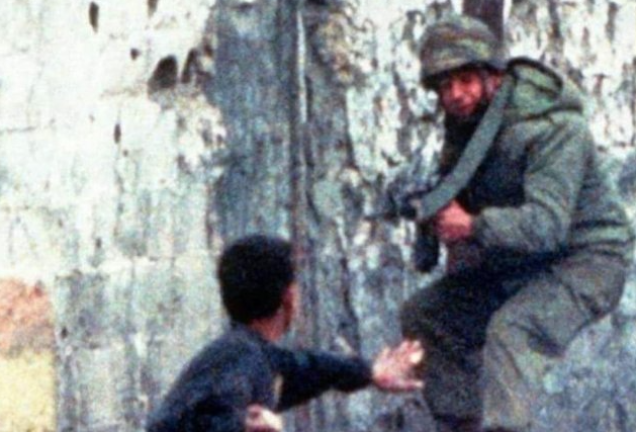
The First Palestinian Intifada: The Intifada of Stones, 1987–1993
The First Palestinian Intifada, widely known as the “Intifada of Stones”, was a broad Palestinian popular uprising against the Israeli occupation. It began in December 1987 and continued, with varying levels of intensity, until the political transition associated with the Oslo process in 1993.
The Intifada began in the Gaza Strip and quickly spread to the West Bank, including East Jerusalem. It reshaped Palestinian political and social life and brought the reality of Israeli military occupation before international public opinion on an unprecedented scale.
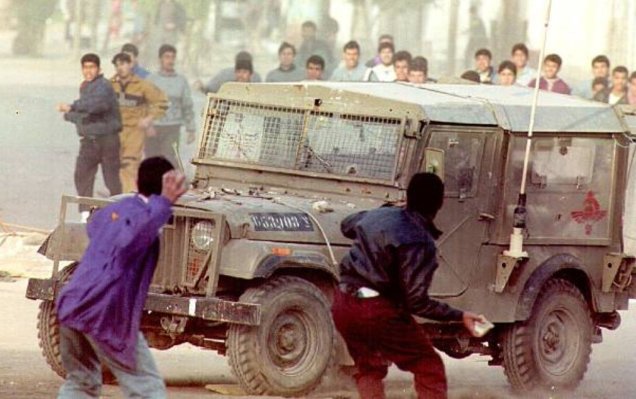
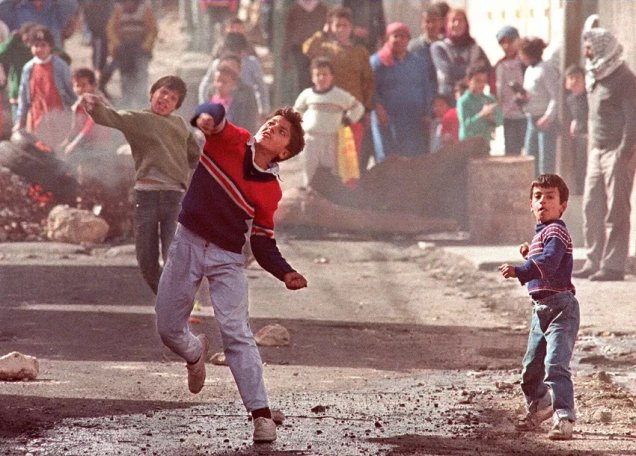
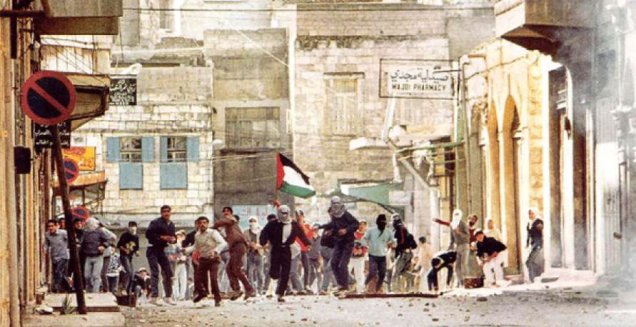
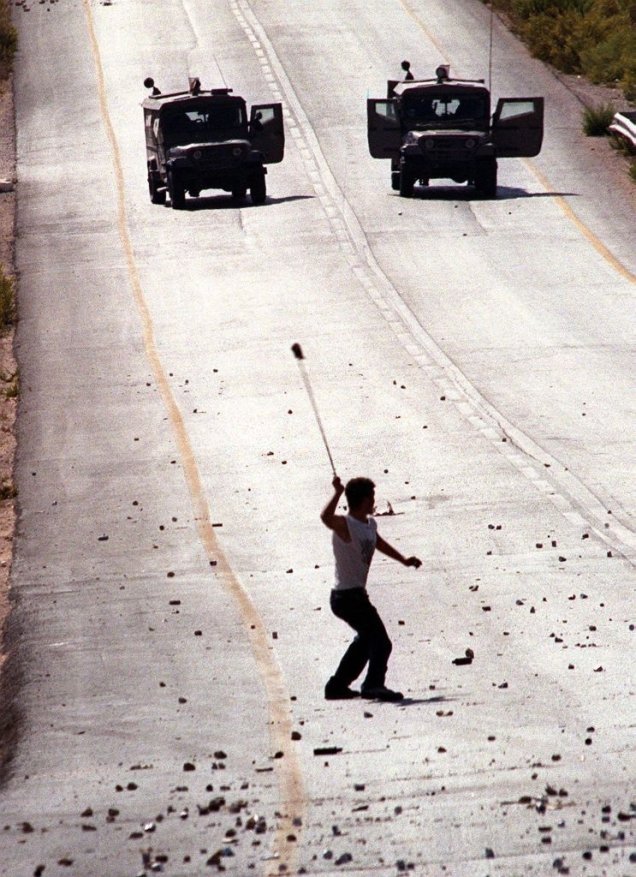
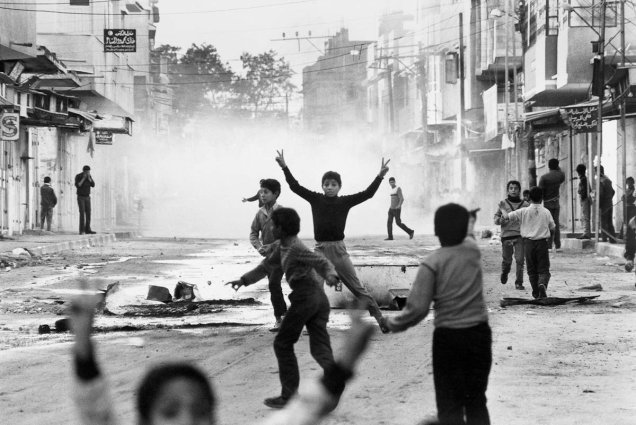
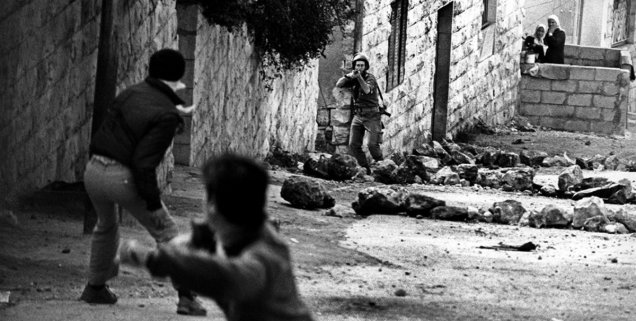
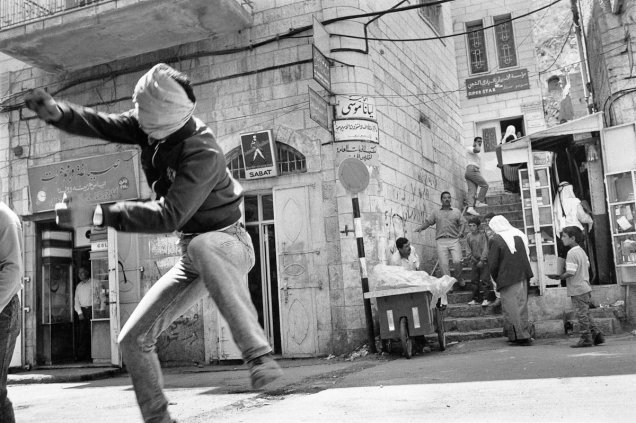
The Intifada became known for its broad popular character. The image of Palestinian youths confronting Israeli occupation soldiers with stones became its most enduring symbol, but the uprising extended far beyond street confrontations.
It included general strikes, commercial shutdowns, boycotts of Israeli products, refusal to pay taxes, demonstrations, barricades, alternative popular education, agricultural cooperatives, local committees, underground political organization, and extensive forms of civil disobedience.
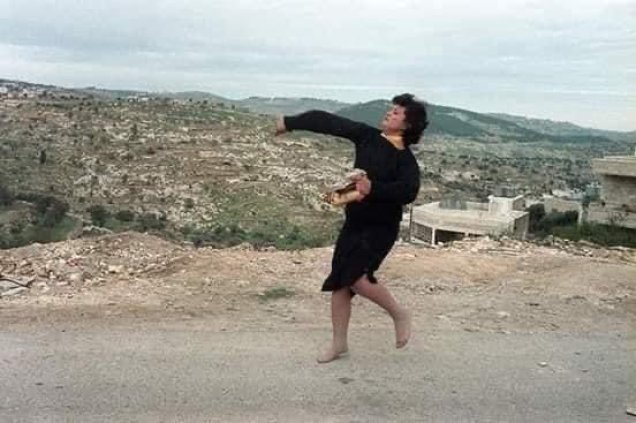
Women, workers, students, teachers, merchants, farmers, professionals, and refugees all participated, while entire villages, cities, and refugee camps became arenas of popular action and community organization.
The Intifada erupted spontaneously in its first moments, but it quickly developed its own local and national organizational structures, becoming one of the most important periods of popular mobilization in modern Palestinian history.
Nearly Forty Years Since the Nakba and Twenty Years Since the 1967 Occupation
By December 1987, Palestinians in the West Bank, including East Jerusalem, and the Gaza Strip had lived under Israeli occupation for more than twenty years.
Since the occupation of the remaining parts of Palestine in 1967, Israeli settlements had expanded, Palestinian land had been confiscated, military systems had been imposed to control movement and public life, Palestinian activists had been subjected to arrest and deportation, homes had been demolished, and large areas of Palestinian economic, political, and administrative life had been subordinated to the occupation authorities.
In the Gaza Strip, refugee camps suffered from severe overcrowding, opportunities for work and development were limited, and large sections of the population lived under difficult social and economic conditions.
These conditions did not begin in December 1987.
During the preceding years, universities, labor unions, women’s organizations, student movements, professional associations, voluntary work committees, and Palestinian political factions had built an increasingly active network of civil and political organization inside the occupied territory.
Demonstrations, strikes, arrests, confrontations, and the killing of Palestinians by Israeli occupation forces also increased during 1986 and 1987.
The Intifada was therefore spontaneous in the moment of its outbreak, but it emerged from a long accumulation of resistance to occupation and popular rejection of its policies.
The Spark: December 8, 1987
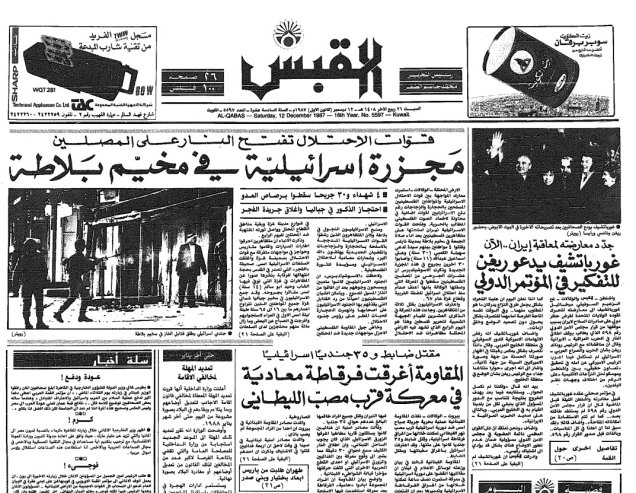
On December 8, 1987, an Israeli occupation army tank transporter collided with Palestinian vehicles carrying workers returning from their jobs near the Erez crossing in the northern Gaza Strip, known to Palestinians as the Beit Hanoun checkpoint.
Four Palestinian workers were killed in the collision. News of their deaths spread rapidly throughout the Gaza Strip, particularly in Jabalia refugee camp. Among sections of the Palestinian population, a belief spread that the collision had been a deliberate act of retaliation for the killing of an Israeli in Gaza two days earlier.
December 9: The Intifada Erupts in Jabalia
On December 9, 1987, large demonstrations took place in Jabalia refugee camp during the funerals of the four workers.
Palestinian youths confronted Israeli occupation forces with stones and other simple means. During the confrontations, Israeli occupation soldiers opened fire. Seventeen-year-old Hatem al-Sisi was shot in the heart and killed. His death intensified the protests. Within days, demonstrations spread from Jabalia refugee camp throughout the Gaza Strip, and then into the West Bank, East Jerusalem, refugee camps, villages, towns, and Palestinian cities.
For this reason, December 9, 1987 is the date most commonly recognized as the beginning of the First Palestinian Intifada, although some Palestinian interpretations connect its beginning to confrontations and events that preceded that date.
Why Was It Called the “Intifada of Stones”?
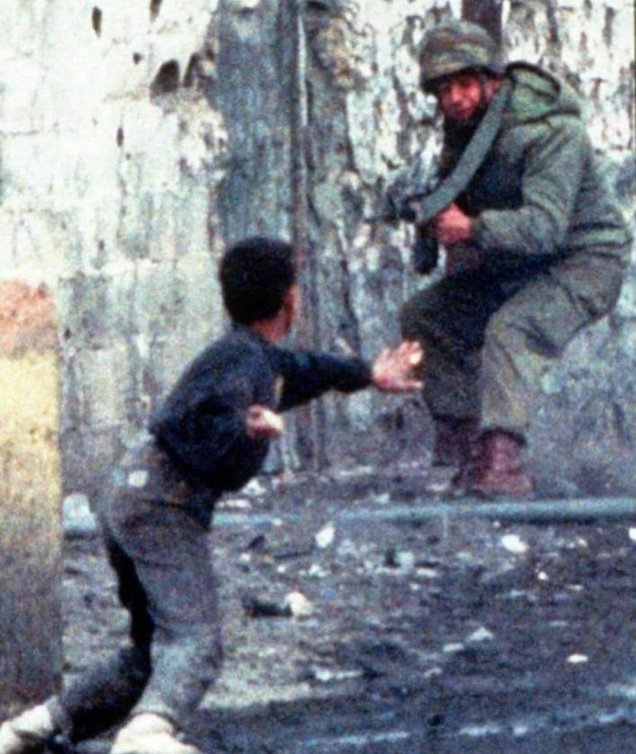
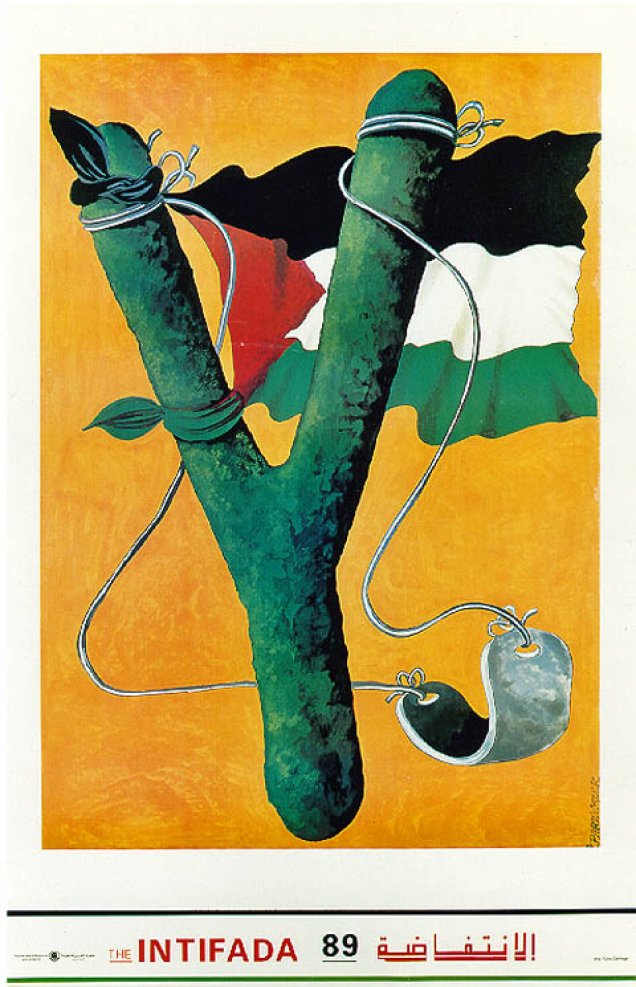
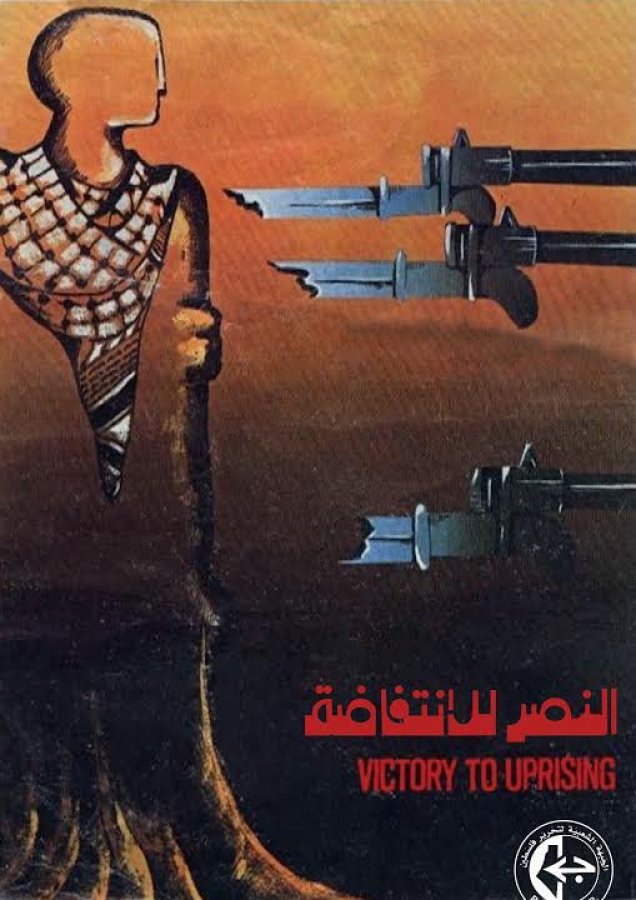
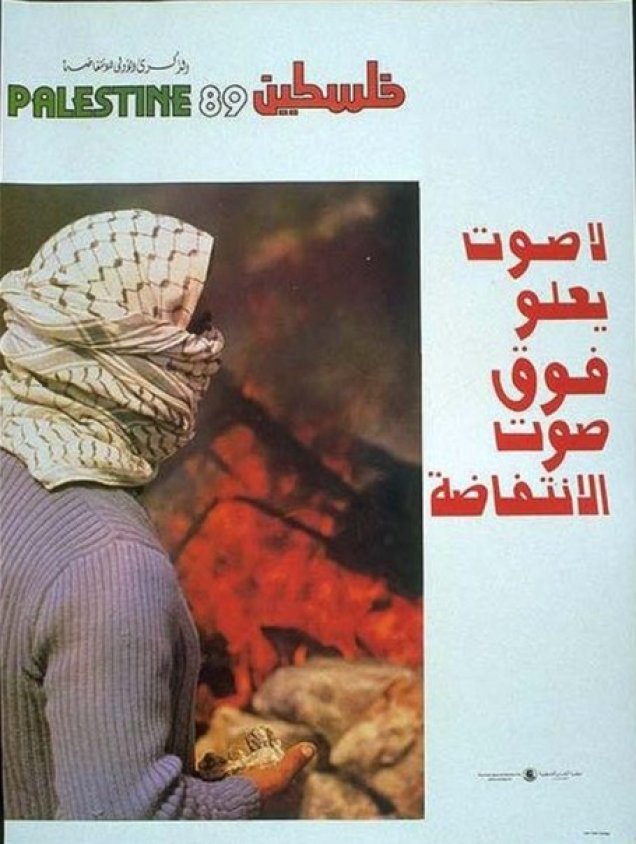
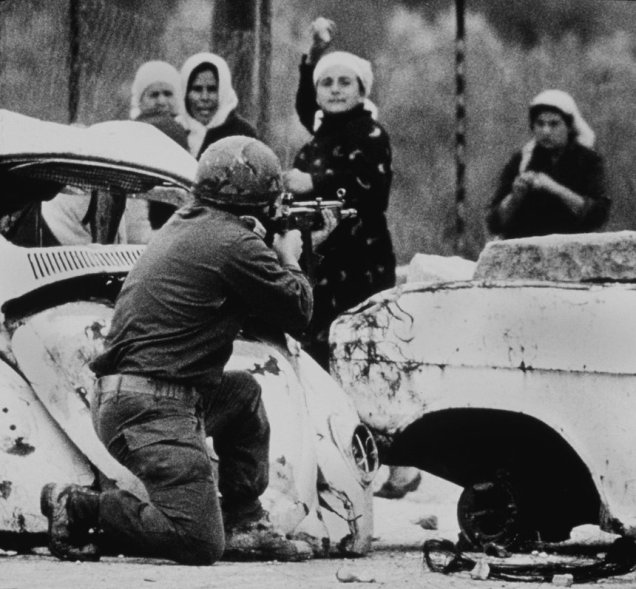
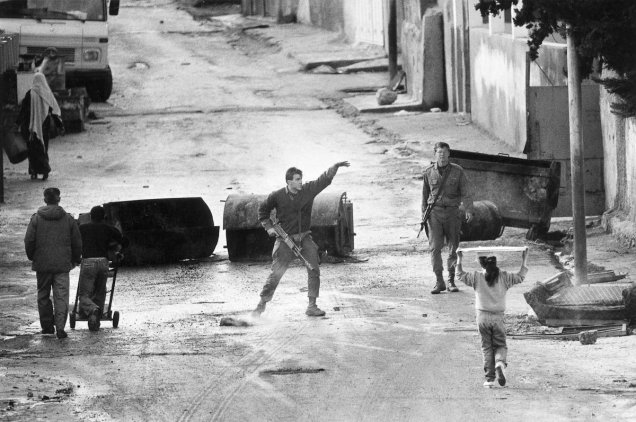
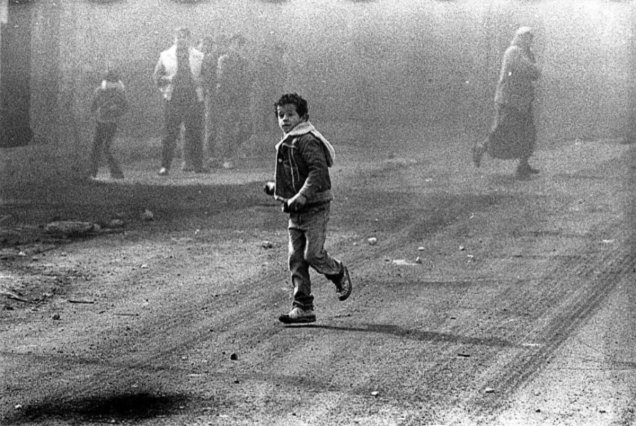
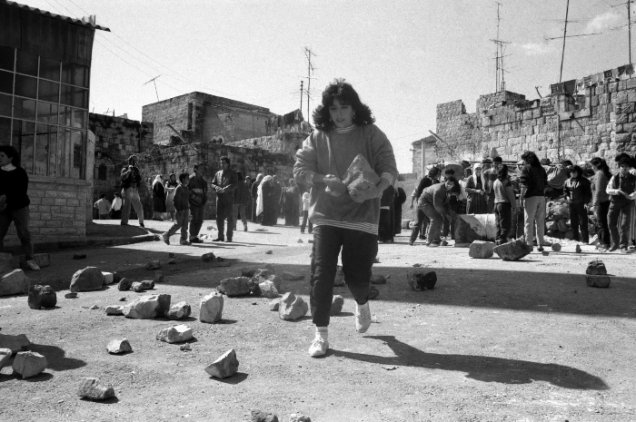
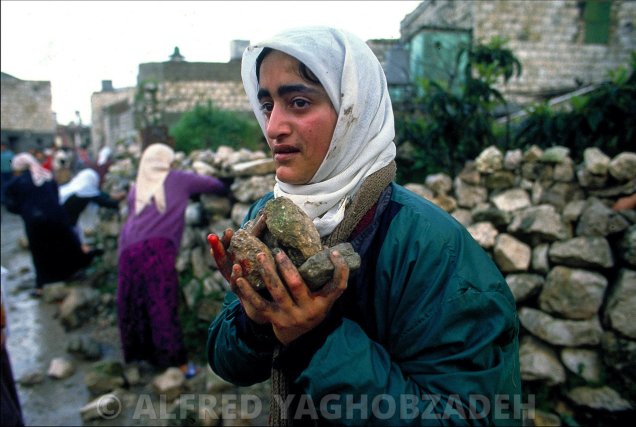
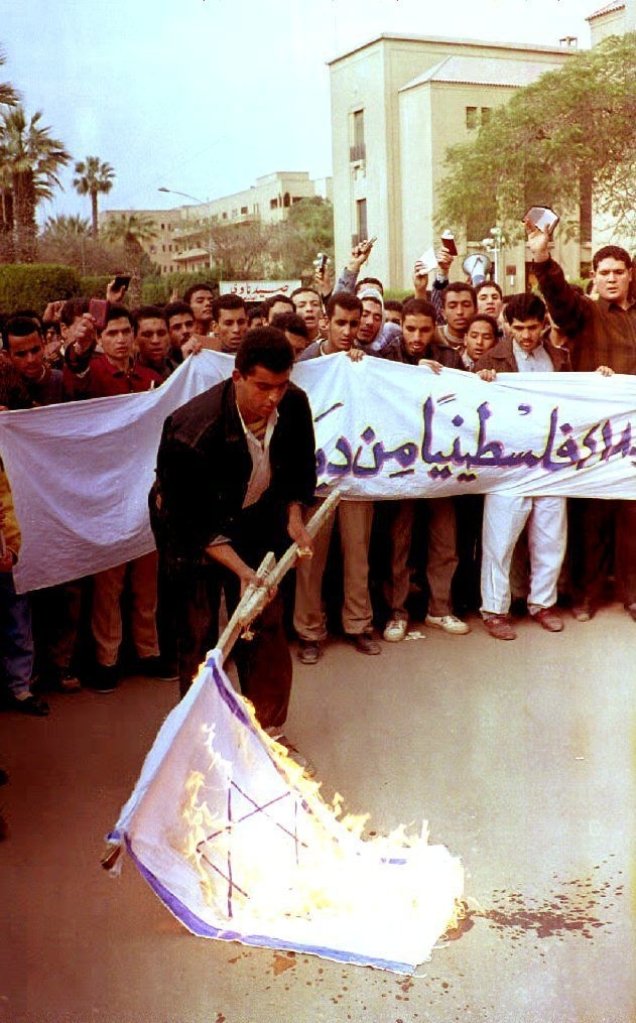
Stones became the most famous symbol of the Intifada. Images circulated around the world of Palestinian youths and children confronting Israeli occupation forces with stones. The imbalance of power became one of the defining elements of the uprising’s image: a population living under military occupation confronting soldiers, rifles, military vehicles, and tear gas with what was available in the streets. Yet the term “Intifada of Stones” can sometimes obscure the much broader nature of the uprising.
The stone was one method of confrontation, while the Intifada was also, at its core, a broad movement of economic, social, political, and civil resistance.
Forms of Palestinian Resistance
Palestinian communities developed a wide range of methods to confront the occupation and reduce Palestinian society’s dependence on its institutions. These included:
- Demonstrations and stone throwing at Israeli occupation soldiers and military vehicles.
- Building barricades, burning tires, and obstructing military patrols.
- Using Molotov cocktails in some confrontations.
- General strikes and partial commercial strikes.
- Boycotting Israeli products and encouraging Palestinian products.
- Refusing to pay taxes to the occupation authorities.
- Palestinians resigning from institutions and structures linked to the occupation administration.
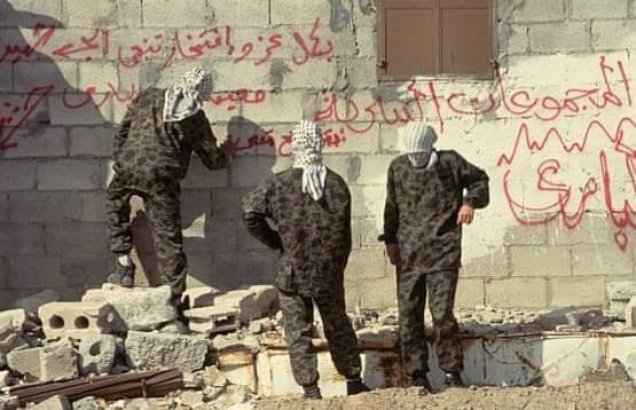
- Writing political slogans and raising the Palestinian flag despite restrictions imposed by the occupation authorities.
- Establishing popular committees for health, supplies, agriculture, education, and local security.
- Organizing alternative and underground education after schools and universities were closed.
- Organizing women, workers, students, professionals, and farmers within frameworks of popular resistance.
The Intifada therefore did not seek only to confront occupation forces in the streets, but also to reduce Palestinian dependence on the institutions through which the occupation system was administered.
From a Spontaneous Outburst to an Organized Uprising
The first demonstrations did not begin on the orders of the PLO leadership abroad. They erupted locally and unexpectedly.
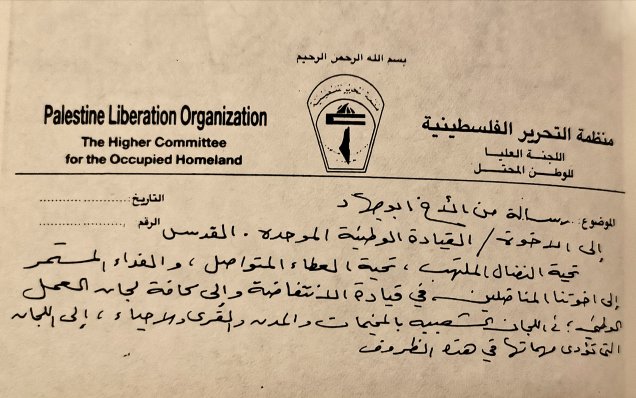
Within a few weeks, however, political cadres inside the occupied Palestinian territory began to form a clandestine framework capable of coordinating protests across different regions. This became known as the Unified National Leadership of the Uprising.
Its core consisted of local representatives of Fatah, the Popular Front for the Liberation of Palestine, the Democratic Front for the Liberation of Palestine, and the Palestinian Communist Party, which later became the Palestinian People’s Party.
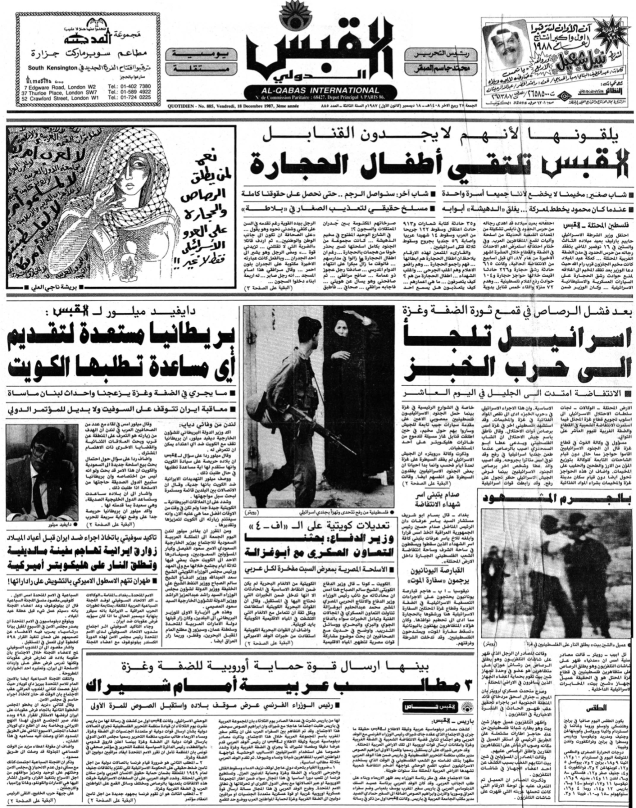
The leadership issued a long series of underground communiqués that were distributed in cities, villages, and refugee camps.
These communiqués set dates for strikes, demonstrations, boycotts, work stoppages, and workdays; presented political and economic demands; and issued instructions intended to sustain the momentum of the Intifada.
During the first years, the communiqués of the Unified National Leadership became among the most influential instruments of political organization in everyday Palestinian life.
The Popular Committees
The formation of popular committees in villages, refugee camps, neighborhoods, and towns was one of the most important features of the First Intifada. These committees expanded significantly from the spring of 1988 and were, in many cases, extensions of voluntary work committees that had existed before the uprising. They attempted to provide services that would help Palestinian society reduce its dependence on the occupation administration. Health committees organized first aid and medical care. Agricultural committees helped increase local production and encouraged self-sufficiency. Supply committees worked to deliver food and basic necessities to refugee camps and towns placed under curfew for days or weeks. Education committees established alternative classes when occupation authorities closed schools.
Other committees worked on local security, political communication, and assistance to the families of detainees, martyrs, and workers who had lost their sources of income. These institutions gave the Intifada an additional meaning. Palestinians were not only protesting the occupation; they were also experimenting with forms of grassroots self-organization and community administration. The importance of these committees grew to the point that occupation authorities declared many of them illegal and threatened their members with severe punishment.
The Role of Women in the Intifada
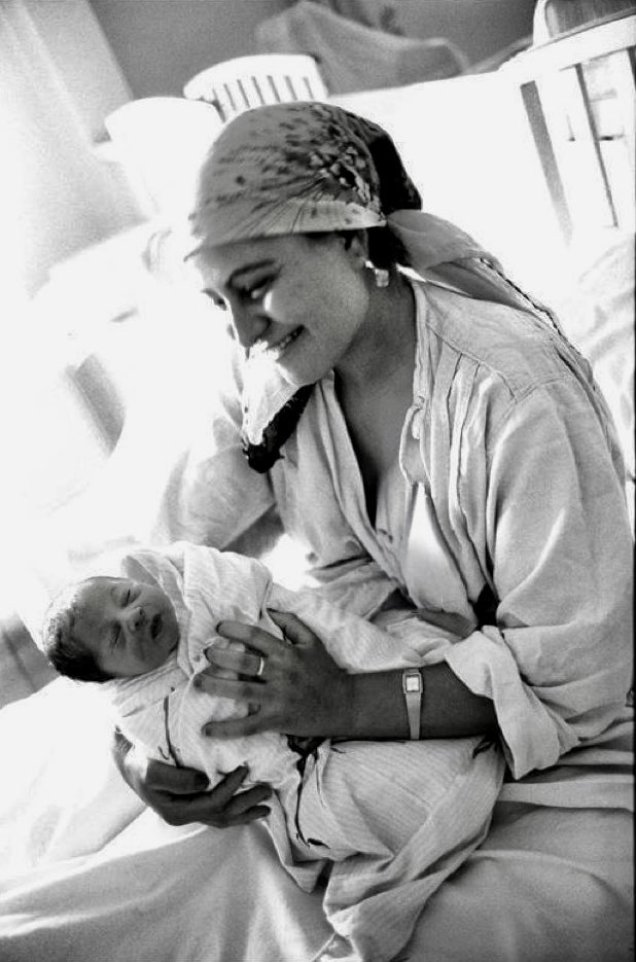
Palestinian women played a central role in sustaining the uprising. Women’s committees and organizations had already built extensive networks during the years preceding 1987. During the Intifada, women participated in organizing demonstrations, transporting food and medicine, supporting prisoners and their families, working in agricultural projects, providing alternative education, treating the wounded, distributing political communiqués, and organizing boycott campaigns. Women were also arrested, beaten, injured, and killed during the years of the uprising. Their participation demonstrated that resistance was not limited to armed or street confrontation, but was a social movement involving entire communities.
Workers, Merchants, and Economic Resistance
Economic resistance became one of the main characteristics of the Intifada. Palestinian merchants carried out repeated commercial strikes. Workers refused or reduced work in Israeli enterprises on days designated by the Unified National Leadership. Popular campaigns encouraged the purchase of Palestinian products and, where possible, the abandonment of Israeli goods. The aim was to reduce the economic dependency that had deepened during two decades of occupation.
For long periods, shops opened only for limited hours in the morning before closing in accordance with strike schedules and popular instructions. These policies imposed a heavy economic cost on Palestinian society itself, but participants viewed that sacrifice as part of an effort to make the continued administration of the occupation more difficult and costly.
Beit Sahour and the Tax Revolt
One of the most famous examples of civil disobedience during the Intifada took place in Beit Sahour near Bethlehem.
In 1989, large numbers of residents organized a collective campaign refusing to pay taxes to the occupation authorities. Their position was based on the principle that taxation could not be legitimate in the absence of political representation and national sovereignty. Occupation authorities responded with a prolonged campaign against the town that included curfews, declaring it a closed military area, arrests, raids on homes and businesses, and the confiscation of furniture, vehicles, goods, and equipment. United Nations reports confirm that confiscations continued for weeks, that property worth millions of shekels was seized, and that diplomats, clergy, and journalists were at various times prevented from entering the town. The Beit Sahour tax revolt became one of the best-known international examples of the civil and non-armed dimension of the First Intifada.
The Emergence of Hamas
The Intifada also produced a major transformation within Palestinian Islamist politics. Before the uprising, the Muslim Brotherhood in the Gaza Strip had focused largely on religious, social, educational, and charitable institutions. After the Intifada began, a group of Islamist leaders, including Sheikh Ahmed Yassin, entered the resistance under the name Islamic Resistance Movement – Hamas. Hamas issued its first communiqué on December 14, 1987, only days after the uprising began. Over time, Hamas became increasingly involved in the Intifada and issued its own communiqués designating days of strikes, protests, and confrontation.
Hamas was not part of the Palestine Liberation Organization or the Unified National Leadership, but developed into a competing political and ideological force to the factions within the PLO. The Intifada therefore did not only strengthen existing Palestinian organizations; it also reshaped the political landscape of the Palestinian national movement.
The Response of the Israeli Occupation Authorities
Occupation authorities initially expected the protests to subside as earlier waves of unrest had done. Instead, the demonstrations expanded.
Israeli occupation forces responded with live ammunition, tear gas, beatings, mass arrests, administrative detention, deportations, house demolitions, school and university closures, restrictions on movement, and the declaration of towns and refugee camps as closed military areas. Entire communities were sometimes placed under curfew for days or weeks. Supplies of food, medicine, fuel, communications, education, and employment were disrupted in many areas.
In many cases, repression itself contributed to sustaining the Intifada, as the killing or injury of Palestinians generated new funerals, demonstrations, strikes, and confrontations.
The Policy of “Force, Might, and Beatings”
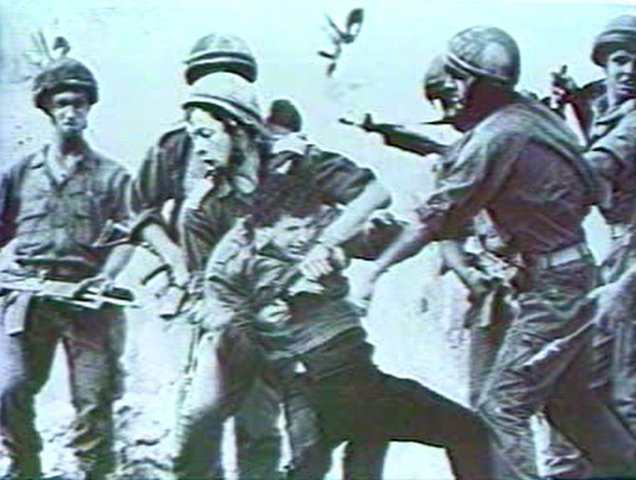
Israeli Defense Minister Yitzhak Rabin became particularly associated with the methods used to suppress the Intifada. In January 1988, contemporary reports referred to a policy announced by Rabin and commonly summarized as “force, might, and beatings.” The stated aim was to use force to restore control while reducing reliance on live fire.
United Nations reports, however, documented widespread beatings of Palestinians by Israeli occupation soldiers. By late January 1988, reports submitted to the United Nations indicated that at least 300 Palestinians had been hospitalized with injuries caused by beatings, while hundreds of others avoided hospitals for fear of arrest.
The “Breaking Bones” Policy
Images and reports of Israeli occupation soldiers beating Palestinian demonstrators became among the most disturbing scenes of the early months of the uprising. Palestinians reported being beaten with clubs, rifle butts, boots, and other objects. United Nations documents recorded large numbers of injuries caused by beatings, including cases of fractures and crushed bones. In Palestinian and international discourse, this became known as the “breaking bones” policy.
Mass Arrests and Administrative Detention
Arrest became one of the principal tools used to suppress the Intifada. Thousands of Palestinians were detained during the first months alone. Military courts processed large numbers of protesters and activists, including young people and minors accused of throwing stones.
Administrative detention was also used to hold Palestinians without ordinary criminal trials or, in some cases, without publicly presented charges. PalQuest records approximately 18,000 arrests during the first year of the Intifada alone and around 3,000 cases of administrative detention during 1988.
The Closure of Schools and Universities
Educational institutions became major centers of political mobilization and were therefore repeatedly subjected to closure orders. Occupation authorities closed schools, universities, and colleges for extended periods throughout the occupied Palestinian territory. Birzeit University, al-Najah University, Bethlehem University, and institutions in Hebron, among others, were important parts of the political and organizational life surrounding the Intifada.
When formal education was suspended, Palestinians organized alternative classes in homes, mosques, churches, community centers, and other informal locations. Many university students and teachers returned to their villages, camps, and towns and became involved in popular committees and local organizing. Education itself thus became another arena of resistance.
The United Nations Response
International concern emerged only days after the Intifada began.
On December 22, 1987, the Security Council adopted Resolution 605.
The resolution strongly deplored Israeli policies and practices that violated the human rights of Palestinians in the occupied territory and specifically referred to Israeli army gunfire that had killed and wounded Palestinian civilians.
It also affirmed the applicability of the Fourth Geneva Convention to the Palestinian and Arab territories occupied since 1967, including Jerusalem, and called upon Israel, as the occupying Power, to comply with its obligations.
The Security Council also requested that the Secretary-General examine ways to ensure the safety and protection of Palestinian civilians under occupation.
In January 1988, the Security Council adopted Resolutions 607 and 608 in response to the deportation of Palestinians from the occupied territory.
Resolution 607 called upon Israel to refrain from deporting Palestinian civilians, while Resolution 608 called for the deportation decisions to be rescinded and for the safe and immediate return of those already deported.
The World Sees the Occupation Differently
The First Intifada had a profound effect on the way the world viewed Palestine. Television cameras and the press increasingly transmitted images of Palestinian youths confronting occupation forces in refugee camps, streets, villages, and university towns. The images highlighted the imbalance between stones and rifles, between demonstrations and military vehicles, and between civilian communities and curfews and military raids. Everyday life under occupation became more visible to international audiences.
The Intifada therefore helped shift the Palestinian question in international consciousness from an issue often presented primarily through diplomacy, armed organizations, and the refugee question into the direct image of a civilian population living under military occupation and resisting it inside its homeland.
Palestinian Losses
Statistics concerning the victims, detainees, and material losses of the First Intifada vary according to source, period, and method of counting deaths, injuries, and arrests.
For the general commemorative casualty figures in this article, the figures published by the Palestinian News and Information Agency WAFA are used, while noting that other sources provide different totals.
According to WAFA’s figures for the 1987–1993 Intifada, approximately 1,162 Palestinians were killed, including about 241 children.
The agency also estimates that approximately 90,000 Palestinians were wounded or injured.
It reports that approximately 1,228 homes were demolished or destroyed and around 140,000 fruit-bearing trees were uprooted from Palestinian land.
Regarding arrests, WAFA’s summary gives a figure of approximately 15,000, while PalQuest records around 18,000 arrests during the first year alone. This difference reflects variations in time periods and counting methods, and the two figures should therefore not be combined or treated as a single agreed final total.
Whatever the differences in statistics, they reflect the heavy human, social, and economic price paid by Palestinian society during the years of the Intifada.
A Generation Raised Under the Intifada
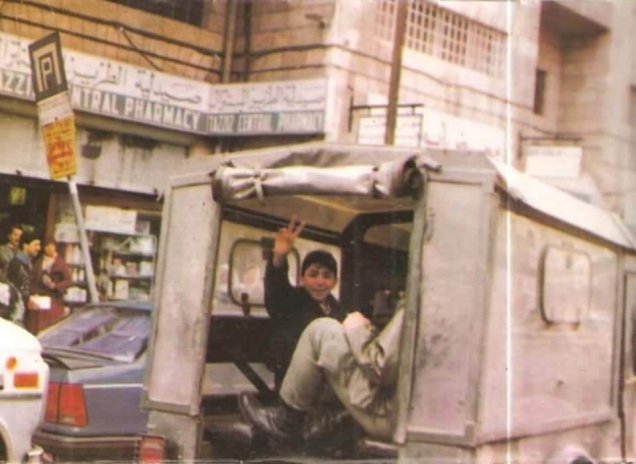
Children and adolescents became a central part of both the reality and the public image of the uprising. Many participated in demonstrations, carried messages, built barricades, threw stones, attended popular education classes, or lived under repeated curfews and military raids. Some were arrested or injured, or experienced the killing or detention of a family member or the demolition of their home. For an entire generation, occupation was no longer simply a political condition inherited from 1967. It became a daily experience in the street, school, workplace, home, checkpoint, prison, and refugee camp.
The Intifada and Palestinian Political Independence
The Intifada also changed the relationship between Palestinians inside the occupied territory and the PLO leadership abroad. The PLO remained the principal national and political reference for large sections of the Palestinian population.
At the same time, the uprising demonstrated that Palestinians inside the homeland had developed leadership and organizational networks capable of managing a broad national movement from within.
The Unified National Leadership cooperated with the PLO, but it also represented a new generation of Palestinian leaders rooted directly in the cities, villages, and refugee camps that were leading the uprising.
Jordan Severs Its Legal and Administrative Ties with the West Bank
One of the most important regional political transformations came on July 31, 1988.
King Hussein announced a series of measures severing Jordan’s legal and administrative ties with the West Bank.
The decision was presented in the context of strengthening Palestinian national identity and consolidating independent Palestinian representation, fourteen years after the Rabat Summit had recognized the PLO as the sole legitimate representative of the Palestinian people.
The decision helped consolidate the principle that the future of the occupied West Bank would be addressed as a Palestinian question represented by the Palestinians and the PLO, rather than as a matter of Jordanian sovereignty over the West Bank.
The Intifada was one of the important factors that pushed this transformation forward.
The 1988 Palestinian Declaration of Independence
The political force generated by the Intifada also influenced the meetings of the Nineteenth Palestine National Council in Algiers in November 1988.
On November 15, 1988, the Council proclaimed the establishment of the State of Palestine with Jerusalem as its capital.
The Declaration of Independence presented the Intifada as one of the central moments in the Palestinian national struggle.
It is important, however, to distinguish between the Declaration of Independence and the Political Communiqué adopted during the same session.
The Political Communiqué called for an international peace conference under United Nations auspices on the basis of Security Council Resolutions 242 and 338, and demanded Israeli withdrawal from all Palestinian and Arab territories occupied since 1967, including Arab Jerusalem, while affirming Palestinian national rights, foremost among them the right to self-determination.
These decisions represented an important diplomatic transformation in PLO strategy.
From the Intifada to U.S.–PLO Dialogue
The Palestinian political initiative continued in December 1988.
Yasser Arafat addressed the United Nations General Assembly in Geneva and, the following day, provided additional clarifications concerning the PLO’s acceptance of Resolutions 242 and 338 and its position on violence.
On December 14, 1988, the United States announced that it would open an official and substantive dialogue with the Palestine Liberation Organization.
The Intifada thus helped move the Palestinian national question from the streets of Jabalia, Nablus, Ramallah, Hebron, Jerusalem, and Gaza into a new stage of international diplomacy.
The Intifada Becomes a Way of Life
By 1989 and 1990, the Intifada had become more organized and enduring. Strikes, communiqués, demonstrations, closures, raids, arrests, and funerals became recurring parts of everyday life. The initial revolutionary enthusiasm increasingly coexisted with growing social and economic exhaustion. Years of commercial strikes caused major financial losses to families and business owners. Long school closures damaged education. Repeated arrests weakened local leadership networks. Economic pressure on Palestinian society intensified.
Yet the Intifada continued.
The Assassination of Khalil al-Wazir “Abu Jihad”
The policy of targeting Palestinian leaders extended beyond the occupied territory.
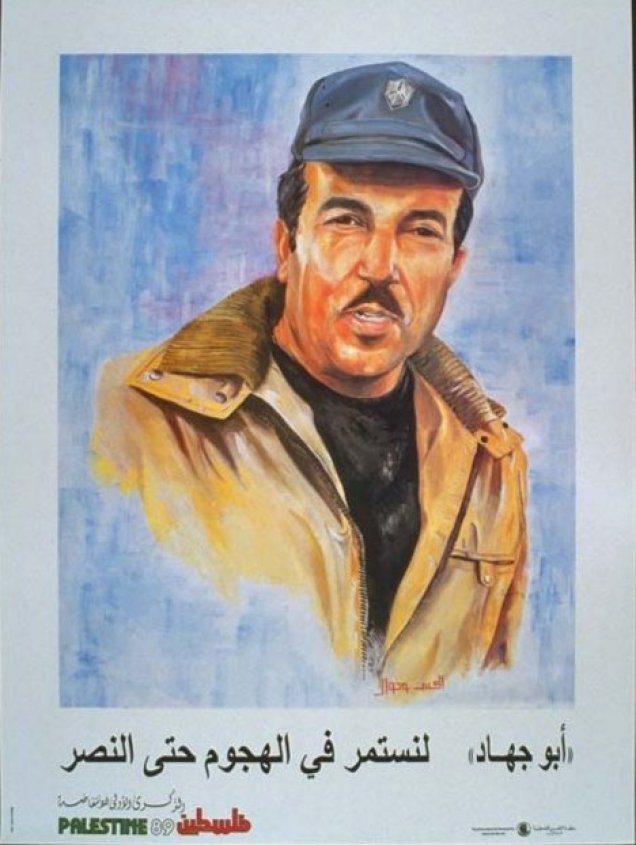
On April 16, 1988, an Israeli unit assassinated Khalil al-Wazir “Abu Jihad”, one of the founders of Fatah and one of the most prominent leaders of the PLO, at his home in Sidi Bou Said near Tunis.
Abu Jihad had been closely associated with following and supporting the Intifada and organizing resistance inside the occupied Palestinian territory.
His assassination triggered a broad wave of mourning, demonstrations, and confrontations throughout Palestine.
The Gulf Crisis and the Decline in the Intifada’s Momentum
The regional environment changed dramatically after Iraq invaded Kuwait in August 1990.
The position adopted by the PLO leadership during the Gulf crisis damaged its relations with several Gulf states and subjected it to severe diplomatic and financial pressure after the war.
At the same time, Palestinian society inside the occupied territory was suffering from the cumulative effects of years of repression, arrests, economic disruption, and political exhaustion.
The Intifada did not suddenly end in 1991, but its intensity and organizational capacity began to decline compared with the first years.
From the Streets to the Madrid Conference
On October 30, 1991, the Madrid Peace Conference opened a new diplomatic phase.
Palestinians from the occupied territory participated within a joint Jordanian-Palestinian delegation.
Several of the most prominent Palestinian figures involved in the negotiations, including Haidar Abd al-Shafi, Hanan Ashrawi, Faisal al-Husseini, and Saeb Erekat, were closely connected to the political environment shaped during the years of the Intifada.
Public negotiations later continued in Washington, while forms of the Intifada and popular resistance persisted on the ground.
Oslo and the Formal Political End of the First Intifada
Beginning in January 1993, a secret negotiating channel developed in Norway between representatives of the Palestine Liberation Organization and the Israeli government.
These talks produced the Declaration of Principles on Interim Self-Government Arrangements.
On September 9, 1993, Yasser Arafat and Yitzhak Rabin exchanged the letters of mutual recognition between the PLO and Israel.
Then, on September 13, 1993, the Declaration of Principles was formally signed in Washington.
The document was signed by Shimon Peres for Israel and Mahmoud Abbas for the Palestine Liberation Organization, in the presence of Yasser Arafat, Yitzhak Rabin, and U.S. President Bill Clinton.
The Oslo agreement did not resolve the issues of Palestinian statehood, refugees, Jerusalem, borders, settlements, or sovereignty.
Its signing nevertheless became the date most commonly used to mark the formal political end of the First Intifada and the beginning of a new phase centered on negotiations and the establishment of the interim Palestinian Authority.
What Did the First Intifada Change?
The First Intifada did not immediately end the Israeli occupation.
Nor did it establish an independent Palestinian state.
But it transformed the Palestinian question on several fundamental levels.
It shifted the center of resistance to a significant degree from Palestinian armed organizations operating outside Palestine toward broad popular mobilization inside the occupied homeland.
It demonstrated Palestinian society’s ability to create extensive networks of self-organization under occupation.
It brought forward a new generation of local Palestinian leaders.
It made everyday life under occupation more visible to international public opinion.
It strengthened Palestinian demands for self-determination and independence in the West Bank and Gaza Strip, including East Jerusalem.
It contributed to Jordan’s decision to disengage from the West Bank and to the political transformations adopted by the PLO in 1988.
It also helped create the political environment that later led to Madrid and Oslo.
The Stone as a Palestinian Symbol
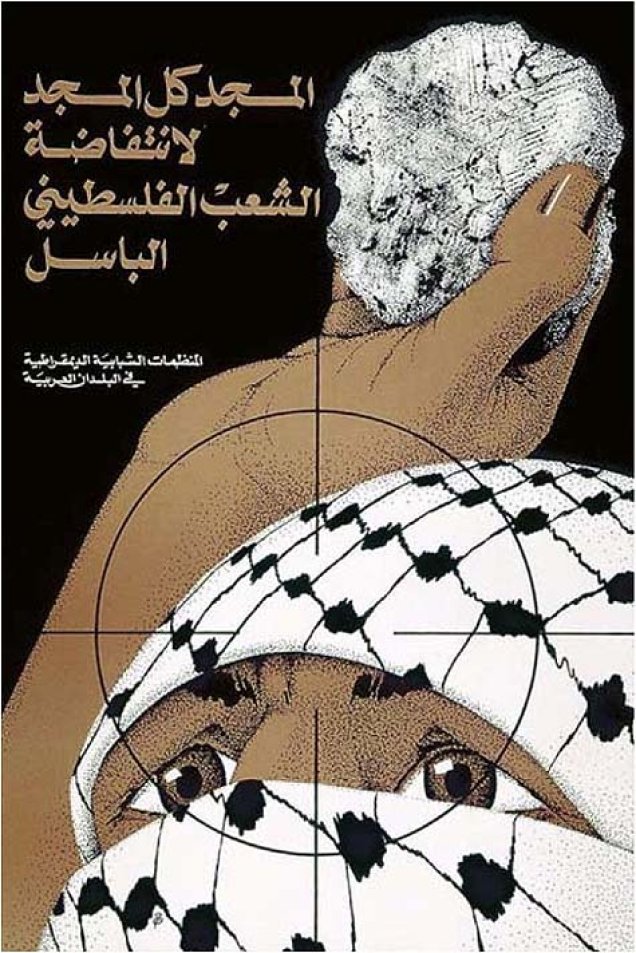
The stone remained the symbol most closely associated with the First Intifada because it embodied the extreme imbalance of power that characterized the confrontation.
Palestinian youths faced occupation forces equipped with rifles, military vehicles, tear gas, detention systems, and the machinery of military occupation.
The stone therefore acquired a meaning far beyond its actual military effectiveness.
It became a symbol of refusal, defiance, and popular participation.
But the power of the Intifada did not lie in the stone alone.
It lay in the ability of Palestinian society to transform the strike, the school, the farm, the clinic, the shop, women’s committees, student movements, neighborhood organization, and everyday acts of non-cooperation into components of a single national uprising.
The Legacy of the First Intifada
The First Palestinian Intifada remains one of the foundational events of modern Palestinian history.
It erupted unexpectedly in Jabalia and quickly developed into a broad national uprising against occupation.
Its participants and Palestinian society as a whole paid a heavy human and material price.
According to the commemorative figures published by WAFA, approximately 1,162 Palestinians were killed, including around 241 children, while tens of thousands were wounded.
Thousands of Palestinians also experienced imprisonment, administrative detention, curfews, school closures, house demolitions, land confiscation, and economic pressure.
At the same time, the Intifada produced one of the broadest periods of Palestinian grassroots organization created under occupation.
Its legacy can be seen in the popular committees, women’s activism, civil disobedience, boycotts, alternative education, political organization, and international visibility that characterized the years from 1987 to 1993.
From a Palestinian historical perspective, the First Intifada was not merely an explosion of anger.
It was an affirmation that Palestinians living under occupation were not simply a population waiting for decisions about their future to be made elsewhere.
They had become direct and active participants in shaping their political future and in returning the Palestinian question to the center of international attention.
The most famous image of the Intifada may remain that of a young Palestinian holding a stone.
But behind that stone stood an entire society rising up against occupation.
Photo gallery
More from the archive


 Download Our Palestine App
The whole archive in the palm of your hand: depopulated villages, the Nakba, the massacres and Al-Aqsa — free, with no ads to erase the story.
Download Our Palestine App
The whole archive in the palm of your hand: depopulated villages, the Nakba, the massacres and Al-Aqsa — free, with no ads to erase the story.
Comments
No comments yet — be the first to write one.
Add your comment
Name and email are optional. Comments appear after review.