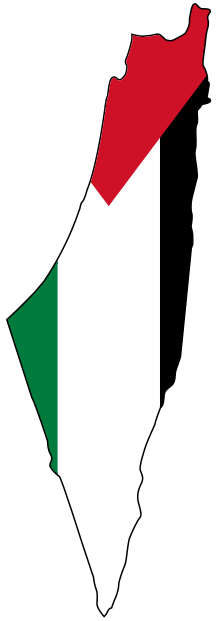
The 1988 Palestinian Declaration of Independence and Acceptance of UN Resolutions 242 and 338
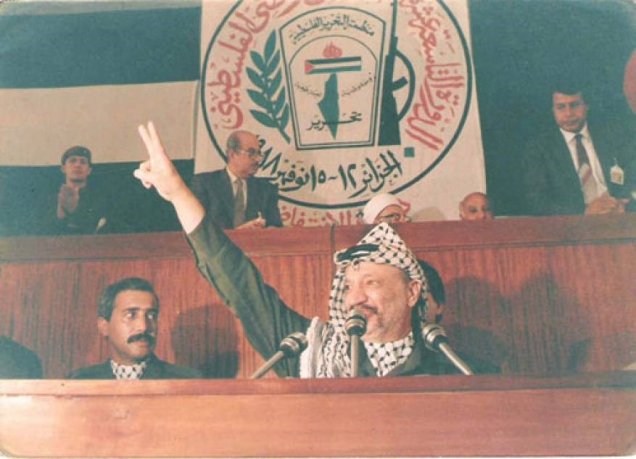
On November 15, 1988, the Palestine National Council concluded its nineteenth extraordinary session in Algiers with one of the most consequential political decisions in modern Palestinian history.
The Council proclaimed the State of Palestine, with Jerusalem as its capital, and simultaneously adopted a political program that accepted United Nations Security Council Resolutions 242 of 1967 and 338 of 1973 as the basis for an international peace conference.
The two decisions were closely connected, but they appeared in two separate documents.
The first was the Palestinian Declaration of Independence.
The second was the Political Communiqué of the Nineteenth Palestine National Council.
This distinction is essential because the Declaration of Independence itself did not explicitly state that the PLO was accepting Resolutions 242 and 338. Their explicit acceptance appeared in the accompanying political communiqué adopted by the same Council session.
Taken together, the two documents marked a profound change in Palestinian diplomatic strategy: the national movement formally proclaimed Palestinian statehood while embracing a negotiated international framework centered on ending the Israeli occupation that began in 1967.
The Political Context of 1988
The decisions taken in Algiers were the result of major transformations that had reshaped the Palestinian national movement during the preceding decade.
The Israeli invasion of Lebanon in 1982 had forced the PLO leadership and thousands of Palestinian fighters out of Beirut, depriving the organization of its principal military and political base near Palestine.
The PLO leadership subsequently established its headquarters in Tunis, geographically farther from the occupied Palestinian territories.
The Palestinian struggle, however, did not disappear.
In December 1987, the First Intifada erupted in the occupied Palestinian territories.
The uprising shifted the center of Palestinian political action back inside Palestine itself.
Palestinians in the West Bank, East Jerusalem, and Gaza Strip organized strikes, demonstrations, boycotts, popular committees, civil disobedience, and confrontations with the Israeli occupation forces.
The Intifada restored the Palestine question to the center of international attention and demonstrated that the occupation could not be treated as a stable or permanent political arrangement.
The Intifada and the Road to Independence
The Palestine National Council itself described its nineteenth session as the session of “the Intifada and national independence.”
The political momentum generated by the uprising was fundamental to the decisions taken in Algiers.
Palestinians inside the occupied territories had increasingly articulated demands for an end to occupation, national independence, and Palestinian political authority over the West Bank and Gaza Strip.
At the same time, international diplomatic efforts were again focusing on a possible settlement based on the territories occupied in 1967.
The PLO leadership increasingly concluded that the Intifada had created an opportunity to translate Palestinian popular resistance into international political recognition.
Jordan Disengages from the West Bank
Another major development came on July 31, 1988.
King Hussein of Jordan announced the severing of Jordan's legal and administrative ties with the West Bank.
The decision removed one of the longstanding ambiguities surrounding the political future of the territory.
It strengthened the position that Palestinians themselves, represented internationally by the PLO, would determine the political future of the West Bank.
By the autumn of 1988, the Palestinian leadership therefore faced a new political landscape: an uprising inside the occupied territories, Jordanian disengagement from the West Bank, growing international interest in a negotiated settlement, and a changing international environment as Cold War tensions began to ease.
The Nineteenth Palestine National Council
The Nineteenth Palestine National Council met in Algiers from November 12 to 15, 1988.
The session brought together the principal institutions and political factions of the Palestine Liberation Organization at a moment of exceptional national importance.
On November 15, the Council adopted the Palestinian Declaration of Independence.
It proclaimed:
“the State of Palestine on our Palestinian land, with Jerusalem as its capital.”
Yasser Arafat subsequently announced the declaration publicly.
The Palestinian Declaration of Independence
The Declaration presented Palestinian statehood as the culmination of the Palestinian people's historical connection to their homeland and their long struggle for national independence.
It invoked international legitimacy, Palestinian self-determination, and the historic responsibility of the United Nations toward Palestine.
One of its most important legal and political references was United Nations General Assembly Resolution 181 of 1947.
Resolution 181 had proposed the partition of Mandatory Palestine into an Arab state and a Jewish state.
The Palestinian declaration noted the profound historical injustice Palestinians associated with partition but argued that Resolution 181 nevertheless continued to provide international legitimacy for the Palestinian people's right to sovereignty and national independence.
Did the Declaration Establish the State on the 1967 Borders?
It is common to describe the 1988 declaration as proclaiming a Palestinian state in the West Bank and Gaza Strip on the borders existing before June 1967.
Politically, this interpretation reflects the direction in which the PLO strategy was moving.
The text of the Declaration itself, however, did not explicitly define the borders of the State of Palestine as the 1967 lines.
Instead, it proclaimed the State of Palestine “on our Palestinian land” and named Jerusalem as its capital.
The territorial significance of the 1967 lines becomes much clearer in the separate political communiqué adopted by the same Council session.
The Political Communiqué
The political communiqué transformed the declaration of statehood into a detailed diplomatic program.
It reaffirmed Palestinian rights to return, self-determination, and the establishment of an independent national state.
Most importantly, it called for an international peace conference under United Nations auspices with the participation of the five permanent members of the Security Council and all parties to the conflict, including the PLO on an equal footing.
The Council declared that such a conference should be convened on the basis of Security Council Resolutions 242 and 338, together with recognition of the legitimate national rights of the Palestinian people, foremost among them the right to self-determination.
What the PLO Demanded Alongside 242 and 338
The acceptance of Resolutions 242 and 338 was not presented in isolation.
The Palestinian political program linked them to a series of explicit demands:
- Israeli withdrawal from all Palestinian and Arab territories occupied in 1967, including Arab Jerusalem.
- Cancellation of annexation and appropriation measures imposed on the occupied territories.
- Removal of Israeli settlements established in Palestinian and Arab territory since 1967.
- Temporary United Nations supervision of the occupied Palestinian territories to facilitate a political settlement and the exercise of Palestinian state authority.
- A solution to the Palestinian refugee question in accordance with relevant United Nations resolutions.
- Recognition of Palestinian self-determination and independent statehood.
- Security and peace arrangements for all states in the region, including the Palestinian state.
The PNC therefore sought to place its acceptance of 242 and 338 inside a broader framework of Palestinian national rights rather than accepting the two Security Council resolutions as a complete definition of the Palestine question.
Security Council Resolution 242
Resolution 242 had been adopted on November 22, 1967 following Israel's occupation of the West Bank, including East Jerusalem, the Gaza Strip, Egypt's Sinai Peninsula, and Syria's Golan Heights.
The resolution emphasized the inadmissibility of acquiring territory through war.
It called for the withdrawal of Israeli armed forces from territories occupied during the 1967 conflict and for the termination of states of belligerency and respect for the sovereignty and territorial integrity of every state in the region.
It also called for a just settlement of the refugee problem.
It did not, however, explicitly recognize the Palestinians as a people possessing a right to self-determination.
Nor did it call for an independent Palestinian state.
Palestinians were addressed only indirectly through the phrase “refugee problem.”
Security Council Resolution 338
Resolution 338 was adopted on October 22, 1973 during the October confrontation between Egypt and Syria on one side and Israel on the other.
It called for an immediate ceasefire, implementation of Resolution 242 in all of its parts, and negotiations under appropriate auspices aimed at establishing a just and durable peace in the Middle East.
Because Resolution 338 incorporated Resolution 242, the two increasingly became treated together as the central diplomatic framework for Arab-Israeli negotiations.
Why the PLO Had Rejected Resolution 242
The PLO had rejected Resolution 242 for approximately two decades.
The central Palestinian objection was that the resolution approached the conflict primarily as one between states while failing to recognize Palestinian national rights.
It made no explicit reference to Palestinian self-determination.
It made no provision for an independent Palestinian state.
And it did not explicitly address the Palestinian right of return, instead referring more generally to a “just settlement of the refugee problem.”
Early PLO positions also rejected the political implications of a framework based upon coexistence among the existing states in the region.
For these reasons, Palestinian national institutions repeatedly rejected Resolution 242 during the late 1960s and 1970s.
Why 1988 Was Different
By 1988, Palestinian strategy had changed substantially.
The PLO had spent years seeking greater international diplomatic recognition.
The expulsion from Beirut in 1982 had reduced its ability to maintain a large military infrastructure near Palestine.
The First Intifada had shifted political initiative toward Palestinians living directly under occupation.
Jordan's disengagement had strengthened the PLO's claim to represent the political future of the West Bank.
At the same time, international diplomacy increasingly treated Israeli withdrawal from the territories occupied in 1967 as the territorial basis for a political settlement.
The PLO leadership consequently moved toward a strategy centered on establishing an independent Palestinian state in the occupied Palestinian territories while preserving claims concerning refugees, Jerusalem, self-determination, and other national rights.
A Major Strategic Transformation
The decisions of November 1988 therefore represented one of the most significant transformations in official PLO diplomacy.
The organization that had rejected Resolutions 242 and 338 now accepted them as the basis of an international peace conference.
At the same time, it attempted to correct what it regarded as their fundamental Palestinian deficiency by insisting that implementation must also include Palestinian self-determination, statehood, refugee rights, withdrawal from occupied territory, and the removal of settlements.
This was not simply an acceptance of the language of Resolution 242.
It was an attempt to combine the 242–338 diplomatic framework with the broader body of United Nations resolutions recognizing Palestinian national rights.
Was This an Abandonment of Palestinian Resistance?
The shift is sometimes described as the moment when the PLO moved from armed struggle to diplomacy.
That description captures an important strategic change but is too absolute if taken literally.
The same political communiqué that endorsed negotiations based on Resolutions 242 and 338 also called for the continuation and strengthening of the First Intifada.
It reaffirmed what the PNC described as the right of peoples to resist foreign occupation and colonialism while also reiterating its rejection of terrorism in all its forms.
The transformation of 1988 is therefore better understood as the elevation of diplomatic and negotiated statehood to the center of official PLO strategy rather than the instantaneous abandonment of every other form of Palestinian struggle.
The Internal Palestinian Debate
The new strategy was controversial within the Palestinian national movement.
Supporters argued that international recognition and acceptance of a political settlement based on ending the occupation of the territories seized in 1967 offered a realistic route toward Palestinian sovereignty.
They also argued that the Intifada had created an opportunity to translate Palestinian resistance on the ground into international diplomatic gains.
Opponents feared that acceptance of Resolution 242 would reduce Palestinian territorial claims and weaken the historic rights of refugees displaced during the Nakba.
They emphasized that Resolution 242 itself did not recognize Palestinian national self-determination or explicitly establish a Palestinian state.
These disagreements did not disappear after 1988 and would remain central to Palestinian political debate during the Madrid and Oslo years.
The Declaration Did Not Eliminate the Right of Return
Acceptance of the new diplomatic framework did not mean that the PNC formally abandoned the Palestinian refugee question.
The political communiqué explicitly reaffirmed the Palestinian right of return and called for settlement of the refugee question according to the relevant United Nations resolutions.
It therefore attempted to combine a state-centered strategy in the territories occupied in 1967 with continuing Palestinian claims rooted in the displacement of 1948.
The tension between these two dimensions—statehood in the occupied territories and the rights of Palestinian refugees—would remain one of the central unresolved questions of subsequent Palestinian diplomacy.
International Recognition of the State of Palestine
The declaration triggered a rapid wave of diplomatic recognition.
Numerous Arab, African, Asian, socialist, and other states recognized the newly proclaimed State of Palestine within days or weeks of the Algiers declaration.
By the beginning of the 1990s, United Nations documentation described approximately 100 states as having recognized the State of Palestine.
Recognition continued to expand in subsequent decades.
Palestinian representative offices in many states increasingly operated as diplomatic missions associated with the proclaimed State of Palestine, although the exact status of individual missions depended on the recognizing state.
The United Nations Acknowledges the Proclamation
On December 15, 1988, exactly one month after the declaration, the United Nations General Assembly adopted Resolution 43/177.
The resolution formally acknowledged the proclamation of the State of Palestine by the Palestine National Council.
It affirmed the need to enable the Palestinian people to exercise sovereignty over their territory occupied since 1967.
It also decided that the designation “Palestine” would henceforth be used instead of “Palestine Liberation Organization” within the United Nations system, without altering the PLO's existing observer status and functions.
Resolution 43/177 was adopted by 104 votes to 2, with 36 abstentions.
The United States and Israel voted against it.
The United States Had Not Yet Opened Dialogue
The Algiers decisions brought the PLO closer to satisfying long-standing American conditions for official dialogue, but the United States did not immediately open formal talks after November 15.
Washington demanded an explicit and unambiguous statement accepting Resolutions 242 and 338, recognizing Israel's right to exist in peace and security, and renouncing terrorism.
This led to several weeks of intense diplomatic maneuvering.
Arafat Goes to Geneva
In December 1988, Yasser Arafat sought to address the United Nations General Assembly in New York.
The United States refused to grant him a visa.
The General Assembly therefore moved its consideration of the Palestine question temporarily to Geneva.
Arafat addressed the Assembly there on December 13.
International diplomacy continued during the following hours as the United States sought further clarification of the PLO's positions.
December 14, 1988: The PLO Clarifies Its Position
On December 14, Arafat publicly clarified the Palestinian position.
The PLO explicitly accepted Security Council Resolutions 242 and 338, recognized the right of the parties to the conflict to exist in peace and security—including Israel—and renounced terrorism.
The clarification satisfied the conditions established by the United States for official contact with the organization.
The United States Opens Dialogue with the PLO
Later on December 14, 1988, U.S. President Ronald Reagan announced that he had authorized the State Department to begin a substantive dialogue with representatives of the PLO.
This marked the first formal political dialogue of its kind between the United States government and the Palestine Liberation Organization.
The American decision was one of the most important immediate diplomatic consequences of the Palestinian transformation of 1988.
The PLO Was Already the Principal Palestinian Representative
It is important, however, not to attribute all international recognition of the PLO to the 1988 declaration.
The organization had already been recognized by the Arab League in 1974 as the sole legitimate representative of the Palestinian people.
That same year, Yasser Arafat addressed the United Nations General Assembly and the PLO received observer status at the United Nations.
The historical importance of 1988 therefore lies elsewhere.
It transformed the PLO from a national liberation organization seeking international recognition into an organization that had also proclaimed a Palestinian state and formally adopted a diplomatic program centered on Resolutions 242 and 338.
From Algiers to Madrid
The decisions of 1988 did not immediately produce negotiations with Israel.
The first U.S.–PLO dialogue was later suspended, while regional politics were transformed by the end of the Cold War and the Gulf crisis of 1990–1991.
Nevertheless, the political framework adopted at Algiers contributed to the diplomatic path that eventually led to the Madrid Peace Conference in October 1991.
Palestinian representatives participated at Madrid within a joint Jordanian-Palestinian delegation and coordinated closely with the PLO leadership.
Resolutions 242 and 338 formed a central part of the negotiating framework.
From Madrid to Oslo
The public negotiations following Madrid made limited progress.
Secret talks subsequently developed between representatives of the PLO and Israel in Norway.
On September 9, 1993, the PLO and Israel exchanged letters of mutual recognition.
Yasser Arafat again confirmed that the PLO accepted Security Council Resolutions 242 and 338.
Four days later, on September 13, the Oslo Declaration of Principles was signed in Washington.
The agreement created the framework from which the Palestinian Authority later emerged in parts of the West Bank and Gaza Strip.
Oslo did not establish the sovereign Palestinian state proclaimed in Algiers in 1988, nor did it resolve Jerusalem, refugees, settlements, borders, or final sovereignty.
What Changed in November 1988?
The importance of November 1988 can be understood through several interconnected changes.
The PLO formally proclaimed the State of Palestine.
It placed Palestinian independence within an international legal and diplomatic framework.
It accepted Security Council Resolutions 242 and 338 as the basis of an international peace conference.
It demanded Israeli withdrawal from the Palestinian territories occupied in 1967, including Arab Jerusalem.
It explicitly linked that withdrawal to Palestinian self-determination, statehood, refugee rights, and the removal of Israeli settlements.
And within weeks, the new diplomatic strategy opened official dialogue between the PLO and the United States.
From the Whole of Palestine to a State in the Occupied Territories
The deeper historical significance of the decision lay in the evolution of Palestinian territorial strategy.
Earlier PLO programs had defined liberation in relation to the entirety of historic Palestine.
By 1988, the organization's official diplomatic program had moved toward an independent Palestinian state whose immediate territorial focus was the land occupied by Israel in 1967.
This did not mean that Palestinian historical claims relating to the Nakba, refugees, return, or Jerusalem had disappeared.
The political communiqué explicitly maintained those claims.
What changed was the proposed mechanism for achieving Palestinian sovereignty: international recognition, an international peace conference, Israeli withdrawal, and establishment of Palestinian authority in the occupied territories had become central elements of official strategy.
A Turning Point, Not an End Point
The 1988 decisions did not end the Israeli occupation.
They did not produce an independent Palestinian government exercising sovereignty over the West Bank, East Jerusalem, and Gaza Strip.
They did not resolve the refugee question.
Nor did they end internal Palestinian disagreement over the political strategy adopted by the PLO leadership.
Their significance lay instead in transforming the international political framework of the Palestinian national movement.
Palestine was now formally proclaimed as a state.
The United Nations acknowledged that proclamation.
Large numbers of states extended diplomatic recognition.
And the PLO had publicly accepted a negotiating framework based on the territories occupied in 1967 while insisting that Palestinian national rights remain integral to any settlement.
The Palestinian Debate Over the Decision
From a Palestinian perspective, the Algiers decisions have remained the subject of two competing historical interpretations.
Supporters viewed them as a necessary diplomatic breakthrough.
They argued that the Palestinian people had transformed the international political gains of the First Intifada into recognition of statehood and had placed Palestinian self-determination at the center of global diplomacy.
Critics argued that acceptance of the 242–338 framework represented a major territorial and political concession, particularly because Resolution 242 itself contained no explicit recognition of Palestinian statehood, self-determination, or the right of return.
These interpretations reflect a fundamental debate over the relationship between historical rights, territorial compromise, diplomacy, and liberation.
The November 1988 documents themselves attempted to bridge those positions by accepting a negotiated framework while continuing to affirm return, self-determination, statehood, the end of occupation, and Palestinian rights recognized in other United Nations resolutions.
The Historical Legacy of November 15, 1988
November 15, 1988 remains one of the defining dates in modern Palestinian political history.
On that day, the Palestine National Council proclaimed the State of Palestine with Jerusalem as its capital.
In a separate political communiqué adopted at the same session, it accepted Security Council Resolutions 242 and 338 as the basis for an international peace conference.
It demanded Israeli withdrawal from all Palestinian and Arab territory occupied in 1967, including Arab Jerusalem, the removal of settlements, recognition of Palestinian self-determination, and resolution of the refugee question according to United Nations resolutions.
The Declaration did not immediately create a sovereign state on the ground.
Israeli occupation remained in place.
But the political map had changed.
The Palestinian national movement had formally declared statehood, accumulated wide international recognition, and adopted a diplomatic framework that would shape the subsequent path through Geneva, Madrid, Oslo, and later Palestinian statehood initiatives at the United Nations.
From a Palestinian historical perspective, Algiers 1988 therefore represented neither the completion of independence nor the end of the national struggle.
It represented the beginning of a new stage: an attempt to translate Palestinian resistance, national rights, and the First Intifada into internationally recognized statehood and effective sovereignty over Palestinian land.
More from the archive



 Download Our Palestine App
The whole archive in the palm of your hand: depopulated villages, the Nakba, the massacres and Al-Aqsa — free, with no ads to erase the story.
Download Our Palestine App
The whole archive in the palm of your hand: depopulated villages, the Nakba, the massacres and Al-Aqsa — free, with no ads to erase the story.

Comments
No comments yet — be the first to write one.
Add your comment
Name and email are optional. Comments appear after review.