
Tiberias Before the Nakba: The Lake’s Bride, From the Walls to Exile
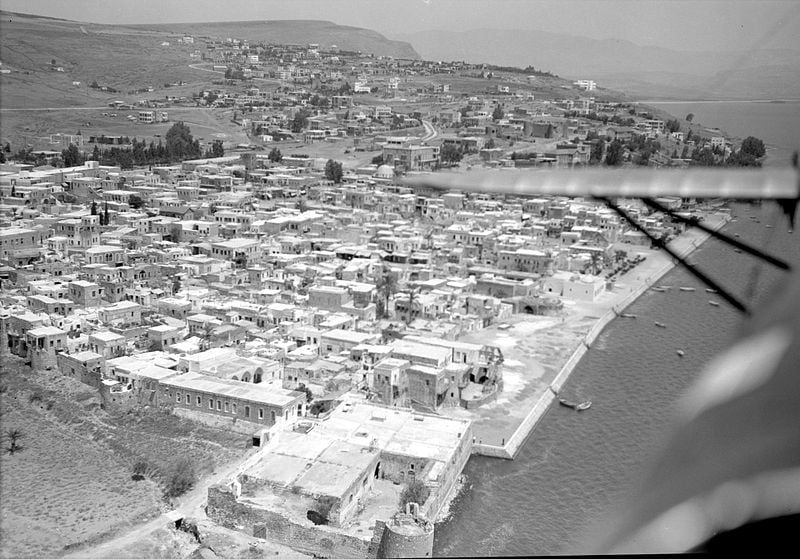
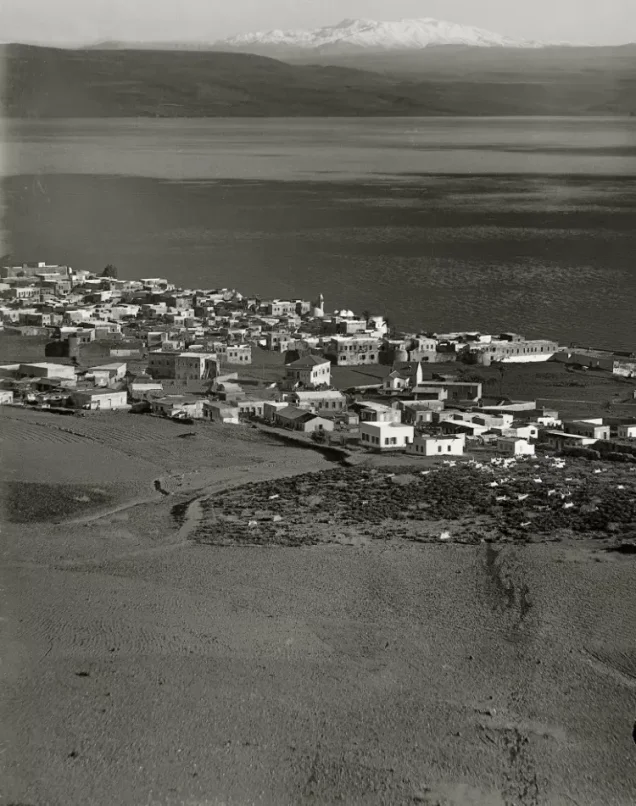
Tiberias, the bride of the lake, is a Palestinian city on the western shore of Lake Tiberias, more than two hundred meters below sea level. Before the Nakba it was Palestine's winter resort with its mineral baths, a city of fishermen and of walls built by Zahir al-Umar, and a market on the road to Damascus. On April 18, 1948 it became the first mixed Palestinian city to be emptied of its Arab people, within a few hours. [2] [4] [5]
This article tells the story of Tiberias before the Nakba: its history, walls and quarters; its lake, fishermen and baths; its market, cafés and schools; then the spring of 1948, its fall and the expulsion of its people and the villages of its district. Find more on our Tiberias page.
Tiberias Before the Nakba at a Glance
| Item | Details |
|---|---|
| Location | The southwestern shore of Lake Tiberias, more than 200 meters below sea level [2] |
| The lake | About 166 km², 21 km long and 13 km wide [2] [9] |
| Population (1922) | About 6,950, 64% of them Jewish [13] |
| Arabs under the Mandate | About 5,000 [12] |
| Arab property in the city | About 76,854 square meters, mostly in the old city [6] |
| Fall of the city | April 18, 1948 [4] [5] |
| Expelled from the city | About 5,000: some 500 to Nazareth and about 4,500 to the Jordanian border [5] |
| Depopulated villages in the district | 25 villages on our site [1] |
From Herod to Zahir al-Umar
Herod Antipas built Tiberias around 20 CE near the Canaanite site of "Raqqat" and named it after the Roman emperor Tiberius. [2] It lay on the trade route between Damascus and Egypt, which gave it commercial and military importance, and its mineral baths added to its fame. [3]
Muslims entered it in 634 under Shurahbil ibn Hasana. It was later occupied by the Crusaders, recovered by Saladin in 1187 just before the Battle of Hattin, handed back to the Crusaders in 1240 by al-Salih Ismail, and retaken in 1247. [2] [3] The Ottomans took it in 1517, and it became a district center under Acre. [2]
In 1730 Zahir al-Umar al-Zaydani took control of it, fortified it and restored its citadel, and in 1749 he extended its walls and built the great mosque in its northern quarter. [2] Napoleon took it in 1799, and under Egyptian rule its baths were restored and visitors multiplied. [2] [3] After the 1834 revolt against Egyptian rule, the mufti of Tiberias, Sheikh Abdullah al-Tabari, was exiled to Egypt for three years. [5] A devastating earthquake struck in 1837, and the city was rebuilt. [2]
The Walls and the Old City
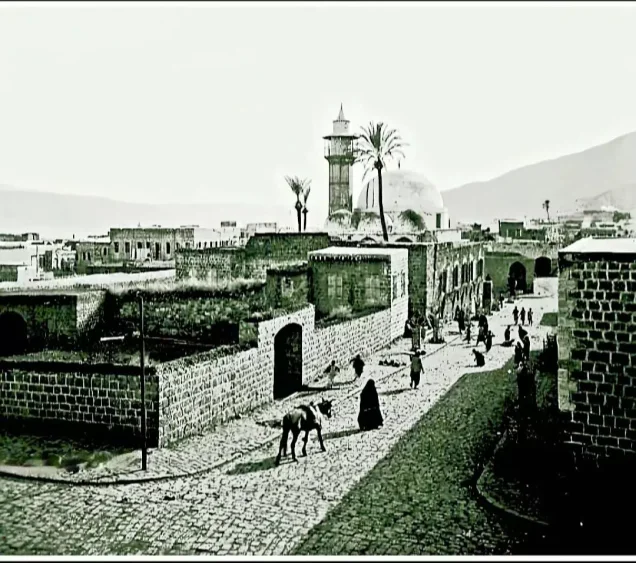
A thick wall surrounded Tiberias on its landward side; a section about 100 meters long survives, and it once had about 25 towers some six meters high. Houses stayed inside the walls until 1904, when building outside them was allowed, and at first only about 15 houses were built there. [2]
Before the Nakba the city was made up of three strips from north to south [2]:
- The shoreline strip: the boat landing, a Jewish residential quarter, the slaughterhouse, and the mineral baths in the south.
- The center: the main hospital and mission hospitals in the north, the old government house, and the main markets and residential quarters inside the walls.
- The west: black basalt quarries, the farmland of al-Urayda, and the city's cemeteries.
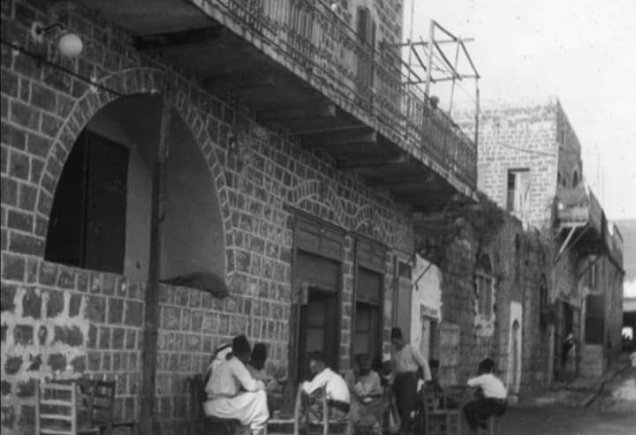
Arabs lived in the old city inside the walls, in "al-Hara al-Gharbiyya" (the Western Quarter), in the northern neighborhoods, and in the "Suq al-Atm" area in the south of the city. [9] [16] Its landmarks included the Saraya, the Arab fort at its northern exit, the government house, the magistrates' court and the Butler Hotel. [6] Ownership of the old city's houses was split roughly equally between Arabs and Jews. [5]
The Lake and Its Fishermen
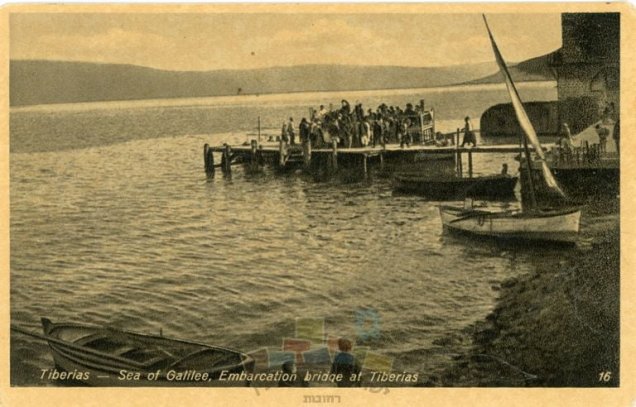
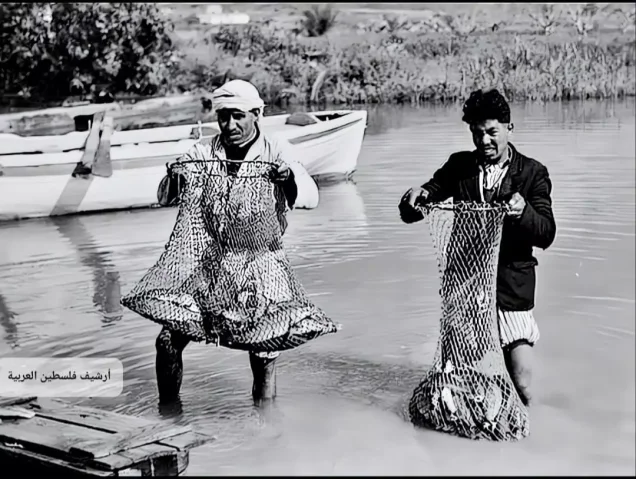
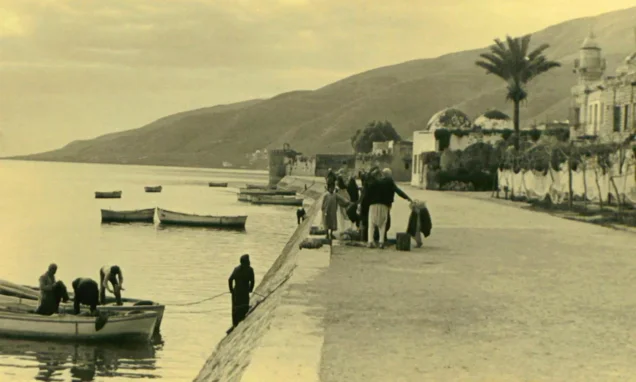
Fishing on the lake was the trade of the "Tabarna," the people of Tiberias, who went out at night in their boats with drag nets for fish merchants. The boats landed at "al-Bunt," where sardines were piled on reed mats and cafés stood. [8] The lake's most famous fish was "musht al-Tabarani," which was sold in the markets of Damascus and is still known there as "al-Tabarani." [8] [9] The Mandate authorities required fishermen to hold a license they called the "sea passport." [8]
Read the full story of fishing, the lake's fish and its dishes in Fishing Before the Nakba.
The Mineral Baths and Palestine's Winter Resort
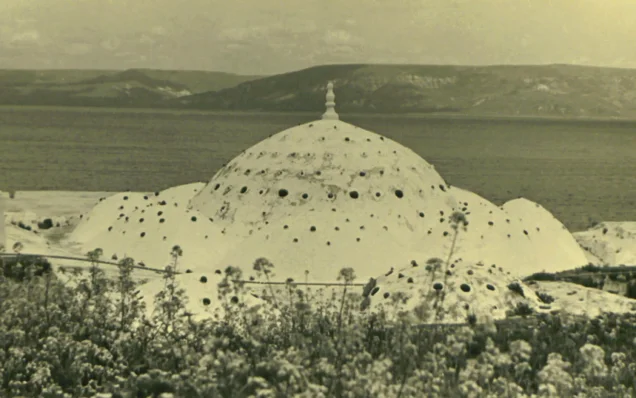
Since Roman times Tiberias was famous for its hot springs and mineral baths, where people came to heal [2], and its warm winters made it Palestine's winter resort, as Safad was its summer resort. [3] Under the Mandate the British authorities took over the baths, which brought in thousands of pounds a year, while neglecting Arab education in the city. [4]
Read also: Safad, Palestine's summer resort and Tiberias's neighbor.
Market, Trade and Transport
- Occupations: the Arabs of Tiberias worked in trade, crafts, fishing, tourism, construction, services and farming. [2] [4]
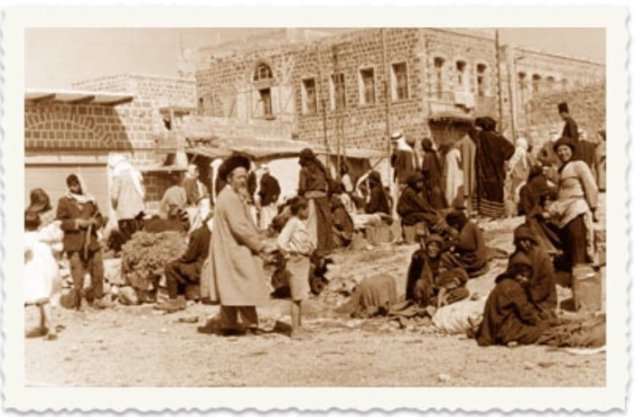
- The market: the city's main markets were inside the walls, and Tiberias was the trading center of the northern Jordan Valley. [2]
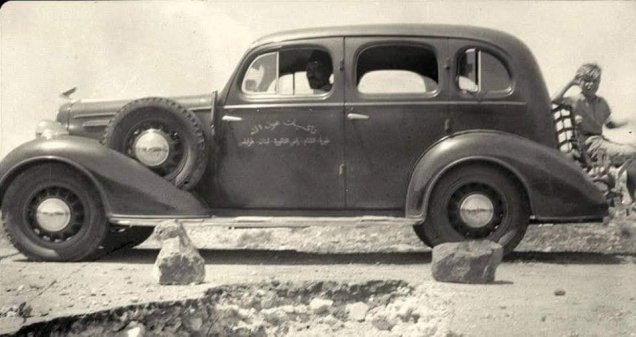
- Transport: paved roads linked Tiberias to Safad and Jerusalem, and the railway reached it through Samakh station on the Haifa–Daraa line. [2] Taxis linked it to Damascus and Lebanon. [1]
- An unequal balance: backed by Zionist institutions, Jews controlled the larger share of the city's economy, while Arabs were mostly limited to farming, fishing and small trade. [2] [4] The Beirut Sursuq family sold land in the area to the Jewish Agency, sparking peasant protests in the early 20th century. [6]
Read also: Palestinian Industries Before the Nakba.
Daily Life and Culture
The cafés of Tiberias, on the shore and in its quarters, were where its people met, especially the cafés of "al-Bunt" where the fishing boats landed. [8] The Tabarna loved classic Arabic singing at their weddings and evening gatherings. [9] Cultural life was limited: the city had no public libraries and newspaper sales were low, until the "Arab Cultural Club" was founded in February 1937. [4] [12] There were only a few private libraries, the best known belonging to the al-Tabari family, and a single Arabic bookshop, run by Ahmad Mansour, who imported its books from Egypt. In 1947 the "Nahda Club" was founded under the activist Ismail Qara Shuli. [12]
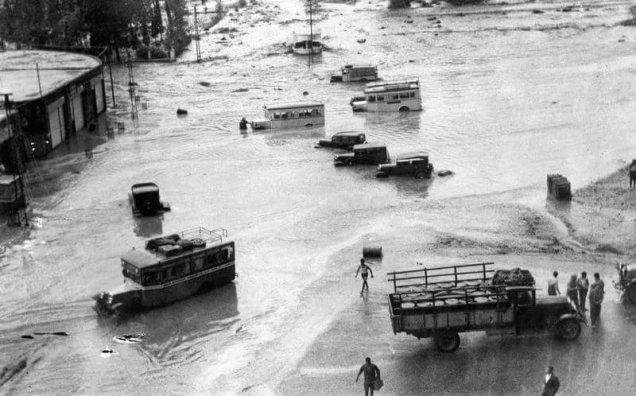
Life in the city was bound to the lake and its moods: in the winter of 1934 floods swept through its streets, as photographs in the city's gallery show. [1]
Schools
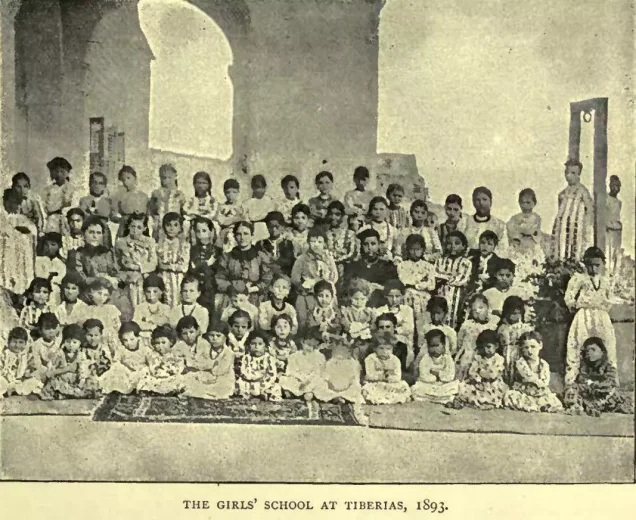
Arab education in Tiberias was less developed than in Nazareth and Safad. [4] Throughout the Mandate, Tiberias had no Arab secondary school, and a decision to establish one was taken only in 1947, while Nazareth and Safad had secondary schools from the late 19th century. [12] The Mandate authorities cited budget shortages, even though they had taken over the city's baths, which brought in thousands of pounds a year. [12]
Arab education in the city was limited to elementary schools for boys and girls, and those who wanted to continue their studies had to move to other cities. [1] [12]
Read: Education in Palestine Before the Nakba.
Tiberias Under the Mandate and the 1936 Revolt
Tiberias was known for good neighborly relations between its Arabs and Jews, who had lived together for nearly two hundred years since the days of Zahir al-Umar, and these relations held even through the Buraq Revolt of 1929 and the Great Revolt of 1936–1939. [5] [10] Sephardic Jews made up about half the population before 1936. [6]
The al-Tabari family led the city's political life [5], its most prominent figure being Sheikh Taher al-Tabari, born in Tiberias in 1890, who was appointed its mufti in 1921 and headed its Islamic-Christian Association. [7] Among the city's leaders in the early Mandate were Sheikh Abd al-Salam al-Tabari and Sheikh Said al-Tabari, and in the last decade Sidqi al-Tabari became almost the sole Arab leader there. [12] National politics in the city went through three stages: keeping the civil peace in the first decade; engagement with the national movement that peaked in the 1936 revolt, when dozens of young Arabs joined armed groups; and division in the last decade between moderates and the camp of Hajj Amin al-Husseini. [4]
The 1936–1939 revolt in Tiberias and its district
The Great Revolt strained the city's economic and social ties, so much so that in 1938 Jewish merchants appealed to the Jewish Agency for help as the city's economy suffered. [12] The roads of the district became a field for the rebels:
- June 21, 1936: rebels led by Abdullah al-Sha'ir and Abdullah al-Asbah attacked British and Zionist forces near Jubb Yusuf, on the road between Tiberias and Safad. [15]
- 1936: Hamida, wife of Hamad al-Eid, from Lubya, was shot dead by British forces. [14]
- 1937: Dhiba Dhiyab Salem was shot dead by British forces in Hittin. [14]
- June 1938: rebels blocked the Tiberias–Safad road at Jurn Halawa and attacked a British patrol; Rashid al-Sha'ir was killed in the battle. [15]
- October 5, 1938: Mohammad Khadr Abu Khadr was killed in a clash with British forces at Jurn Halawa near Tiberias. [14]
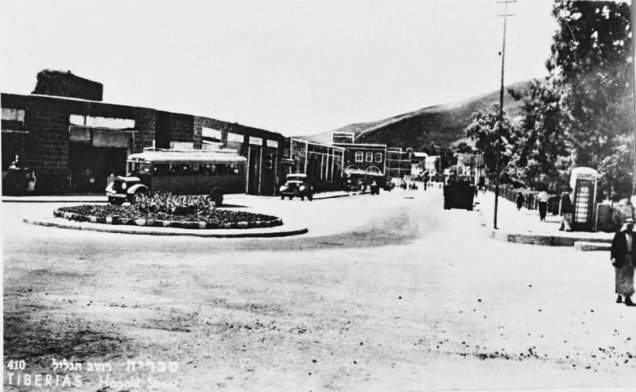
Spring 1948: A Fragile Truce
In early 1948 Arabs cut the road linking the Jewish settlements of Upper Galilee with those of the Jordan Valley, and besieged the old Jewish quarter on the shore. [2] On March 8 clashes broke out in the city; the British mediated a truce that lasted only two days, fighting resumed on March 11 and a curfew was imposed, until the British ordered a ceasefire on March 15. [6] Sadiq and Nayef al-Tabari sought a truce between the two sides known as the "Tiberias Agreement," but it was not respected. [5] [6]
On the night of April 11–12, 1948, "Golani" forces attacked the village of Nasir al-Din near Tiberias and committed a massacre in which about 12 people were killed, most of them women and children, days after the Deir Yassin massacre, spreading terror in the city. [6] Read about Zionist massacres on our site.
The Fall of Tiberias
On April 8 fighting resumed, and Arab fighters held key positions for four days, including the Butler Hotel and the Anglo-Palestine Bank building. [6] On April 16 the Haganah began implementing "Plan Dalet" in the city, seizing the northern fort, and on April 17–18 it took control of Tiberias. [6]
The battle was short; the Haganah faced only a small number of Arab fighters [5] in a city that had not prepared for war, because its leadership had bet on protecting neighborly relations, leaving it isolated from the rest of Palestine, while the British authorities all but abandoned their responsibility as they began to withdraw. [10]
The Day of Departure
On April 18, 1948, under heavy British pressure and Haganah fire, the British army brought buses to take the Arabs of Tiberias out of the city; archive photographs show the buses crammed with people. [5] About 500 were taken to Nazareth and about 4,500 through Samakh and al-Hamma to the Jordanian border and then out of the country, and not a single Arab remained in the city. [5] Most went on to Irbid in Jordan. [6]
Sheikh Taher al-Tabari had urged his family and the city's notables to stay, but he was forced to leave with them [5], and his memoirs were looted from his house after he left. [7] The great-granddaughter of one Tiberias family recounts that Haganah soldiers first took her great-grandfather, one of the city's notables, to the Syrian border, so that the rest would understand they had to leave. [11]
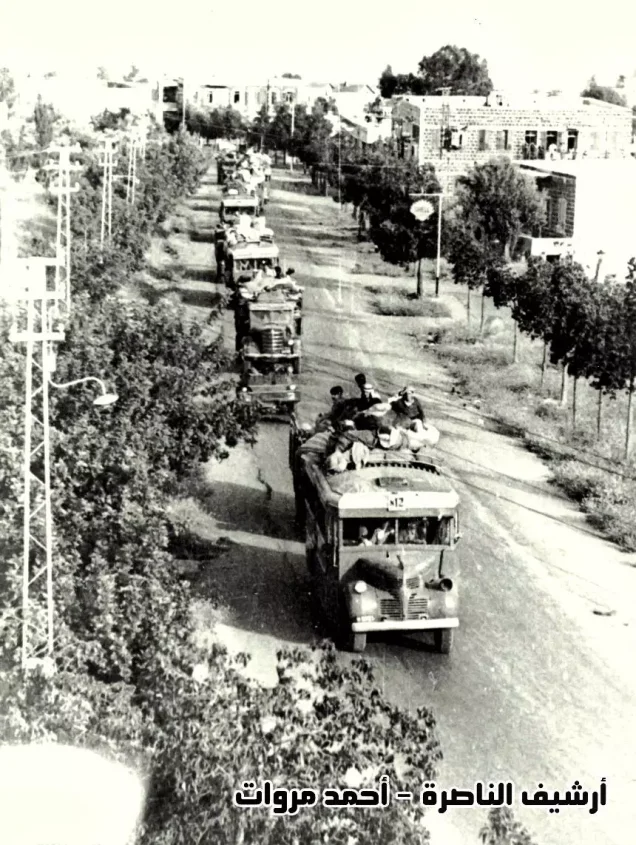
The Tabarna were scattered between Jordan and Syria, and many live today in Irbid, Damascus and Yarmouk camp. [6] [9]
The Depopulated Villages of Tiberias District
Twenty-five villages of Tiberias district are listed as depopulated on our site. [1] Some fell before the city, in March 1948; most in the weeks after its fall; and the rest in Operations "Dekel" in July and "Hiram" in October 1948. Here are brief profiles; each village has a detailed page in the depopulated villages section of our site: [1]
March 1948: villages south of the lake and along the Jordan
- al-Manara (Arab al-Manara): on a hill overlooking the lake, about 5 km south of Tiberias, with 490 inhabitants. The Haganah attacked it on March 2, 1948, expelled its people and demolished some of its houses.
- al-Ubaydiyya: on the west bank of the Jordan River, about 11 km south of Tiberias, with 870 inhabitants. Its people left for the Nazareth area on March 3, 1948, fearing an expected attack, and its houses were later demolished.
- al-Manshiyya (Manshiyyat Samakh): near the Jordan River, about 11 km south of Tiberias. It was depopulated in early March 1948, at about the same time as al-Ubaydiyya.
April 1948: the villages around the city
- Khirbat Nasir al-Din: on a hill about 3 km southwest of Tiberias, with 90 inhabitants. "Golani" forces attacked it on April 11–12, 1948 and committed a massacre there; most of its people fled to Lubya and Tiberias, and Tiberias neighborhoods now stand on its land.
- al-Samra: on the southeastern shore of the lake, about 10 km southeast of Tiberias, with 290 inhabitants. Its depopulation began on April 21, 1948, those who stayed were forced out between 1949 and 1956, and most became refugees in Syria.
- al-Majdal: on the western shore of the lake, about 4 km northwest of Tiberias, with 360 inhabitants. Its people left on April 22, 1948, four days after the fall of Tiberias.
- Wadi al-Hamam: about 5 km northeast of Tiberias. Its people were expelled on April 22, 1948, and a village of the same name was later built nearby for people displaced from the Hula villages.
- Kafr Sabt: about 10.5 km southwest of Tiberias, with 480 inhabitants. Its people left on April 22, 1948 after the fall of Tiberias, and only stone rubble remains.
- Ghuwayr Abu Shusha: on a hill near the western shore of the lake, about 8 km north of Tiberias, with 1,240 inhabitants. The Palmach attacked it on April 24, 1948; its women, children and elderly were moved to al-Rama, and some were later expelled to Lebanon in October.
- Samakh: on the southern shore of the lake, about 10 km southeast of Tiberias, and one of the largest villages in the district, with 3,460 inhabitants and an important station on the Haifa–Daraa Hejaz line. "Golani" occupied it on April 28, 1948; the Syrian army entered it briefly in May, and it was reoccupied on May 21.
- al-Dalhamiyya: on the north bank of the Yarmouk River, about 14 km south of Tiberias, with 410 inhabitants. Its people were expelled between mid-April and early May 1948.
- Yaquq: on a hill overlooking the lake, about 12.5 km north of Tiberias, with 210 inhabitants. It was depopulated in late April or early May 1948.
- al-Wa'ra al-Sawda: about 7 km northeast of Tiberias, overlooking Wadi al-Hamam and the lake, with 1,870 inhabitants together with Arab al-Mawasi and al-Wuhayb. It was depopulated in 1948, with dates given between April and July.
May 1948: the northern shore and the west of the district
- al-Samakiyya (Arab al-Samakiyya): on the northern shore of the lake, about 11 km northeast of Tiberias, with 380 inhabitants who combined herding, farming and fishing. Its people were expelled on May 4, 1948, some of them to Syria.
- al-Tabigha: on the northwestern shore of the lake, about 9 km northeast of Tiberias. The Palmach occupied it on May 4, 1948 and expelled its people, and some of its houses were burned.
- al-Shajara: about 14 km west of Tiberias, with 770 inhabitants, and the birthplace of the artist Naji al-Ali in 1936. "Golani" occupied it on May 6, 1948 and expelled its people.
- Hadatha: about 12.5 km southwest of Tiberias, with 520 inhabitants. "Golani" occupied it on May 12, 1948, and only stone ruins remain.
- Ma'dhar: about 12 km southwest of Tiberias, with 480 inhabitants. "Golani" occupied it on May 12, 1948, and its people fled in fear.
- Awlam: about 15 km southwest of Tiberias, with 720 inhabitants. "Golani" entered it on May 12, 1948, and only stone ruins remain.
July 1948: Operation Dekel
- Hittin: about 8 km northwest of Tiberias, near the site of the Battle of Hattin, where Saladin won in 1187, with 1,190 inhabitants. Israeli forces attacked it, and most of its people left on the night of July 16–17, 1948 after the fall of Nazareth.
- Nimrin: about 10 km northwest of Tiberias, with 320 inhabitants. It was occupied on July 16–17, 1948.
- Lubya: on a rocky hill about 10 km west of Tiberias, and the largest village in the district, with 2,350 inhabitants. Its people repelled attacks in January, February and March 1948; most left on the night of July 16 after the fall of Nazareth, and Israeli forces entered it on July 17.
October 1948 and after
- al-Mansura: about 16 km northwest of Tiberias, south of Mount Hazzur. It was probably depopulated in late October 1948 during Operation Hiram, and was completely destroyed.
- Eilabun: at the northeastern edge of the Battuf plain, about 12 km northwest of Tiberias, with 550 inhabitants. It was occupied in late October 1948 and a massacre was committed there in which 14 men were killed; most of its people were expelled to Lebanon, many returned in 1949, and it is still a living village.
- al-Nuqayb: on the eastern shore of the lake, about 10 km east of Tiberias, with 320 inhabitants. After the 1949 armistice it fell in the demilitarized zone; its people were pressured to leave between 1949 and 1956, and the last of them left in June 1967.
Read about the Eilabun massacre of 1948 on our site. The full list of the district's villages, with a page for each, is on our Tiberias district page.
Tiberias After the Nakba
- Demolition of the old city: the old city was demolished, with its walls and most of its historic landmarks, and the demolition continued until 1959. [4] [5]
- Confiscation of land: Arab property was confiscated, and more than 555 dunams of Arab land were transferred to Jewish institutions. [6]
- In place of the Arab quarters: gardens, parks and hotels were built where the Arab quarters in the north of the city had stood, and the city was ringed with settlements. [2] [3]
- The houses: the Tiberias municipality seized the houses of expelled families. [11]
- The lake: in 1964 a pipeline was built to carry the lake's water to other areas under occupation, which has been linked to the fall in its level. [2]
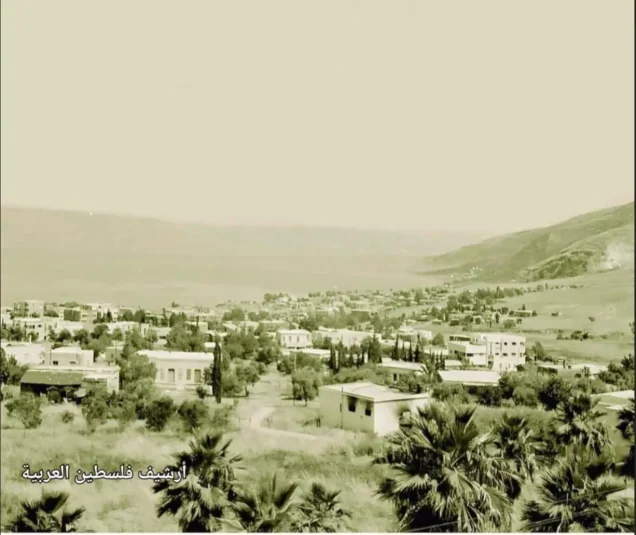
Read more on our site: Safad and its depopulated villages, Beisan and its depopulated villages and Nazareth.
Conclusion
Tiberias was the bride of the lake: walls and a citadel fortified by Zahir al-Umar, hot baths that drew people from all over Palestine, and fishermen returning at dawn to al-Bunt with their catch of musht. On a single day in April 1948 its people left in crowded buses for Nazareth and Irbid, and the villages of its district followed. Yet "al-Tabarani" is still the name of the lake's fish in the markets of Damascus, and the Tabarna in Irbid and Yarmouk still wait to return to their lake.
Frequently Asked Questions About Tiberias Before the Nakba
When did Tiberias fall in 1948?
Tiberias fell on April 17–18, 1948, and all its Arab inhabitants were taken out on April 18, making it the first mixed Palestinian city to be emptied of its Arab population.
How many Arabs lived in Tiberias before the Nakba?
About 5,000 Arabs lived in Tiberias under the Mandate. It was a mixed city with a Jewish majority from the 1920s; Jews made up 64% of its roughly 6,950 inhabitants in 1922.
Where were the people of Tiberias expelled to?
About 500 were taken to Nazareth and about 4,500 through Samakh and al-Hamma to the Jordanian border; most settled in Irbid, and others in Syria.
Who built the walls of Tiberias?
Zahir al-Umar al-Zaydani fortified the city after taking control of it in 1730 and extended its walls in 1749; the walls surrounded it on the landward side.
Why was Tiberias called Palestine's winter resort?
Because of its warm winters, as it lies more than 200 meters below sea level, and because of its hot springs and mineral baths, where people came to heal.
What is musht al-Tabarani?
The most famous fish of Lake Tiberias; before the Nakba it was sold in the markets of Damascus, where it is still known as "al-Tabarani."
What was the Nasir al-Din massacre?
A massacre committed by "Golani" forces in the village of Nasir al-Din near Tiberias on the night of April 11–12, 1948, in which about 12 people were killed, most of them women and children; it was one of the causes of the terror that preceded the fall of the city.
How many villages were depopulated in Tiberias district?
Our site lists 25 depopulated villages in Tiberias district, including Lubya, Hittin, Samakh, al-Shajara, Nasir al-Din, al-Majdal and al-Tabigha.
Sources and References
Arabic-language sources are listed with translated titles.
- "Tiberias," Depopulated Palestinian Villages section, Palestinina (Arabic).
- "Tiberias, a Palestinian City Named After a Roman Emperor," Encyclopedia, Al Jazeera Net, October 16, 2024 (Arabic).
- "The City of Tiberias," Al Jazeera Net, July 17, 2006 (Arabic).
- Mustafa al-Abbasi, Arab Tiberias Under British Rule, 1918–1948, Arab Center for Research and Policy Studies, 2023.
- Yousef al-Shayeb, "Arab Tiberias: When the Haganah Gangs Assassinated the 'City of Coexistence'," Diffah Thalitha – Al-Araby Al-Jadeed, February 18, 2024 (Arabic).
- Ayman A. Hassouneh, "Palestine Library: Tiberias, an Encyclopedic History" (review of Issam Sakhnini's book), Ultra Sawt, July 5, 2020 (Arabic).
- Ahmad Mrouat, "The Memoirs of Sheikh Taher al-Tabari," Diwan al-Arab, November 24, 2007 (Arabic).
- "Fishing Before the Nakba: Abundant Fish and Good Times on Palestine's Shores," Palestinina (Arabic).
- Ali Badwan, "Tiberias, the Tabarna and the Sea of Galilee," Diwan al-Arab, January 15, 2020 (Arabic).
- Mustafa Abbasi, "The End of Arab Tiberias: The Arabs of Tiberias and the Battle for the City in 1948," Institute for Palestine Studies.
- Marwa Daoudi, testimony on her family's house in Tiberias, Noon Post, December 1, 2023 (Arabic).
- "New: Arab Tiberias Under British Rule, 1918–1948" (on Mustafa al-Abbasi's book), Romman Magazine, February 27, 2023 (Arabic).
- Ahmad Mrouat, "Toward Recovering Folk Memory," Diwan al-Arab, March 23, 2007 (Arabic).
- "Martyrs of the 1936–1939 Revolt," Palestinian National Information Center – WAFA (Arabic).
- Ali Habib Allah, "Safad: Nights of Cold and Gunpowder (3/4)," Arab48, December 15, 2021 (Arabic).
- Zuhair Doula, "Tiberias: Its Landmarks Are Palestinian, Its Residents Zionist Gangs" (testimonies of refugees from Tiberias and its district), Emarat Al Youm, February 8, 2017 (Arabic).
More from the archive
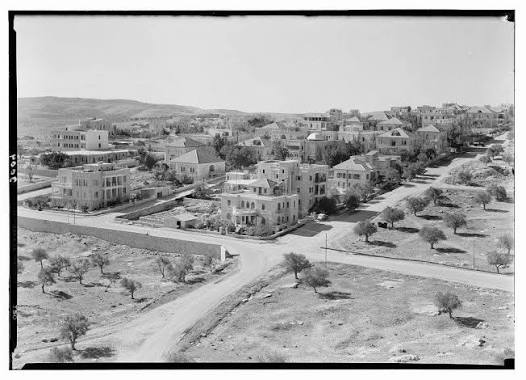
 Download Our Palestine App
The whole archive in the palm of your hand: depopulated villages, the Nakba, the massacres and Al-Aqsa — free, with no ads to erase the story.



Comments
No comments yet — be the first to write one.
Add your comment
Name and email are optional. Comments appear after review.