
Sheikh Farhan al-Saadi: The First Bullet of the 1936 Revolt
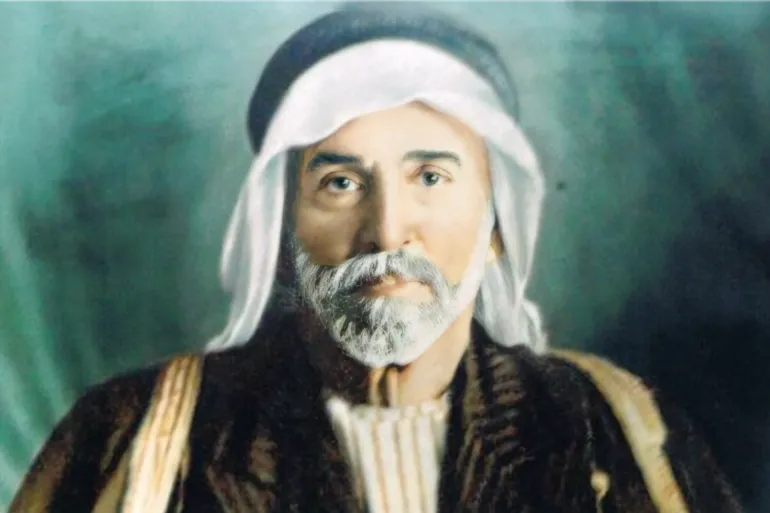
“No, I am not guilty – and if you let me go now, I will go back and fight.”
(Sheikh Farhan al-Saadi before the British court, according to his family) [1]
Sheikh Farhan al-Saadi was a Palestinian fighter from the village of al-Mazar in the Jenin district, a comrade of Sheikh Izz al-Din al-Qassam and leader of the Qassamite groups after his death, regarded as the man who fired the “first bullet” of the Great Palestinian Revolt in 1936. The British Mandate authorities arrested him in November 1937, tried him before a hasty military court and hanged him in Acre prison, an old man of nearly eighty, fasting in Ramadan. [2] [1] [3]
Who was Sheikh Farhan al-Saadi?
Farhan al-Saadi was one of the earliest leaders of armed resistance against the British occupation and the Zionist project in Palestine. He fought in the Buraq uprising, was imprisoned, then became al-Qassam’s deputy and his successor at the head of the Qassamites despite his age, making Jenin a centre of resistance in 1936 [1] [3] [2]. His name still inspires Jenin’s martyrs and fighters today [2].
Farhan al-Saadi at a glance
| Item | Details |
|---|---|
| Name | Sheikh Farhan al-Saadi [2] [1] |
| Born | Al-Mazar, Jabal Faqqu’a, Jenin district; 1858 according to Al Jazeera [2] [1] |
| Titles | “Sheikh,” for memorising the Qur’an and hadith; “owner of the first bullet” of the 1936 revolt [2] [1] |
| Movement | Comrade of Sheikh Izz al-Din al-Qassam and leader of the Qassamite groups after his death [2] [1] [3] |
| Imprisonment | 1929–1932 in Acre and Nur Shams prisons; final arrest in al-Mazar in November 1937 [2] [3] [4] |
| Executed | 27 November 1937 (14 Ramadan 1356 AH), Acre prison; Al-Quds Al-Arabi gives 28 November [2] [1] |
| Age | About 75–80, according to the sources [1] [3] [5] [2] |
| Buried | The village of Nuris, according to Al Jazeera [2] |
Timeline
| Date | Event |
|---|---|
| 1858 | Born in al-Mazar, Jenin district, according to Al Jazeera [2] |
| First World War | Fights in the Ottoman army after serving in the gendarmerie [2] |
| 1929 | Resigns from the Mandate police with the Buraq uprising and forms a fighting group in Jenin [2] [1] |
| 1929–1932 | Three years in prison in Acre and Nur Shams [2] [3] |
| After 1932 | Joins Sheikh Izz al-Din al-Qassam [2] [1] |
| November 1935 | Al-Qassam killed in the woods of Ya’bad; al-Saadi survives, being on another mission [2] |
| 15 April 1936 | Attack on a convoy on the Nablus–Tulkarm road, the spark of the Great Revolt [1] [3] |
| 30 June 1936 | The al-Fandaqumiya ambush between Nablus and Jenin [2] |
| November 1937 | Besieged and arrested in al-Mazar; tried before a military court [2] [1] [4] |
| 27 November 1937 | Hanged in Acre prison while fasting [2] [1] |
Birth and upbringing
Farhan al-Saadi was born in al-Mazar, in the Jabal Faqqu’a area of the Jenin district – in 1858 according to Al Jazeera – to a family of Hijazi origin [2] [1]. His grandfather Ibrahim taught him to shoot and ride; he studied at the kuttab and then the schools of al-Mazar and Jenin, and memorised the Qur’an and hadith in mosque study circles, earning the title “Sheikh” early [2] [1]. He worked the land and married Latifa Abu Hijazi and Zarifa Suleiman [2] [1].
He joined the Ottoman gendarmerie and fought in the Ottoman army in the First World War [2].
The Buraq uprising and prison
Under British rule he served as a sergeant in the Northern District police, but resigned when the Buraq uprising broke out in 1929 and formed a group of fighters in Jenin that attacked British and Zionist targets [2] [1]. The Mandate authorities arrested him and he spent three years (1929–1932) in Acre and Nur Shams prisons [2] [3].
Al-Qassam’s comrade
After his release Farhan al-Saadi joined Sheikh Izz al-Din al-Qassam; they first met at the Istiqlal Mosque in Haifa, he became al-Qassam’s deputy, and al-Qassam visited him at his home in al-Mazar [2] [1] [3].
In November 1935 British forces surrounded al-Qassam in the woods of Ya’bad near Jenin and killed him; the British believed al-Saadi was with him, but he survived because al-Qassam had sent him on another mission [2]. After al-Qassam’s death the Qassamite groups chose Farhan al-Saadi as their leader despite his advanced age [1] [2].
The first bullet: 15 April 1936
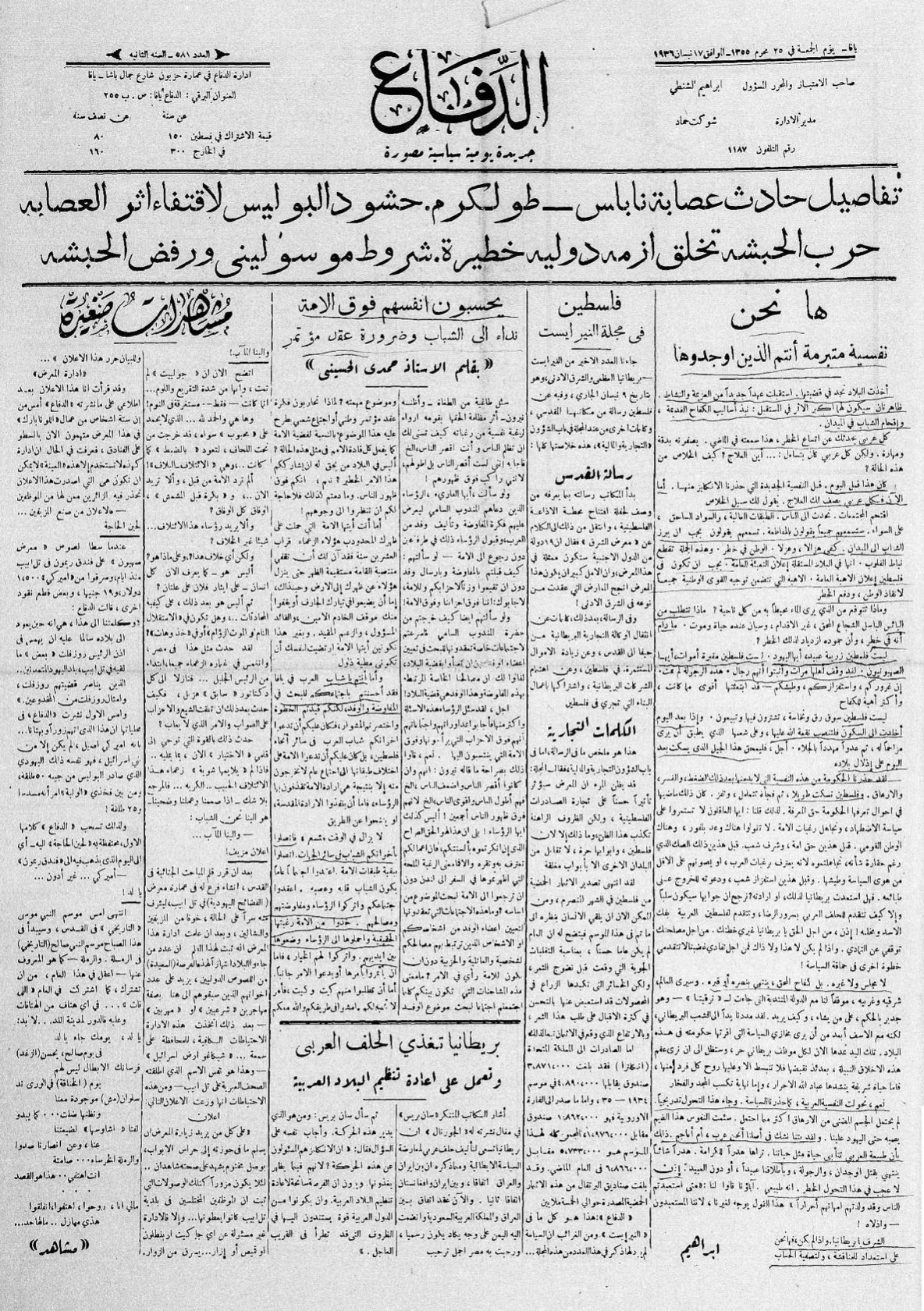
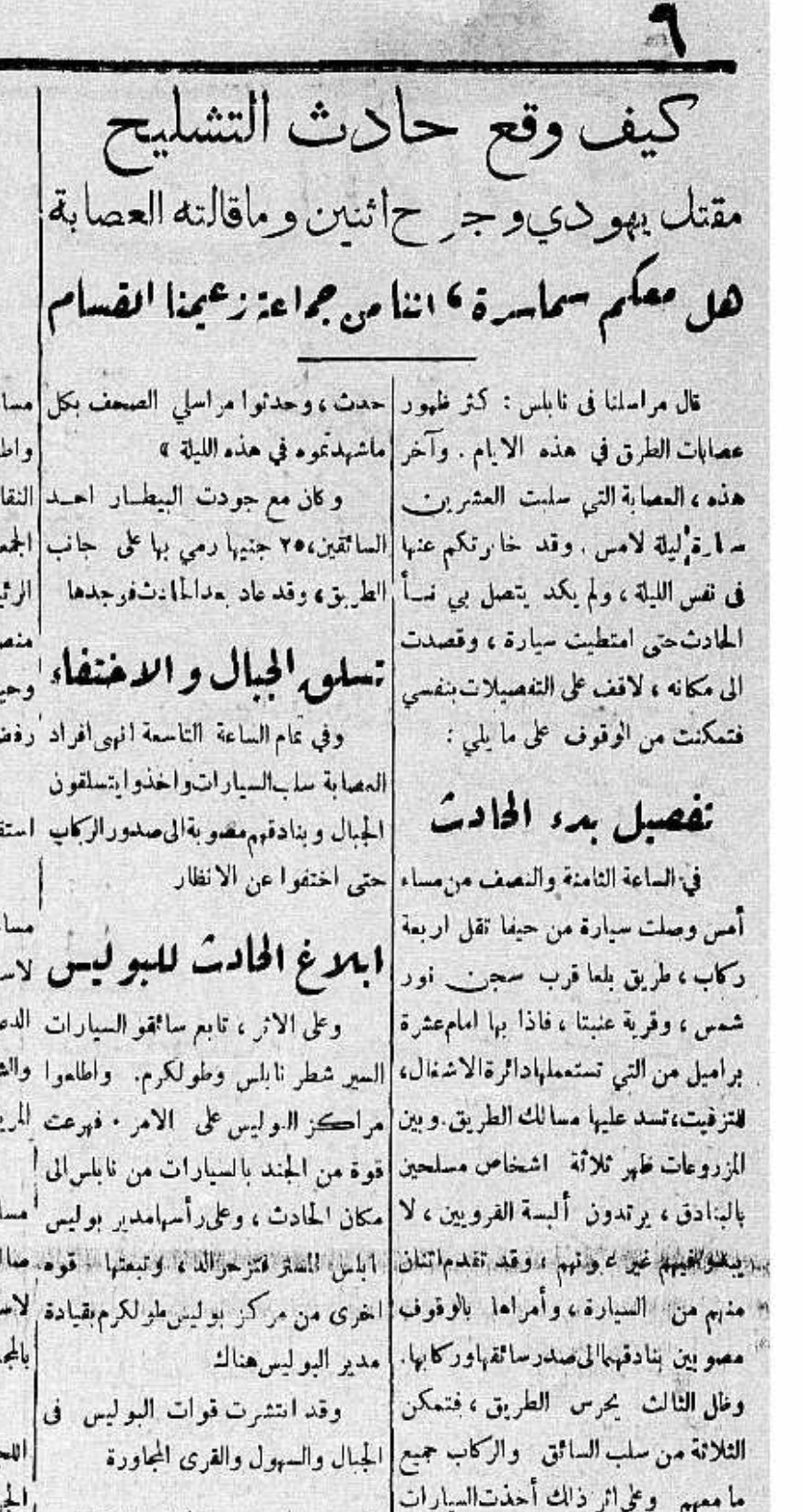
On 15 April 1936 a Qassamite group led by Farhan al-Saadi attacked a Jewish convoy on the Nablus–Tulkarm road, killing two and wounding a third, according to historian Mohsen Saleh, in response to attacks on Arabs in the Jaffa area [1] [3]. The operation was the spark that set events alight: the general strike was declared and the Great Palestinian Revolt began – which is why Farhan al-Saadi is called the man of the “first bullet” of the revolt [3] [1] [5].
In the Great Revolt
In 1936 Jenin became a centre of resistance under Farhan al-Saadi’s leadership [3]. On 30 June 1936 his group ambushed British forces at al-Fandaqumiya between Nablus and Jenin, an ambush Al Jazeera says killed more than 30 British soldiers, with three fighters killed [2]. He was wounded in the hand at the battle of Ein Jalut and kept fighting [1].
Al Jazeera credits him with launching the second phase of the revolt in 1937 by targeting the British official Andrews, after which Britain stepped up its pursuit of him [2]. His house and orchard were open to the fighters [1].
Siege and arrest
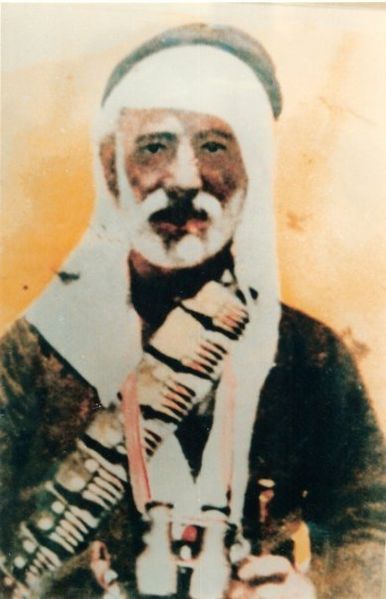
In November 1937, during Ramadan, British forces surrounded al-Mazar, and he was arrested at dawn in his sister’s house, according to his family, who blame an informer [1]. Al Jazeera says he agreed to surrender through the village mukhtar together with three comrades, to spare the villagers’ lives and homes [2]. The Palestinian Museum Digital Archive holds a photograph of his arrest by British occupation forces in 1937 [4].
Trial and execution while fasting
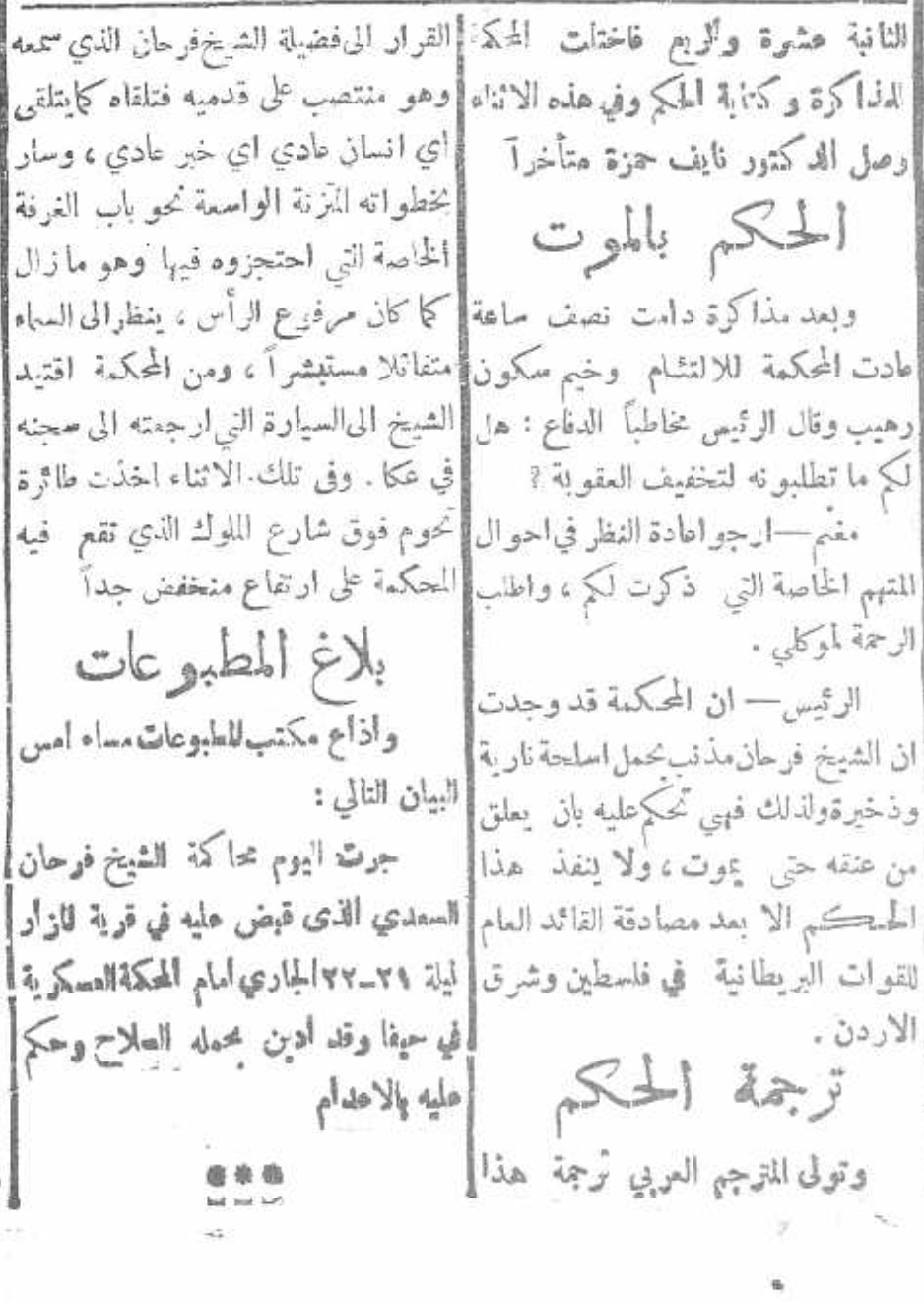
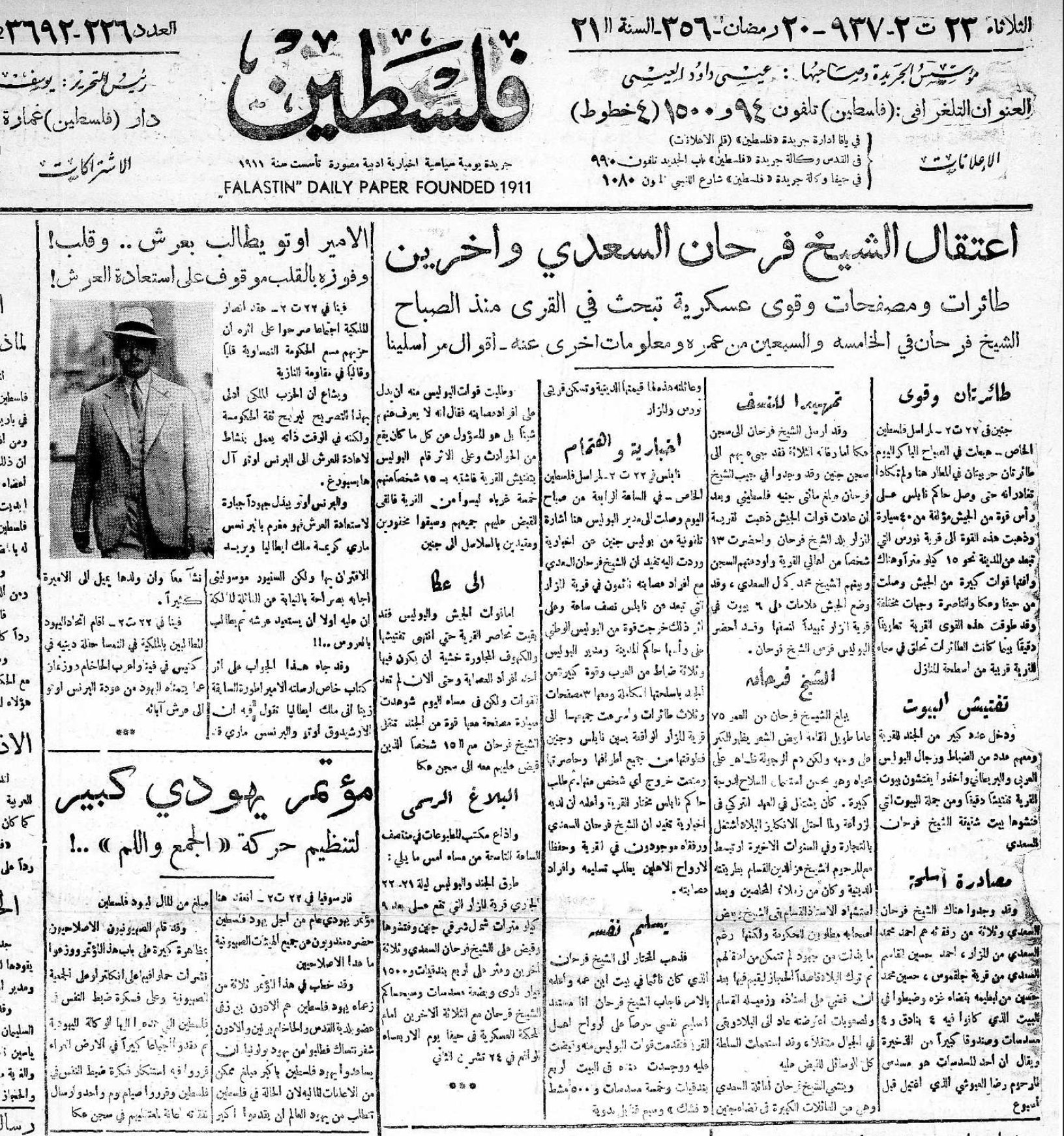
The sheikh was taken to Acre prison and tried before a military court for possessing arms – the first person tried under Britain’s emergency regulations – with his lawyer’s defence ignored, and was sentenced to death by hanging [2] [1]. The newspaper Falastin on 25 November 1937 described him walking through the court with his head held high despite exhaustion and heavy chains [1].
His family relates that when asked in court whether he was guilty he answered: “No, I am not guilty – and if you let me go now, I will go back and fight” [1]. Asked for his last wish, he asked to see his family; offered food to break his fast, he refused, saying: “I want to meet the face of the Lord of the Worlds while fasting” [1].
On 27 November 1937 – 14 Ramadan 1356 AH – less than five days after his arrest, Britain hanged him in Acre prison [2]; Al-Quds Al-Arabi gives the date as 28 November [1]. He was an old man of about seventy-five to eighty, fasting in Ramadan [1] [3] [5].
Sheikh As’ad al-Shuqairi provided the shroud, and the house of mourning stayed open for three months [1]. He was buried in the village of Nuris, according to Al Jazeera [2]. He left a written will urging his family to be patient and united, which one of his grandsons keeps in Jordan [1].
Legacy: from al-Mazar to Jenin camp
Farhan al-Saadi remains a symbol of resistance in northern Palestine; Al Jazeera describes him as one who “still inspires the martyrs and fighters of Jenin” [2]. The al-Saadi family has given 28 martyrs since 1990, among them 18-year-old Mahmoud al-Saadi, killed by occupation fire during a raid on Jenin on 21 November 2022 [2]. His great-nephew Bassam al-Saadi, a prisoner in the occupation’s jails, tells his story and stresses his high standing in the northern West Bank [3] [2].
In Arraba al-Battuf, Dr Farhan al-Saadi bears his name, at the request of a friend who carried a spoken message from the sheikh before his execution [1].
Read also: Abdel Qader al-Husseini, Abdel Rahim Mahmoud.
Video
Frequently asked questions about Sheikh Farhan al-Saadi
Who was Sheikh Farhan al-Saadi?
A Palestinian fighter from al-Mazar in the Jenin district, comrade of Sheikh Izz al-Din al-Qassam and leader of the Qassamites after him, who fired the first bullet of the 1936 revolt.
Why is Farhan al-Saadi called the man of the first bullet?
Because his group carried out the attack of 15 April 1936 on the Nablus–Tulkarm road that sparked the Great Palestinian Revolt.
When was Sheikh Farhan al-Saadi executed?
On 27 November 1937 according to Al Jazeera, or 28 November according to Al-Quds Al-Arabi.
Where was Farhan al-Saadi executed?
In Acre prison, hanged by the British Mandate authorities.
How old was Farhan al-Saadi when he was executed?
About 75 to 80, and he was fasting in Ramadan.
What was Farhan al-Saadi’s relationship with al-Qassam?
He was his deputy and comrade, and led the Qassamite groups after al-Qassam was killed in the woods of Ya’bad in 1935.
What did Farhan al-Saadi say when offered food before his execution?
He refused, saying, according to his family: “I want to meet the face of the Lord of the Worlds while fasting.”
Sources and references
Arabic-language sources are listed with translated titles.
- Wadie Awawdeh, “The Mujahid Sheikh Farhan al-Saadi: The First Bullet of the Great Palestinian Revolt,” Al-Quds Al-Arabi, 27 December 2018.
- “Sheikh Farhan al-Saadi: The Resistance Fighter Who Escaped Assassination but Not Execution,” Al Jazeera Encyclopedia, 27 November 2022.
- Fareed Taamallah, “Jenin’s Revolutionary History as Told by Its Elders,” Noon Post, 5 October 2021.
- “Farhan al-Sa’di Being Arrested by the British Occupation, 1937,” Sameeh Hammoudeh Collection, Palestinian Museum Digital Archive.
- “Sheikh Farhan Al-Saadi” (photograph, 1937), Mohamed Ali Eltaher archive.
Photo gallery
More from the archive

 Download Our Palestine App
The whole archive in the palm of your hand: depopulated villages, the Nakba, the massacres and Al-Aqsa — free, with no ads to erase the story.



Comments
No comments yet — be the first to write one.
Add your comment
Name and email are optional. Comments appear after review.