
Palestinian Embroidery at UNESCO: The 2021 Global Recognition
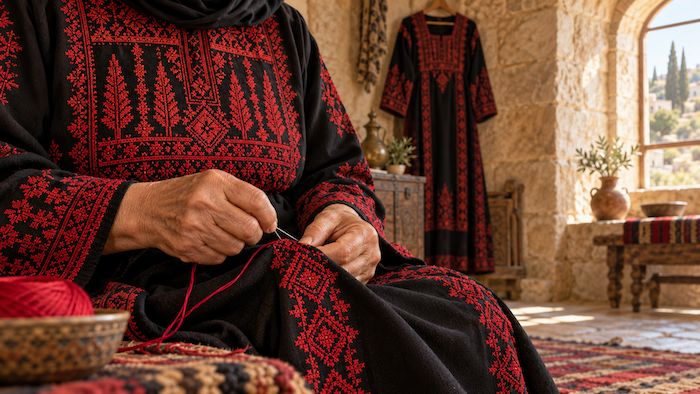
In December 2021, UNESCO inscribed the art of embroidery in Palestine on the Representative List of the Intangible Cultural Heritage of Humanity. It was the first explicit international recognition that the stitches Palestinian women have passed down for generations are a heritage that bears Palestine's name.
The decision came after years of attempts to present the Palestinian thobe on global fashion stages as "Israeli." In this article we tell the story of Palestinian embroidery at UNESCO: what this art is, how its nomination file reached UNESCO, and what the inscription means in practice in the battle over memory.
What is Palestinian embroidery (tatreez)?
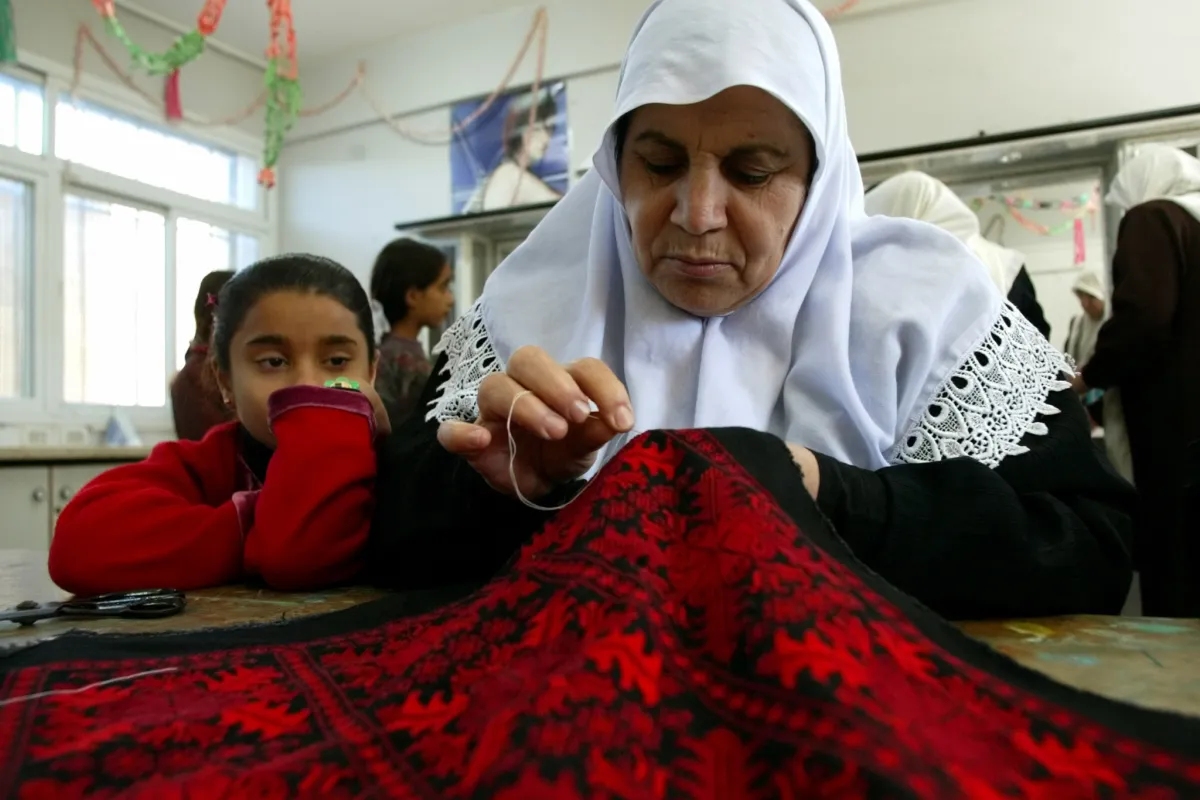
Palestinian embroidery, known in Arabic as tatreez, is the art of decorating fabric with needle and coloured thread. It began in rural Palestine and spread to the cities, the refugee camps and the diaspora. UNESCO describes it as a social practice passed between generations: women embroider with their daughters and neighbours when they gather in each other's homes.
The village thobe and its parts
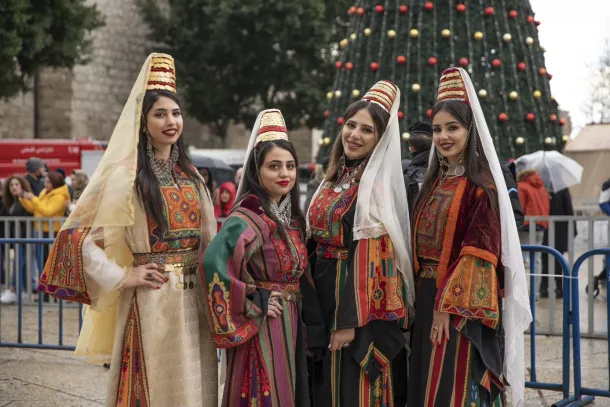
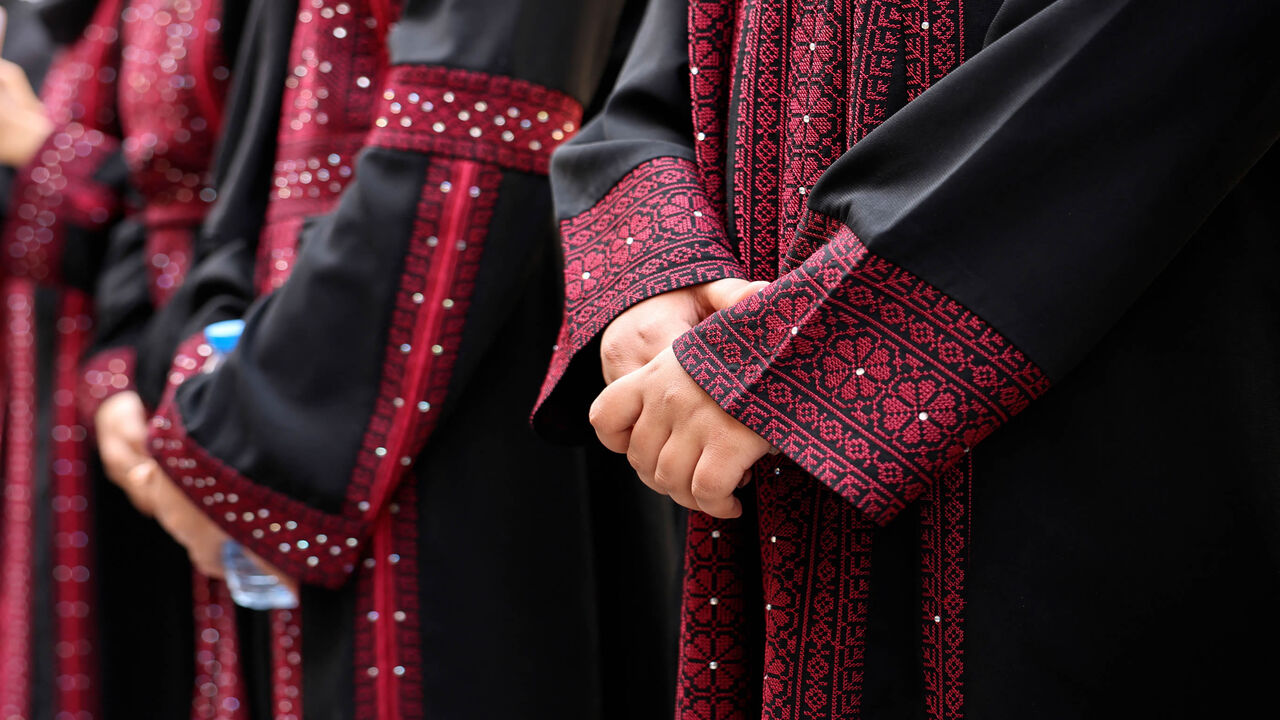
A village woman's traditional dress consists of a long dress (thobe), trousers, a jacket, a headdress and a veil. Embroidery is concentrated on the qabbeh (chest panel), the sleeves and cuffs, and on the banayeq, the vertical side panels running from the waist to the hem. Women embroider with silk thread on wool, linen or cotton.
A language of stitches: what the thobe says about its wearer
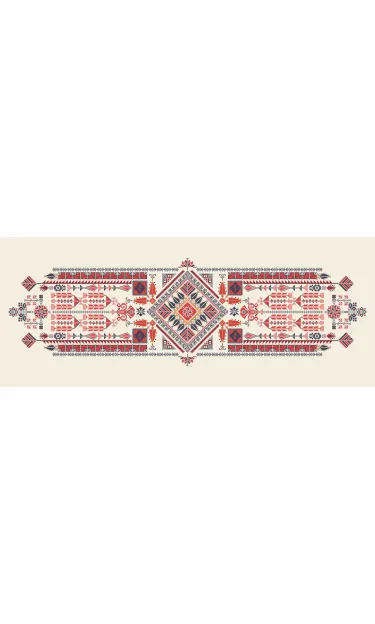
The thobe was never just decoration; it was an identity card. Its colours and motifs revealed a woman's village and region, her marital status and her economic standing. Among the best-known motifs:
- The cypress tree: a symbol of steadfastness and eternity, common on the side panels.
- The palm tree: one of the signature motifs of the Ramallah thobe.
- Wheat ears, roses and feathers: inspired by the Palestinian landscape and its seasons.
- Birds: such as doves and roosters, symbols of love and good fortune.
Every region has its own pattern
Women call a repeating decorative unit an "irq", and every region has its own patterns and colours:
| Region | Distinctive features of its embroidery |
|---|---|
| Ramallah | Red cross-stitch on white or black linen, with the palm-tree motif |
| Bethlehem | Couching stitch (tahriri or qasab) in silk, silver and gold thread, and the "malak" (queen's) dress |
| Hebron | Dense embroidery covering most of the dress in dark colours |
| Gaza and the coast | Bright colours on striped fabrics such as the Majdalawi weave |
| Beersheba and the Naqab | On Bedouin dresses, red for married women and blue for unmarried women or widows |
Embroidery as a witness to the Nakba and the Intifada
After the Nakba in 1948, refugee women carried their dresses into the camps, and embroidery became both a livelihood and a way of preserving memory. During the First Intifada (1987) "Intifada dresses" appeared, embroidered with the map of Palestine, the flag and the Dome of the Rock, in defiance of the ban on raising the flag at the time.
The road to UNESCO
Work on the Palestinian embroidery nomination began in 2016, five years before the decision, according to the UNESCO Committee decision. The Palestinian Ministry of Culture led the effort, together with other ministries, NGOs and community representatives.
From the national list to the international list
UNESCO does not accept a nomination for an element that the state has not first recorded on its own national inventory. The file therefore went through several stages:
- 2016: The Ministry of Culture created the National Intangible Cultural Heritage List with 18 elements, updated every two years.
- 2018: Embroidery was added to the national list, proposed by craftswomen and charitable associations.
- 2021: The Intergovernmental Committee inscribed it on the Representative List of Humanity.
Women at the heart of the file
The nomination relied on wide participation by the embroiderers themselves, including women from refugee camps. The UNESCO Committee explicitly commended this, noting that Palestine had involved communities as widely as possible. The communities concerned also gave their free, prior and informed consent to the nomination, a core requirement for any file.
The decision names bodies that helped document and study the embroidery, including the Anata Cultural Centre and a museum the decision refers to as "Teraze," as well as families who preserved old dresses.
Then-Minister of Culture Atef Abu Saif said his ministry had worked intensively on the file for more than two years before submitting it, according to Al Jazeera.
The decision: December 2021
The decision was adopted on Wednesday, 15 December 2021, during the 16th session of the Intergovernmental Committee for the Safeguarding of the Intangible Cultural Heritage, held online. It bears the number 16.COM 8.B.30, and the element is inscribed as "The art of embroidery in Palestine, practices, skills, knowledge and rituals."
Five criteria, all met
Being old or beautiful is not enough for an element to be inscribed. The Committee assesses every file against five criteria, and found that the Palestinian file met all of them:
| Criterion | What the Committee said about Palestinian embroidery |
|---|---|
| Definition of the element (R.1) | Clearly defined: embroidery on women's dresses, sheets and bedspreads, practised by women of all ages and passed from grandmothers and mothers to daughters |
| Impact of inscription (R.2) | Raises awareness of women's heritage, encourages safeguarding within Palestinian communities and fosters intercultural dialogue |
| Safeguarding measures (R.3) | Existing exhibitions, bazaars and research; embroidery taught in schools; plans for documentation, publication and income generation |
| Community participation (R.4) | Broad participation since 2016, with free, prior and informed consent from communities |
| Inclusion in a national inventory (R.5) | On the Palestinian national list since 2018 |
The Committee's only recommendation was a reminder that Palestine should establish a clear process for involving communities in updating its inventories in future.
Palestinian reactions
Then-Prime Minister Mohammad Shtayyeh welcomed the decision as protection for Palestinian identity and narrative against attempts to appropriate them, according to Al Jazeera. Culture Minister Atef Abu Saif described heritage as a reservoir of the people's memory and called on international organisations to prevent its theft.
The decision coincided with widespread public anger: on the same day, women in Ramallah protested in embroidered dresses against what had happened at the Miss Universe pageant, as described below.
What does the inscription mean in practice?
The inscription of Palestinian embroidery at UNESCO means the international community officially recognises this art as a living element of Palestinian heritage, with Palestine as the state responsible for safeguarding it. It does not, however, grant intellectual property or copyright in any legal sense.
What the decision provides
- Palestine's name in the international record: the element bears the name "Palestine" alone, making it a reference for any journalist, researcher or museum asking whose embroidery this is.
- An argument in the battle over the narrative: when the thobe is presented at a fashion show or pageant as "Israeli," the UNESCO decision is the first documented response.
- Support for safeguarding programmes: Palestine can apply for assistance from the Intangible Cultural Heritage Fund to finance documentation and training.
What it does not provide
- It does not legally prevent any designer or company from using Palestinian motifs commercially.
- It does not mean embroidery exists only in Palestine; the Committee itself noted that embroidery is practised in many parts of the world. The recognition concerns Palestinian embroidery, with its motifs, meanings and rituals.
Palestine's obligations after inscription
The state that owns the element must implement the safeguarding plan it submitted and report periodically to UNESCO on the element's status. For embroidery, the plan covers documentation, research and publication, training new generations, and supporting women who rely on embroidery for income.
The inscription against the appropriation of the Palestinian thobe
The decision did not come out of nowhere. In the years before it, Palestinian embroidery was repeatedly presented on international stages without credit to its owners. These are the two best-documented cases:
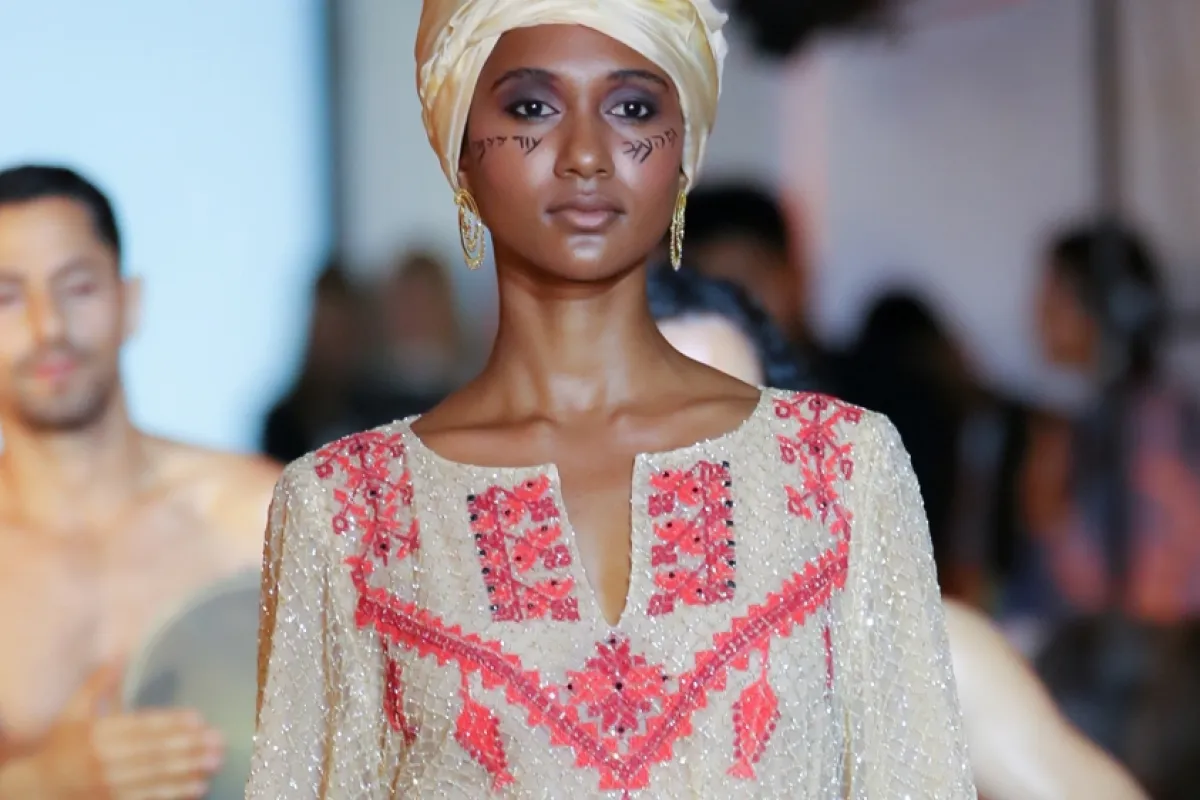
The New York Fashion Week dress (2017)
In September 2017, Israeli designer Aviad Arik Herman showed a dress embroidered in the Palestinian style at an event during New York Fashion Week, after which it was auctioned. It was embroidered by Bedouin women from the Association for the Improvement of Women's Status in Lakia in the Naqab (Negev), according to Al Jazeera.
The association's head, Asma al-Saneh, said the women were not told that the sponsor was the OR Movement, which builds Jewish towns in the Naqab and Galilee, sometimes in place of existing Bedouin villages. The association asked for its name to be removed from promotional materials. The designer and the movement, for their part, said the process had been transparent.
Miss Universe contestants in Rahat (2021)
Ahead of the Miss Universe pageant in Eilat (13 December 2021), contestants visited the Bedouin town of Rahat in the Naqab. Some wore embroidered Palestinian dresses while rolling grape leaves and baking, according to Al-Monitor.
Miss Philippines posted her photos captioned "Day in the life of a Bedouin" with a hashtag promoting tourism to Israel, and no mention of Palestine. Social media erupted, and Palestinians and rights groups called it cultural theft. The day after the UNESCO decision (16 December), university students in Gaza held an event titled "Don't Steal Our Heritage," dressed in embroidered thobes.
Answering the "shared heritage" argument
Defenders of such displays argue that the Bedouin are citizens of Israel, so their heritage is part of "Israeli diversity." This argument ignores two facts:
- The Bedouin of the Naqab are part of the Palestinian people, and their embroidery was part of the map of Palestinian embroidery before Israel was established in 1948.
- The problem is not wearing the thobe, but presenting it without its name and attributing it to a state that pursues its owners and demolishes their unrecognised villages in the Naqab.
This is where the value of the UNESCO decision lies: it puts Palestine's name on the thobe in an international record, so the question is no longer one opinion against another.
Palestinian embroidery after 2023: stitches that bear witness
Since October 2023, the question is no longer only who gets credit for Palestinian embroidery, but whether the heritage itself survives. As of 27 May 2025, UNESCO had verified damage to 110 cultural sites in the Gaza Strip, including 77 buildings of historical or artistic interest, one museum and three repositories of movable cultural property, according to a report on UN findings. In February 2025 the World Bank estimated that about 53% of the Strip's cultural property had been damaged or completely destroyed.
A child's thobe that survived the Rafah Museum
Most of the Rafah Museum's collection was destroyed in 2023. But a child's embroidered dress survived the bombing after the blast threw it onto a neighbouring roof, where it stayed for eight months before being recovered. It became the final piece in the exhibition Thread Memory: Embroidery from Palestine at V&A Dundee in Scotland, which opened in June 2025, according to Twyg.
Evacuation maps in cross-stitch
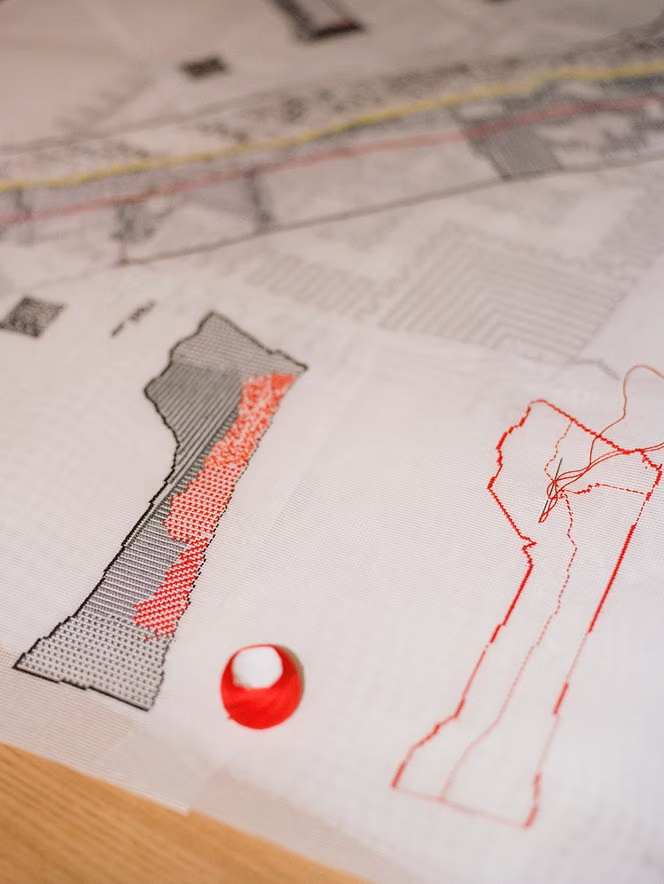
Gaza artist Maha Dayeh, who had worked in embroidery for about twenty years, was displaced to a tent in al-Mawasi after leaving her home on 16 October 2023. There she began her project "The Road of Pain": embroidering, in cross-stitch, the evacuation maps the Israeli army dropped on residents, using grey for destruction, black for mourning and red for blood, according to Erem News. In April 2025 she presented her embroidered map of Gaza to the French president at the Arab World Institute in Paris.
In the camps: the needle as livelihood and therapy
In Beirut's Shatila refugee camp, women at a workshop run by the NGO Beit Atfal Assumoud keep embroidering the patterns of villages they have never seen, watching footage of the bombing of Gaza on their phones as they work, according to NPR. For them, embroidery is a source of income, a form of therapy and an act of steadfastness all at once.
Embroidery is thus returning to its original role: a living archive carried by women when museums and archives are destroyed. That makes UNESCO's 2021 decision more than symbolic recognition today; it is prior international testimony that this heritage exists and has owners.
Other Palestinian elements on UNESCO's lists
Embroidery was neither the first Palestinian element recognised by UNESCO nor the last. By 2025, Palestine had nine elements on the Representative List, four of them in its name alone, according to the list of Palestinian elements:
| Year | Element | Palestine alone? |
|---|---|---|
| 2025 | Arabic kohl | No, joint Arab file |
| 2024 | Nabulsi soap making | Yes |
| 2024 | Henna: rituals and practices | No, joint Arab file |
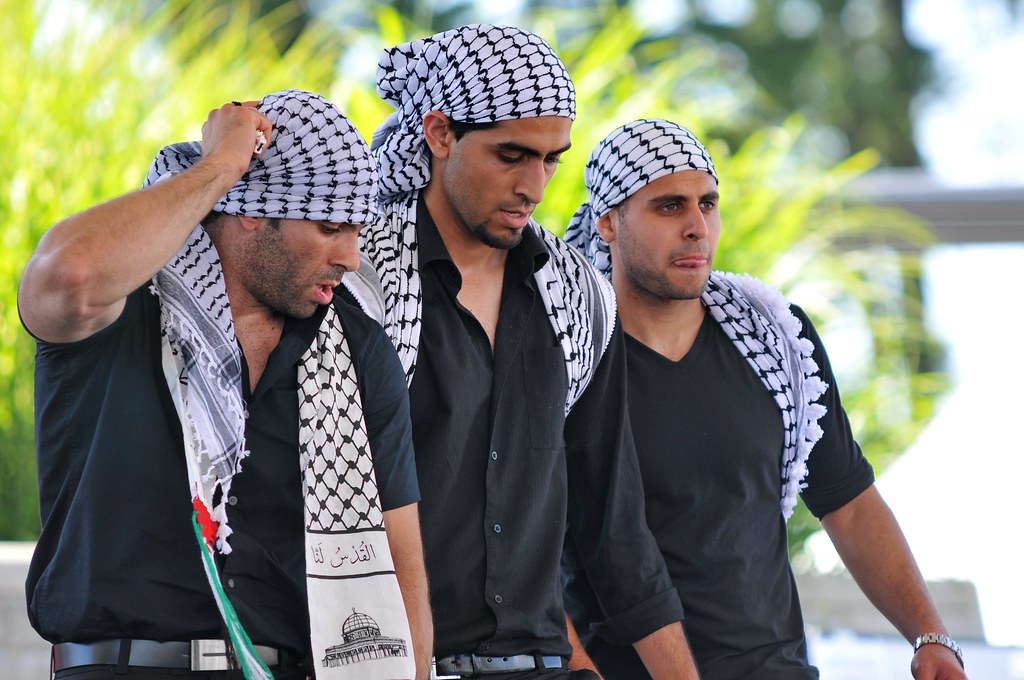
| 2023 | Palestinian dabkeh | Yes |
| 2023 | Engraving on metals | No, joint Arab file |
| 2022 | Date palm: knowledge and traditions | No, joint Arab file |
| 2021 | The art of embroidery in Palestine | Yes |
| 2021 | Arabic calligraphy | No, joint Arab file |
| 2008 | Palestinian hikaye (folk tales) | Yes |
Notably, the elements inscribed in Palestine's name alone, such as embroidery, dabkeh and Nabulsi soap, are the same ones repeatedly presented worldwide without credit to their owners. That is why many see their inscription as a defensive step as much as a celebration.
Frequently asked questions about Palestinian embroidery at UNESCO
When was Palestinian embroidery inscribed by UNESCO?
On 15 December 2021, during the 16th session of the Intergovernmental Committee for the Safeguarding of the Intangible Cultural Heritage, by decision 16.COM 8.B.30.
Which list was it inscribed on?
The Representative List of the Intangible Cultural Heritage of Humanity, which is different from the World Heritage List of archaeological sites and buildings.
Who submitted the Palestinian embroidery nomination?
The State of Palestine, through its Ministry of Culture, with the participation of NGOs and craftswomen, including women from refugee camps.
How long did the nomination take?
The nomination process began in 2016, embroidery was added to the national list in 2018, and the international decision followed in 2021.
Does the decision stop Israel or others from using Palestinian embroidery?
Not legally, because UNESCO does not grant intellectual property rights. But it provides documented international recognition that this art is Palestinian, which can be cited in the media, in museums and in international forums.
What other Palestinian elements are inscribed by UNESCO?
Most notably Palestinian hikaye (2008), Palestinian dabkeh (2023) and Nabulsi soap making (2024), alongside joint Arab files such as Arabic calligraphy, the date palm and henna.
How has the war on Gaza affected Palestinian embroidery?
By May 2025 UNESCO had verified damage to 110 cultural sites in Gaza, and most of the Rafah Museum's collection was destroyed. At the same time, embroidery has become a way of documenting the war, as in the work of artist Maha Dayeh, who embroidered evacuation maps.
Read more on Our Palestine
Sources
- The art of embroidery in Palestine, practices, skills, knowledge and rituals, UNESCO element page
- Decision of the Intergovernmental Committee 16.COM 8.B.30, UNESCO
- Palestinian embroidery added to UNESCO cultural heritage list, Al Jazeera, 16 December 2021
- Refuting the occupation's claims: embroidery, a Palestinian art goes global (Arabic), Al Jazeera Net, 17 December 2021
- Bedouin women misled into embroidering gown for NYFW, Al Jazeera, 13 September 2017
- Palestinians decry cultural theft as Miss Universe contestants wear Bedouin clothes, Al-Monitor, 28 December 2021
- List of Intangible Cultural Heritage elements in Palestine, Wikipedia
- UN denounces destruction of Palestinian cultural heritage due to Israeli attacks, Finestre sull'Arte, 18 June 2025
- Palestinian embroidery bears witness, Twyg, 25 July 2025
- Maha Dayeh: a Palestinian artist documenting Gaza's tragedy with needle and thread in Paris (Arabic), Erem News
- In Lebanon, these Palestinian refugees sew designs from a homeland they've never seen, NPR, 18 January 2025
More from the archive
 Palestinian heritage
The Dead Sea Scrolls: How the Israeli Occupation Seized a Palestinian Treasure Found on the Eve of the Nakba
 Palestinian heritage
Gaza's Heritage Under Genocide: The Great Omari Mosque, Pasha's Palace and Central Archives
 Palestinian heritage
The Jaffa Orange: How Palestine's Orange Became an Israeli "Jaffa" Brand
 Download Our Palestine App
The whole archive in the palm of your hand: depopulated villages, the Nakba, the massacres and Al-Aqsa — free, with no ads to erase the story.



Comments
No comments yet — be the first to write one.
Add your comment
Name and email are optional. Comments appear after review.