
Is Dabke Israeli? How the Occupation Appropriated the Palestinian Dance
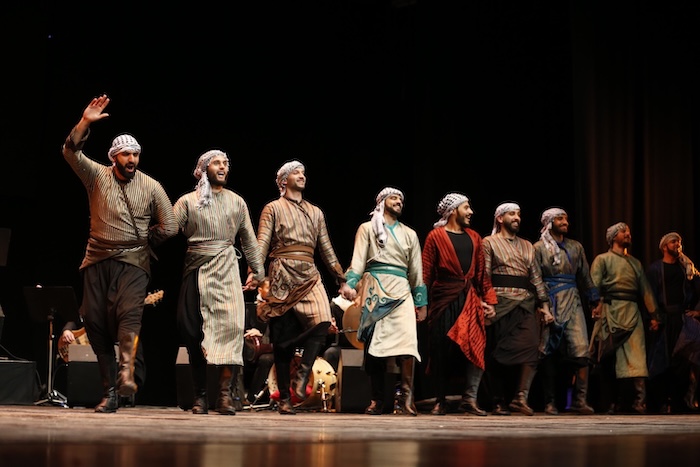
In folk dance clubs around the world, from California to Berlin, enthusiasts learn dances with names like "Debka Gilboa" and "Debka Abud," and are told they are "Israeli folk dances." In Palestine, dabke itself was danced at weddings and harvest festivals for centuries before Israel existed.
This is no coincidence. In the 1940s, on the eve of the Nakba, Zionist choreographers sat at weddings in Palestinian villages watching the dabke, then built from it a new "folklore" for a people meant to look native to the land. This is the story of how Palestinian dabke entered "Israeli folklore," and how Palestinians responded.
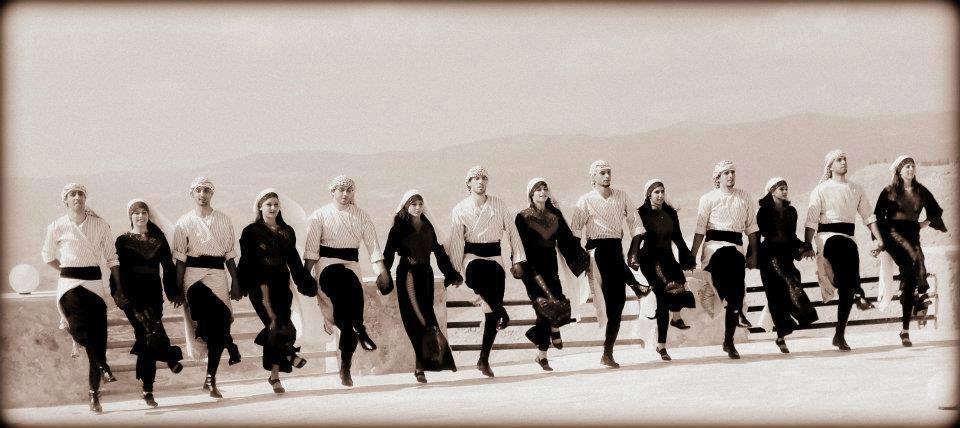
Palestinian dabke: the dance of the community
Dabke is a group dance in which dancers, men and women, stand in a straight line or semicircle, hands or shoulders linked, stamping the ground and jumping to a single rhythm. It is accompanied by traditional wind instruments such as the shabbabeh and yarghoul, and by songs in local dialects about courage, strength and love, according to UNESCO.
Dabke is danced at weddings, graduations and festivals, in public squares and family courtyards. Children learn it by joining in and imitating at celebrations. At its core it is a dance of cooperation: in popular memory it is linked to the "awneh," when villagers worked together to pack down the mud roofs of their homes with their feet.
A "folklore" made in the 1940s
Israeli dance historians themselves acknowledge that "Israeli folk dance" did not arise from the folk. It was deliberately designed in the 1940s to build a new culture for the settlers in Palestine, according to Wikipedia.
Jewish immigrants had brought the dances of their European homelands, such as the Romanian hora and the polka. But the second generation wanted "local" dances that tied it to the land. And here was the problem: there were no ancient Jewish dances in this land to revive. So choreographers turned to the nearest "local" source available: the dances of the country's Palestinian inhabitants.
In 1944, four years before the Nakba, Gurit Kadman organised the first folk dance festival at Kibbutz Dalia on Mount Carmel. It became a recurring event that laid the foundation of this new "folklore."
Rivka Sturman: from Arab village weddings to "Debka Gilboa"
Rivka Sturman was one of the leading Israeli choreographers, creating more than 90 dances between 1942 and 1983. In her biography she recounts that her brother-in-law, a negotiator with the Arabs, would take her to weddings and feasts in Arab villages, where she watched the dancing.
She says these observations gave her early dances "an Arabic color," especially in the step-bend, the restrained, erect bearing and the abrupt rhythm, according to her published biography. Her dances include:
| Dance | Year | What her biography says |
|---|---|---|
| "Haroim" (The Shepherds) | 1942 | A debka performed at a graduation programme at Kibbutz Geva |
| "Ani Roeh Tzony" | 1944 | Described as "the first debka I did," performed at the Dalia Festival |
| "Debka Gilboa" | 1947 | A debka about "the Gilboa battle," with advancing and retreating movements |
Note the date: "Debka Gilboa" was created in 1947, on the eve of the Nakba, about a "battle." A dance taken from Palestinian weddings was re-presented to tell the story of fighting against them.
Gurit Kadman: "from the Arab debkas"
Gurit Kadman is known as the "mother of Israeli folk dance." In a 1973 text, she explained plainly how this dance was made: the aim was not to revive ancient dances, since biblical dances were lost, but to create new dances blending elements from several sources, according to her published text.
Kadman listed these sources: Hasidic, Yemenite and Balkan dances, and "the Arab debkas," which she described as dances in open lines with small, restrained, sometimes intricate steps and vibrating body movements. She described the whole process as a "bridge" between East and West.
In other words, the "mother of Israeli folk dance" herself acknowledges Arab dabke as one of its sources. But that acknowledgement stays in the books; in dance halls around the world, the dances are presented simply as "Israeli."
After the Nakba: dabke in the victor's hands
After the Nakba and the occupation of Palestine, the use of dabke went beyond "inspiration." In his book Raising Dust: A Cultural History of Dance in Palestine, scholar Nicholas Rowe documents how, before 1948, Zionist choreographers presented Palestinian dances as Zionist dances, in search of "local roots" to legitimise a Jewish state, according to The London Magazine.
Rowe notes that dancer Vera Goldman claimed in the 1940s that European Jewish immigrants felt an "innate connection" to these Arab peasant dances. The Palestinian peasant's dance thus became evidence of the European settler's "authenticity."
At the first "Independence Day" celebration in 1949, hundreds of Israeli soldiers performed a dance piece titled "Yes, They Will Lose," mimicking attacks on and victory over the local population. The Nakba had happened months earlier, and now it was being danced in celebration.
Debkas with Arabic names and an "Israeli" label
The creation of "Israeli debkas" continued after the Nakba. In 1974, Moshiko Halevy choreographed "Ya Abud" (Debka Abud) for a Druze troupe in Isfiya on Mount Carmel, using Arab elements he learned from one of its elder dancers, set to two Lebanese songs by singer Sabah: "An-Nadda Nadda" and "Jeeb il-Mijwiz Ya Abud," according to Fort Collins Folk Dance.
An Arab dance, for an Arab troupe, to an Arab song, with Arab steps. Yet it is still taught in dance clubs around the world as part of "Israeli folk dance."
Palestinian troupes: dabke returns to its people
Palestinians, for their part, made dabke a tool for reclaiming their identity. After the Israeli occupation of the West Bank and Gaza in 1967, major Palestinian troupes were founded, including the El-Funoun Palestinian Popular Dance Troupe in 1979 and Sareyyet Ramallah in 1985, both in the West Bank.
This came at a price. According to Nicholas Rowe, dancers were arrested at performances, folklore festivals were censored and disrupted, organisers were interrogated, imprisoned and beaten, and the military imposed travel restrictions on troupe members. The occupation that was "inspired" by dabke punished Palestinians when they danced it themselves.
In 2004 Ramallah troupes staged a satirical piece titled Mamnou al-Obour (Access Denied), about artists' experiences under occupation. Dabke became a fixture of every national occasion, in the camps and the diaspora, a symbol of standing together and of feet planted firmly on the land.
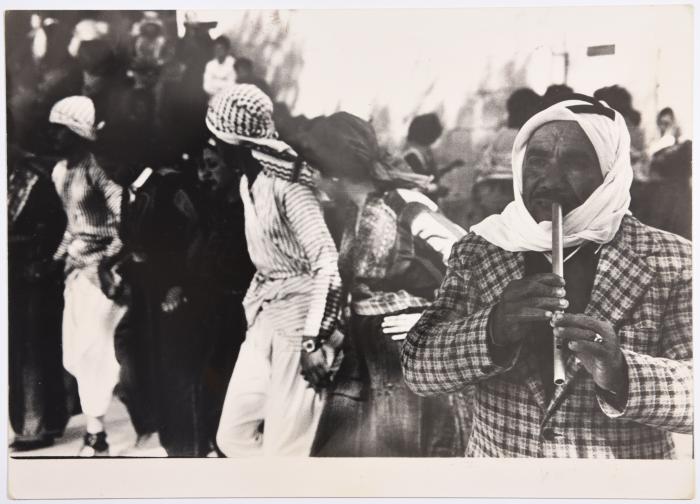
2023: Palestinian dabke at UNESCO
In December 2023, at the 18th session of the Intergovernmental Committee for the Safeguarding of the Intangible Cultural Heritage, UNESCO inscribed "Dabkeh, traditional dance in Palestine" on the Representative List of the Intangible Cultural Heritage of Humanity, by decision 18.COM 8.B.3, according to UNESCO.
The inscription came two years after Palestinian embroidery was inscribed in 2021, giving Palestine two of the most prominent symbols of its identity registered in its name alone, both elements repeatedly presented abroad as "Israeli."
"Influence" or appropriation?
The Israeli argument
Defenders of "Israeli debka" say all folk dances influence one another, that Israeli dance is a "bridge between East and West" combining Jewish, Arab and Balkan traditions, and that the Druze who dance dabke are citizens of Israel.
The response
- Influence keeps the name; appropriation erases it. No one objects to anyone learning dabke. The objection is to presenting it to the world as "Israeli" while removing Palestine's name from it.
- The context is not an exchange between equals. Dabke was taken from Palestinian village weddings, in a land most of whose people were expelled a few years later, and some "Israeli debkas" were created to tell of "battles" against them.
- The occupation punishes the dance's owners. While "Israeli debkas" toured the world, Palestinian dancers were being arrested and their troupes barred from travelling.
- The Druze are Arabs. Druze dabke in the Carmel and Galilee is part of the Arab heritage of Palestine and the Levant, not evidence of its "Israeliness."
- The choreographers themselves admitted it. Rivka Sturman learned at Arab village weddings, and Gurit Kadman named "the Arab debkas" as an explicit source.
Dabke is not just a dance. It is feet striking the very ground that someone wants to seize, in one rhythm, with linked hands. That is exactly why the Zionist occupation wanted to dance it: whoever dances the dance of the land looks as if they belong to it. But dabke, like the thobe, hummus and the village's name, knows who it belongs to.
Frequently asked questions about dabke and "Israeli folk dance"
Is dabke Israeli?
No. Dabke is an Arab folk dance of Palestine and the Levant. The founders of "Israeli folk dance" themselves, such as Gurit Kadman and Rivka Sturman, acknowledged drawing on "the Arab debkas" and on Palestinian village weddings.
When did Israeli folk dance begin?
It was deliberately designed in the 1940s, on the eve of the Nakba, to build a new culture for the settlers. Its first festival was held at Kibbutz Dalia in 1944.
What is "Debka Gilboa"?
A dance created by Rivka Sturman in 1947 about "the Gilboa battle," among dances she said took their "Arabic color" from Arab village weddings.
What is the dance "Ya Abud"?
A debka choreographed by Moshiko Halevy in 1974 for a Druze troupe in Isfiya, set to two Lebanese songs by singer Sabah, and taught worldwide today as part of "Israeli folk dance."
When was Palestinian dabke inscribed by UNESCO?
In December 2023, on the Representative List of the Intangible Cultural Heritage of Humanity, as "Dabkeh, traditional dance in Palestine."
What are the best-known Palestinian dabke troupes?
Among the best known are the El-Funoun Palestinian Popular Dance Troupe, founded in 1979, and Sareyyet Ramallah, founded in 1985.
Read more on Our Palestine
Sources
- Dabkeh, traditional dance in Palestine, UNESCO, 2023
- Israeli folk dance, Wikipedia
- Rivka Sturman, published biography, Berkeley Israeli Dance club
- Folk Dance of Israel, Gurit Kadman, Folk Dance Scene, May 1973
- Raising Dust: A Cultural History of Dance in Palestine, review of Nicholas Rowe's book, The London Magazine
- Ya Abud (Debka Abud), Fort Collins Folk Dance
More from the archive
 Palestinian heritage
The Dead Sea Scrolls: How the Israeli Occupation Seized a Palestinian Treasure Found on the Eve of the Nakba
 Palestinian heritage
The Jaffa Orange: How Palestine's Orange Became an Israeli "Jaffa" Brand
 Palestinian heritage
Palestinian Olive Oil Under Occupation: Uprooted Trees and Settlement Oil in Europe
 Download Our Palestine App
The whole archive in the palm of your hand: depopulated villages, the Nakba, the massacres and Al-Aqsa — free, with no ads to erase the story.



Comments
No comments yet — be the first to write one.
Add your comment
Name and email are optional. Comments appear after review.