
Is Hummus Israeli? The Story of Stolen Hummus
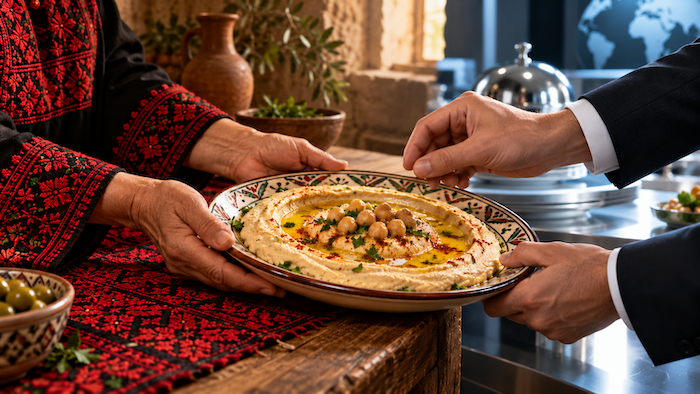
On American supermarket shelves, the leading tub of hummus is called "Sabra," the nickname for a Jew born in Israel. On restaurant menus around the world, "Israeli hummus" is listed next to a dish Palestinians ate every Friday morning for centuries before Israel existed.
This article tells the story of stolen hummus: from its oldest written recipes in Arabic in the 13th century, to the homes of Palestinian grandmothers and the restaurants of Jerusalem and Jaffa, and how, in the decades after the Nakba, it was turned into an Israeli national symbol exported to the world.
800 years of hummus: what the Arabic manuscripts say
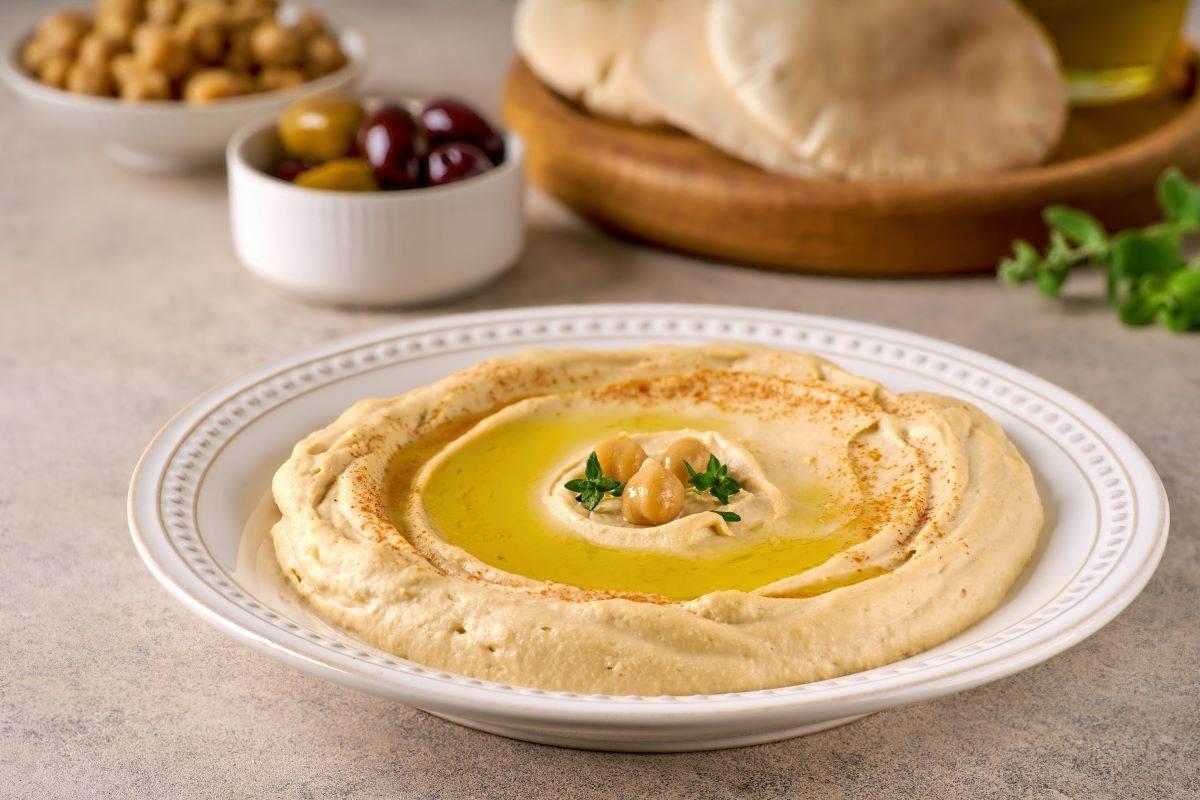
In Arabic, "hummus" is the name of the chickpea itself; the dish's full name is "hummus bi tahini" (chickpeas with tahini). Medieval Arabic cookbooks show that this dish and its relatives were on the tables of the Levant some seven centuries before Israel existed.
The oldest written recipes
| Book | Century and place | What it says about hummus |
|---|---|---|
| Kitab al-Wusla ila al-Habib, attributed to Ibn al-Adim | 13th century, Aleppo | Considered the oldest recorded recipe for "hummus kassa," with chickpeas, tahini and lemon plus walnuts and herbs |
| Kanz al-Fawa'id fi Tanwi' al-Mawa'id, anonymous | 14th century, Egypt | About a dozen recipes for mashed chickpeas with cumin, olive oil and preserved lemon |
| Kitab Wasf al-At'ima al-Mu'tada | 14th century, based on a Baghdadi original | Mashed chickpeas with tahini, oil, vinegar and more than a dozen spices |
| Tadhkirat al-Khawatin wa Ustadh al-Tabbakhin | 1885, Lebanon | A recipe very close to modern hummus: chickpeas, tahini, lemon, garlic and olive oil |
This draws on the research of culinary historian Charles Perry and scholar Nawal Nasrallah, who translated the Kanz, according to Atlas Obscura and New Lines Magazine. These older recipes were richer than today's hummus; they were dishes for the tables of the well-off in the cities of the Islamic world.
The historical bottom line: hummus bi tahini is an Arab Levantine dish, shared by Palestine, Syria, Lebanon, Jordan and Egypt. Palestinians are an original part of this history, not guests in it. Calling it "Israeli" finds no support whatsoever in these manuscripts.
Hummus in the Palestinian home
In Palestine, hummus is not a side dish. It is the family Friday breakfast, bought hot from the neighbourhood shop before prayers and eaten with ful, falafel, pickles and spring onions. Whole chickpeas also go into classic Palestinian dishes such as Hebron's qidreh and musabbaha.
Abu Shukri: Jerusalem's hummus since 1948
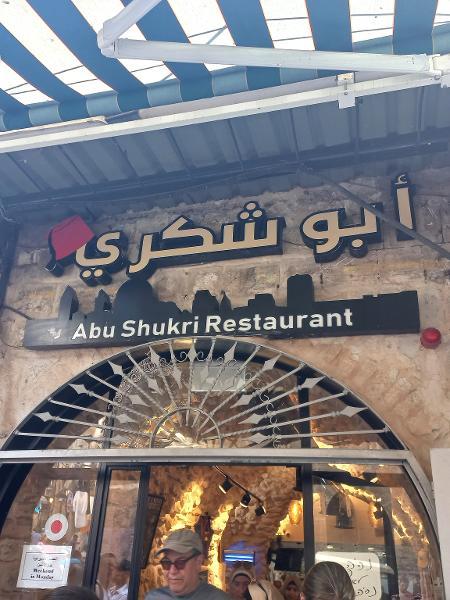
In Jerusalem's Old City, on the Via Dolorosa between the seventh and eighth Stations of the Cross, stands Abu Shukri, founded in 1948. The Taha family has run it for three generations, and worshippers heading to Al-Aqsa on Fridays would queue for up to two hours, according to Gulf News.
Abu Hassan: "Israel's best hummus," made by a Palestinian from Jaffa
In Jaffa, Ali Karawan, known as "Abu Hassan," started selling hummus from a cart in the Ajami neighbourhood, then opened his current restaurant on Dolphin Street in the early 1970s, according to Wikipedia. Today it tops lists of "the best hummus in Israel," and Lonely Planet calls it the "Mecca" of hummus.
Here is the irony: the most famous hummus served to tourists as "Israeli" was made by a Palestinian from Jaffa, a city most of whose people were expelled in 1948.
How did hummus become "Israeli"?
Surprisingly, the early Zionist settlers did not like hummus. According to Israeli sociologist Dafna Hirsch of the Open University of Israel, many of them ignored or rejected hummus and other Palestinian staples at first, labelling them "Arab" or "Oriental," according to the summary of her book The Israeli Career of Hummus: Colonial Appropriation, Authenticity, and Distinction (2026).
From army mess halls to national symbol
- The 1950s: the Israeli army began serving hummus in its mess halls, because it was cheap and filling and its ingredients met Jewish dietary rules (kashrut), according to Ali Qleibo's article for the Heinrich Böll Foundation.
- "Sabra" identity: hummus became part of the identity of the native-born Israeli, a dish associated with masculinity and eaten in "hummusiyas."
- Today: Hirsch says hummus has become an Israeli national emblem and an object of near-religious devotion, its consumption tied to ideas of "indigeneity" in the land.
The Arab origin: hidden at times, showcased at others
Hirsch's key finding is that hummus's Arab identity was not simply erased but is used selectively. It is downplayed when hummus is presented as an Israeli national dish, and highlighted when "authenticity" is wanted for the dish and those who eat it. The Palestinian thus becomes decoration in the story of his own dish: invoked to give it the flavour of the "authentic East," then written out of its ownership.
"Sabra": when hummus became a brand worth hundreds of millions
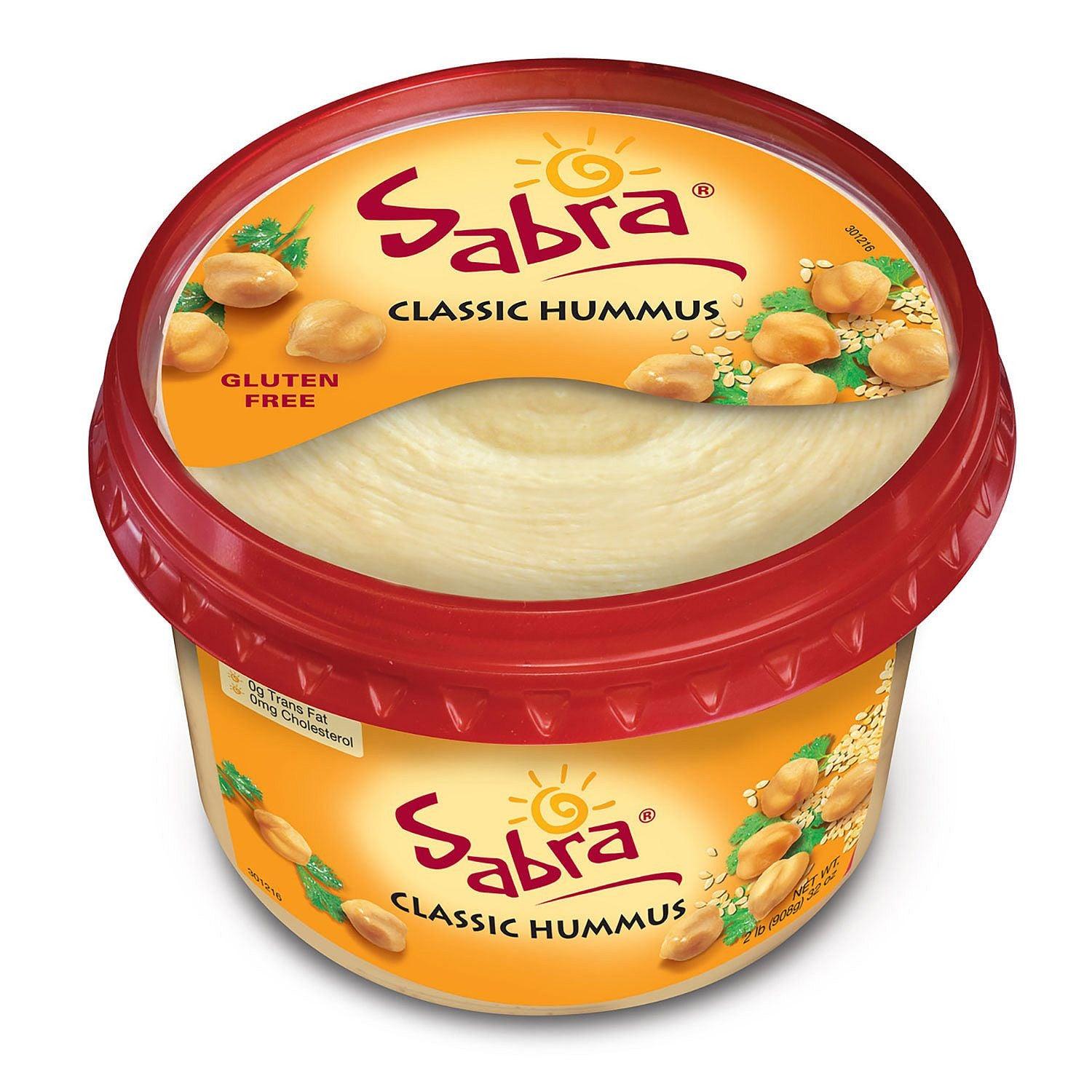
The name "Sabra" is itself a message: it is the nickname for a Jew born in Palestine under occupation, taken from the prickly pear cactus. Israeli company Strauss and American company PepsiCo set up the Sabra brand as a 50/50 joint venture in 2008, according to Food Dive.
- Sabra's US retail sales reached about $400 million.
- Its share of the US hummus market at one point exceeded 60%, before falling to about 37%.
- In November 2024, PepsiCo bought out Strauss's entire stake for about $241 million.
A Palestinian grandmother's dish was thus turned into a product worth hundreds of millions, carrying a name that stands for Israeli identity, with nothing going back to the people it came from.
The hummus war: a battle of world records
Between 2008 and 2010 the media reported a "hummus war," fought mainly between Lebanon and Israel:
- 2008: Lebanese businessmen announced plans to sue Israel to stop it marketing hummus and other regional dishes as Israeli, according to NBC News.
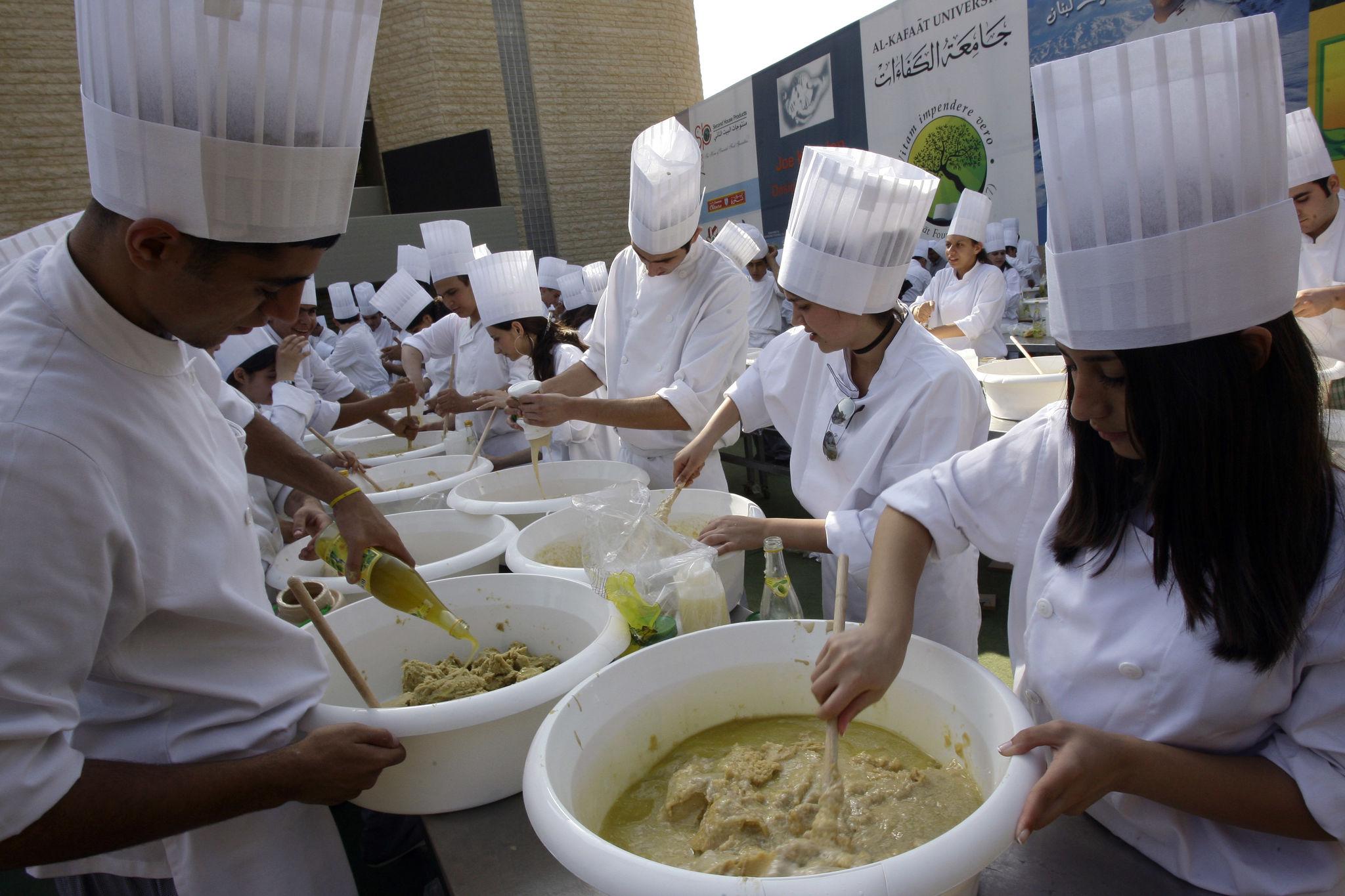
- October 2009: Lebanon broke the world record for the largest plate of hummus, led by then-tourism minister Fadi Abboud.
- 8 January 2010: the Arab town of Abu Ghosh near Jerusalem took back the record with a dish of more than four tonnes, on the initiative of local restaurateur Jawdat Ibrahim.
- May 2010: Lebanon responded with a dish weighing 23,042 pounds (about 10.4 tonnes), according to NPR.
Lebanon also sought protected designation of origin for hummus from the European Union, but the EU declined because hummus is a regional dish. That refusal itself demolishes the Israeli claim: if hummus cannot be attributed to a single Arab country, how can it be attributed to a state founded in 1948?
Notably, the "Israeli" record of 2010 was made by a Palestinian Arab town inside the 1948 lands, by Palestinian hands, and then credited in the world's media to "Israel."
"Shared cuisine" or theft? Refuting the Israeli narrative
The Israeli argument
Defenders of "Israeli hummus" say that Jews who came from Iraq, Morocco, Yemen and Syria ate hummus in their countries before emigrating, and that Israeli cuisine is an "immigrant cuisine" combining the region's dishes, so there is no point in talking about theft.
The response
- Arab Jews ate hummus as Arab food. Writer Steven Salaita argues that calling these dishes "Israeli" distorts the history of Mizrahi Jews themselves, who knew them as part of their Arab culture, according to The New Arab.
- The problem is the label, not the eating. Palestinians do not object to anyone eating their food, but to who owns the brand, the narrative and the profits.
- The context is not ordinary cultural exchange. Pizza and potatoes travelled between peoples without occupation. The "Israelisation" of hummus happened alongside the expulsion of its owners and the erasure of their village names, as Ali Qleibo explains.
- Even Israeli scholars call it appropriation. The very title of Dafna Hirsch's book describes hummus's career in Israel as "colonial appropriation."
It is not only hummus. According to Salaita, falafel, shawarma, fattoush, mujaddara and knafeh are presented in "Brand Israel" campaigns as authentically Israeli dishes, while the Israeli government calls falafel its "national snack."
Hummus, then, is not just a plate. It is a miniature of the whole conflict: land taken during the Nakba and after, history rewritten, then the dish presented to the world under a new flag.
Frequently asked questions about hummus and its origins
Is hummus Israeli?
No. The oldest recipes for hummus with tahini were written in Arabic in Aleppo and Egypt in the 13th and 14th centuries, about seven centuries before Israel existed. Hummus is an Arab Levantine dish shared by Palestinians, Syrians, Lebanese, Jordanians and Egyptians.
Where does hummus bi tahini come from?
The book Kitab al-Wusla ila al-Habib, attributed to Ibn al-Adim of Aleppo (13th century), is the oldest known source for a hummus-with-tahini recipe, followed by the Egyptian Kanz al-Fawa'id in the 14th century.
Is hummus Palestinian or Lebanese?
Hummus is a shared Levantine dish not owned by any single Arab country. The European Union declined to register it as a protected product of Lebanon for exactly that reason. Palestinians are an original part of its history.
What was the hummus war?
A media term for the 2008–2010 rivalry between Lebanon and Israel over who owns hummus, involving Guinness world records for the largest plate, ending with a Lebanese dish of about 10.4 tonnes.
What is Sabra hummus?
A brand set up by Israeli company Strauss with American PepsiCo in 2008, with about $400 million in annual US sales. Its name is the nickname for an Israeli-born Jew. PepsiCo bought out Strauss's entire stake in 2024.
What are the most famous hummus restaurants in Palestine?
Among the best known are Abu Shukri in Jerusalem's Old City (founded 1948) and Abu Hassan in Jaffa, founded by Ali Karawan.
Read more on Our Palestine
Sources
- Medieval hummus, Atlas Obscura
- The True Origins of Hummus, Kareem Shaheen, New Lines Magazine, 24 March 2023
- The Israeli Career of Hummus: Colonial Appropriation, Authenticity, and Distinction, Dafna Hirsch, Indiana University Press, 2026
- Mashing it up: the Hubbub over Hummos or the Israeli Appropriation of Palestinian Heritage, Ali Qleibo, Heinrich Böll Foundation, 4 October 2017
- 'Israeli' hummus is theft, not appropriation, Steven Salaita, The New Arab, 4 September 2017
- Latest in hummus war: Israel doubles record, NBC News, 8 January 2010
- Give Chickpeas A Chance: Why Hummus Unites, And Divides, The Mideast, NPR, 18 July 2016
- PepsiCo buys rest of Sabra, Obela brands for $244M, Food Dive, 22 November 2024
- The best hummus in Palestine, Gulf News, 2018
- Abu Hassan (restaurant), Wikipedia
More from the archive
 Palestinian heritage
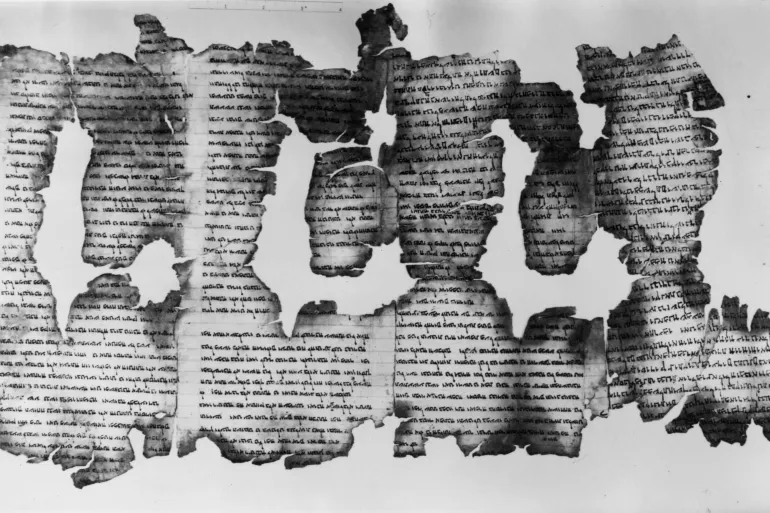
The Dead Sea Scrolls: How the Israeli Occupation Seized a Palestinian Treasure Found on the Eve of the Nakba
 Palestinian heritage
The Jaffa Orange: How Palestine's Orange Became an Israeli "Jaffa" Brand
 Palestinian heritage
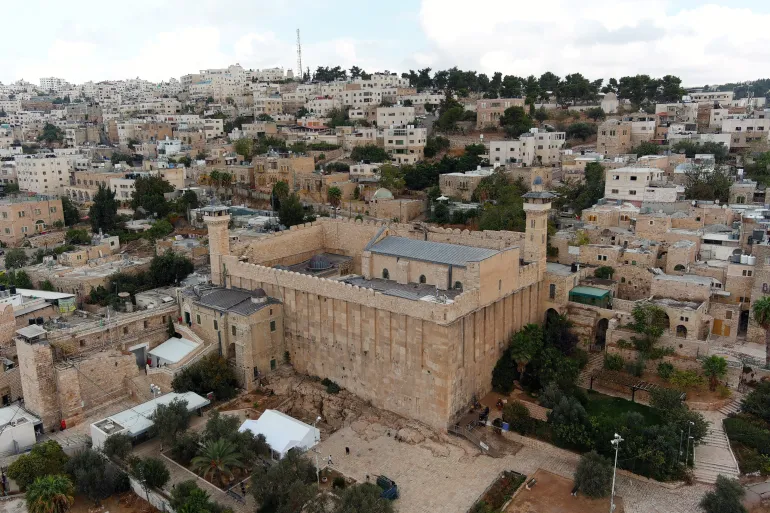
Ibrahimi & Bilal Mosques: How Israel Rewrites Holy Sites
 Download Our Palestine App
The whole archive in the palm of your hand: depopulated villages, the Nakba, the massacres and Al-Aqsa — free, with no ads to erase the story.



Comments
No comments yet — be the first to write one.
Add your comment
Name and email are optional. Comments appear after review.