
Palestinian Banks Before the Nakba: From the Arab Bank to Refugees' Frozen Money
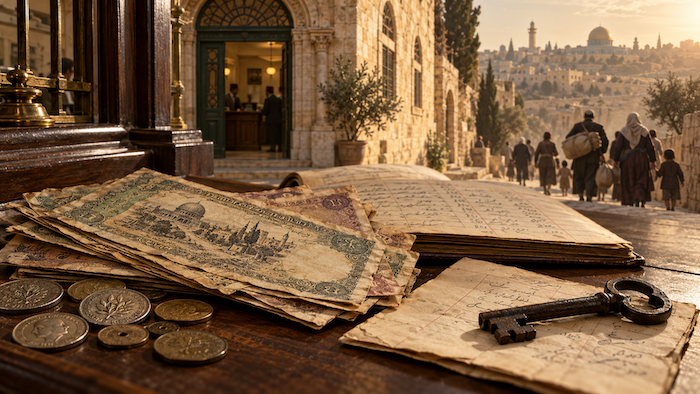
In the summer of 1930, a man from the village of Beit Hanina near Jerusalem opened a small bank with a capital of 15,000 Palestine pounds. His name was Abdul Hameed Shoman, and he had just returned from New York after twenty years abroad. He called his bank the "Arab Bank," and on its first day he told his staff: "Every Arab venture that manages to do well serves as a shield in the protection and defense of Palestine."
The story reveals a side often missing from the picture of Palestine before the Nakba: a country with its own currency, its own banks, and citizens with accounts, deposits and safe deposit boxes. Then came the Nakba of 1948. Palestinians were expelled, and the Israeli occupation froze their bank accounts, releasing them only in instalments and on its own terms over many years. This is the story of Palestinian banks before the Nakba, and of what happened to refugees' money afterwards.
The Palestine pound: a country's currency before the Nakba
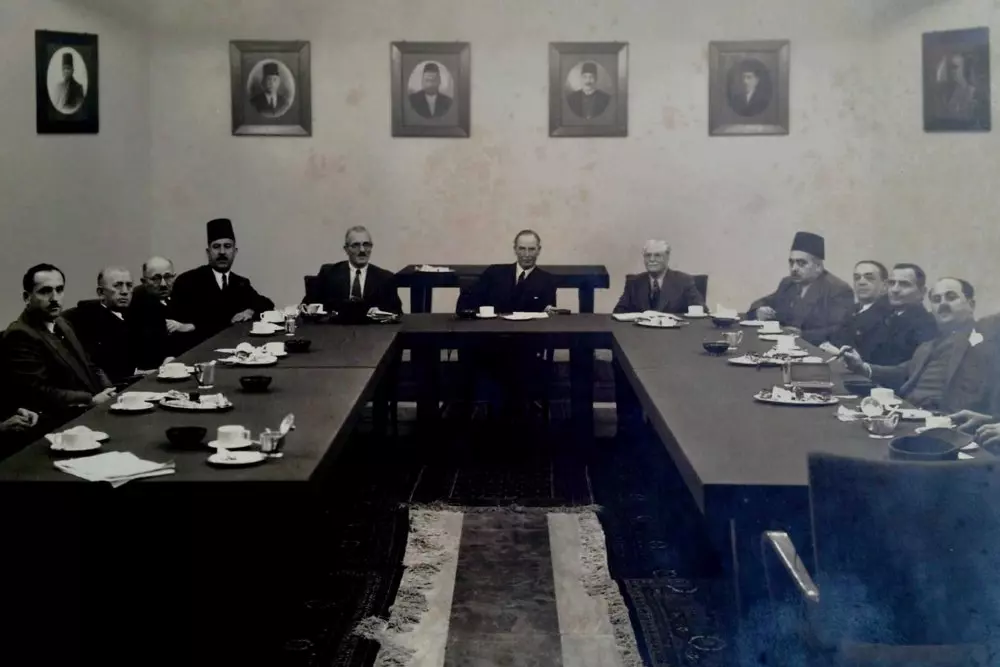
Until the mid-1920s, Palestinians used the Egyptian pound. In 1927 the British Mandate authorities issued a currency of the country's own, the Palestine pound, which remained in circulation until the Nakba of 1948, according to Al Jazeera Net.
Banknotes were issued in denominations of 500 mils, 1, 5, 10 and 50 pounds, plus a rare 100-pound note, and bore images of the Dome of the Rock and the Mamluk shrine of Nabi Salih in Ramla. Today a 10-pound note can fetch up to $5,000 among collectors.
But the Palestine pound was not a purely "Arab" currency. The Mandate government printed on it, in Hebrew, the words "Eretz Israel" (Land of Israel) alongside "Palestine," an early sign of Britain's bias towards the Zionist project since the Balfour Declaration.
The banking map of Mandate Palestine
Under the Mandate, three kinds of banks operated in Palestine: foreign British banks; Zionist banks founded by the Zionist movement; and Palestinian Arab banks founded by Palestinian businessmen to protect the national economy.
| Bank | Type | Founded | Notes |
|---|---|---|---|
| Anglo-Palestine Bank | Zionist | 1902 (London) | Financed land purchases and settlement; became Bank Leumi after the Nakba |
| Barclays | British | British bank | In 1954 offered a loan to repay refugees' frozen balances |
| Arab Bank | Palestinian Arab | 1930 (Jerusalem) | Founded by Abdul Hameed Shoman, with branches in Jaffa and Haifa |
| Arab Agricultural Bank | Palestinian Arab | Mandate era | Founded by Ahmed Hilmi Abdul Baqi to lend to farmers |
| Arab Nation Bank | Palestinian Arab | 1937 | Founded by Ahmed Hilmi Abdul Baqi; offered long-term agricultural loans |
The Anglo-Palestine Bank: the Zionist project's bank
About three decades before the Arab Bank was born, the Zionist movement had already founded its own bank. In 1899 the Second Zionist Congress set up the Jewish Colonial Trust, which in 1902 founded the Anglo-Palestine Company in London; it opened its first office in Palestine in 1903, according to Encyclopedia.com.
This was no ordinary commercial bank. According to the same source, it "played an important role in financing land purchases and settlement in Haifa, Jerusalem, and what became Tel Aviv." In other words, money was an early tool of the occupation of Palestine, long before the gun.
After the Nakba, the bank became the sole banker of the Israeli government and issued its first banknotes, and in 1954 it was reincorporated as Bank Leumi le-Israel, one of the largest banks in Israel today.
The Arab Bank: from an emigrant's savings to a nation's bank
Abdul Hameed Shoman was born in 1888 in Beit Hanina and worked in stone quarries as a young man. In 1911 he emigrated to the United States, starting as a travelling salesman in New York and going on to own a clothing factory and a chain of shoe stores in New York, Baltimore and Philadelphia, according to Jerusalem Story.
Shoman returned to Palestine in 1929. The Arab Bank was registered on 21 May 1930 and began operations in Jerusalem on 14 July 1930, with a capital of 15,000 Palestine pounds provided by seven investors, according to the Arab Bank's official website. Shoman had tried to raise capital among wealthy Arabs in New York, but they did not share his vision.
Shoman chose the bank's name deliberately: not his own name or his village's, but that of "the Arab nation, the greater homeland." The bank grew quickly, opening branches in most Palestinian cities within a few years, including Jaffa and Haifa.
Ahmed Hilmi Abdul Baqi: banks against Zionist land seizure
The Arab Bank's co-founder was Ahmed Hilmi Abdul Baqi, who left his government post in 1930 to become its general manager. Hilmi, born in Sidon in 1882, saw banks as a weapon against the Zionist movement's seizure of land, according to the Al Jazeera Encyclopedia. He founded:
- The Arab Agricultural Bank: to give farmers agricultural loans.
- The Arab Nation Bank (1937): it lent to Arab farmers for terms of up to a year, while commercial banks lent for three months at most. The aim was to keep farmers on their land rather than forcing them to sell under the pressure of debt.
- The Arab Nation Fund: to rescue Arab lands threatened with Zionist seizure, re-established with two colleagues in August 1943.
- The Dunam Project: so that every Palestinian would own at least one dunam in threatened areas.
The logic was clear: the Zionist movement had banks financing the purchase of land, so Palestinians needed banks financing their ability to stay on it.
1948: banks expelled with their owners
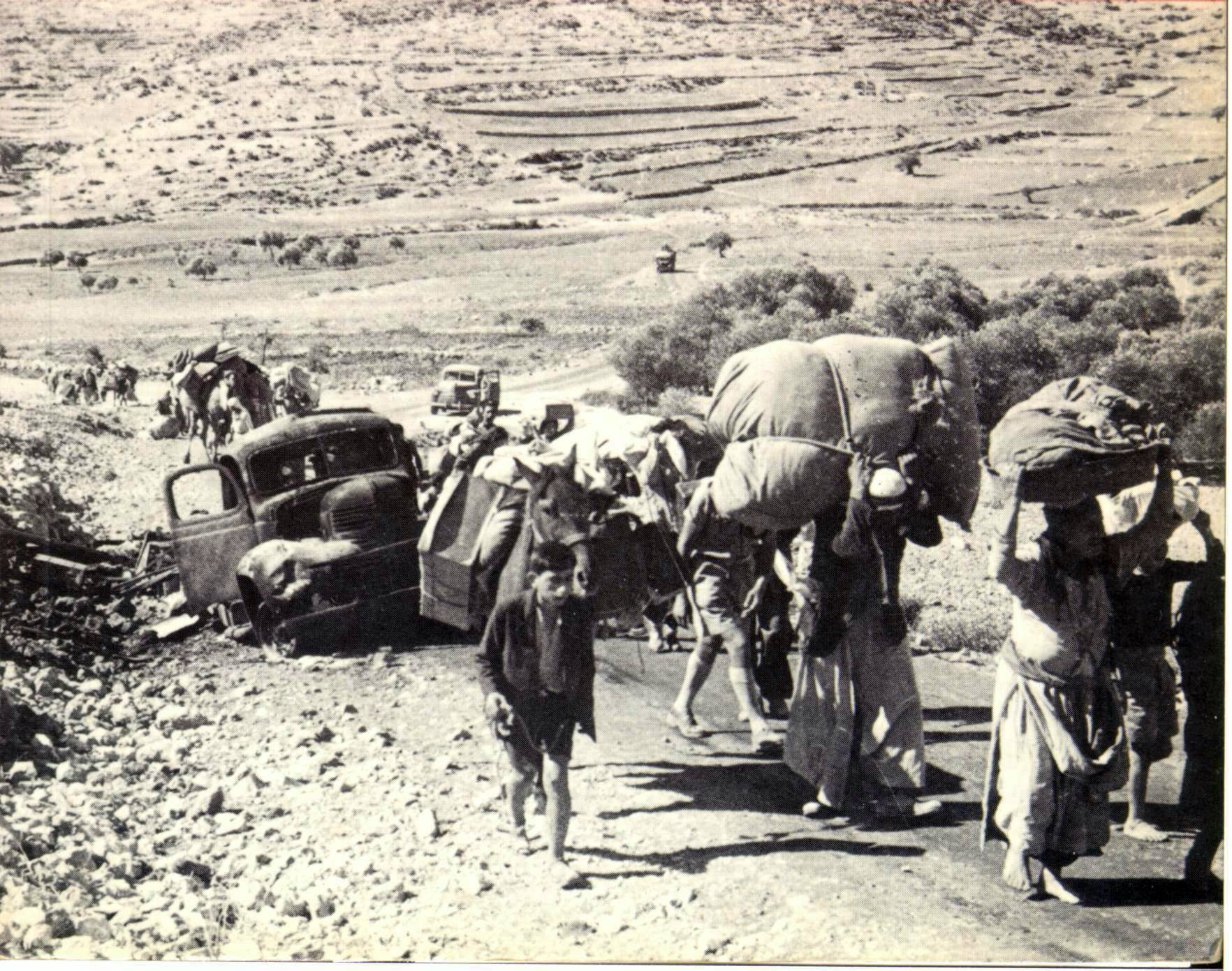
In the Nakba of 1948, it was not only people who were expelled; their banks were too:
- The Arab Bank lost its Jaffa and Haifa branches. The Haifa branch moved to Beirut and then Amman, the Jaffa branch to Nablus and then Ramallah, Jerusalem operations moved into the Old City, and the headquarters moved to Amman.
- The Arab Nation Bank resumed work from Cairo under Ahmed Hilmi. But many farmers who owed it money could not repay after being driven off their land.
To its credit, the Arab Bank repaid the deposits of customers forced to leave the country; the bank says it "fully redeemed all claims," according to its official website. Money deposited in banks that remained in areas occupied by Israel had a very different fate.
Refugees' frozen money: 17 years of release in instalments
After the Nakba, the Israeli state froze the bank accounts of expelled Palestinians, along with the contents of their safe deposit boxes: shares, bonds and valuables. The account holders were mostly city dwellers; villagers tended to keep their savings at home, and some buried them in the ground.
The UN Conciliation Commission for Palestine negotiated with Israel to release the accounts. Its documents reveal a long trail of delay and conditions:
| Date | What happened |
|---|---|
| 1948 | Refugees' accounts in banks in occupied areas are frozen |
| February 1950 | An agreement signed in Geneva between Israel and Egypt (for the Arab states), later declined by Arab governments |
| June 1952 | Israel agrees "in principle" to a "gradual" release, subject to its foreign-exchange position, and links it to the property of Jews in Iraq; the Commission estimates 20,000–30,000 Arabs are affected |
| 1953 | First instalment: £740,408 sterling |
| May 1954 | Barclays Bank offers a sterling loan sufficient to repay all remaining balances, removing the currency obstacle |
| August–November 1954 | Israel imposes new procedures involving "negotiations" with depositors; the Commission objects |
| July 1965 | Total paid to account holders reaches £3,588,008 sterling |
Sources: US letter to the Conciliation Commission, June 1952, the Commission's Fourteenth Progress Report and its Twenty-third Progress Report.
Safe deposit boxes: not everything released even by 1965
According to the Conciliation Commission's twenty-third report, this was the status of safe custody items as of 31 July 1965, 17 years after the Nakba:
| Category | Total | Released | Remaining |
|---|---|---|---|
| Boxes and parcels | 60 | 48 | 12 |
| Shares, bonds, etc. | 800 | 274 | 526 |
| Government bearer bonds | 434 | 332 | 102 |
| Safe deposit lockers | 178 | 143 | 35 |
In other words, two-thirds of the shares and bonds owned by Palestinian refugees were still being held in the mid-1960s.
Behind the numbers
£3.6 million may seem small next to everything Palestinians lost in land, homes and orchards. But the frozen accounts reveal the occupation's whole logic:
- Money as hostage: Israel linked the release of refugees' money to the property of Iraqi Jews, as if an expelled Palestinian were responsible for another government's policies.
- The victim must negotiate: Israel demanded "negotiations" with depositors over their own money, which the UN Commission opposed.
- Money only, not land: the release of bank accounts was not accompanied by any release of refugees' other property, which remained with the "Custodian of Absentee Property."
The Palestine pound after the Nakba
Even the currency was appropriated. On 18 August 1948, the Anglo-Palestine Bank issued the Israeli state's first banknotes, printed in New York and brought into the country secretly. Because the new state's name and currency had not yet been decided, the notes bore the name "Palestine Pound," and they remained in circulation until 23 June 1952, according to the Bank of Israel itself.
In 1950 the occupation exchanged the remaining Palestine pounds for the Israeli lira, and the name Palestine vanished from the currency as it had from the map. Historian Mustafa Kabha says the Mandate authorities themselves seized a large quantity of Palestinian money in 1948, according to Al Jazeera Net.
Conclusion: a country's economy, not "a land without a people"
The story of Palestinian banks undoes one of the best-known myths of Zionist propaganda: "a land without a people." Before the Nakba, Palestine had a currency, national banks, deposits, shares and bonds, and businessmen like Abdul Hameed Shoman and Ahmed Hilmi Abdul Baqi building institutions to protect the land with money.
What the Israeli occupation did with the frozen accounts is a miniature of what it did with Palestine as a whole: seize first, then bargain, then return a little in instalments and on its own terms, and keep the rest. Today the Arab Bank, born in Jerusalem, remains one of the largest banks in the Arab world, a reminder that Palestinian institutions were not erased; they were expelled along with their owners.
Frequently asked questions about banks in Palestine before the Nakba
When was the Arab Bank founded?
It was registered on 21 May 1930 and began operations in Jerusalem on 14 July 1930, with a capital of 15,000 Palestine pounds. It was founded by Abdul Hameed Shoman of Beit Hanina.
Which Arab banks operated in Palestine before 1948?
The main ones were the Arab Bank (1930), the Arab Agricultural Bank and the Arab Nation Bank (1937), founded by Ahmed Hilmi Abdul Baqi, along with the Arab Nation Fund for rescuing land.
What was the Anglo-Palestine Bank?
A Zionist bank founded in London in 1902 by the Jewish Colonial Trust. It financed land purchases and settlement in Palestine and became Bank Leumi le-Israel after the Nakba.
What happened to Palestinian refugees' bank accounts after the Nakba?
Israel froze them, then released them gradually after negotiations with the UN Conciliation Commission starting in 1953. By July 1965 the total paid out was £3,588,008 sterling, and some shares and bonds were still being held.
When was the Palestine pound issued?
In 1927 under the British Mandate, replacing the Egyptian pound. It remained in circulation until the 1948 Nakba, and Israel replaced it with the Israeli lira in 1950.
Did the Arab Bank repay its depositors after the Nakba?
Yes. According to the bank, it repaid the deposits of customers forced to leave the country and fully redeemed all claims, despite losing its Jaffa and Haifa branches.
Read more on Our Palestine
- The Jaffa orange: from a symbol of Palestine to an occupation trademark
- The Great Book Robbery: 70,000 Palestinian books looted in the Nakba
- The Palestinian Nakba
- All Palestinian heritage articles on Our Palestine
Sources
- Our History, Arab Bank official website
- Abd al-Hamid Shuman, Jerusalem Story
- Ahmed Hilmi Abdul Baqi: the banker who founded banks to fight Zionism (Arabic), Al Jazeera Encyclopedia, 19 June 2024
- The Palestine pound: a struggle of history and future (Arabic), Wadie Awawdeh, Al Jazeera Net, 29 April 2015
- Bank Leumi le-Israel B.M., Encyclopedia.com
- Anglo Palestine Bank Series, Bank of Israel
- Transmission of Israel's Aide Memoire on Arab blocked accounts, UN Conciliation Commission, 26 June 1952
- Fourteenth Progress Report (A/2897), UN Conciliation Commission, 1955
- Twenty-third Progress Report (A/6225), UN Conciliation Commission, 28 December 1965
More from the archive

 Download Our Palestine App
The whole archive in the palm of your hand: depopulated villages, the Nakba, the massacres and Al-Aqsa — free, with no ads to erase the story.



Comments
No comments yet — be the first to write one.
Add your comment
Name and email are optional. Comments appear after review.