
Palestinian Fiction Pioneers: Khalil Baydas & Najati Sidqi
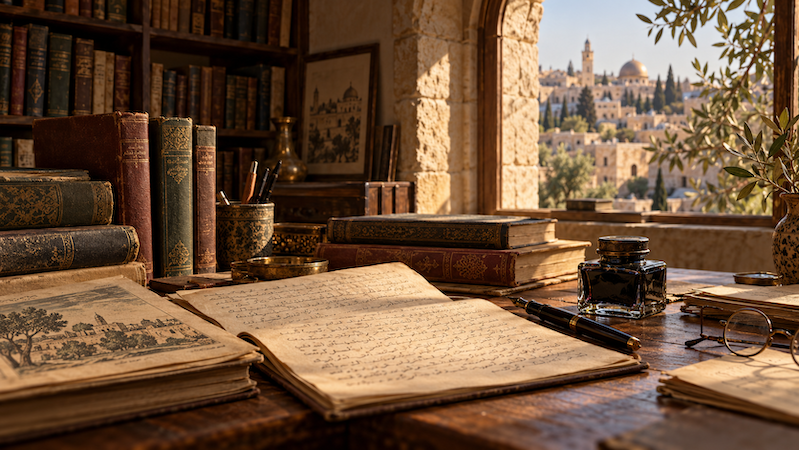
Pioneers of Palestinian Fiction: Khalil Baydas and Najati Sidqi
Decades before the Nakba, Palestine was writing, printing, and reading. In Nazareth, Haifa, Jerusalem, and Jaffa, early Palestinian novels and short-story collections emerged, literary magazines circulated, and works of Russian literature reached readers in Arabic translation. Among the leading figures were Khalil Baydas, founder of Al-Nafa’is al-‘Asriyya and author of the 1920 novel Al-Warith, and Najati Sidqi, the Jerusalem-born pioneer of the Palestinian short story. The Nakba of 1948 displaced these writers and their contemporaries, disrupted their publications, and scattered their libraries.
The Growth of Palestinian Publishing After 1908
Palestinian novels and short stories developed within an active culture of printing and journalism. In 1894, Jurji Habib Hanania established his printing house in Jerusalem’s Old City. After years of seeking permission to publish an Arabic newspaper, he obtained a license following the restoration of the Ottoman constitution in 1908.
His newspaper, Al-Quds, began appearing in September 1908. A pioneering privately owned Arabic publication in Palestine, it appeared twice weekly, with approximately 1,500 copies per issue.
The constitutional changes opened the door to new publications. Approximately fifteen newspaper and magazine licenses were issued in 1908 alone. By 1918, the number of Arabic newspapers established in Palestine had reached around thirty, although many were short-lived.
In 1911, Issa Daoud al-Issa and Yusuf al-Issa launched Filastin in Jaffa. Alongside political reporting, the newspaper published literary criticism of books appearing in Cairo and Paris. Its publication in Jaffa continued until it was forced to stop in 1948.
This environment nurtured literary magazines that welcomed early short fiction, printing houses that produced books, and schools that educated a generation able to read Arabic alongside Russian, French, and English.
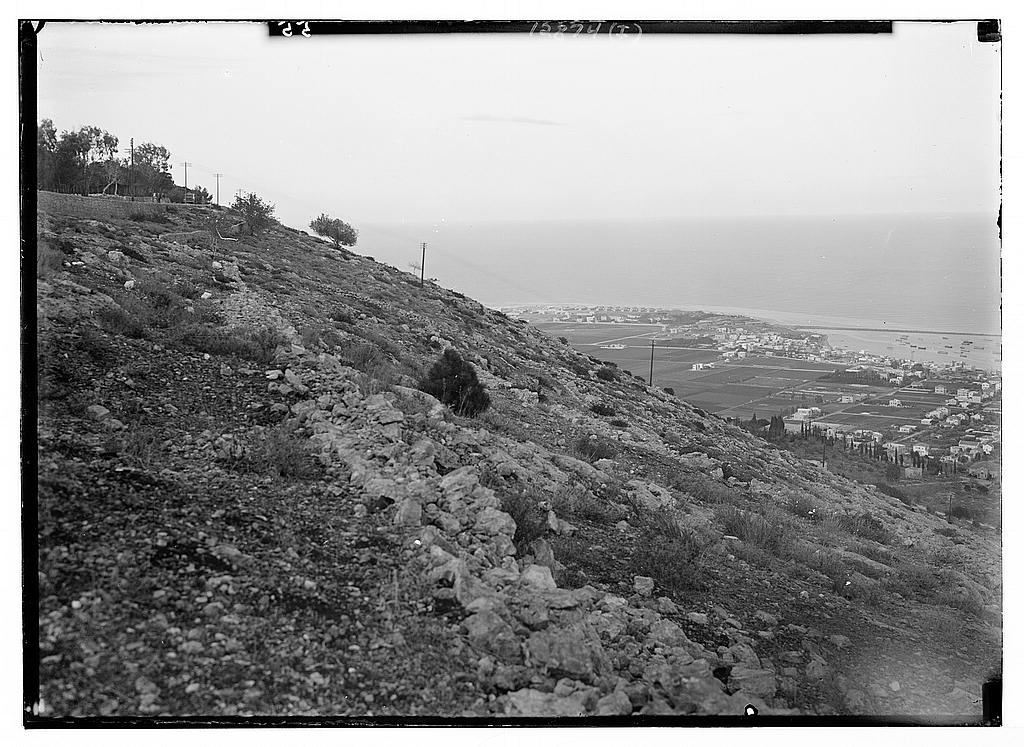
Khalil Baydas: From Nazareth to Al-Nafa’is al-‘Asriyya
Early Life and Russian Schools
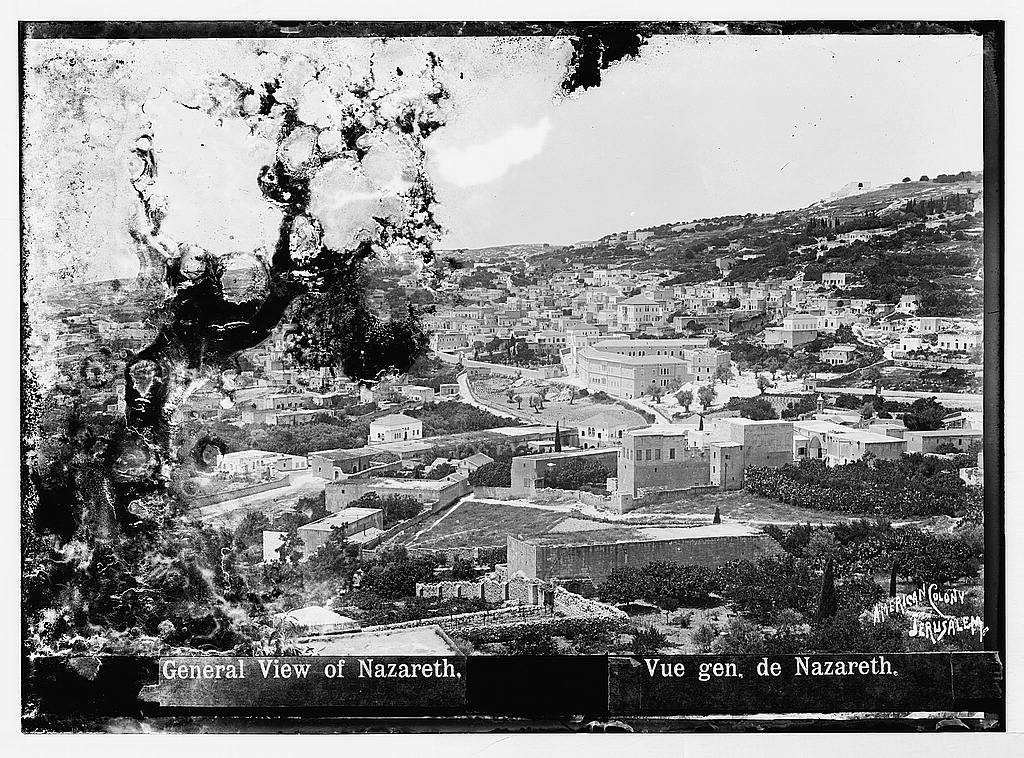
Khalil Ibrahim Baydas was born in Nazareth in 1875, according to the Interactive Encyclopedia of the Palestine Question, although other sources give 1874. He attended the Orthodox school in Nazareth and then spent six years at the city’s Russian Teachers’ Seminary, where he mastered Russian and became familiar with its literature.
After graduating, he became headmaster of a Russian elementary school in Homs. He later taught at Russian schools in Baskinta, Souk al-Gharb, and Jdeidet Marjayoun in Lebanon. In 1908, he moved to the Orthodox school in Haifa.
A Pioneer of Translation from Russian
Baydas was among the pioneers of translation from Russian into Arabic. His early publications included a translation of a work by Pushkin, published in Beirut in 1898, and Akim Olesnitsky’s account of the Holy Land, also published in 1898. A translation of a work by Tolstoy appeared in Haifa in 1909.
He introduced Arabic readers to works by Tolstoy, Turgenev, and Gorky. Estimates of his output vary: some sources credit him with approximately 44 authored and translated books, while critic Nasir al-Din al-Asad lists 34 works spanning fiction, history, textbooks, and translation.
Al-Nafa’is al-‘Asriyya: A Home for Early Fiction
Following the restoration of the Ottoman constitution in 1908, Baydas founded Al-Nafa’is in Haifa. Some accounts date its first issue to November 1908. In 1909, it became a twice-monthly magazine under the title Al-Nafa’is al-‘Asriyya.
The magazine moved with him to Jerusalem in 1911, when he was chosen to represent Arab Orthodox Christians on the community’s mixed council. Publication stopped during the First World War and resumed in 1919. Sources differ over its final year: the Interactive Encyclopedia of the Palestine Question gives 1923, while other researchers place its end in 1919.
Al-Nafa’is published original fiction alongside translations from Russian, German, English, and French. It reached readers in Arab countries and beyond, attracted prominent Palestinian and Arab writers and poets, and supplied material that other newspapers republished.
Al-Warith and Masarih al-Adhhan
In 1920, Baydas published Al-Warith, or The Heir, in Jerusalem. Many scholars regard it as the first Palestinian novel. A social and romantic narrative, it follows a young Arab man who falls in love with an actress and becomes trapped in heavy debts to moneylenders. She eventually abandons him after obtaining what she wants. The novel also touches on the events of the First World War.
In 1924, he published Masarih al-Adhhan in Cairo, widely described as the first Palestinian short-story collection. In its introduction, he argued that a writer should be widely read and attentive to the society around him.
Imprisonment After a Speech Against the Balfour Declaration
Baydas’s literary career was closely connected to politics. He wrote in the Egyptian newspapers Al-Ahram and Al-Muqattam, warning against Zionist immigration. According to accounts of his life, Ottoman authorities sentenced him to death following the outbreak of the Arab Revolt in 1916, and he sought refuge at the Orthodox Patriarchate in Jerusalem.
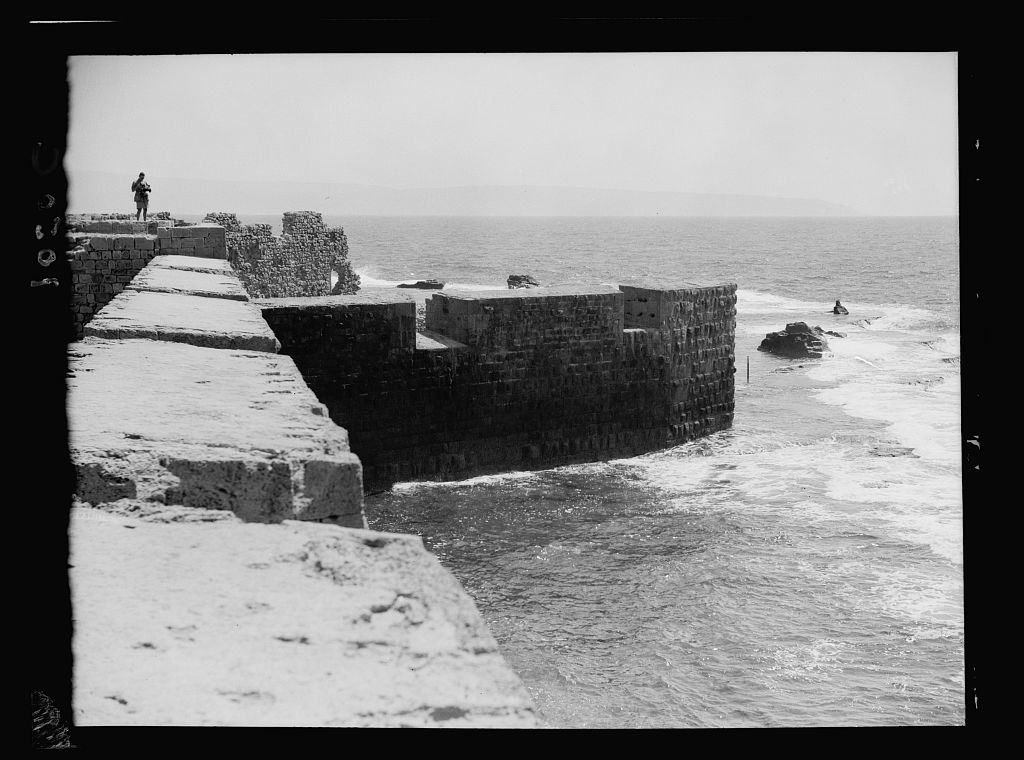
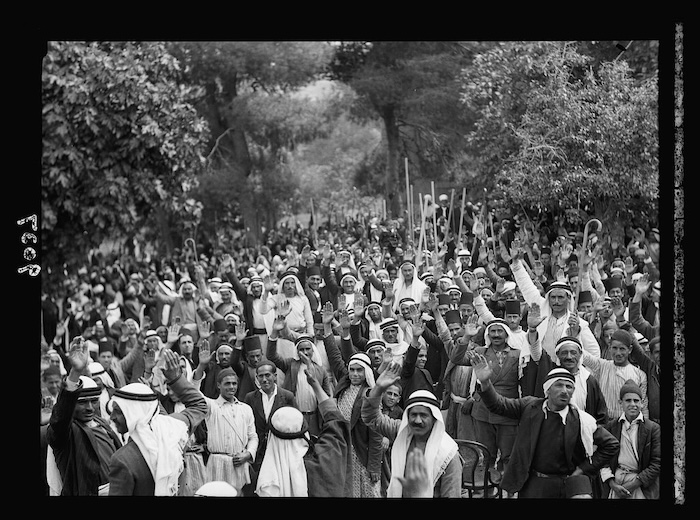
In 1920, he spoke at a Jerusalem demonstration against the Balfour Declaration. British authorities arrested him and sentenced him to fifteen years in prison. While imprisoned in Acre, he wrote a booklet about prison conditions and the treatment of nationalist prisoners. He was subsequently released under High Commissioner Herbert Samuel’s amnesty for political prisoners.
From 1920 to 1945, Baydas taught Arabic at St. George’s School in Jerusalem. In 1942, he published a book about Arab heroes and their most famous battles.
Najati Sidqi: Jerusalem’s Traveling Storyteller
From Jerusalem to Moscow
Najati Sidqi was born in Jerusalem on 15 May 1905. His father, Bakr Sidqi, taught Turkish. He attended several Jerusalem schools, including Al-Salahiyya, Al-Ma’muniyya, Al-Rashidiyya, and the Sultani school. After the First World War, he accompanied his father to the Hijaz with Prince Faisal’s forces.
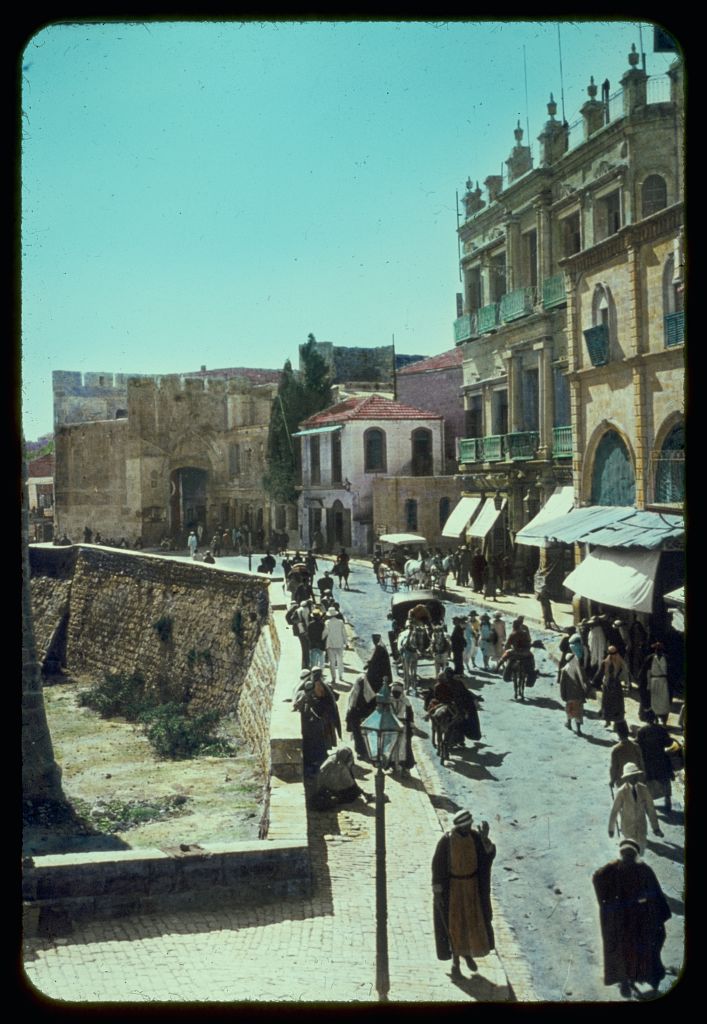
In 1924, Sidqi worked for Jerusalem’s postal and telegraph service and joined the Palestine Communist Party. In 1925, the party sent him to the Communist University of the Toilers of the East in Moscow. He studied there for three years, read Russian literature, and returned to Palestine in 1929.
Prison and Early Exiles
British authorities arrested Sidqi in February 1931 and sentenced him to two years in prison. In 1933, he was sent to Paris to edit the monthly magazine Al-Sharq al-‘Arabi, which the French government closed in 1936.
In August 1936, he traveled to Spain to conduct political outreach among the Moroccan soldiers recruited by Franco. He later went to Algeria to attempt to establish an Arabic-language radio station.
In Syria and Lebanon, he wrote for Al-Nahar and Al-Jumhur. He was expelled from the Syrian-Lebanese Communist Party after criticizing the German-Soviet pact of 1939. He subsequently returned to Jerusalem and worked for the Near East Broadcasting Station.
A Writer of Realist Short Fiction
Sidqi published stories in Al-Adib, Al-Risala, and Al-Kitab. He also introduced Arab readers to Russian literature through books on Pushkin, published in 1945, and Chekhov, published in 1947, in the Iqra’ series. His translations included works by Edgar Allan Poe and selections from international short fiction.
Critics place him alongside Khalil Baydas among the pioneers of Palestinian short fiction. His writing is associated with accessible language, lively dialogue, and the influence of Russian literature and literary realism.
One of his best-known stories is Al-Akhawat al-Hazinat, or The Sad Sisters, written in Jaffa in 1947, on the eve of the Nakba. Its narrator falls asleep beside five ancient sycamore trees that have survived on a modern street.
The trees recount episodes from the country’s Arab history: a love story, a caravan of Sufis traveling to Jerusalem, Napoleon’s siege of Acre, and a young village couple. The final tree, which dates its birth to 1917, refuses to speak.
The story reflects on Palestine’s transformation under the Zionist project and presents the Balfour Declaration as a turning point in the tragedy. Despite its sorrow, it closes on a note of hope.
Jaffa and Al-Fajr: Al-Irani and Al-‘Azzuni
In 1935, ‘Arif al-‘Azzuni and Mahmud Sayf al-Din al-Irani established the weekly literary magazine Al-Fajr in Jaffa. Often counted among Palestine’s most important literary magazines before 1948, it produced approximately fifty issues.
‘Arif al-‘Azzuni
Born in Jaffa in 1896, al-‘Azzuni attended the Frères school there and completed his secondary education at Antoura in Lebanon. He taught at Al-Rashidiyya and later at the School of Islamic Sciences.
He contributed to Jaffa’s newspapers, including Filastin, Al-Difa, and Al-Hurriyya, and spent three years as a correspondent for Cairo’s Al-Ahram. He wrote and translated more than ninety stories published in periodicals and was among the early writers to warn against Zionist expansion. British Mandate authorities detained him during the Second World War on accusations of anti-British propaganda.
Mahmud Sayf al-Din al-Irani
Born in Jaffa in 1913, al-Irani graduated from the Frères school in 1929. Fluent in French and English as well as Arabic, he worked in government education and began writing short stories in the 1930s.
His collections and books included Awwal al-Shawt, Ma‘a al-Nas, Ma Aqall al-Thaman, and Mata Yantahi al-Layl, alongside translations of stories from different parts of the world.
Ishaq Musa al-Husayni and Memoirs of a Hen
Ishaq Musa al-Husayni was born in Jerusalem’s Al-Sa‘diyya neighborhood in 1904. He studied in Cairo under Taha Hussein and Ahmad Amin, then earned a doctorate from the University of London in 1934. He is described as the first Palestinian to receive a doctorate in a literary subject from that university.
He taught at the Arab College in Jerusalem from 1934 to 1946 and subsequently served as chief inspector of Arabic in Palestinian schools until 1948.
In 1943, Dar al-Ma‘arif in Cairo published his novel Mudhakkirat Dajaja, known in English as Memoirs of a Hen, with an introduction by Taha Hussein.
Narrated by a wise Palestinian hen, the novel explores a small community marked by selfishness, injustice, and aggression, but also cooperation, sacrifice, loyalty, and solidarity with the vulnerable. It asks how such a community should respond to those who attack it and remains one of the most notable Palestinian narratives published before the Nakba.
Al-Husayni was also a founder and secretary-general of the Arab Cultural Committee, established in 1945. In 1946, the committee organized the first Palestinian Arab Book Exhibition, reflecting the scale of literary production and publishing on the eve of the Nakba.
Other Voices in Early Palestinian Prose
Baydas and Sidqi belonged to a broader literary generation. Scholars also identify Najib Nassar, whose Muflih al-Ghassani stands between autobiography and fiction, alongside Iskandar al-Khuri and Jamal al-Husayni, among the pioneers of Palestinian narrative prose.
Short-story writers during the Mandate period included Abd al-Karim al-Karmi and Abd al-Hamid Yasin. Women writers included Najwa Qa‘war Farah and Asma Tubi.
The Balfour Declaration and the revolt that began in 1936 shaped this generation’s writing. Their stories expressed national identity and political anger while exploring poverty, changing customs, land sales, and human relationships in towns and villages. Palestinian fiction gradually moved beyond the moralizing tale toward more developed literary forms.
What the Nakba Did to Writers and Their Libraries
Baydas: The Library He Never Recovered
In his Jerusalem home, Khalil Baydas assembled a valuable library containing manuscripts and rare printed books. When Zionist forces took his neighborhood in 1948, he lost both his house and his collection.
At approximately seventy-three, he left on foot for Silwan, then traveled to Amman and finally Beirut. He died as a refugee in Beirut on 9 February 1949 and was buried there. In 1990, the Palestine Liberation Organization posthumously awarded him the Jerusalem Medal for Culture, Arts, and Literature.
Tens of Thousands of Books Taken
Baydas’s library was not an isolated loss. Accounts of the cultural dispossession of 1948 describe approximately 30,000 books, mostly in Arabic, collected from Palestinian homes in West Jerusalem between May 1948 and February 1949 and transferred to the Jewish National and University Library.
Estimates cited in these accounts place the number taken from other cities, including Haifa, Jaffa, Tiberias, Lydda, Ramla, Acre, and Safad, at a further 40,000 to 50,000. Books from displaced owners became associated with the designation AP, meaning “Abandoned Property.”
Among the owners of the affected libraries was Khalil al-Sakakini, displaced from his Qatamon home on 30 April 1948.
A Generation Scattered
- Najati Sidqi: When the Near East Broadcasting Station moved to Cyprus after the Nakba, he moved with it, living in Limassol until 1950 and later in Beirut. His short-story collections Al-Akhawat al-Hazinat and Al-Shuyu‘i al-Milyunir appeared in exile. He died in Athens on 17 November 1979 and was buried there.
- Ishaq Musa al-Husayni: Forced to leave Jerusalem, he sought refuge in Aleppo and later taught in Beirut and Cairo. He returned to Jerusalem after 1967 and died there in 1990.
- ‘Arif al-‘Azzuni: He left Jaffa for Nablus, where he worked in schools and later directed the municipal library. He died in 1961, leaving five unpublished manuscripts. Accounts of his life describe his family burning a collection of his stories out of fear of security authorities and, later, occupation authorities.
- Mahmud Sayf al-Din al-Irani: He moved to the East Bank, working as a teacher, school headmaster, adviser at the Ministry of Culture in Amman, and editor of Afkar magazine. He died in Amman in the 1970s.
- Filastin newspaper: Its publication in Jaffa ended in 1948 after thirty-seven years.
Some scholars describe the immediate aftermath of the Nakba as a period of shock and bewilderment, during which novel publication within the territory that became Israel stalled until 1953.
Al-Warith itself disappeared from circulation after 1948. Following a lengthy search, a surviving copy was located, allowing the novel to be republished in 2011 after approximately sixty-three years of absence.
The lives of these pioneers document a Palestinian society that wrote novels and short stories, published literary magazines, and translated world literature before the Nakba. What was uprooted in 1948 included not only homes, but also libraries, publications, and the institutions that sustained a written cultural memory.
Frequently Asked Questions About the Pioneers of Palestinian Fiction
What was the first Palestinian novel?
Many scholars identify Al-Warith by Khalil Baydas, published in Jerusalem in 1920, as the first Palestinian novel. It disappeared from circulation after the Nakba and was republished in 2011.
Who was Khalil Baydas?
Khalil Baydas was a Palestinian writer and translator born in Nazareth in 1875, although some sources give 1874. Educated at the Russian Teachers’ Seminary, he founded Al-Nafa’is al-‘Asriyya, translated Russian literature, and was imprisoned by British authorities after speaking against the Balfour Declaration. He lost his Jerusalem home and library in 1948 and died as a refugee in Beirut in 1949.
What was Al-Nafa’is al-‘Asriyya?
It was a literary magazine founded by Khalil Baydas in Haifa in 1908 under the initial title Al-Nafa’is. It moved to Jerusalem in 1911 and published original and translated fiction. Publication stopped during the First World War and resumed in 1919; sources differ over its final year.
Who was Najati Sidqi?
Najati Sidqi (1905–1979) was a Jerusalem-born short-story writer, journalist, and translator. A pioneer of Palestinian short fiction, he studied in Moscow, was imprisoned by British Mandate authorities, and worked in broadcasting. After the Nakba, he lived in Cyprus and Beirut and eventually died in Athens.
What happened to Palestinian writers’ libraries in 1948?
Libraries belonging to displaced Palestinians were looted, collected, or dispersed. Approximately 30,000 books were taken from West Jerusalem alone, according to accounts of the period. The affected collections included those of Khalil Baydas and Khalil al-Sakakini, and books taken from Palestinian owners were classified under the designation “Abandoned Property.”
More from the archive
 Download Our Palestine App
The whole archive in the palm of your hand: depopulated villages, the Nakba, the massacres and Al-Aqsa — free, with no ads to erase the story.



Comments
No comments yet — be the first to write one.
Add your comment
Name and email are optional. Comments appear after review.