
Battles of Salama 1947–1948: Five Months of Resistance at the Gates of Jaffa
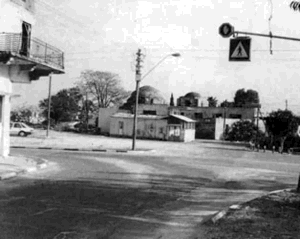
The battles of Salama were a series of clashes fought by the people of Salama, a village east of Jaffa, to defend their village against the Zionist gangs, from 1 December 1947 until late April 1948. Salama was among the first Palestinian villages the Haganah attacked after the partition resolution, and its people held out for some five months although settlements hemmed it in on several sides. [1][2]
The defenders fought on until their ammunition ran out; the village then fell on 29–30 April 1948 in Operation Hametz, aimed at encircling and seizing Jaffa. Its people were scattered as refugees, and the expansion of Tel Aviv swallowed its land. [1][2][3]
Contents
- At a glance
- Salama before the Nakba
- The first spark: December 1947
- The counter-attack on Hatikva
- Five months of resistance
- The fall of Salama
- Salama today
- Differences between the accounts
- Timeline
- Frequently asked questions about the battles of Salama
At a glance
| Item | Details |
|---|---|
| Period | 1 December 1947 – 30 April 1948 |
| Place | The village of Salama, Jaffa district, on the Jaffa–Lydda road |
| Population (1945) | 6,730 |
| Defenders | Salama’s young men, fighters from Lydda and al-Abbasiyya, and 20 Arab Liberation Army fighters |
| Attackers | The Haganah and the Alexandroni Brigade, from the settlements of Hatikva, Ramat Gan and Petah Tikva |
| Main attacks | 19 and 28 December 1947; 18 January, 28 February and 15–16 April 1948 |
| Fall of the village | 29–30 April 1948, in Operation Hametz |
| Fate | Its people driven out and its land swallowed by Tel Aviv |
Salama before the Nakba
Salama lay on the central coastal plain east of Jaffa. Its people believed it took its name from the Companion Salama Abu Hashim, buried there in AD 634, whose shrine, known as “Sayyiduna Salama,” still stands. [2]
It was one of the largest villages in the Jaffa district, with 3,691 people in 1931 and 6,730 in 1945. Its people grew citrus and bananas on 2,853 dunams and grain on 2,266, drawing on some 85 artesian wells, and shipped their produce through the port of Jaffa. The village had a boys’ school opened in 1920, a girls’ school opened in 1936, and a transport company shared with the village of al-Abbasiyya. [2]
Salama sat on the Jaffa–Lydda road used by British forces and was ringed by Zionist settlements, among them the Hatikva quarter on the Tel Aviv side, which placed it on the front line from the moment the partition resolution was passed. [1]
The first spark: December 1947
From 1 December 1947 settlers began harassing the people of Salama. Settlers from Hatikva attacked an Arab farmer, and the village’s young men struck back that same day and place. On 5 December the Haganah raked the village with machine-gun fire, and some families began leaving for Ramla and Lydda. [1][2]
At dawn on 19 December 1947 the Haganah attacked the village, an assault its own record called “the first attack on an Arab village,” but it failed in the face of the villagers’ resistance. [2]
The villagers organised their defence through a village defence committee, whose leading figures included Mufleh Ali Saleh and Musa Abu Hashiya, alongside the heads of the large families, Hajj Najib Abu Najm, Abd al-Rahim Hammad and Hasan Abu Eid. The committee recruited and armed 30 of the village’s young men, its secretary brought 30 British and German rifles and 60 boxes of ammunition from Cairo, and the commander Sheikh Hasan Salama helped supply the defenders with arms. [4]
On 20 December 1947 the defenders attacked a British military vehicle passing through the village, having warned the British not to cross it because the Zionist gangs were disguising themselves in British uniforms. British forces struck back with tanks and infantry, arrested a number of villagers and then closed the main Jaffa–Lydda road, cutting the village’s most important supply line from the neighbouring Arab villages. [4]
The counter-attack on Hatikva
On 28 December 1947 Zionist forces attacked Salama from Ramat Gan after a diversionary strike from Petah Tikva, according to the historian Aref al-Aref. The villagers drove the attack back, then repelled a second one from the north of the village, inflicting heavy losses. [2][1]
That same night Salama’s fighters counter-attacked Hatikva and set fire to a number of its houses. The settlers fled, leaving 26 children behind, whom the fighters handed over unharmed to the British authorities. [1][4]
Women from Salama took part in this counter-attack. [4]
Reinforcements arrived in Salama from the fighters of Lydda and al-Abbasiyya, who chased the attackers to the outskirts of Tel Aviv and burned houses in the Shapira settlement. British forces then intervened at the request of Tel Aviv’s mayor, forced the fighters to withdraw under threat of air bombardment and surrounded Salama on all sides on the pretext of separating it from the settlements. The Zionists used the time to fortify their settlements, and once they had finished, the British withdrew. [1][2][4]
Some historians believe the course of the Nakba in and around Jaffa might have changed but for this British intervention to protect the settlements. [4]
Five months of resistance
In January 1948 the villagers built makeshift defences around Salama, but on 11 January British forces removed four roadblocks and ordered a trench filled in. The newspaper Filastin counted ten separate attacks on the village that month alone, and on 18 January the Alexandroni Brigade attacked and destroyed a large number of its houses. [2]
On 28 February 1948 came the largest attack of that phase: an Arab communiqué said about 250 Zionist gunmen took part, six of whom were killed, while three villagers were martyred, among them a woman. The Arab Liberation Army had sent 20 fighters to help defend Salama. Another account says the defenders killed 15 Zionist soldiers that day and seized arms and equipment. [2][4]
On 15–16 April 1948 the village came under another major attack in which at least 30 mortar shells were fired from Petah Tikva, according to Aref al-Aref. The assault lasted three days, and the defenders answered with mortar fire on Hatikva, but their ammunition and funds were running out. [2][4]
The fall of Salama
Salama’s people held out until late April 1948 and stopped fighting only when their ammunition ran out. With the launch of Operation Hametz on 29 April, in which the Haganah’s Kiryati, Alexandroni and Giv’ati brigades set out to encircle Jaffa and seize the villages around it, the villages fell one after another. [1][3]
Alexandroni Brigade units occupied Salama on 29 April 1948, and according to Aref al-Aref the village had been completely emptied of its people by 30 April. Its people were scattered as refugees around Ramallah and Nablus, and in Gaza, Jordan and Iraq, and its fighters later fought in the battles of al-Abbasiyya, Lydda, Ramla and Ras al-Ain. [2][4]
Read also: The fall of Jaffa, 1948.
Salama today
The expansion of Tel Aviv swallowed the village and its lands, and its site is now part of the Kfar Shalem neighbourhood; all that remains is a number of houses, four coffee shops, the mosque, the Sayyiduna Salama shrine, the two schools and a cemetery. Most of the houses are deserted and crumbling, apart from a few occupied by Jewish families, while one of the village’s two cemeteries has been turned into a small Israeli park and the other is overgrown. [2][4]
Differences between the accounts
The sources differ on some details. Salama’s 1945 population was 6,730 according to the statistics used by the Institute for Palestine Studies, while Arabi Post puts it at about 12,000 by the end of the Mandate. For the attack of 28 February 1948, the Arab communiqué reports six attackers killed and another account 15. We have used the better-documented figures while noting the others. [2][4]
Timeline
| Date | Event |
|---|---|
| 1 December 1947 | Attacks on Salama’s people from Hatikva begin [1] |
| 5 December 1947 | The Haganah machine-guns the village [2] |
| 19 December 1947 | The Haganah’s dawn attack on the village fails [2] |
| 28 December 1947 | Attack from Ramat Gan repelled; counter-attack on Hatikva [2] |
| 18 January 1948 | Alexandroni Brigade attack destroys houses in the village [2] |
| 28 February 1948 | Largest attack: about 250 gunmen; three villagers martyred [2] |
| 15–16 April 1948 | Mortar bombardment from Petah Tikva [2] |
| 29–30 April 1948 | The village is occupied in Operation Hametz and its people driven out [3] |
Frequently asked questions about the battles of Salama
When did the battles of Salama begin?
On 1 December 1947, days after the partition resolution. [1]
Where was Salama?
East of Jaffa on the central coastal plain, on the Jaffa–Lydda road. [2][1]
Who defended Salama?
The village’s young men, with fighters from Lydda and al-Abbasiyya and 20 Arab Liberation Army fighters. [1][2]
What is the story of the 26 children?
When Salama’s fighters attacked Hatikva, the settlers fled leaving 26 children behind, and the fighters handed them to the British authorities. [1][4]
When did Salama fall?
On 29–30 April 1948, in Operation Hametz to encircle Jaffa, after the defenders ran out of ammunition. [2][3]
What was Salama’s population before the Nakba?
6,730 in 1945. [2]
Read also on Palestinuna
- The fall of Jaffa, 1948
- Abd al-Qadir al-Husseini
- The Arab Liberation Army
- Depopulated villages
- Battles archive
Sources and references
- WAFA – Palestinian National Information Centre, “Battles of the Nakba”: “The Battles of Salama” (in Arabic).
- Institute for Palestine Studies – Interactive Encyclopedia, “Salama,” from Walid Khalidi, All That Remains.
- Institute for Palestine Studies, “Document 4: The Fall of Jaffa” (in Arabic).
- Shaimaa al-Abyad, “They Nearly Entered Tel Aviv but for British Intervention: The Story of Salama’s Resistance to the Occupation,” Arabi Post, 20 August 2024 (in Arabic).
More from the archive
 Download Our Palestine App
The whole archive in the palm of your hand: depopulated villages, the Nakba, the massacres and Al-Aqsa — free, with no ads to erase the story.



Comments
No comments yet — be the first to write one.
Add your comment
Name and email are optional. Comments appear after review.