
Battle of al-Subaih 1948: The Clan Ambush That Broke a Haganah Attack near Nazareth
The Battle of al-Subaih was one of the first battles of the Nakba in Galilee. It was fought in early January 1948 near the village of al-Shajara, on the lands of the Arab al-Subaih clan on the northern slopes of Mount Tabor, south-east of Nazareth. The clan’s men, joined by fighters from nearby villages, ambushed a force of the Haganah and the surrounding settlements that had come for revenge; they broke its attack and inflicted twenty dead and twenty wounded without losing a single man. [1][2]
The battle opened a series of clashes the clan fought to defend its land before the Zionist gangs attacked it, committed a massacre against its people and drove them out in 1948. [2][3]
Contents
- At a glance
- Arab al-Subaih and their land
- The spark: the clash of the eight men
- The course of the battle
- Results
- The fate of Arab al-Subaih
- Differences between the accounts
- Timeline
- Frequently asked questions about the Battle of al-Subaih
At a glance
| Item | Details |
|---|---|
| Date | Early January 1948 (3 January according to WAFA, 13 January in other accounts) |
| Place | Arab al-Subaih lands near al-Shajara, between Kafr Kanna and Nazareth, on the northern slopes of Mount Tabor |
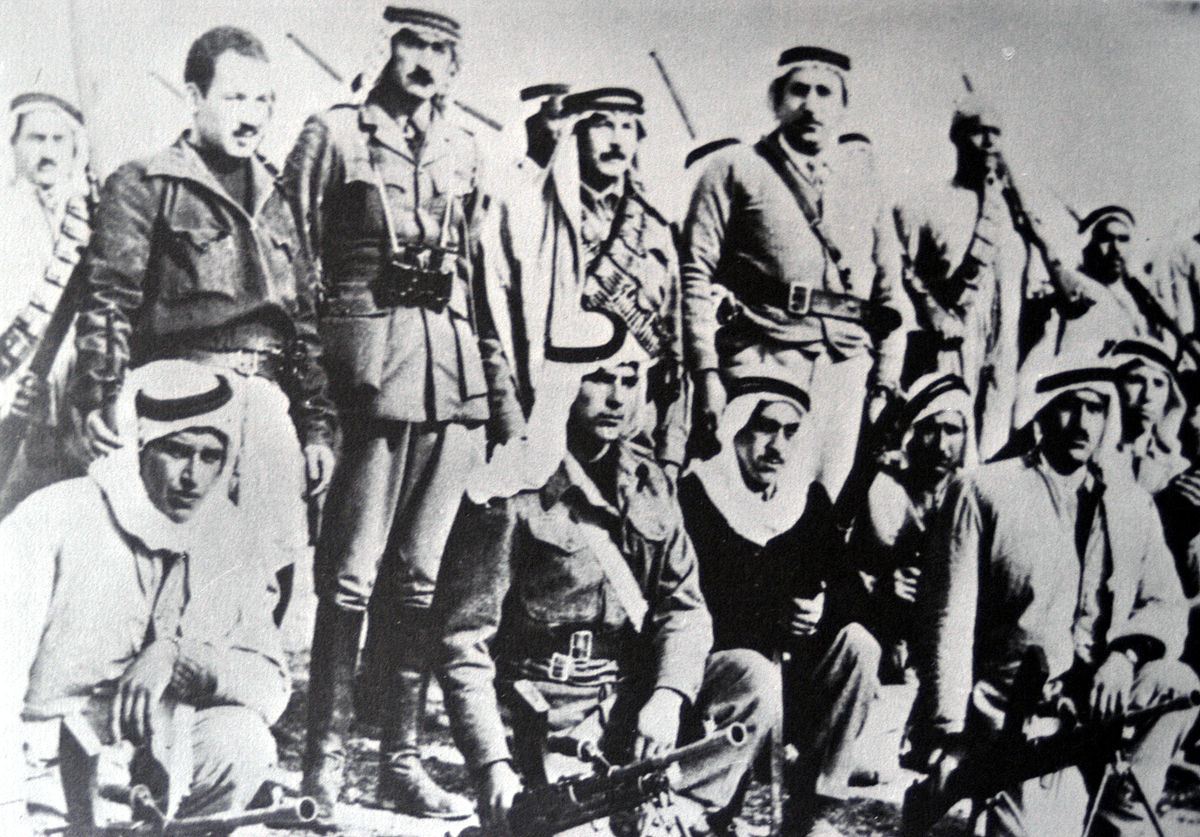
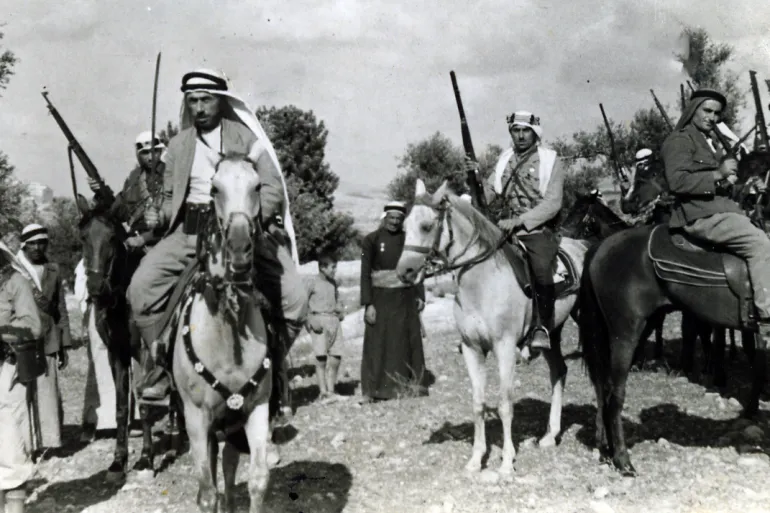
| Defenders | Men of the al-Subaih clan and fighters from nearby villages, about 90 men with a single Bren gun |
| Commander | Abd al-Latif Fahum |
| Attackers | The Haganah and settlers from the neighbouring settlements |
| Attackers’ losses | 20 killed and 20 wounded |
| Defenders’ losses | None killed |
| Outcome | The Zionist attack failed and the attackers fell back |
Arab al-Subaih and their land
Arab al-Subaih was an Arab clan of the Nazareth district made up of seven branches, among them al-Shibli, al-Zahirat, al-Maqatira and al-Nujaydat. It was known for its strength and standing in the area, and its leading sheikhs included Sheikh Aqla al-Nimr and then his son Sheikh Ali al-Nimr. [2]
The clan lived on the northern slopes of Mount Tabor, about 10 kilometres south-east of Nazareth, bordered by al-Shajara to the north and Ein Mahil and Dabburiya to the west. Its lands covered about 8,686 dunams, nearly a thousand of them olive groves, and its numbers rose from 653 in 1922 to 1,320 in 1945. [3][2]
In the early 1940s the settlement of Beit Keshet was set up on the edge of the clan’s lands, and its expansion at the land’s expense became a constant source of friction and confrontation. [3][2]
The spark: the clash of the eight men
The events began when about twenty armed Zionists attacked eight men of the clan near al-Shajara. The eight fought back and killed seven of them, and the rest fled. [1][2]
The Haganah command ordered the neighbouring settlements to attack the Arabs to recover the bodies and take revenge. The clan’s men called on the surrounding villages for help, and fighters rushed to their aid until they numbered about ninety, with nothing heavier than a single Bren gun, under the command of Abd al-Latif Fahum. [1][2]
The course of the battle
On the evening of the battle the Zionists opened their attack with two hours of artillery fire, then advanced in vehicles and bulldozers, because the heavy rain and deep mud made an advance on foot impossible. [1]
The fighters had laid an ambush, and when the attackers came within range they opened fire. The attackers broke and began fleeing towards their settlements, while the bulldozers carried away their dead and wounded. [1][2]
Results
The battle ended in the failure of the Zionist attack, with twenty attackers killed and twenty wounded, while not one of the Arab defenders was killed. [1][2]
The confrontation did not end there. Learning that the fighters who had rushed to help Arab al-Subaih were based in the village of Kafr Kanna, the Zionist command decided to seize it. On 15 January 1948 it split its force in two: the first group crept up to the entrance of the fighters’ camp, but they spotted it and fought it fiercely until it pulled back in haste, while the second stopped before making contact, so the attack on Kafr Kanna failed too. [1]
The fate of Arab al-Subaih
Under Sheikh Ali al-Nimr the clan kept up its resistance to the settlers’ attacks and ambushed them in the months that followed. Then the Zionist gangs seized its land in 1948: the Encyclopedia of Palestinian Villages dates the occupation to 19 April 1948 and records later attacks on the clan by the Palmach and settlers from Beit Keshet. [2][3]
In one of these attacks, at five in the morning, some 600 Zionist gunmen fell on the clan’s encampments while most of its fighters were away defending al-Shajara, leaving only about thirty men behind. The attackers committed a massacre whose victims were mostly women, children and the elderly, among them Ghazala and Alia al-Nimr, sisters of Sheikh Ali al-Nimr. [2]
The clan’s people were scattered as refugees in Lebanon, Syria and Jordan, with only a few remaining in Palestine; those left numbered 402 by November 1948, while the occupation absorbed their land into what it named the “Beit Keshet forest.” [2]
Differences between the accounts
The sources differ on the date of the battle. The “Battle of al-Subaih” section of the WAFA file gives 3 January 1948, while its “Battle of Kafr Kanna” section dates the clan’s clash with the Haganah to 13 January, the date also given by Mawteni48. Since the attack on Kafr Kanna on 15 January came in response to the help given to al-Subaih, 13 January may be the more likely date. [1][2]
Sources also differ on the date of the final attack and massacre, placing it between May and June 1948. [2][3]
Timeline
| Date | Event |
|---|---|
| Early 1940s | Beit Keshet settlement set up on the edge of the clan’s land [3] |
| 3 or 13 January 1948 | The clash of the eight men, then the Battle of al-Subaih [1] |
| 15 January 1948 | The Zionist attack on Kafr Kanna fails [1] |
| 19 April 1948 | Arab al-Subaih lands occupied, according to the Encyclopedia of Palestinian Villages [3] |
| May–June 1948 | Attack on the clan’s encampments, massacre and expulsion [2] |
Frequently asked questions about the Battle of al-Subaih
When was the Battle of al-Subaih?
In early January 1948: 3 January according to WAFA, 13 January in other accounts. [1][2]
Where was it fought?
On Arab al-Subaih land near al-Shajara, on the northern slopes of Mount Tabor south-east of Nazareth. [1][3]
Who led the Arab side?
Abd al-Latif Fahum, at the head of about ninety fighters from the clan and nearby villages. [2]
What were the losses?
Twenty attackers were killed and twenty wounded; none of the Arab defenders was killed. [1]
How is it linked to the Battle of Kafr Kanna?
The Haganah attacked Kafr Kanna on 15 January 1948 because the fighters who had helped Arab al-Subaih were based there, but the attack failed. [1]
What happened to Arab al-Subaih afterwards?
The Zionist gangs seized their land in 1948, committed a massacre against them, and they were scattered as refugees in Lebanon, Syria and Jordan. [2][3]
Read also on Palestinuna
Sources and references
- WAFA – Palestinian National Information Centre, “Battles of the Nakba”: “The Battle of al-Subaih” and “The Battle of Kafr Kanna” (in Arabic).
- Saher Ghazawi, “Arab al-Subaih: A Clan That Resisted Bravely and Made the Zionist Gangs Suffer before Its Expulsion,” Mawteni48, 18 April 2020 (in Arabic).
- Encyclopedia of Palestinian Villages, “Arab al-Subaih / Arab al-Shibli” (in Arabic).
More from the archive
 Download Our Palestine App
The whole archive in the palm of your hand: depopulated villages, the Nakba, the massacres and Al-Aqsa — free, with no ads to erase the story.



Comments
No comments yet — be the first to write one.
Add your comment
Name and email are optional. Comments appear after review.