Al-Asi Stream in the Beisan Valley

Al-Asi Stream in the Beisan Valley: The Stream That "Runs Alone" Between Depopulated Villages
The al-Asi Stream (Nahr al-Asi) is one of the main streams of the Beisan valley (Marj Beisan) in the northern Jordan Valley, fed by springs that draw their water from Mount Faqqu'a, chief among them Ein al-Sakhna and Ein al-Asi. The Palestinian Encyclopedia says it was named "al-Asi" ("the disobedient") because the water of Ein al-Sakhna, unlike the other springs of the area that join in Wadi Jama'in, "runs alone, separate". The stream ran between the villages of al-Sakhna to the north and Tall al-Shawk to the south, watering Arab farmers' fields, until the people of Beisan and its villages were expelled in 1948. Since 2010 the settlement of Nir David, built on its banks, has fenced off part of its course and charged for entry. This guide covers the stream's geography, history and current situation.
Quick facts
| Arabic name | نهر العاصي – مرج بيسان |
|---|---|
| Location | Beisan valley, northern Jordan Valley |
| Water source | Springs fed from Mount Faqqu'a |
| Main springs | Ein al-Sakhna, Ein al-Asi, Ein Zahra, Ein al-Jawsaq |
| Origin of the name | Ein al-Sakhna's water "runs alone, separate" |
| Villages on its banks | Al-Sakhna to the north, Tall al-Shawk to the south |
| Expulsion of Beisan | May 1948 |
| Settlement on its banks | Nir David, founded 1936 |
| Fencing | Since 2010, with entrances and fees |
| Imposed name | "HaAsi" in Hebrew |
The name
The Palestinian Encyclopedia says the stream was named "al-Asi", "the disobedient", because the water of Ein al-Sakhna, unlike the area's other springs that join in Wadi Jama'in, "runs alone, separate", as if it had "disobeyed" and refused to follow the others. The Israeli establishment changed its name in Hebrew to "HaAsi", part of a wide policy of replacing the country's original place names.
Location and springs
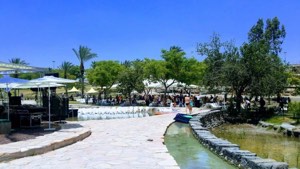
The al-Asi Stream runs through the Beisan valley in the northern Jordan Valley, west of the town of Beisan, in a low-lying area below sea level. It is fed by a group of springs that draw their water from Mount Faqqu'a, chief among them Ein al-Sakhna, Ein al-Asi to its east, Ein Zahra to the north-east and Ein al-Jawsaq to the south. Sources describe the area as a natural boundary between the lands occupied in 1948 and those occupied in 1967.
The Arab villages on its banks
The stream ran between two Arab villages: al-Sakhna to its north and Tall al-Shawk to its south, both villages of the Beisan district. Arab farmers irrigated their lands from its water through canals supported in the Ottoman period, growing vegetables, sugar cane, cotton and other crops, before settlements were built on its banks.
The Nakba and settlement
In 1936 the settlement of Nir David was built on the banks of the stream, the first settlement in the country built by the "tower and stockade" method, enclosed by walls with a watchtower, during the 1936 revolt. In May 1948 Zionist militias occupied Beisan and expelled its Arab people, and the district's villages fell one after another, among them al-Sakhna and Tall al-Shawk, whose people were expelled and whose lands and springs were seized, while new immigrants were settled in Beisan.
Fencing off the stream
Since 2010 the settlement of Nir David has barred the general public from part of the valley, setting up entrances to the springs where fees are charged. This provoked wide protests by residents of the area, a movement called "Liberate al-Asi" emerged, and the case reached the Haifa Central Court in 2021. On 22 June 2021 a section of the valley was opened to the public with advance registration and a cap of 250 visitors; the state then proposed a settlement raising the cap to 400 without registration, which the protesters rejected, demanding the opening of the entire course. A 1997 agreement granting the settlement use of the surrounding land runs until 2049, while the valley itself is classified as "state land". In all this dispute, the original owners of the land, the expelled people of al-Sakhna and Tall al-Shawk, are absent.
The stream today (2026)
The al-Asi Stream still flows with clear water through the Beisan valley, under an imposed Hebrew name and amid a dispute over access between the settlement and the Israeli public, while the people of the villages on its banks and their descendants live in refugee camps and the diaspora, denied return. The name "al-Asi" remains a witness to an Arab stream that "refused" to join the others, just as its expelled people refuse to forget.
Frequently asked questions
Where is the al-Asi Stream in Beisan?
In the Beisan valley in the northern Jordan Valley, west of the town of Beisan.
Why is it called the al-Asi Stream?
Because the water of Ein al-Sakhna "runs alone, separate", unlike the area's other springs that join in Wadi Jama'in, according to the Palestinian Encyclopedia.
Where does the stream's water come from?
From springs fed from Mount Faqqu'a, chief among them Ein al-Sakhna, Ein al-Asi, Ein Zahra and Ein al-Jawsaq.
Which Arab villages stood on its banks?
Al-Sakhna to the north of the stream and Tall al-Shawk to the south; their people were expelled in 1948.
Why has part of the stream been fenced off?
Since 2010 the settlement of Nir David has barred the general public from part of the valley and charged fees at the entrances to the springs.
Conclusion
From the springs of Mount Faqqu'a, the al-Asi Stream runs through the Beisan valley as it has for centuries between al-Sakhna and Tall al-Shawk, once watering the fields of Arab farmers who grew cotton and sugar cane on its banks. Today, behind fences, fees and an imposed name, the stream remains part of the memory of Beisan and its depopulated villages, and of their people's right to return to their water and land.
More from the archive
 Download Our Palestine App
The whole archive in the palm of your hand: depopulated villages, the Nakba, the massacres and Al-Aqsa — free, with no ads to erase the story.
Comments
No comments yet — be the first to write one.
Add your comment
Name and email are optional. Comments appear after review.