The Sea Mosque in Tiberias
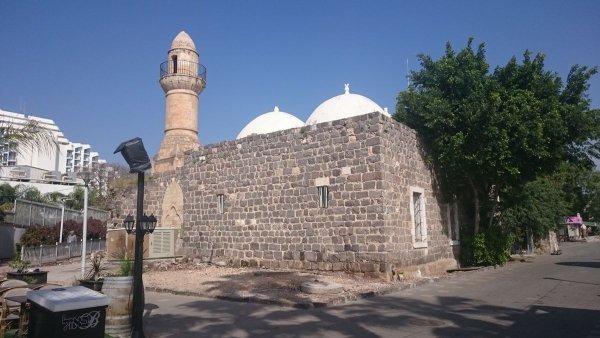
The Sea Mosque in Tiberias: The Fishermen's Mosque Closed Since the Nakba
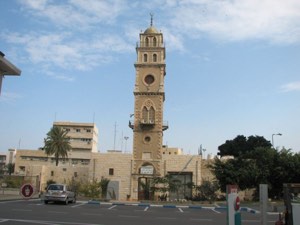
The Sea Mosque (Masjid al-Bahr) is a historic mosque standing right on the shore of Lake Tiberias in the old city of Tiberias, which gave it its name. It was built in 1702 and renovated by Sheikh Yusuf al-Umar, brother of Zahir al-Umar al-Zaydani, in the 18th century; fishermen tied their boats beside it and prayed there. Together with the Zaydani (Omari) Mosque, it is one of the two surviving historic mosques of Tiberias. It has been closed since the fall of Tiberias in April 1948 and the expulsion of all its Arab inhabitants, and has since suffered neglect, arson and desecration; at one point its courtyard was turned into a bar, and in 2019 the Tiberias municipality tried to convert it into a museum. This guide covers the mosque's history, architecture and current plight.
Quick facts
| Arabic name | مسجد البحر – طبريا |
|---|---|
| Other names | Jami' al-Bahr |
| Location | Shore of Lake Tiberias, old city of Tiberias |
| Built | 1702 CE |
| Renovation | Sheikh Yusuf al-Umar, brother of Zahir al-Umar, 18th century |
| Architecture | Minaret, Ottoman domes, mihrab, columns and arches |
| Worshippers | Fishermen and the people of Tiberias |
| Closure | Since the fall of Tiberias in April 1948 |
| Attacks | Arson in 2000, desecration in 2009, and others |
| Museum plan | 2019, frozen after protests |
The name
It is called the Sea Mosque because it stands right on the shore of Lake Tiberias, which local people call "the Sea of Tiberias"; its waters lapped against its walls, and fishermen tied their boats beside it and prayed there before and after setting out.
Location
The mosque stands on the lakeshore in the old city of Tiberias, near the Zaydani (Omari) Mosque, St. Peter's Church and the old city walls built by Zahir al-Umar, in an area now crowded with restaurants and tourist facilities.
History and builders
- 1702 CE: the mosque was built on the lakeshore, and people prayed there before the Zaydani Mosque was built.
- 18th century: Sheikh Yusuf al-Umar, brother of Zahir al-Umar al-Zaydani, renovated it around the same time the Zaydani Mosque was built in 1743, when the Zaydani family made Tiberias their seat of power and fortified it with walls.
- 1932: a photograph from that year shows the mosque in use on the shore.
- April 1948: the mosque was closed with the fall of Tiberias and the expulsion of its Arab inhabitants.
Architecture
The mosque bears the clear features of Ottoman Islamic architecture: a minaret reached by a staircase, Ottoman domes on its roof, a mihrab marking the qibla, and a structure resting on columns and arches. It once had an inscribed commemorative plaque that was later removed and its place walled up, in an attempt to erase its identity.
Tiberias and the Nakba
Tiberias was an Arab city of Muslims and Christians, rebuilt and fortified by Zahir al-Umar in the 18th century. On 18–19 April 1948 the city fell to Zionist militias, and all of its Arab inhabitants, some 6,160 people, were expelled, and much of its old city was demolished. Its two historic mosques, the Sea Mosque and the Zaydani Mosque, were closed and confiscated, and prayer in them has been banned ever since.
Neglect and desecration
- From around the late 1970s: the Tiberias municipality allowed a bar called "the Mosque Bar" to open next to the mosque, and its courtyard was used as a dance hall and bar for a time; bulldozing nearly demolished the mosque, until the bar was closed after intervention by Arab institutions and activists.
- 6 February 2000: an individual set fire to the mosque, and Jewish extremists wrote hostile slogans on its walls.
- 15 February 2009: a group of youths daubed the mosque's walls and domes with black and red paint and "satanic" writings, in a busy area in full public view.
- Later years: the mosque was for a period turned into a museum, then set on fire and closed, becoming a rubbish dump, while excavations inside threaten its foundations.
The attempt to turn it into a museum (2019)
In February 2019 Tiberias municipality bulldozers entered the mosque courtyard and prayer hall and began implementing a plan to convert it into a "museum of ancient antiquities", while the mayor claimed without evidence that the site was not Islamic. A delegation of the High Follow-Up Committee for Arab Citizens visited the mosque on 5 February 2019 and declared that "the Sea Mosque is a Palestinian landmark" and that it would confront the municipality's plan. On 10 February 2019 it was agreed to freeze the plan to turn it into a museum and begin cleaning and maintaining it, with cooperation on restoring and maintaining the mosques of Tiberias.
The mosque today (2026)
The Sea Mosque remains closed to worshippers on the shore of Tiberias, more than 78 years after the city's people were expelled, while the expelled people of Tiberias and their descendants live in refugee camps and the diaspora, denied return. The Palestinians inside the Green Line call for the mosque to be reopened for prayer and returned, with its waqfs, to its rightful owners. With its minaret and domes overlooking the lake, it remains a witness to Arab Tiberias, whose landmarks have been erased.
Frequently asked questions
Where is the Sea Mosque in Tiberias?
Right on the shore of Lake Tiberias, in the old city of Tiberias.
When was the Sea Mosque built?
In 1702; it was renovated by Sheikh Yusuf al-Umar, brother of Zahir al-Umar, in the 18th century.
Why is it called the Sea Mosque?
Because it stands right on the shore of Lake Tiberias, and fishermen tied their boats beside it and prayed there.
Is the Sea Mosque used for prayer today?
No. It has been closed to worshippers since the fall of Tiberias and the expulsion of its people in April 1948.
What happened to the mosque in 2019?
The Tiberias municipality began converting it into a museum, but the plan was frozen on 10 February 2019 after protests by the High Follow-Up Committee.
Conclusion
On the shore of Lake Tiberias, where fishermen once tied their boats and prayed, the Sea Mosque has stood for more than three centuries, silent since the Nakba. Despite arson, desecration and attempts to turn it into a museum, its minaret remains a witness to Arab Tiberias, all of whose people were expelled, and to their right to return to it and its mosques.
More from the archive
 Download Our Palestine App
The whole archive in the palm of your hand: depopulated villages, the Nakba, the massacres and Al-Aqsa — free, with no ads to erase the story.
Comments
No comments yet — be the first to write one.
Add your comment
Name and email are optional. Comments appear after review.