
Haram Ramat al-Khalil (Mamre),
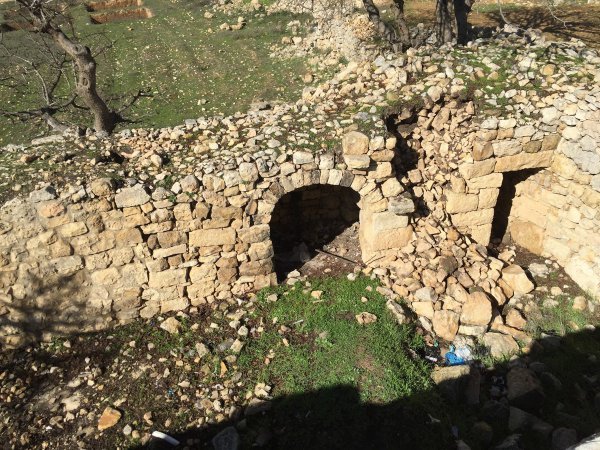
Haram al-Rama (Ramat al-Khalil), Hebron: Abraham's First Sanctuary and Well
Haram al-Rama, or Ramat al-Khalil, is a Palestinian archaeological site on the northern edge of Hebron, on the Hebron–Jerusalem road, with a history of more than 4,000 years. According to Arab and local sources, it was the first sanctuary established by the Prophet Ibrahim (Abraham) al-Khalil, before the Ibrahimi Mosque. He pitched his tent here under the oaks and dug his well, and here Sarah received the news of Isaac's birth. In the Roman period it became a major trading centre known as Terebinthus, and a church was built here under Constantine. Restored by Hebron Municipality and the Palestinian Ministry of Tourism and Antiquities, the site has been stormed by settlers under Israeli army protection, most recently on 30 September 2026. This guide covers its history, traditions, archaeology and situation today.
Quick facts
| Arabic name | حرم الرامة / رامة الخليل |
|---|---|
| Other names | Haram Ramat al-Khalil; Roman name Terebinthus |
| Location | Northern Hebron, on the Hebron–Jerusalem road, in the al-Rama suburb |
| Age | More than 4,000 years |
| Tradition | Ibrahim's first sanctuary, the site of his tent and well, and of the good news given to Sarah |
| Well | Ibrahim's Well in the south-western corner, now covered with iron bars |
| Roman period | Major trading centre; expanded by Hadrian with a temple and barracks |
| Church | Basilica built c. 325 under Constantine; destroyed by the Persians in 614 |
| Palestinian excavation | Palestinian–French mission since 2016 |
| Recent events | Settler incursion under army protection, 30 September 2026 |
The name
The site is known as Haram al-Rama, Ramat al-Khalil or Haram Ramat al-Khalil. Al-Khalil ("the Friend [of God]") is Ibrahim's title and the Arabic name of Hebron itself, and the surrounding suburb is still called al-Rama. It is called a haram (sanctuary) because, according to local tradition, it was the first sanctuary Ibrahim established, before the Ibrahimi Mosque. In the Roman period it was known as Terebinthus, after the terebinth tree, while the occupation authorities give it a biblical Hebrew name as part of efforts to change its identity.
Location
The sanctuary lies on the northern edge of Hebron, on the Hebron–Jerusalem road, near the Qeizun area and the al-Rama suburb. It stood on a historic route linking northern Palestine with the south, passing through old Bethlehem, Zif and Yatta.
Ibrahim al-Khalil at al-Rama
According to Arab and local sources, Ibrahim al-Khalil settled here on land given to him by a Canaanite landowner. He pitched his tent under the oak trees and dug a well that is still attributed to him. Here, according to these accounts, the angels came to him with good news, as the Quran tells: "Our messengers came to Ibrahim with good news. They said, 'Peace.' He said, 'Peace,' and hastened to bring a roasted calf." His wife laughed when she was told she would bear Ishaq (Surat Hud 11:69–73; Surat al-Dhariyat 51:24–30). Some narrators link the place to the story of the people of Lut near the Dead Sea, and some travellers say Ismail lived here with his mother Hajar. Local stories also say that Maryam rested here on her journey to Egypt, an account not found in standard history books.
History through the ages
- Canaanite period: the site's beginnings go back more than 4,000 years, and it served as a religious centre for several faiths.
- Roman period: after the Roman commander Cerealis destroyed Hebron, the site, known as Terebinthus, became a major trading centre visited by merchants from across the Levant. Emperor Hadrian expanded the town and built a temple and a military barracks there.
- Byzantine period (c. 325): after the visit of Empress Helena, mother of Constantine, to Palestine, a large basilica was built at the site, one of the oldest churches in Palestine.
- 614: the Persians destroyed the church.
- Crusader period: the church was rebuilt, then abandoned, and little of it remains.
- Mamluk period: the Palestinian–French excavations uncovered a Mamluk building outside the southern wall.
- Modern times: the site remained known to the people of Hebron as Haram al-Rama, with its well and ancient wall.
The enclosure, the well and the church
- The enclosure: an ancient wall of huge stones surrounds the site, its southern side about 64 metres long and its western side about 50 metres. Its stones resemble those of the Ibrahimi Mosque enclosure, leading some studies to link the two sites. Folk stories explain the size of the stones by saying the jinn helped Ibrahim build it.
- Ibrahim's Well: in the south-western corner of the sanctuary. The director of Tourism and Antiquities in Hebron describes it as an artesian spring dug by Ibrahim under the oaks. It is now covered with iron bars.
- The church: the remains of the Byzantine church built around 325, one of whose walls was uncovered by the Palestinian–French mission.
- The town: the ancient town spread over a wide area, but few of its remains are still visible, scattered across a large space.
Excavations: from biblical agendas to a Palestinian mission
- 1926: a German archaeologist began excavating the site, with aims that Palestinian researchers describe as driven by the biblical narrative.
- 1984: the occupation authorities excavated the eastern and southern sides. The director of Tourism and Antiquities in Hebron criticises these digs as based on biblical narratives rather than science, and says they were not aimed at uncovering the site's real history.
- 2016: a joint Palestinian–French mission, between the Palestinian Ministry of Tourism and Antiquities and a French university and funded by the French Foreign Ministry, began a four-year project to survey the site and produce a complete plan. It uncovered a wall of the Byzantine church and a Mamluk building outside the southern wall.
Restoration and revival
After years of neglect, Hebron Municipality and the Ministry of Tourism and Antiquities carried out a project to revive the site. The first phase, completed by July 2018, included partial restoration, an interpretation centre, toilets and shaded rest areas. The second phase aims to acquire a plot of 6.5 dunums east of the site, where the ministry hopes to build the Hebron Museum.
Under occupation
Israeli forces occupied Hebron and its surroundings in June 1967. Although the sanctuary lies inside the city of Hebron, settler groups seek to take it over by projecting a biblical narrative onto it and giving it a Hebrew name. The army escorts them into the site, closing the surrounding streets to the city's residents. Palestinian institutions warn that these incursions are a step towards imposing control over the site, as happened at the Ibrahimi Mosque.
The site today (2026)
On the evening of 30 September 2026, large Israeli forces entered northern Hebron from several directions and deployed in Qeizun, the al-Rama suburb and around the well of Haram al-Rama. They closed the area and stopped residents from moving, and then buses carrying settlers entered the archaeological site, where they performed Talmudic rituals, according to An-Najah News. The incursion came amid a wider escalation in Hebron in 2026, including the seizure of planning powers at the Ibrahimi Mosque, closures of the Old City and hundreds of settlers storming the Ibrahimi Mosque at the end of September.
Legal protection
As a historic and religious site in occupied territory, Haram al-Rama is protected by the 1954 Hague Convention for the Protection of Cultural Property and the Fourth Geneva Convention, which prohibit the occupying power from seizing cultural property or altering its character. The Old City of Hebron has been on the UNESCO List of World Heritage in Danger since 2017.
Frequently asked questions
Where is Haram al-Rama?
On the northern edge of Hebron, on the Hebron–Jerusalem road, in the al-Rama suburb near Qeizun.
What is the link between Haram al-Rama and the Prophet Ibrahim?
According to Arab sources, it was the first sanctuary Ibrahim al-Khalil established. He pitched his tent and dug his well here, and here the angels brought him the news of Ishaq, as the Quran tells.
How old is Haram al-Rama?
The site is more than 4,000 years old. It was a major trading centre in the Roman period, and a church was built there around 325.
Who has excavated Haram al-Rama?
A German archaeologist in 1926 and the occupation authorities in 1984, both with biblical agendas according to Palestinian researchers. Since 2016 a Palestinian–French mission has worked there and uncovered the Byzantine church wall and a Mamluk building.
What happened at Haram al-Rama in 2026?
On 30 September 2026 settlers stormed the site and performed Talmudic rituals under the protection of Israeli forces, which closed the area to Hebron's residents.
Conclusion
Haram al-Rama keeps the earliest memory of Ibrahim al-Khalil in the land of Hebron: his tent, his well and his hospitality to his guests, long before the whole city came to carry his name. From its huge stones to the remains of its church and Mamluk building, it remains part of the heritage of Hebron and its people, who today defend it against attempts to seize it and change its identity.
More from the archive
 Download Our Palestine App
The whole archive in the palm of your hand: depopulated villages, the Nakba, the massacres and Al-Aqsa — free, with no ads to erase the story.
Download Our Palestine App
The whole archive in the palm of your hand: depopulated villages, the Nakba, the massacres and Al-Aqsa — free, with no ads to erase the story.



Comments
No comments yet — be the first to write one.
Add your comment
Name and email are optional. Comments appear after review.