The Muslim Quarter of Jerusalem
The Muslim Quarter of Jerusalem: The Heart of the Old City Around al-Aqsa
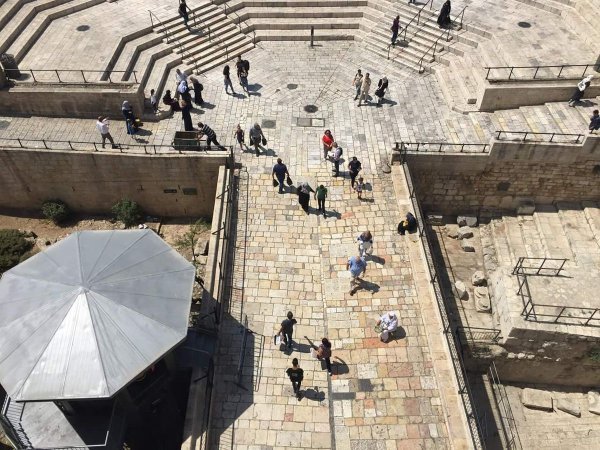
The Muslim Quarter (al-Hayy al-Islami, or Harat al-Muslimin) is the largest and most populous quarter of the Old City of Jerusalem. It occupies the north-east of the Old City and wraps around al-Aqsa Mosque to the north and west. It holds historic neighbourhoods such as al-Wad, Bab Hutta and al-Sa'diyya, old markets such as Souq Khan al-Zeit and Souq al-Qattanin, and dozens of Mamluk and Ottoman madrasas, sabils, bathhouses and takiyas; visitors enter it through Damascus Gate (Bab al-Amud), Herod's Gate (Bab al-Sahira) and Lions' Gate (Bab al-Asbat). Some 22,000 Jerusalemites live here at one of the highest population densities in the world, and since the occupation of Jerusalem in 1967 they have faced house seizures, settlement outposts, the Hebraisation of place names and pressure on merchants. This guide covers the quarter's history, landmarks and present state.
Quick facts
| Arabic name | الحي الإسلامي (حارة المسلمين) – القدس |
|---|---|
| Other names | Harat al-Muslimin |
| Location | North-east of the Old City, west and north of al-Aqsa Mosque |
| Status | Largest and most populous of the Old City's four quarters |
| Population | About 22,000 |
| Main neighbourhoods | Al-Wad, Bab Hutta, al-Sa'diyya |
| Gates | Damascus Gate, Herod's Gate, Lions' Gate |
| Main markets | Souq Khan al-Zeit, Souq al-Qattanin |
| World Heritage | Part of the Old City and its Walls, inscribed in 1981 on Jordan's nomination |
| Danger list | Since 1982 |
The name and the division into quarters
The division of the Old City into four quarters, Muslim, Christian, Armenian and Jewish, is not as old as is often thought: it is a European division dating from the early 19th century, based on each community's religious centre. Jerusalemites historically did not know neighbourhoods closed to one religion, but rather harat named after crafts, topography, families or the origins of their residents, such as Harat al-Wad, Harat Bab Hutta, Harat al-Sa'diyya and Harat al-Magharba. Today the name "Muslim Quarter" is applied to the whole group of these neighbourhoods in the north-east of the city.
Location and gates
The Muslim Quarter occupies the north-eastern part of the Old City of Jerusalem, bounded by al-Aqsa Mosque to the east and south-east and by the city wall to the north. It is entered through three gates in the wall: Damascus Gate (Bab al-Amud) in the north-west, Herod's Gate (Bab al-Sahira) in the north, and Lions' Gate (Bab al-Asbat) in the east. Most of the gates of al-Aqsa Mosque also open from it, among them Bab Hutta, Bab al-Ghawanima, Bab al-Nazir, Bab al-Hadid and Bab al-Qattanin.
Neighbourhoods and lanes
- Al-Wad: runs from Damascus Gate through the middle of the Old City to the entrance of al-Buraq Wall, linked to the lanes of al-Tut, al-Mufti, al-Takiya, al-Khalidiyya and Qanatir Khudair, and joining Souq Bab al-Silsila to the south.
- Bab Hutta: beside al-Aqsa Mosque, entered from Herod's Gate; Bab Hutta, one of al-Aqsa's gates, lies here, and the neighbourhood has about 53 shops.
- Al-Sa'diyya: in the north, crossed by many lanes including Aqabat al-Shaykh Rayhan, Aqabat al-Saraya, Aqabat Shaddad, Aqabat al-Bustami, Aqabat Darwish and Aqabat Habb Rumman.
- The aqabat: the stepped, sloping lanes characteristic of the Old City, linking the neighbourhoods to one another, to the markets and to the gates of al-Aqsa.
Main landmarks
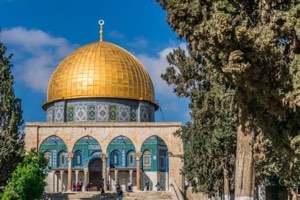
- Al-Aqsa Mosque: the quarter wraps around it to the north and west, and most of its gates open onto it.
- Souq al-Qattanin (Cotton Merchants' Market): about 100 metres long and 10 metres wide, built by the emir Tankiz al-Nasiri under the Mamluk sultan al-Nasir Muhammad ibn Qalawun, roofed by 30 pointed vaults, and home to Hammam al-Shifa and Hammam al-Ayn, built in 1337.
- Hammam al-Sultan: an Ottoman bathhouse attributed to Khasseki Sultan, wife of Sultan Suleiman the Magnificent, dated 959 AH (1551 CE).
- Takiya of Khasseki Sultan: a soup kitchen where food was given to the poor, later linked to the Islamic Orphans' School (Dar al-Aytam al-Islamiyya); it gave its name to Aqabat al-Takiya.
- Sabils of Suleiman the Magnificent: including the Sabil of al-Wad Road, dated 943 AH (1536–1537 CE), and the Sabil of Bab al-Nazir.
- Via Dolorosa: runs through al-Wad for more than 200 metres and draws Christian pilgrims.
- Austrian Hospice: built in the late 19th century; it became a military hospital in 1948 and then a government hospital, and was the only hospital inside the walls until 1985.
The Moroccan Quarter: the neighbour that was erased
At the south-eastern edge, adjoining al-Buraq Wall, stood the Moroccan Quarter (Harat al-Magharba), endowed in 1193 by al-Malik al-Afdal Nur al-Din, son of Salah al-Din, for North Africans who had fought the Crusaders and later came as students and pilgrims. Days after the occupation of Jerusalem, between 11 and 13 June 1967, the occupation authorities bulldozed the entire quarter, demolishing 135 historic buildings from the Ayyubid, Mamluk and Ottoman periods, among them the al-Buraq Mosque and the Maghariba Mosque, displacing its residents and building a plaza for Jewish prayer in its place. A further 116 dunams of the Old City were expropriated, and the Sharaf neighbourhood demolished, to expand the Jewish Quarter.
The quarter under occupation
- House seizures: the authorities and settler associations seized houses in al-Wad and elsewhere and turned them into Jewish religious schools, took over shops, and set up two police stations inside the neighbourhood.
- Settlement outposts: about 10 settlement outposts were counted in the quarter in 2017, while former Israeli prime minister Ariel Sharon took a house for himself in al-Wad.
- Hebraisation of names: in September 2021 a sign giving a Hebrew name commemorating Israeli dead was put up at the junction of al-Wad Road and the Via Dolorosa, a first since the occupation of Jerusalem.
- Pressure on merchants: the quarter's traders have faced fines and closures since 1967; 24 of Bab Hutta's 53 shops closed during the raids of 2017–2018, and hundreds of shops across the Old City have shut.
The quarter today (2026)
The Muslim Quarter remains the beating heart of Arab Jerusalem: its markets bustle with Jerusalemites and visitors, and its people pray at al-Aqsa through the nearby gates. But it lives under constant pressure: settlement outposts spreading through its lanes, checkpoints and raids at the gates of al-Aqsa, merchants struggling to survive, and suffocating overcrowding with building and restoration blocked. Yet Jerusalemites hold on to their homes and neighbourhoods, and the quarter remains a witness to the Arab and Islamic identity of Jerusalem and part of an Old City inscribed on the List of World Heritage in Danger.
Frequently asked questions
Where is the Muslim Quarter in Jerusalem?
In the north-eastern part of the Old City, wrapping around al-Aqsa Mosque to the north and west.
How many people live in the Muslim Quarter?
About 22,000; it is the largest and most populous quarter of the Old City.
What are the main neighbourhoods of the Muslim Quarter?
Al-Wad, Bab Hutta and al-Sa'diyya, linked by many stepped lanes (aqabat).
Is the division of the Old City into four quarters ancient?
No. It is a European division dating from the early 19th century; Jerusalemites knew neighbourhoods named after crafts, families and topography.
What does the Muslim Quarter face today?
House seizures, settlement outposts, the Hebraisation of names and pressure on merchants since the occupation of Jerusalem in 1967.
Conclusion
Among the lanes of al-Wad, Bab Hutta and al-Sa'diyya, beneath the vaults of Souq al-Qattanin and the domes of the Mamluk bathhouses, Arab and Islamic Jerusalem appears at its finest. Despite the erasure of the neighbouring Moroccan Quarter and the creep of settlement outposts into its homes, the Muslim Quarter and its steadfast people remain the guardians of al-Aqsa and a living memory of a city that will accept no identity but its own.
More from the archive
 Download Our Palestine App
The whole archive in the palm of your hand: depopulated villages, the Nakba, the massacres and Al-Aqsa — free, with no ads to erase the story.
Comments
No comments yet — be the first to write one.
Add your comment
Name and email are optional. Comments appear after review.