
The Church of Saint Anne in Jerusalem

The Church of Saint Anne in Jerusalem: From Crusader Basilica to Salah al-Din's Madrasa
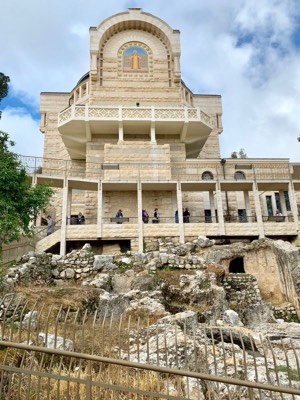
The Church of Saint Anne (Kanisat al-Qiddisa Hanna) is a historic church in the Old City of Jerusalem, about 60 metres inside Lions' Gate (Bab al-Asbat) in the Muslim Quarter, beside the archaeological site of the Pool of Bethesda. Christians believe it stands on the home of Saints Anne and Joachim, parents of the Virgin Mary, and that Mary was born in a grotto beneath it. The Crusaders built it around 1130 over the ruins of a Byzantine church; after liberating Jerusalem, Salah al-Din turned it into the Salahiyya Madrasa, opened in 1192, whose inscription still stands over its entrance, and it remained a centre of learning for centuries. In 1856 the Ottoman sultan Abdulmejid I gave it to France, and it remains French government property. This guide covers the church's history, architecture and present state.
Quick facts
| Arabic name | كنيسة القديسة حنّة – القدس |
|---|---|
| Other names | St Anne's Basilica, al-Madrasa al-Salahiyya |
| Location | About 60 m inside Lions' Gate, Old City |
| Byzantine church | 5th century CE |
| Crusader church | About 1130–1131 CE |
| Salahiyya Madrasa | Opened in 1192 CE |
| Gift to France | 1856, Sultan Abdulmejid I |
| Run by | The White Fathers, under the French consulate |
| Style | Three-aisled Romanesque basilica |
| Next to it | The Pool of Bethesda archaeological site |
Location
The church stands in the Muslim Quarter of the Old City of Jerusalem, about 60 metres from Lions' Gate, at the start of the Via Dolorosa and close to Bab al-Asbat, the gate leading to al-Aqsa Mosque. It sits in a compound around a garden, with the Pool of Bethesda site beside it.
Religious significance
Christians believe the church stands on the site of the home of Saint Anne and her husband Joachim, parents of the Virgin Mary, and that Mary was born in a grotto beneath the church, reached today through a crypt in the south aisle. The site is also linked to the neighbouring Pool of Bethesda, where the Gospel tells that Jesus healed a paralysed man.
History
- Antiquity: the site drew the sick seeking healing at the Pool of Bethesda, and a Roman temple to Asclepius, god of medicine, stood here.
- 5th century CE: the Byzantines built a cathedral on a site they regarded as the home of Saints Anne and Joachim; the Persians partly destroyed it in 614 CE.
- About 1130–1131 CE: the Crusaders built the present church over the ruins of the Byzantine church, completed under Queen Melisende.
- 1187–1192 CE: after Salah al-Din liberated Jerusalem following the Battle of Hattin, the church was turned into the Salahiyya Madrasa, opened in 1192.
- Ayyubid, Mamluk and Ottoman periods: the Salahiyya Madrasa remained one of Jerusalem's leading centres of learning, until the building fell into neglect in the late Ottoman period.
- 1856: the Ottoman sultan Abdulmejid I gave the church to the French emperor Napoleon III in thanks for France's support in the Crimean War; France restored it and still owns it.
- 19th century: the French government entrusted the church to the White Fathers, the missionary order founded by Cardinal Lavigerie.
The Salahiyya Madrasa
After Salah al-Din liberated Jerusalem in 1187, he turned several of the city's buildings into schools of Islamic learning, among them this church, which became the Salahiyya Madrasa, opened in 1192. Its name and the date of its endowment were inscribed in Arabic over the entrance, and the inscription still stands today. The madrasa remained a prominent centre of learning in Jerusalem throughout the Ayyubid and Mamluk periods and part of the Ottoman era, with leading scholars teaching there and students coming from across the Islamic world.
Architecture
The church is one of the best-preserved examples of Crusader Romanesque architecture in Palestine. It is a three-aisled basilica divided by two rows of piers, with vaulted ceilings, a dome over the crossing and a plain façade crowned by the Arabic inscription of the Salahiyya Madrasa. From the crypt in the south aisle, steps lead down to the grotto believed to be the birthplace of the Virgin. The church is famous for its exceptional acoustics, which draw choirs and singers, and visitors are allowed to sing hymns inside.
The Pool of Bethesda
Beside the church lies the archaeological site of the Pool of Bethesda, with two large ancient water reservoirs uncovered in 20th-century excavations, the remains of Roman baths and a temple to Asclepius, and the ruins of a Byzantine church built over the pool to commemorate the healing of the paralysed man, which was also damaged in 614 CE.
The church today (2026)
Today the church comes under the French consulate in Jerusalem and is run by the White Fathers, who teach theology courses there, while pilgrims and visitors come to see the grotto and hear the hymns. France insists on its ownership of the site: former French president Jacques Chirac refused in 1996 to enter until the Israeli soldiers accompanying him had left, and the scene was repeated with a French president in January 2020. The Arabic inscription over its entrance, a few steps from Lions' Gate, remains a witness to the Salahiyya Madrasa and to the history of Arab and Islamic Jerusalem, in which Christian and Islamic layers are interwoven.
Frequently asked questions
Where is the Church of Saint Anne?
In the Old City of Jerusalem, about 60 metres inside Lions' Gate, in the Muslim Quarter.
Why is it called the Church of Saint Anne?
Because Christians believe it stands on the home of Saints Anne and Joachim, parents of the Virgin Mary, and that Mary was born in a grotto beneath it.
What was the Salahiyya Madrasa?
A school of Islamic learning founded by Salah al-Din in the church building and opened in 1192; its inscription still stands over the entrance.
Why does France own the church?
Because the Ottoman sultan Abdulmejid I gave it to Napoleon III in 1856 in thanks for France's support in the Crimean War.
What is the Pool of Bethesda?
An archaeological site beside the church with ancient water reservoirs, Roman baths and a Byzantine church, where the Gospel tells that Jesus healed a paralysed man.
Conclusion
A few steps from Lions' Gate, the Church of Saint Anne tells the layered history of Jerusalem: a Roman temple, then a Byzantine church, a Crusader basilica, a Salahiyya madrasa where scholars taught for centuries, and finally a church given to France by an Ottoman sultan. The Arabic inscription over its door remains a witness to a Jerusalem that embraced the holy places of Muslims and Christians alike.
More from the archive


 Download Our Palestine App
The whole archive in the palm of your hand: depopulated villages, the Nakba, the massacres and Al-Aqsa — free, with no ads to erase the story.



Comments
No comments yet — be the first to write one.
Add your comment
Name and email are optional. Comments appear after review.