
The Great Omari Mosque of Gaza

The Great Omari Mosque of Gaza: 14 Centuries of History Destroyed in the Genocide War
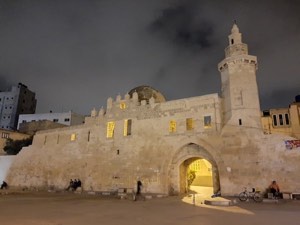
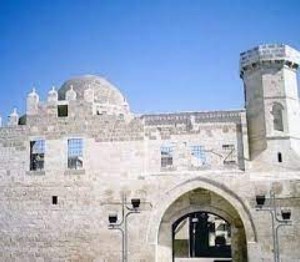
The Great Omari Mosque in the al-Daraj quarter of Gaza's Old City was the largest and oldest mosque in the Gaza Strip and, for fourteen centuries, the heart of the city's religious, scholarly and national life. It stood on the ruins of a Roman temple and then a Byzantine church, and was built after the Islamic conquest and named "Omari" after Caliph Omar ibn al-Khattab. The Crusaders turned it into a church, the Mamluks restored it as a mosque, and Sultan al-Zahir Baybars founded a great library in it. On 8 December 2023, during the genocide war on Gaza, Israeli bombing destroyed most of it. Damage exceeded 90% of its buildings, and its library and manuscripts were buried under the rubble. This guide covers its history, architecture and library, its destruction, and the efforts to save what remains.
Quick facts
| Arabic name | الجامع العمري الكبير |
|---|---|
| Location | Al-Daraj quarter, Old City of Gaza |
| Area | About 4,100 m², including an open courtyard of 1,190 m² |
| Columns | 38 marble columns |
| Capacity | More than 3,000 worshippers; about 5,000 on the 27th night of Ramadan |
| Origins | Roman temple, then Byzantine church, then a mosque after the Islamic conquest |
| Minaret | Mamluk, with a square base and octagonal upper part |
| Library | Founded by al-Zahir Baybars; over 20,000 books and 228 manuscripts before the war |
| Destroyed | 8 December 2023, by Israeli bombing |
| Damage | Over 90% of buildings; prayer hall almost entirely destroyed |
The name
The mosque is called "Omari" after Caliph Omar ibn al-Khattab, under whose rule Gaza was conquered by Amr ibn al-As, and "the Great" because it is the largest mosque in Gaza. Gazans also call it simply "al-Jami' al-Kabir" (the Great Mosque).
Location
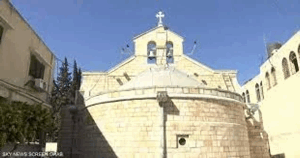
The mosque stands in the al-Daraj quarter of the Old City of Gaza, near Omar al-Mukhtar Street. It is surrounded by the old markets, including the historic gold market (Qaysariyya), and is close to the Pasha's Palace, the Sayed Hashim Mosque and the Church of Saint Porphyrius.
History through the ages
- Roman period: the site held the main temple of Marnas, the pagan god of Gaza, when the city was a stronghold of paganism.
- Byzantine period (407): after the city's people converted to Christianity, a Byzantine church was built on the site. It was destroyed during the Persian invasion in 614.
- The Islamic conquest: Amr ibn al-As conquered Gaza during the caliphate of Omar ibn al-Khattab, and most of its people embraced Islam. The mosque was built on the ruins of the church and named after the caliph.
- Crusader period (1149): the Crusader king Baldwin III ordered the mosque turned into a large church dedicated to St John, whose basilica structure is still visible inside the mosque.
- Ayyubid and Mamluk periods: after Saladin's victory the building was restored as a mosque. The eastern wall was demolished, an entrance opened and the minaret built, and the southern wall of the basilica was replaced with a new arcade. In the late 13th century the Mamluks restored the mosque's standing, and Sultan al-Zahir Baybars founded a large library in it.
- Ottoman period (late 18th century): Sheikh Muhammad Kamal al-Din al-Bakri rebuilt it and added extensions, including the open courtyard of 1,190 square metres, a minbar, a mihrab and a platform (dikka) in the eastern iwan.
- First World War (1917): British aircraft bombed the mosque, claiming it held Ottoman weapons, and its library was destroyed.
- 1926–1927: the Supreme Muslim Council of Palestine restored it.
- 2015: the last restoration and maintenance before the war, including the minaret and the surrounding area.
- 2023: Israeli bombing destroyed most of the mosque on 8 December 2023.
Architecture
The mosque covers about 4,100 square metres and had 38 marble columns, some with Corinthian capitals decorated with acanthus leaves from ancient buildings. It combined the layers of successive eras: the basilica structure of the Crusader period, the Ayyubid and Mamluk additions, and the Ottoman courtyard, minbar and mihrab. The minaret, square at its base and octagonal in its upper half, is described by historians as a model of Mamluk architecture. The ground floor held the main prayer hall and a women's prayer area, the upper floor a Quran school, and the lower level a reception hall and an archaeological hall set up as an Islamic museum.
The library and its manuscripts
Sultan al-Zahir Baybars founded the mosque's library some seven centuries ago, and it held more than 20,000 volumes in many fields before being destroyed in the bombing of the First World War. It was later revived and came to be regarded as the third-largest library in Palestine. Before the recent war it held more than 20,000 books on jurisprudence, language, literature and medicine, together with 228 manuscripts and 78 historical documents. Some of these were more than 700 years old, from the Mamluk and Ottoman periods, and their digitisation was under way before the war. According to the mosque's custodians, about fifty years ago Israeli soldiers forced one of its sheikhs to hand over three manuscripts that were never seen again, and a British officer stole a copy of the Quran from it in 1917.
Religious and scholarly role
For centuries the mosque was Gaza's main Friday mosque, a centre for Quran teaching and Islamic scholarship, and the gathering place of the city's people on feast days and in Ramadan. It held about 5,000 worshippers on the 27th night, and hundreds stayed in seclusion (i'tikaf) during the last ten nights. Historians note that the passing eras changed the mosque's architecture, but its location and its name remained the same.
Destruction on 8 December 2023
On 8 December 2023, two months into the genocide war on Gaza, Israeli bombing struck the Great Omari Mosque. Its roof and most of its structure collapsed, and the minaret was hit by several shells. According to the head of the Department of Sites and Excavations at the Ministry of Tourism and Antiquities in Gaza, damage exceeded 90% of the mosque's buildings. The prayer hall, more than 70% of its area, was almost entirely destroyed, leaving only limited parts, mainly the northern courtyard and some walls. The western section and the adjoining Quran-memorisation buildings were destroyed later, and the ancient marble columns were smashed.
The mosque and the genocide war on Gaza's heritage
- Mosques: according to the Ministry of Awqaf in Gaza, as reported in July 2026, 1,050 of the Strip's 1,275 mosques were completely destroyed and 191 partially damaged.
- Churches: the Church of Saint Porphyrius was struck on 19 October 2023, killing 18 displaced people sheltering inside, and the Holy Family Church was also hit.
- Heritage sites: UNESCO had verified damage at 164 sites in Gaza by March 2026, while the Palestinian Ministry of Tourism and Antiquities counts 226 of 316 sites destroyed or significantly damaged.
- The Old City: landmarks around the mosque, including the Pasha's Palace, the Sayed Hashim Mosque and the historic market, were damaged or destroyed, as was Barquq Castle in Khan Yunis.
Scholars and human rights organisations describe this systematic destruction of mosques, churches, libraries, archives and archaeological sites as an attack on the collective memory and identity of Gaza's people, an integral part of the genocide war.
The mosque today (2026)
- After the ceasefire: work focused on clearing rubble, stabilising the parts at risk of collapse and keeping the remaining stones in place. On 2 December 2025 the Palestinian Ministry of Tourism and Antiquities announced the official start of restoration, but full repairs depend on materials being allowed into Gaza.
- Ramadan 2026: worshippers returned to an alternative prayer space in the rehabilitated northern arcade, with a nylon sheet replacing the collapsed roof and about 1,200 m² of the courtyard prepared for prayer, but i'tikaf was cancelled for lack of space. The imam said the mosque had lost many of its imams, scholars and Quran reciters in the war.
- Near the "yellow line": the mosque lies close to the "yellow line" held by the occupation army, adding to the risks facing worshippers and restorers.
- Saving the library: the manuscripts lay under the rubble for more than 500 days, exposed to water, mould and damp. A team from Gaza's Department of Archaeological Manuscripts, based in the Qubbat al-Sa'ada of the mosque library, together with volunteers from the Eyes on Heritage organisation, is recovering and cleaning the books and manuscripts with simple tools. By March 2025 they had recovered 123 manuscripts and 36 documents, while about 105 manuscripts had not yet been found. Volunteers estimate that about 4,000 volumes may be recoverable.
International law
The 1954 Hague Convention for the Protection of Cultural Property and the Fourth Geneva Convention protect places of worship and historic monuments in war and occupation. The Rome Statute of the International Criminal Court (Article 8) classifies intentionally directing attacks against buildings dedicated to religion and historic monuments as a war crime, and UN Security Council Resolution 2347 (2017) condemns the destruction of cultural heritage in armed conflict. In January 2024 the International Court of Justice ordered provisional measures in the case brought by South Africa under the Genocide Convention.
Frequently asked questions
Where is the Great Omari Mosque?
In the al-Daraj quarter of the Old City of Gaza, near Omar al-Mukhtar Street.
Why is it called the Omari Mosque?
After Caliph Omar ibn al-Khattab, under whose rule Gaza was conquered by Amr ibn al-As. The mosque was built after the conquest on the ruins of a Byzantine church.
When was the Great Omari Mosque destroyed?
Israeli bombing destroyed most of it on 8 December 2023, during the genocide war on Gaza, with damage exceeding 90% of its buildings.
What happened to the mosque's library?
The library, founded by al-Zahir Baybars and holding more than 20,000 books and 228 manuscripts, was buried under the rubble. By March 2025 about 123 manuscripts had been recovered.
Is the Great Omari Mosque being rebuilt?
The Ministry of Tourism and Antiquities announced the start of restoration in December 2025. Work has so far focused on clearing rubble and stabilising the remains, and prayers are held in an alternative prayer space within the complex.
Conclusion
For fourteen centuries the Great Omari Mosque carried the layers of Gaza's history, its location and name unchanged through the passing eras. Its destruction in the genocide war was an attempt to erase that memory, but worshippers have returned to pray under a nylon roof, and restorers and volunteers are saving its manuscripts page by page, keeping the mosque alive until it can rise again.
More from the archive
 Download Our Palestine App
The whole archive in the palm of your hand: depopulated villages, the Nakba, the massacres and Al-Aqsa — free, with no ads to erase the story.



Comments
No comments yet — be the first to write one.
Add your comment
Name and email are optional. Comments appear after review.