
Sayed Hashim Mosque

Sayed Hashim Mosque, Gaza: The Tomb of the Prophet's Great-Grandfather
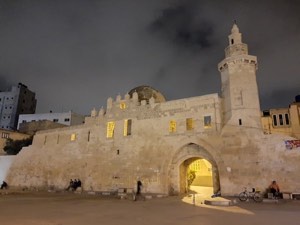
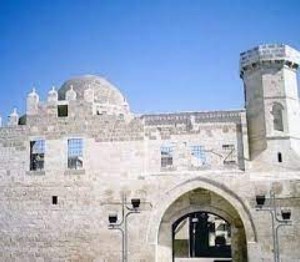
The Sayed Hashim Mosque in the al-Daraj quarter of Gaza's Old City is one of the largest and oldest mosques in the Gaza Strip. Muslim tradition holds that it contains the tomb of Hashim ibn Abd Manaf, great-grandfather of the Prophet Muhammad, who died in Gaza on a trading journey. That is why the city has long been called "Ghazzat Hashim" (Hashim's Gaza). A mosque and lodging have stood on the site since at least the 12th century, and the present building dates from 1850, in the reign of the Ottoman sultan Abdulmejid I. During the genocide war on Gaza the mosque was struck several times, starting in October 2023. This guide covers its history, architecture and fate.
Quick facts
| Arabic name | مسجد السيد هاشم |
|---|---|
| Location | Al-Daraj quarter, northern part of Gaza's Old City, off al-Wehda Street |
| Named after | Hashim ibn Abd Manaf, great-grandfather of the Prophet Muhammad |
| Earliest mosque | At least the 12th century |
| Present building | 1850, under Ottoman sultan Abdulmejid I |
| Later works | Minaret and north and west arcades rebuilt 1903; last restoration 2017 |
| Area | About 2,371 m² |
| Layout | Open square courtyard, arcades, domed tomb, 16 rooms for students |
| Style | Mamluk and Ottoman |
| War damage | Struck in October 2023, 7 December 2023 and in 2024 |
Who was Hashim ibn Abd Manaf?
Hashim ibn Abd Manaf was a leader of the Quraysh tribe of Mecca and the great-grandfather of the Prophet Muhammad, and the Banu Hashim clan is named after him. According to Arab tradition, he organised the two trade caravans of Quraysh, the winter journey to Yemen and the summer journey to the Levant, referred to in Surat Quraysh. He died in Gaza on one of these summer journeys, around the late 5th or early 6th century, and was buried there. Ever since, the city has been known in Arabic as "Ghazzat Hashim". Gaza is also the birthplace of Imam al-Shafi'i (767–820), founder of one of the four Sunni schools of law.
Location
The mosque stands in the al-Daraj quarter in the northern part of the Old City of Gaza, off al-Wehda Street and about a kilometre from the Great Omari Mosque. It is surrounded by the alleys of one of the city's oldest neighbourhoods, near other historic buildings such as the Pasha's Palace and al-Zawiya al-Ahmadiyya.
History through the ages
- Early period: tradition places Hashim's grave here from pre-Islamic times, and a mosque and hostel stood on the site by at least the 12th century.
- Mamluk period: the building took on Mamluk features, and some sources date its foundation to the late Mamluk period.
- 1799: buildings in Gaza were damaged during Napoleon's campaign in Palestine.
- 1850: the present mosque was built under the Ottoman sultan Abdulmejid I, reusing materials from older buildings destroyed by Napoleon's troops.
- 1903: the original Ottoman minaret was rebuilt, along with the north and west arcades.
- 1917: British bombardment during the First World War battles for Gaza hit the mosque's main dome.
- 20th–21st centuries: the mosque was repaired and renovated several times, most recently in 2017.
- Since 2023: during the genocide war on Gaza the mosque was struck several times.
Architecture
The mosque covers about 2,371 m². Its plan centres on an open square courtyard surrounded by arcades. The prayer hall is a large square space covered by cross vaults, with three aisles for prayer. Hashim's tomb lies under a dome, which Wikipedia places in the north-western corner of the complex. Around the courtyard were 16 rooms that once housed students of Islamic law and Quran memorisation. The building combines Mamluk and Ottoman features in its pointed arches, vaults, domes and slender Ottoman minaret.
A centre of learning and worship
In the 19th and early 20th centuries the mosque housed a madrasa and was a centre of religious learning in Gaza, and traders from Egypt, Arabia and Morocco stopped there on their journeys. In recent decades it remained one of the city's main mosques for Friday prayers, Tarawih in Ramadan and Laylat al-Qadr, and the tomb drew visitors from Gaza and beyond.
The mosque in the genocide war on Gaza
- October 2023: an Israeli airstrike damaged the mosque and caused a fire, according to Al Jazeera.
- 7 December 2023: Israeli warplanes struck the mosque, causing extensive damage, according to Al Jazeera. The strike came a day before the Great Omari Mosque was destroyed nearby.
- 2024: the mosque was hit directly again, and drone footage filmed by Al Jazeera Mubasher in November 2025 showed serious damage.
- Sheltering the displaced: during the war the mosque became a refuge, where water and aid were distributed to displaced families. Prayers were suspended for fear for worshippers' lives as bombing intensified, and solar panels and water tanks were destroyed.
Reports of the damage vary, from partial destruction to severe damage, and no full engineering assessment has been published. The attacks were part of the wider destruction of Gaza's religious heritage. According to the Ministry of Awqaf in Gaza, 1,050 of the Strip's 1,275 mosques were completely destroyed and 191 partially damaged. Other landmarks in the Old City, including the Great Omari Mosque, the Pasha's Palace and al-Zawiya al-Ahmadiyya, were destroyed or damaged, as was Barquq Castle in Khan Yunis.
The mosque today (2026)
After the October 2025 ceasefire the mosque still stands, but it has been badly damaged and needs specialised restoration, which depends on materials being allowed into Gaza. Its imam has expressed the hope that worshippers will return for Tarawih and Laylat al-Qadr as before. The neighbourhood around it remains heavily destroyed.
International law
The 1954 Hague Convention for the Protection of Cultural Property and the Fourth Geneva Convention protect places of worship and historic monuments. The Rome Statute of the International Criminal Court (Article 8) classifies intentionally directing attacks against buildings dedicated to religion and historic monuments as a war crime, and UN Security Council Resolution 2347 (2017) condemns the destruction of cultural heritage in armed conflict.
Frequently asked questions
Who is buried in the Sayed Hashim Mosque?
According to Muslim tradition, Hashim ibn Abd Manaf, the great-grandfather of the Prophet Muhammad, who died in Gaza on a trading journey.
Why is Gaza called "Ghazzat Hashim"?
Because Hashim ibn Abd Manaf, the Prophet's great-grandfather, died and was buried in Gaza, and his tomb is in the Sayed Hashim Mosque.
When was the Sayed Hashim Mosque built?
A mosque has stood on the site since at least the 12th century. The present building dates from 1850, under the Ottoman sultan Abdulmejid I, with the minaret rebuilt in 1903.
Where is the Sayed Hashim Mosque?
In the al-Daraj quarter in the northern part of Gaza's Old City, off al-Wehda Street, about a kilometre from the Great Omari Mosque.
Was the Sayed Hashim Mosque damaged in the war?
Yes. It was struck in October 2023, on 7 December 2023 and again in 2024, causing serious damage, and prayers were suspended during the bombing.
Conclusion
The Sayed Hashim Mosque binds Gaza to the earliest history of Islam, through the grave of the man whose name the city has carried for fifteen centuries. Struck again and again in the genocide war, it still stands among the ruins of al-Daraj, waiting for the day its courtyard fills again with worshippers and students.
More from the archive
 Download Our Palestine App
The whole archive in the palm of your hand: depopulated villages, the Nakba, the massacres and Al-Aqsa — free, with no ads to erase the story.



Comments
No comments yet — be the first to write one.
Add your comment
Name and email are optional. Comments appear after review.