
The Martyrs of Red Tuesday: Muhammad Jamjoum, Fuad Hijazi, and Atta al-Zir

The Martyrs of Red Tuesday: Muhammad Jamjoum, Fuad Hijazi, and Atta al-Zir
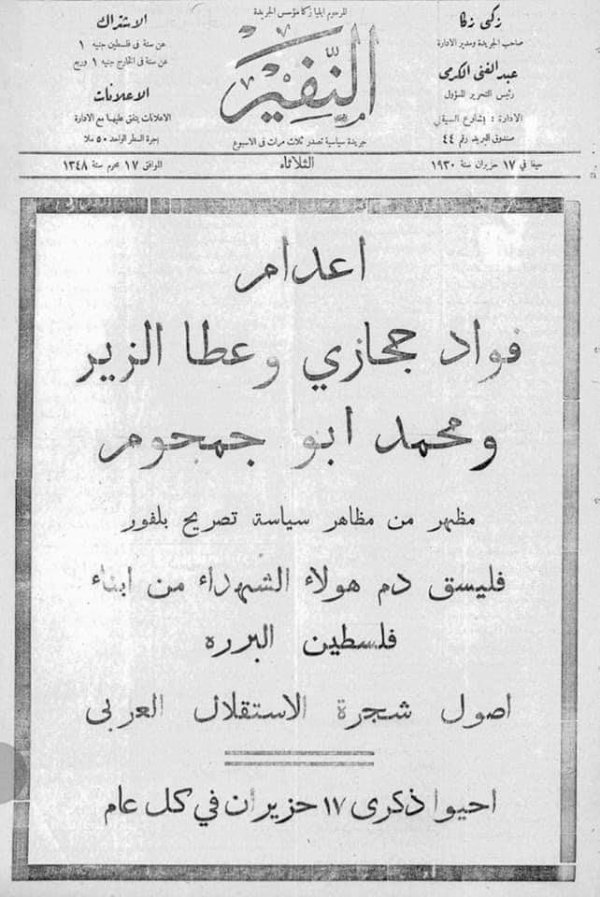
On Tuesday, June 17, 1930, the British Mandate authorities executed Palestinian activists Muhammad Jamjoum, Fuad Hijazi, and Atta al-Zir by hanging at Acre Citadel Prison following their involvement in the 1929 Buraq Uprising. Despite protests and appeals to overturn their sentences, the executions went ahead. The day became known in Palestinian collective memory as “Red Tuesday.”
The Buraq Uprising: How the Story Began
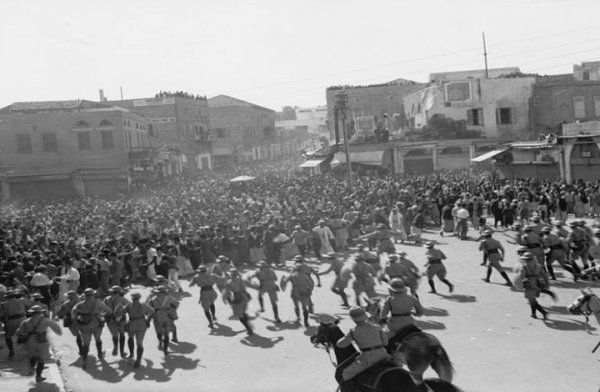
In August 1929, tensions escalated in Palestine over the Buraq Wall, also known as the Western Wall, in Jerusalem. On August 14, a Zionist demonstration took place in Tel Aviv to mark the anniversary of the destruction of the Temple. The following day, another demonstration in Jerusalem reached the wall, where participants raised Zionist flags, sang the Zionist anthem, and chanted slogans demanding control of the site.

On Friday, August 16, an Arab demonstration marched from Al-Aqsa Mosque toward the Buraq Wall, coinciding with celebrations of the Prophet Muhammad’s birthday. Tensions continued to rise, and on August 23, clashes spread across several Palestinian cities and regions in the events that became known as the Buraq Uprising.
Arrests and Death Sentences
The uprising was followed by a campaign of arrests and trials conducted by the British Mandate authorities. According to the Palestinian National Information Center, WAFA, 26 Palestinians received death sentences. The sentences of 23 were subsequently commuted to life imprisonment, while those against Muhammad Jamjoum, Fuad Hijazi, and Atta al-Zir were upheld.
The British authorities scheduled the executions for June 17, 1930, at Acre Citadel Prison. The final hours of the three condemned men left a lasting impression on Palestinian collective memory. Popular accounts have preserved stories of their courage and steadfastness in the face of death.
Muhammad Jamjoum: From Hebron to the Gallows of Acre
Muhammad Khalil Jamjoum was born in Hebron and became known for participating in protests against British Mandate rule and the Zionist project. He took part in the events of the 1929 Buraq Uprising before the British authorities arrested him and sentenced him to death.
According to popular accounts, he asked to go to the gallows before his fellow prisoner Atta al-Zir. This episode became a symbol of courage and sacrifice in Palestinian national memory.

Fuad Hijazi: The Youngest of the Three
Fuad Hasan Hijazi was born in Safed and was the youngest of the three martyrs. He participated in the Buraq Uprising in his hometown, where the British Mandate authorities arrested him and sentenced him to death.
He was the first of the three to be executed on June 17, 1930. Before his execution, he wrote a final testament expressing his devotion to Palestine and calling for the anniversary to be commemorated each year so that their sacrifices would remain alive in the memory of future generations.
Atta al-Zir: The Worker Who Became a Symbol of Sacrifice
Atta Ahmad al-Zir was born in Hebron. He worked in agriculture and several manual trades and was known for his physical strength and boldness. He participated in protests in his city and later in the events of the Buraq Uprising before being arrested and sentenced to death.
Popular accounts relate that he asked to approach the gallows without restraints. Alongside his two companions, he remains present in Palestinian songs and stories as a symbol of steadfastness against British Mandate rule.

Red Tuesday in Palestinian Collective Memory
The three men were executed inside Acre Citadel Prison on Tuesday, June 17, 1930. The date became a significant milestone in Palestinian national memory. Their lives and sacrifices continue to be remembered through commemorations, songs, and poetry.

“From Acre Prison, a Funeral Procession Emerged”
The names of the three martyrs were immortalized in a popular elegy attributed to the poet Nuh Ibrahim and made widely known through performances by Al-Asheqeen. The following is an English rendering of the version included in this article:
From Acre Prison, a funeral procession emerged,
Muhammad Jamjoum and Fuad Hijazi.
Hold them to account, my people, hold them to account:
The High Commissioner and all his men.
Muhammad Jamjoum, alongside Atta al-Zir,
And Fuad Hijazi, a cherished source of strength.
Behold what fate has decreed:
By the tyrant’s judgments, they will execute us.
Muhammad says, “I shall go before you;
I fear, Atta, the anguish of losing you.”
And Hijazi says, “I shall go before you;
We fear neither death nor doom.”
My loving mother cries out;
The whole land has closed in around her.
“Call my Fuad, the heart of my heart,
Before we part, so we may say farewell.”
She calls for Atta from behind the door,
And my mother waits for his reply.
Atta, O Atta, finest of young men,
He charges at the soldiers without fear.
My brother Yusuf, look after my mother;
My sister, do not let grief consume you after I am gone.
For this homeland, I sacrificed my blood;
All for your sake, O Palestine.
Three men died the death of lions;
Give generously, my mother, give.
For this homeland, we offer our souls;
For its freedom, they hang us.
The town crier called, “People, strike!”
On Tuesday, the young men were hanged.
Brave men, Atta and Fuad,
They fear neither death nor doom.
Words Preserved in Popular Memory
The following words are widely circulated and attributed to Fuad Hijazi during a meeting with a delegation that visited him before his execution. Their attribution, however, requires verification against an original source:
“Let us die, and do not trouble yourselves over us... All we need is to hear, before we are parted from life and before we are hanged upon the gallows, that you are a nation worthy of life.”
The case of the three condemned men prompted calls for protests, strikes, and the suspension of their executions. After their deaths, June 17 remained a day of remembrance for their sacrifices. The names of Muhammad Jamjoum, Fuad Hijazi, and Atta al-Zir continue to hold a lasting place in Palestinian collective memory.

Sources and References
More from the archive
 Download Our Palestine App
The whole archive in the palm of your hand: depopulated villages, the Nakba, the massacres and Al-Aqsa — free, with no ads to erase the story.
Download Our Palestine App
The whole archive in the palm of your hand: depopulated villages, the Nakba, the massacres and Al-Aqsa — free, with no ads to erase the story.



Comments
No comments yet — be the first to write one.
Add your comment
Name and email are optional. Comments appear after review.