
Husseiniyeh Refugee Camp
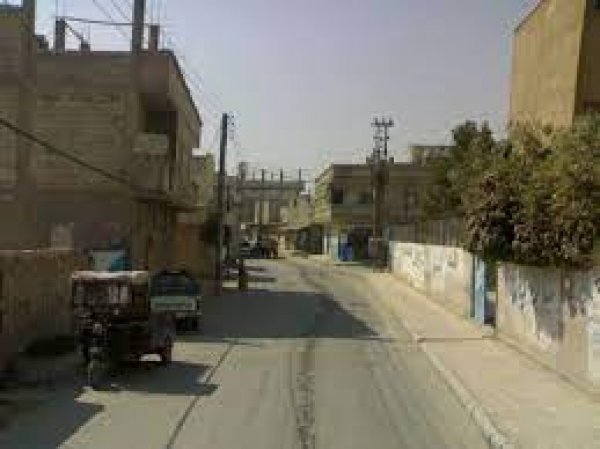
Husseiniyeh Refugee Camp in Syria: History, Origins, Population and the War Years
Husseiniyeh Camp (also known as the Husseiniyeh Gathering) lies about 13 km south-east of Damascus. It began in as a housing area for Syrians displaced from the occupied Golan, and grew into one of the largest Palestinian communities in Syria as refugees moved there, many after their homes in Jaramana camp were demolished for road projects. Its Palestinian families come mainly from the Safed and Tiberias districts and from Haifa and its villages. Unofficial in UNRWA's records, the camp was bombed and emptied in 2013, and its people returned from 2015. This guide covers its history, origins, population, services and its situation today.
Quick Facts About Husseiniyeh Camp
| Arabic name | مخيم الحسينية / تجمع الحسينية |
|---|---|
| Country | Syria |
| Location | About 13 km south-east of central Damascus, Rif Dimashq Governorate |
| Year established | |
| Area | About 3–5 km² (including the wider residential area) |
| Population | About 22,000 UNRWA-registered refugees; about 90,000 residents in the wider area in 2010 |
| Origin of Palestinian residents | Safed and Tiberias districts, Haifa and its villages |
| UNRWA status | Unofficial camp; UNRWA provides services |
| Rank | Among the largest Palestinian communities in Syria |
The Nakba: Why Husseiniyeh Camp Exists
Husseiniyeh's Palestinian families are refugees of the Nakba (Arabic for "catastrophe"): the mass expulsion of Palestinians during the occupation of Palestine in , when roughly 750,000 Palestinians were driven from their homes. Safed, Tiberias and Haifa and the villages around them were emptied in the spring of 1948, and their people crossed into Syria. Many of them settled first in camps around Damascus, especially Jaramana.
Husseiniyeh was born much later, from a chain of displacements. In June , the occupation of the Golan Heights uprooted Syrian villagers, among them the people of the village of Husseiniyeh, who were later housed on land south-east of Damascus. From 1984 onward, Palestinian refugees joined them, many of them moved from Jaramana camp after their homes were demolished. For these families, Husseiniyeh was a second or third displacement, but never a substitute for Palestine.
The Right of Return
The camp's Palestinian factions still mark Nakba Day on 15 May and Palestinian Prisoners' Day on 17 April, and some of its neighbourhoods carry the names of Palestinian cities, such as Harat Safad and Harat Nablus. The right of return rests on several foundations in international law:
- UN General Assembly Resolution 194 (), paragraph 11, resolved that refugees wishing to return to their homes and live at peace with their neighbours should be permitted to do so at the earliest practicable date, and that compensation should be paid to those choosing not to return and for loss of or damage to property.
- The Universal Declaration of Human Rights (Article 13) affirms everyone's right to leave any country, including their own, and to return to it.
- UN General Assembly Resolution 3236 () reaffirmed the "inalienable right" of Palestinians to return to their homes and property.
History of the Camp (1982–2011)
From Golan displaced to Palestinian refugees
Husseiniyeh was established as a residential area in 1982. Its first residents were Syrians displaced from Quneitra and the Golan, along with low-income families from other parts of Syria. In 1983 no more than 200 people lived there. Palestinians were drawn by its closeness to Damascus and by cheap land suitable for building.
The transfers from Jaramana
The largest Palestinian influx came from Jaramana camp, where homes were demolished for the Damascus airport road and other highway projects. Transfers took place in 1984, 1994, 1997 and 2004, and an estimated 8,910 Palestinian refugees were moved from Jaramana to Husseiniyeh. Families from other camps around Damascus also settled there. Electricity arrived in 1985 with the construction of a power station.
Rapid growth
The population grew to about 17,000 by 1995 and about 28,384 at the first official census in 2004. After the Husseiniyeh Suburb Expansion Project, the wider area held about 90,000 people by 2010, of whom Palestinians made up roughly half or more. Homes were built in stages, close together and often without basic utilities, and responsibility for services was split between the governorates of Quneitra, Rif Dimashq and Damascus, a division that often left services poor.
The War Years (2012–2015)
The Syrian war reached Husseiniyeh in late 2012 and early 2013, as clashes between the former regime's army and armed factions spread through the countryside south of Damascus. On , regime warplanes fired three rockets at the western side of the camp, killing at least 15 civilians, including seven children, most of them Palestinians, with others buried under the rubble. Further shelling in March 2013 damaged homes, and a mosque in the camp was hit.
During 2013 the camp's residents were forced to leave; sources differ on whether the final displacement came in early or in October 2013. Public institutions and property were damaged, and the nearby Khomeini hospital stopped working for a time. For about two years, the camp's families lived in collective shelters, rented rooms and other areas, or left Syria.
Return and Recovery (2015–2024)
The former regime's army regained control of the area in 2015, and from August 2015 residents began returning. In September 2015 UNRWA reported that more than 4,500 families had returned, about 80% of them Palestine refugees, with up to 300 families arriving each day. Three schools, two of them run by UNRWA, reopened on 13 September 2015 for more than 2,700 students, and UNRWA distributed food parcels, hygiene kits, jerry cans and kitchen sets. In total, about 6,000 Palestinian families returned, in what UNRWA called a rare success story in the Syrian conflict.
Return did not end the camp's hardships. Water, electricity, sewage and roads remained chronic problems, and in 2024 residents were still calling for an electrical transformer to secure drinking water. UNRWA offered microfinance loans for rebuilding and ran youth and women's programmes.
The Current Situation (2025–2026)
With Yarmouk largely destroyed, Husseiniyeh is now described as the largest Palestinian camp in Syria by population. Since the fall of the former regime in December 2024, its residents have spoken openly of decades of marginalisation, arrests and enforced disappearances, and of hope for reform. But daily life remains hard: in February 2025, electricity came for about an hour in the day and an hour at night, heating fuel was scarce, and a cylinder of cooking gas could cost nearly a month's wages. A local social researcher estimated that 95% of residents live below the poverty line.
Residents also warn of the spread of drug use, especially Captagon, among young people, and call for addiction treatment centres, health centres and paved roads. They want their legal status as refugees preserved to protect their right of return, and the right to own property, which the former regime denied them. Community initiatives continue: in July 2026 the local development committee launched a volunteer campaign called "Let's Leave an Impact".
Origin of the Name
The camp takes its name from the village of Husseiniyeh in the occupied Golan, home of many of the Syrians displaced in 1967 who were the area's first residents. The Palestinians who followed adopted the name, calling it "Husseiniyeh Camp" to stress their refugee identity.
Location and Geography
Husseiniyeh lies about 13 km south-east of central Damascus, in the countryside south of the capital. It is bordered by the gathering of al-Dhiyabiyya, home to Syrians displaced from the Golan, to the north; Hosh Qweil, where Damascus's southern cemetery now stands, to the east; residential areas of Najha, beyond the railway, to the south; and the village of Sahiya to the west. Sayyida Zaynab and Qabr Essit camp lie nearby.
Area and Layout
Sources estimate the camp and its surroundings at 3 to 5 km², far larger than the official camps. Its streets are narrow and poorly maintained, dusty in summer and muddy in winter. Neighbourhoods include Harat Safad and Harat Nablus, and an older area known as the "old project".
Villages of Origin
According to the Interactive Encyclopedia of the Palestine Question, the camp's Palestinian residents trace their origins to:
- The villages of the Safed district
- The villages of the Tiberias district
- Haifa and its surrounding villages
- The village of Sulam
Alongside them live Syrians displaced from the Golan, and the two communities are closely linked by neighbourliness and many mixed marriages.
Population and Demographics
Population figures for Husseiniyeh cover different things: some count only UNRWA-registered refugees, while others cover all residents of the wider area, Palestinian and Syrian. Registered refugees are not the same as residents.
Population of Husseiniyeh Camp over time
- 1983No more than 200Interactive Encyclopedia of the Palestine Question
- 1995About 17,000Interactive Encyclopedia of the Palestine Question
- 2004About 28,384 (first official census)Interactive Encyclopedia of the Palestine Question
- 2010About 90,000 in the wider area; Palestinians about 51–57%Interactive Encyclopedia of the Palestine Question
- Before 2013Nearly 30,000 Palestine refugees and Syrians in the campUNRWA
- 2015More than 4,500 families returned by September; about 6,000 Palestinian families in totalUNRWA
- CurrentAbout 22,000 registered with UNRWAEncyclopedia of Palestinian Camps
Housing and Infrastructure
Homes were built in stages, crowded together with little privacy. Groundwater is scarce, so families install tanks and pay for costly deliveries. The sewage network has been overhauled, but poor drainage still floods streets in winter. The electricity grid is unreliable, and public transport is lacking, with unstable fares.
Economic Life
Poverty is widespread. Families with a member working for UNRWA are considered the camp's middle class. More than two-thirds of working residents have jobs outside the camp: men mostly as labourers or low-level public employees, and women often as domestic workers.
Health Situation
The camp has an UNRWA clinic, a state health centre and a paediatric centre that opens once every two weeks, but no hospital nearby: the Khomeini hospital is about 2 km away and the Emirates (Zayed) hospital about 5 km. Sickle cell anaemia, thrombocytopenia, thalassaemia, vitiligo and immune deficiencies are common, and miscarriages and pre-eclampsia are frequent among pregnant women.
Education
UNRWA runs six schools in the camp on a double-shift system, alongside government primary and preparatory schools, one secondary school and several kindergartens. UNRWA's Youth Support Project and women's centre, the Nour Foundation and the Arab Cultural Centre offer educational and social activities.
Frequently Asked Questions About Husseiniyeh Camp
Where is Husseiniyeh camp located?
About 13 km south-east of central Damascus, in the countryside south of the capital, near al-Dhiyabiyya and Sayyida Zaynab.
When was Husseiniyeh camp established?
In 1982, first for Syrians displaced from the Golan; Palestinian refugees began moving there in 1984, many after their homes in Jaramana camp were demolished.
Is Husseiniyeh an official UNRWA camp?
No. UNRWA does not count it among its official camps, but it runs schools, a clinic and social programmes there.
What happened to Husseiniyeh during the Syrian war?
An airstrike on 17 January 2013 killed at least 15 civilians, most of them Palestinians. Residents were forced out in 2013 and began returning in August 2015; UNRWA called the return a rare success story.
Where do Husseiniyeh's Palestinian refugees come from?
Mainly from the villages of the Safed and Tiberias districts and from Haifa and its surrounding villages.
Conclusion
Husseiniyeh is a camp born of displacement upon displacement: Golan villagers uprooted in 1967, and Palestinian families from Safed, Tiberias and Haifa moved again when their homes in Jaramana were bulldozed. It grew into one of the largest Palestinian communities in Syria, was bombed and emptied in 2013, and came back to life when its people returned in 2015. Today it struggles with poverty, darkness and neglect, but its people still mark Nakba Day each May, and still hold on to the return that no new address can replace.
More from the archive

 Download Our Palestine App
The whole archive in the palm of your hand: depopulated villages, the Nakba, the massacres and Al-Aqsa — free, with no ads to erase the story.
Download Our Palestine App
The whole archive in the palm of your hand: depopulated villages, the Nakba, the massacres and Al-Aqsa — free, with no ads to erase the story.



Comments
No comments yet — be the first to write one.
Add your comment
Name and email are optional. Comments appear after review.