
Tulkarm Refugee Camp
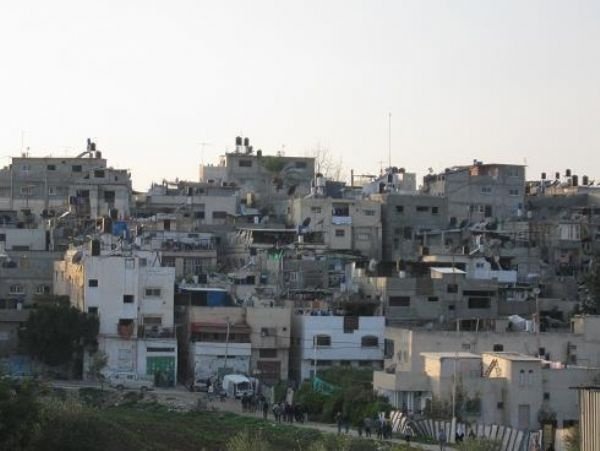
Tulkarm Refugee Camp
Tulkarm Refugee Camp: History, Location, Population and Living Conditions
Tulkarm Camp is a Palestine refugee camp in the heart of the city of Tulkarm, in the northwestern West Bank. Established in on less than a fifth of a square kilometre, it became one of the most densely populated places in the West Bank, home to refugees from the villages of the Haifa, Caesarea and Jaffa areas that were depopulated during the occupation of Palestine in 1948. Since early 2025, the camp's entire population has been forcibly displaced by a large-scale Israeli military operation, and as of autumn 2026 its residents are still prevented from returning. This guide covers the camp's history, its name, geography, population, living conditions and current situation.
Quick Facts About Tulkarm Camp
| Country / Region | Palestine, northwestern West Bank |
|---|---|
| Governorate | Tulkarm (inside Tulkarm city) |
| Year established | |
| Area | About 0.18 km² (180 dunums) |
| Registered refugees | 27,228 (UNRWA, ) |
| Population density | About 119,444 people per km², one of the highest in the West Bank |
| Schools | 4 UNRWA schools with around 1,347 pupils (before 2025) |
| Health facilities | 1 UNRWA health centre (before 2025) |
| Origin of residents | Villages and towns of the Haifa, Caesarea and Jaffa areas |
| Current status | Population forcibly displaced since January–February 2025; return still prevented as of autumn 2026 |
Note: UNRWA counts refer to refugees registered in the camp, not necessarily the number of people living there at any given time.
The Nakba: Why Tulkarm Camp Exists
The story of Tulkarm Camp begins with the Nakba (Arabic for "catastrophe"): the mass expulsion of Palestinians during the occupation of Palestine in . Roughly 750,000 Palestinians were driven from their homes, and hundreds of towns and villages were emptied and later destroyed or resettled.
The villages of the northern coastal plain, between Haifa, Caesarea and Jaffa, were among the first to be depopulated, many of them between March and May 1948. Their people fled east to the nearest Arab town in the hills, Tulkarm. The city itself lost much of its own farmland west of the 1949 armistice line, and thousands of refugees settled on its edges. Two camps were created to shelter them: Tulkarm Camp inside the city, and Nur Shams Camp a few kilometres to the east.
From the camp, refugees could see the coastal plain where their villages once stood, only a few kilometres away across the Green Line.
The Right of Return
The right of return is the central demand of Tulkarm's refugees. It rests on several foundations in international law:
- UN General Assembly Resolution 194 (), paragraph 11, resolved that refugees wishing to return to their homes and live at peace with their neighbours should be permitted to do so at the earliest practicable date, and that compensation should be paid to those choosing not to return and for loss of or damage to property.
- The Universal Declaration of Human Rights (Article 13) affirms everyone's right to leave any country, including their own, and to return to it.
- UN General Assembly Resolution 3236 () reaffirmed the "inalienable right" of Palestinians to return to their homes and property.
Since 2025, the people of Tulkarm Camp have faced a second, more immediate struggle for return: the right to go back to the camp itself, from which they have been forcibly displaced. The UN Human Rights Office has stated that preventing their return violates international law.
History and Establishment of the Camp
Founding (1950)
Tulkarm Camp was established by UNRWA in within the municipal boundaries of Tulkarm, on land leased from the Jordanian government that ruled the West Bank at the time. Refugees first lived in tents, which were replaced with small concrete shelters during the 1950s. Over the decades, families added rooms and upper floors, and the camp became a dense urban quarter fully absorbed into the city.
Under occupation (1967 onward)
The camp came under Israeli military rule with the occupation of the West Bank and Gaza Strip in . Like other camps, it took an active part in the First Intifada (1987–1993) and endured long curfews and mass arrests.
After the Oslo Accords and the Second Intifada
As part of Tulkarm city, the camp came under Palestinian Authority control (Area A) in 1995. During the Second Intifada (2000–2005), it was severely affected by incursions, arrests, raids and curfews, including the reinvasion of Tulkarm by the Israeli army in 2002–2003.
Escalation (2022–2024)
From 2022, and especially after October 2023, Israeli raids on Tulkarm and Nur Shams camps became larger and more frequent, at times involving drone and air strikes, bulldozers tearing up streets and water and sewage networks, and many deaths and injuries.
The Second Displacement: Tulkarm Camp Since 2025
In late January 2025, the Israeli army launched a large-scale military operation in the northern West Bank that extended to Tulkarm Camp. Soldiers went door to door ordering residents to leave, and within weeks the camp had been almost completely emptied. According to a UN Human Rights Office report published in September 2026, Israeli forces forcibly displaced the entire populations of Tulkarm, Nur Shams and Jenin camps in January and February 2025 and continued to prevent their return, in violation of international law.
Demolitions and destruction
- Throughout 2025, the Israeli army carried out repeated mass demolitions in the camp. In May 2025 alone, demolition orders were issued for 106 houses across Tulkarm and Nur Shams camps.
- In July 2025, residents of several neighbourhoods were given only hours to collect their belongings before further demolitions.
- By October 2025, about 36% of structures in Tulkarm Camp had been destroyed or damaged, according to the UN report.
- Local committees documented the destruction of hundreds of residents' vehicles, many of which were their main source of livelihood.
A camp under closure
Israeli forces have turned homes into military posts, closed the camp's entrances with earth mounds, and issued military orders restricting movement in and around Tulkarm, Nur Shams and Jenin camps. As of September 2026, Palestinian sources reported that the military operation in Tulkarm Camp had continued for some 590 consecutive days, with residents still barred from returning and further evacuations of houses on the camp's edges.
The displaced
By early 2026, around 25,000 refugees from Tulkarm and Nur Shams camps had been displaced, according to Tulkarm governorate officials. They now live with relatives, in rented homes and in temporary shelters in Tulkarm city and nearby towns, many of them for a second time in their family's history. UNRWA has described these demolitions as an attempt to permanently change the character of the camps and destroy their social fabric, and has called for the displaced to be allowed to return without delay.
Origin of the Name
The camp takes its name from the city of Tulkarm in which it was built. The city's name is traditionally traced to the Arabic Tur Karm, meaning "mountain of vines", reflecting the vineyards and fertile land for which the area has long been known. In Arabic the camp is called مخيم طولكرم; in English it is also written Tulkarem or Tul Karm.
Location and Geography
Tulkarm Camp lies inside the city of Tulkarm, in the northwestern West Bank. Key features of its location:
- It sits at the eastern entrance of Tulkarm city, along the road leading to Nablus.
- It lies only a few kilometres east of the 1949 armistice line (Green Line) and the separation wall.
- Nur Shams Camp lies about 3 km to the east, along the same road.
- The Mediterranean coast and the depopulated villages of the coastal plain are only about 15 km to the west.
The camp lies on the edge of the coastal plain at low elevation, with mild, rainy winters and hot, humid summers.
Area and Land
The camp covers about 0.18 square kilometres (180 dunums), an area that has not grown since 1950. With more than 27,000 registered refugees, its estimated density of about 119,444 people per square kilometre made it one of the most densely populated places in the West Bank before the 2025 displacement.
Villages of Origin
The residents of Tulkarm Camp descend from refugees of villages and towns in the Haifa, Caesarea and Jaffa areas, and from the coastal villages of the Tulkarm district. They include:
- Qisarya (Caesarea) (Haifa district)
- Sabbarin (Haifa district)
- Miska (Tulkarm district)
- Qaqun (Tulkarm district)
- Wadi al-Hawarith (Tulkarm district)
- Al-Haram (Sayyidna Ali) (Jaffa district)
- Al-Shaykh Muwannis (Jaffa district)
- The cities of Haifa and Jaffa, and many other villages of the coastal plain
The memory of these villages is kept alive through family names, oral history and annual commemorations of Nakba Day (15 May).
Population and Demographics
As of , UNRWA recorded 27,228 registered Palestine refugees in Tulkarm Camp, making it the second most densely populated camp in the West Bank.
| Year | Population | Source |
|---|---|---|
| Early 2010s | About 18,000 registered refugees | UNRWA |
| 2017 | 9,931 residents | Palestinian Central Bureau of Statistics (PCBS) |
| 2022 | 27,228 registered refugees | UNRWA |
| 2025–2026 | Residents forcibly displaced; camp largely emptied | UN Human Rights Office, UNRWA |
The large gap between UNRWA and PCBS figures reflects different counting methods: UNRWA counts refugees registered to the camp, many of whom had moved to Tulkarm city and nearby towns because of overcrowding, while the PCBS counts people actually resident inside the camp's boundaries.
Housing and Infrastructure
Before 2025, the main challenges were overcrowding and poor infrastructure:
- The sewage network was overburdened and suffered frequent blockages.
- Buildings were tightly packed along narrow alleys, with little light or ventilation.
- There was almost no open space for children to play.
Since 2025, the situation has changed dramatically: a large share of the camp's buildings have been demolished or damaged, and its roads, water, electricity and sewage networks have been heavily destroyed by bulldozers and military operations.
Health Situation
Before the displacement, the camp's UNRWA health centre provided primary health care, including maternal and child health, immunisations, treatment of chronic diseases and psychosocial support. Hospital care was available in Tulkarm city.
Key health challenges
- Injuries and deaths during military raids and operations
- Disruption of health services as UNRWA facilities inside the camp became inaccessible after 2025
- Mental health: trauma from repeated raids, loss of homes and forced displacement, especially among children
- Displacement conditions: overcrowded temporary housing and interrupted treatment for chronic illnesses
Economic Situation
Even before 2025, unemployment was one of the camp's main challenges. Many residents worked in Tulkarm's commerce and services, in agriculture, in small workshops, or inside Israel, a source of income that was largely cut off when work permits for most West Bank workers were suspended in late 2023.
The 2025 displacement devastated the camp's economy: homes, shops, workshops and vehicles were destroyed, and displaced families lost their livelihoods while having to pay rent elsewhere.
Education
Before 2025, UNRWA ran four schools in the camp, two for boys and two for girls, serving around 1,347 pupils. Even then, the school dropout rate in the camp was relatively high, linked to poverty, overcrowding and the impact of raids.
Since the displacement, the camp's schools have been inaccessible, and pupils have had to continue their education in temporary arrangements and schools elsewhere in Tulkarm, with severe disruption to their learning.
Frequently Asked Questions About Tulkarm Camp
Where is Tulkarm refugee camp located?
Tulkarm Camp lies inside the city of Tulkarm in the northwestern West Bank, a few kilometres east of the Green Line and about 3 km west of Nur Shams Camp.
When was Tulkarm camp established?
It was established by UNRWA in 1950, after the Nakba of 1948.
What is the population of Tulkarm camp?
UNRWA recorded 27,228 registered refugees in 2022. Since January–February 2025, the camp's population has been forcibly displaced.
Can residents return to Tulkarm camp?
As of autumn 2026, Israeli forces continue to prevent residents from returning, according to the UN Human Rights Office and Palestinian sources.
How much of Tulkarm camp has been destroyed?
According to the UN Human Rights Office, about 36% of structures in Tulkarm Camp had been destroyed or damaged by October 2025, and demolitions continued afterwards.
Where do the camp's residents come from?
They descend from refugees of the Haifa, Caesarea and Jaffa areas, including Qisarya, Sabbarin, Miska, Qaqun, Wadi al-Hawarith, Al-Haram (Sayyidna Ali) and Al-Shaykh Muwannis.
Conclusion
Tulkarm Camp was built in 1950 to shelter people uprooted from the coastal plain, within sight of the land they had lost. For seventy-five years it grew into a crowded, resilient community at the heart of Tulkarm. Since 2025, its people have been uprooted once again, their homes demolished and their return blocked. Their story is now one of double displacement, and their demand is twofold: to return to their camp, and ultimately to the villages their families were driven from in 1948.
More from the archive


 Download Our Palestine App
The whole archive in the palm of your hand: depopulated villages, the Nakba, the massacres and Al-Aqsa — free, with no ads to erase the story.
Download Our Palestine App
The whole archive in the palm of your hand: depopulated villages, the Nakba, the massacres and Al-Aqsa — free, with no ads to erase the story.



Comments
No comments yet — be the first to write one.
Add your comment
Name and email are optional. Comments appear after review.
Social Situation
Before the displacement, Tulkarm Camp was a close-knit community with youth centres, women's centres, sports clubs, mosques and committees that preserved the memory of the villages of origin. Its people were known for their strong solidarity in the face of repeated raids.
Today, the camp's greatest social challenge is the scattering of its community. Families who lived side by side for generations are now dispersed across Tulkarm city and surrounding towns, while children have lost their schools and neighbourhoods, and the elderly have lost the homes their parents built after 1948.