
The depopulated village of Arab Zarra'a / District of Baysan

Arab Zarra'a
About the depopulated village of Arab Zarra'a
- District
- Baysan
- Date Arab Zarra'a was occupied
- 20 May 1948
Hover a dot to read the village name, or click to open its card.
'Arab al-Zarra'a – Palestinian Village in Baysan Subdistrict
Al-Zarra'a, also listed in a number of later sources as 'Arab al-Zarra'a, was a Palestinian village in the Baysan subdistrict of Galilee. It stood in the western Jordan Valley southeast of Baysan on level ground approximately 225 meters below sea level.
Its history differs from that of most Baysan villages depopulated during the 1948 Nakba. Large portions of Al-Zarra'a's land changed hands during the 1930s, and Tirat Zvi was established on lands belonging to Al-Zarra'a and neighboring Al-Khunayzir in 1937. The Palestinian village consequently contracted substantially before the 1948 war.
For this reason Walid Khalidi's Institute for Palestine Studies project excluded Al-Zarra'a from its principal list of villages depopulated in 1948, explaining that its land had been purchased in the 1930s and that a kibbutz had already been built on the village site before the war.
At the same time, Khalidi's entry for nearby Al-Fatur preserves a report that Al-Zarra'a was evacuated on about 20 May 1948. It is not known whether the remaining Arab residents were subjected to a direct military assault or left under the impact of the exodus and military collapse of surrounding Palestinian communities.
Key Facts about 'Arab al-Zarra'a
| Field | Information |
|---|---|
| Name | Al-Zarra'a |
| Alternative name | 'Arab al-Zarra'a |
| Subdistrict | Baysan |
| Location | Southeast of Baysan in the western Jordan Valley |
| Average elevation | Approximately 225 m below sea level |
| Population, 1931 | Approximately 73 |
| Population, 1944/45 | No independent Arab village unit appears in the published Village Statistics |
| Later 1948 estimate | 302 in some Palestinian lists; not an official census figure |
| First stage of displacement | 1930s – major land transfer and contraction of the village following the establishment of Tirat Zvi |
| Reported final evacuation | About 20 May 1948, according to the report preserved by Khalidi in the Al-Fatur entry |
| Military operation | No independently established village-specific operation; final evacuation followed Operation Gideon and the collapse of the Baysan Valley |
| Direct military unit | Not independently established for Al-Zarra'a |
| Cause of the May 1948 exodus | Uncertain: either direct military action or the influence of the exodus from neighboring communities |
| Settlement on village lands | Tirat Zvi – established in 1937 on lands of Al-Zarra'a and Al-Khunayzir |
Name of the Village
The Palestinian Encyclopedia uses the name Al-Zarra'a, while several later lists and documentation projects use 'Arab al-Zarra'a.
The name reflects the locality's strong agricultural character. Palestinian historical sources describe the area as fertile and agriculturally important and state that cultivation around the site had flourished since the Umayyad period.
Location
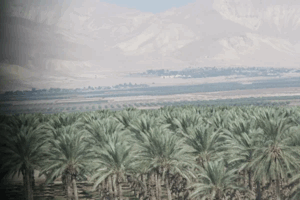
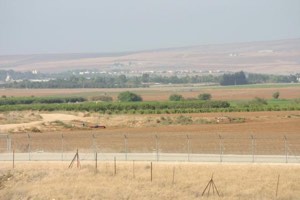
Al-Zarra'a stood southeast of Baysan in the western Jordan Valley on level ground approximately 225 meters below sea level.
It was closer to the western escarpment of the valley than to the Jordan River and overlooked agricultural lands extending north, east, and south.
Wadi Shubash, a tributary of the Jordan River, passed through lands south of the village and provided water for grain, vegetable, and fruit cultivation.
Several archaeological tells lay to the west and northwest, including Tall Abu al-Faraj, Tall al-Shuqaf, Tall al-Safarani, and Tall al-Qurud. These limited expansion toward the west, while marshes constrained development to the northeast.
Population before the Village Contracted
The 1931 Census of Palestine recorded approximately 73 inhabitants at Al-Zarra'a.
The Palestinian Encyclopedia gives a figure of about 83 Arabs in 1938, but this creates a chronological difficulty because the same source states that Tirat Zvi had already been established on the village site in 1937 and that Arab residents were removed during the Mandate period following the transfer of the land.
The 83 figure should therefore be treated cautiously rather than as a fully consistent official census figure.
| Year | Population | Notes |
|---|---|---|
| 1931 | 73 | Mandate census; the last known independent census figure before the major land transformation |
| 1938 | About 83 | Figure given by the Palestinian Encyclopedia; not an official census and chronologically problematic |
| 1944/45 | Not independently available | Al-Zarra'a no longer appears as a separate Arab village unit in the published Village Statistics |
| 1948 | 302 | Later estimate appearing in some Palestinian lists; not an official independent census figure |
Number of Houses
The principal sources reviewed do not provide a reliable independent house count for Al-Zarra'a in 1944/45 or 1948.
Given the major land and settlement transformation of the 1930s, no house total has been inferred from population growth or from Tirat Zvi.
Land Ownership and the Absence of an Independent 1944/45 Table
Khalidi does not provide an independent 1944/45 land-ownership and land-use table for Al-Zarra'a.
The locality had already undergone extensive land transfer and Tirat Zvi had been established on part of Al-Zarra'a and Al-Khunayzir lands before the 1945 statistics were compiled.
Figures belonging to Al-Khunayzir should therefore not be transferred to Al-Zarra'a, nor should Tirat Zvi statistics be presented as if they represented the ownership pattern of the earlier Palestinian village.
Economic Life
Agriculture lay at the center of Al-Zarra'a's economy and identity.
The Palestinian Encyclopedia describes the locality as historically fertile and agriculturally important.
Wadi Shubash supplied water to agricultural lands used for grain, vegetables, and fruit, while fields extended principally north, east, and south of the village.
Water and Wadi Shubash
Wadi Shubash was one of the principal features of the agricultural landscape around Al-Zarra'a.
Its waters were used for irrigating nearby cultivation.
Springs such as 'Uyun Umm al-Faraj and 'Ayn al-Khanazir also existed in the neighboring Al-Khunayzir area, but they should not all be assigned to Al-Zarra'a without independent boundary documentation.
Education and Public Institutions
No independently documented school, founding date, or enrollment figure for Al-Zarra'a was found in the principal Palestinian sources reviewed.
The available evidence is likewise insufficient to establish a specific mosque, marketplace, or other public institution within the original village nucleus.
Land Transfer and the Contraction of Al-Zarra'a
Al-Zarra'a underwent a major transformation during the 1930s as substantial village lands changed hands.
The Palestinian Encyclopedia states that absentee large landowners sold land belonging to the village and that Arab inhabitants were removed during the Mandate period following the transfer.
The methodology of the Institute for Palestine Studies' village project explicitly explains that Al-Zarra'a was excluded from its list of 1948 depopulated villages because the land had been purchased in the 1930s and Tirat Zvi had already been built on the site before the war.
At the same time, Khalidi's Al-Khunayzir entry says that Al-Zarra'a “diminished in size” after Tirat Zvi was established. This wording suggests that the transformation did not necessarily remove every Arab resident from the entire village land immediately.
Establishment of Tirat Zvi
Tirat Zvi was established in 1937 on lands belonging jointly to Al-Zarra'a and Al-Khunayzir.
Some Institute for Palestine Studies methodological material uses 1938 when referring to the kibbutz being built on the Al-Zarra'a site. The one-year difference may reflect the distinction between establishment and completion of settlement at the site.
In either case, Tirat Zvi clearly predates the Nakba and should not be classified as a post-1948 settlement.
The Battle of Al-Zarra'a, February 1948
On the night of 16–17 February 1948, the area witnessed a battle known in Arabic sources as the Battle of Al-Zarra'a.
The target, however, was not the original Palestinian village. The Arab Liberation Army attacked Tirat Zvi, which Arab sources continued to call the “Al-Zarra'a settlement” because it occupied the village locality.
The attack was led by Lieutenant-Colonel Muhammad Safa on the orders of Fawzi al-Qawuqji. Tirat Zvi was heavily fortified with trenches, towers, barbed wire, water installations, and fish ponds that could be used defensively.
The assault was carried out amid exceptionally wet conditions after prolonged rainfall had turned much of the Baysan Valley into muddy terrain.
The Arab Liberation Army failed to take the settlement and suffered substantial casualties. This battle must be distinguished from the later evacuation of the remaining Palestinian residents in May 1948.
Remaining Arab Residents in 1948
Although the Institute for Palestine Studies excluded Al-Zarra'a from its core list because the original site had already been transformed before 1948, Khalidi's entry for nearby Al-Fatur preserves an important report concerning remaining Arab residents.
It states that neighboring Al-Zarra'a was evacuated on 20 May 1948.
Khalidi adds that it is not known whether Al-Zarra'a suffered a direct military assault or whether its residents left under the influence of the exodus from surrounding communities.
The most coherent reconstruction is therefore a two-stage process: major displacement and contraction following land transfer in the 1930s, followed by the evacuation of remaining Arab residents or encampments in May 1948.
Was Al-Zarra'a Occupied during Operation Gideon?
No village-specific evidence establishes that Golani directly captured Al-Zarra'a during Operation Gideon.
The Golani Brigade carried out Operation Gideon between 10 and 15 May 1948, and Baysan fell on 12 May.
The reported evacuation of remaining residents at Al-Zarra'a occurred around 20 May, five days after the formal end of Operation Gideon.
The most accurate wording is therefore that the final evacuation occurred in the aftermath of Operation Gideon and amid the continuing collapse of Palestinian communities throughout the Baysan Valley. The direct military unit responsible, if any, remains unconfirmed.
Cause of Depopulation
Al-Zarra'a's displacement cannot be reduced to a single date or mechanism.
During the 1930s the Palestinian village contracted substantially as land was sold and Tirat Zvi was established on the site.
For May 1948, Khalidi reports evacuation around 20 May but leaves open two possibilities: a direct military attack or departure under the influence of the surrounding Palestinian exodus.
No sufficiently reliable evidence identifies a specific village-wide expulsion order or attacking battalion at Al-Zarra'a.
Depopulation and Transformation Chronology
- 1931
Official census
Approximately 73 residents were recorded at Al-Zarra'a
- 1930s
Major land transfers
Substantial village lands changed hands
- 1937
Establishment of Tirat Zvi
Established on lands belonging to Al-Zarra'a and Al-Khunayzir; some sources use 1938 for construction on the site
- After 1937
Contraction of the Arab village
Khalidi describes Al-Zarra'a as having diminished in size following the establishment of Tirat Zvi
- 16–17 February 1948
Battle of Al-Zarra'a
The Arab Liberation Army attacked Tirat Zvi; this was not an occupation battle against the Palestinian village
- 12 May 1948
Fall of Baysan
Baysan fell during Operation Gideon
- 15 May 1948
Formal end of Operation Gideon
End date given by PalQuest
- 20 May 1948
Reported final evacuation of Al-Zarra'a
Khalidi records the date in the Al-Fatur entry; it is unknown whether the cause was direct attack or the influence of neighboring exodus
Settlement on Al-Zarra'a's Lands
| Settlement | Established | Relationship to Al-Zarra'a |
|---|---|---|
| Tirat Zvi | 1937 | Established before the Nakba on land belonging to Al-Zarra'a and neighboring Al-Khunayzir; the original Al-Zarra'a locality became associated with the settlement |
'Arab al-Zarra'a Today
Al-Zarra'a does not have an independent field-site entry in Khalidi's All That Remains comparable to villages that remained intact Palestinian communities until the 1948 war.
The Institute for Palestine Studies excluded it from the principal village list because its land had already been purchased and Tirat Zvi established on the site before the war.
The original village locality therefore became absorbed into the area associated with Tirat Zvi, while remaining Arab presence on or near the former village lands was reportedly evacuated in May 1948.
This description is based on historical and cartographic sources and is not a comprehensive direct field survey of the former Al-Zarra'a site in 2026.
Sources
- Palestinian Encyclopedia – Al-Zarra'a, drawing on Mustafa Murad al-Dabbagh
- PalQuest / Institute for Palestine Studies – Village Project Methodology and the exclusion of Al-Zarra'a from the principal 1948 list
- PalQuest – Al-Khunayzir, documenting Al-Zarra'a's contraction and Tirat Zvi
- PalQuest – Al-Fatur, preserving the report of Al-Zarra'a's evacuation around 20 May 1948
- PalQuest – 'Arab al-Safa, documenting Tirat Zvi on Al-Zarra'a land
- Palestine Remembered – 'Arab al-Zarra'a, Baysan District
- WAFA – Palestinian villages and towns depopulated in 1948: 'Arab al-Zarra'a
- Palestinian Encyclopedia – Battle of Al-Zarra'a, drawing on Arif al-Arif and Fawzi al-Qawuqji's memoirs
- PalQuest – Operation Gideon
Photos from the village's people
Photos sent in by visitors and published after review.
Add a photo of this village
Log in to add photos of this village.
Other villages from Baysan

More from the archive
 Download Our Palestine App
The whole archive in the palm of your hand: depopulated villages, the Nakba, the massacres and Al-Aqsa — free, with no ads to erase the story.
Download Our Palestine App
The whole archive in the palm of your hand: depopulated villages, the Nakba, the massacres and Al-Aqsa — free, with no ads to erase the story.



Comments
No comments yet — be the first to write one.
Add your comment
Name and email are optional. Comments appear after review.