
Mohamed Boudia: An Algerian Playwright and Advocate of the Palestinian Cause

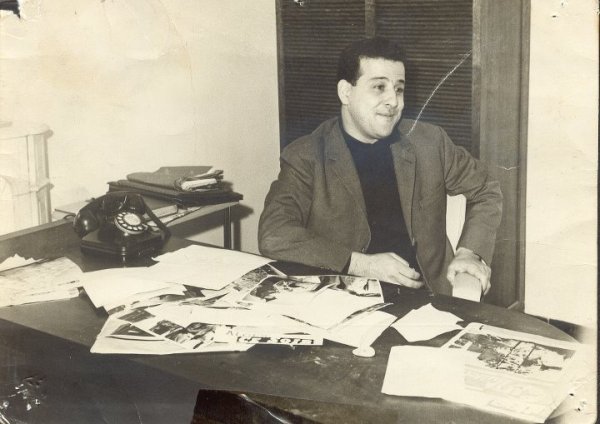
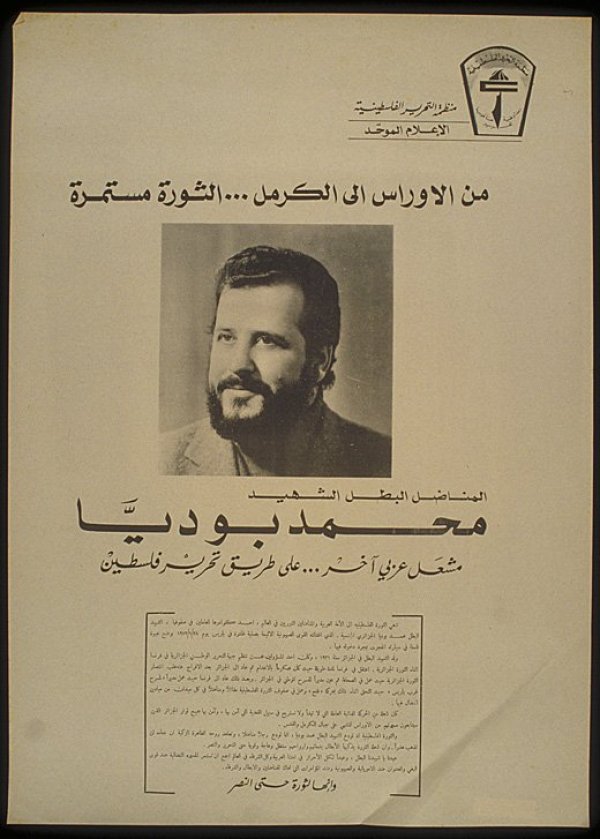
Mohamed Boudia combined a career in theatre with political activism, moving from Algeria’s struggle against French colonial rule to involvement in the Palestinian movement. His life unfolded across cultural institutions and clandestine networks in Europe before ending with his assassination in Paris on June 28, 1973. His story remains part of both Algerian theatre history and the international history of the Palestinian cause.
Early Life and Algeria’s Independence Struggle
Boudia was born on February 24, 1932, in the Bab El Djedid neighborhood of the Casbah of Algiers. Growing up amid the rise of Algerian nationalism, he developed an interest in theatre as a means of expressing his society’s experiences and aspirations.
During Algeria’s war of independence, he joined the National Liberation Front and became active in its networks in France. Theatre remained central to his life, alongside political organizing and periods of imprisonment.
After Algeria gained independence, Boudia helped develop the country’s cultural institutions. In 1963, he assumed an administrative leadership role at the Algerian National Theatre. He also worked in cultural journalism and wrote plays, including “The Olive Tree” and “Birth,” contributing to the country’s theatrical life during its early years of independence.
Paris and His Involvement in the Palestinian Cause
Boudia opposed the overthrow of President Ahmed Ben Bella in 1965 and subsequently moved to France. There, he continued his theatrical work, serving as an administrator at the Théâtre de l’Ouest Parisien between 1968 and 1972 while expanding his contacts with supporters of the Palestinian movement.
His involvement reflected a belief that struggles for liberation were interconnected. Through his political and cultural relationships, he moved beyond expressions of solidarity to participation in Palestinian networks in Europe. He became associated with the Popular Front for the Liberation of Palestine and Wadie Haddad, a leading figure in its external operations.
Some journalistic accounts also describe Boudia’s role in establishing contact with Ilich Ramírez Sánchez, better known as “Carlos,” and bringing him into Palestinian militant networks. However, the circumstances of their meeting and the precise details of that recruitment should be treated as reported accounts rather than unquestioned historical facts.
Clandestine Activities and Disputed Accounts
Boudia attracted the attention of European and Israeli intelligence agencies because of his involvement in networks supporting Palestinian armed operations. Sources attribute organizational, communication, and logistical responsibilities to him, although accounts differ over his precise role in individual attacks.
Contemporary reporting indicated that Italian authorities suspected him of involvement in an attack on oil infrastructure in the Trieste area in August 1972. A historical study published by Cambridge University Press also examines his connection to preparations for an attack on the Schönau transit center near Vienna, which accommodated Jewish emigrants traveling from the Soviet Union to Israel.
Historical accuracy requires distinguishing between an operation that was planned and one that was carried out, as well as between intelligence allegations and established responsibility. The same caution applies to accounts linking Boudia directly to the 1972 Munich attack and other events of the period.
Assassination in Paris
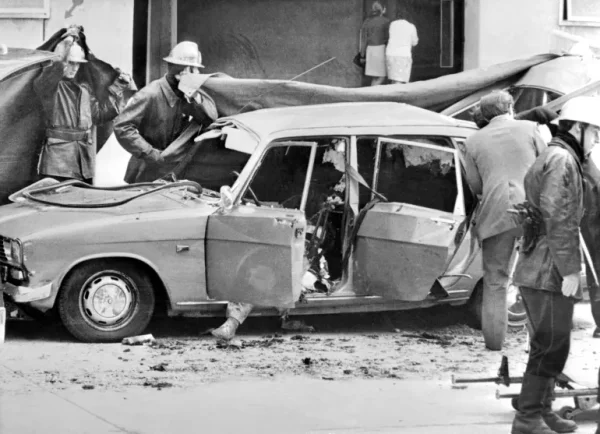
On the morning of June 28, 1973, Boudia was killed when an explosive device concealed beneath the driver’s seat of his Renault 16 detonated. The car was parked on Rue des Fossés-Saint-Bernard in Paris’s Fifth Arrondissement. He was 41 years old.
Historical accounts attribute his assassination to Israel’s intelligence agency, Mossad, as part of the campaign commonly known as “Operation Wrath of God,” which followed the 1972 Munich attack. Research drawing on intelligence records indicates that information shared by European agencies helped Mossad track him, particularly details concerning his vehicle and movements.
These findings demonstrate the importance of intelligence cooperation in the surveillance preceding his death. They do not, however, establish every circulated claim about the direct involvement of French personnel in carrying out the assassination.
A Legacy at the Intersection of Art and Politics
Boudia’s life illustrates the overlap between cultural activity and political struggle during an era shaped by decolonization and international conflict. He combined writing and theatre administration with nationalist activism, later applying part of his experience to the Palestinian cause.
His biography cannot be understood solely through his clandestine activities or the circumstances of his death. His contribution to Algerian theatre after independence remains an essential part of his legacy. Understanding Boudia as both an artist and a political activist requires careful attention to documented events and the historical context in which they occurred.
Sources
Photo gallery
More from the archive
 Download Our Palestine App
The whole archive in the palm of your hand: depopulated villages, the Nakba, the massacres and Al-Aqsa — free, with no ads to erase the story.
Download Our Palestine App
The whole archive in the palm of your hand: depopulated villages, the Nakba, the massacres and Al-Aqsa — free, with no ads to erase the story.



Comments
No comments yet — be the first to write one.
Add your comment
Name and email are optional. Comments appear after review.