
The Union of the Two Banks: The West Bank and Jordan, 1950
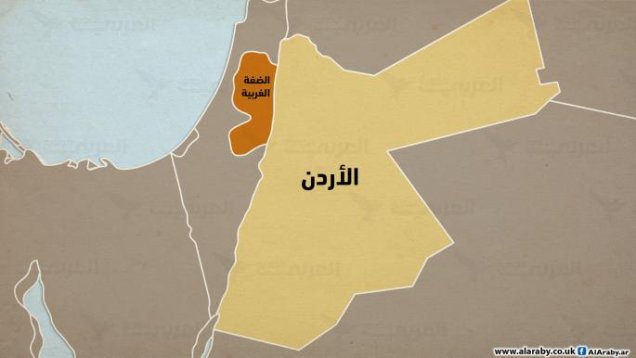
On April 24, 1950, the Jordanian Parliament formally approved what became known as the Union of the Two Banks: the political and administrative incorporation of the West Bank of the Jordan River with the East Bank under the Hashemite Kingdom of Jordan.
The decision came less than two years after the Nakba, at a moment when Palestine had been profoundly transformed by war. Israel controlled approximately 77–78 percent of Mandatory Palestine, hundreds of thousands of Palestinians had become refugees, the Gaza Strip was under Egyptian administration, and Jordanian forces controlled the West Bank, including East Jerusalem.
The union was presented by its supporters as an expression of Arab unity and political integration between populations on both sides of the Jordan River.
For many other Palestinians and Arab governments, however, it raised a fundamental question: would incorporation into Jordan preserve what remained of Arab Palestine after the 1948 war, or would it prevent the emergence of an independent Palestinian political entity?
The Situation After the Nakba
The 1948 war left Palestine territorially fragmented.
Israeli forces controlled most of the country. The West Bank—including Nablus, Hebron, Ramallah, Bethlehem, Jenin, Jericho, and East Jerusalem—remained under the military control of Jordan's Arab Legion.
The Gaza Strip came under Egyptian administration.
Hundreds of thousands of Palestinian refugees were displaced into the West Bank, Gaza Strip, Jordan, Lebanon, Syria, and other neighboring areas.
The Arab Palestinian state envisaged by United Nations Resolution 181 was never established.
Instead, competing projects emerged concerning the political future of those parts of Palestine that had not come under Israeli control.
King Abdullah and the Future of Arab Palestine
King Abdullah I of Transjordan had long pursued a political project centered on expanding Hashemite authority west of the Jordan River.
During and after the 1948 war, his government increasingly sought to integrate the Palestinian areas controlled by the Arab Legion into the Hashemite kingdom.
This policy competed with another Palestinian-Arab political framework: the All-Palestine Government, proclaimed in Gaza in September 1948 under the sponsorship of the Arab League and recognized by most Arab League governments but not by Jordan.
The rivalry reflected a deeper dispute over representation. Would the Palestinians develop a separate national government, or would the remaining Arab areas of Palestine be politically incorporated into neighboring Arab states?
The Jericho Conference
An important step toward union occurred at the Jericho Conference on December 1, 1948.
The conference brought together Palestinian notables and local leaders who favored political unity with Transjordan.
Its resolutions called for Palestinian-Jordanian unity as an initial step toward broader Arab unity and proclaimed King Abdullah as king over Palestine.
The delegates also demanded the rapid return of Palestinian refugees to their homeland and compensation for their losses.
They further proposed a system through which Palestinians would elect legitimate representatives to participate in political decision-making.
The Jericho Conference was politically significant, but it did not represent a unanimous Palestinian position.
Supporters regarded it as a pragmatic response to the military and political catastrophe of 1948 and as a means of preserving Arab-controlled Palestinian territory.
Opponents regarded the conference as dominated by political figures sympathetic to King Abdullah and rejected its claim to speak for the Palestinian people as a whole.
The West Bank Under Jordanian Control
The Jordan–Israel General Armistice Agreement of April 3, 1949 left Jordanian forces in control of the West Bank and East Jerusalem.
Iraqi troops that had operated in parts of central Palestine subsequently withdrew, and Jordanian forces assumed responsibility for the areas they had held.
The armistice agreement itself did not determine permanent sovereignty over the West Bank.
It specifically stated that the armistice demarcation lines were military arrangements that would not prejudice territorial claims or a future political settlement.
Steps Toward Political Union
During 1949 and early 1950, the Jordanian government took a series of measures to integrate the West Bank politically and administratively.
Electoral legislation was changed so that residents of the West Bank could elect representatives to the Jordanian Parliament.
Parliamentary elections were held on April 11, 1950, with voters from both banks participating.
The resulting parliament contained representatives from both the East Bank and the West Bank.
The Declaration of the Union — April 24, 1950
On April 24, 1950, the Jordanian Senate and Chamber of Deputies met and unanimously approved the union of the two banks.
The parliamentary declaration stated that the decision was based on the political, national, geographical, and economic unity of the eastern and western banks of the Jordan River.
Its first provision approved:
“Complete unity between the two banks of the Jordan, eastern and western, and their amalgamation in one single state—the Hashemite Kingdom of Jordan.”
The resolution declared that the united state would remain under King Abdullah and would operate on the basis of parliamentary constitutional government and equality in rights and duties for all citizens.
The Resolution's Reservation Concerning Palestine
An important provision of the 1950 declaration is often omitted from simplified accounts of the union.
The Jordanian Parliament stated that the decision should not prejudice the final settlement of the Palestine question.
It declared that Arab rights in Palestine were to be preserved and defended and that the union should not be interpreted as abandoning those rights.
Jordan therefore formally presented the union as compatible with the continuing Arab claim to Palestine rather than as a declaration that the Palestine question had been permanently settled.
Palestinians Become Jordanian Citizens
The political integration of the West Bank was accompanied by the extension of Jordanian citizenship to its Palestinian population.
Palestinians living in the West Bank consequently gained political and civil rights within the Jordanian state, including representation in parliament and access to government institutions.
This distinguished Jordan from several other Arab countries in which Palestinian refugees generally did not receive full citizenship.
The arrangement produced one of the most complex relationships between Palestinian and Jordanian national identity in modern Arab history.
Palestinians became citizens of Jordan while retaining powerful connections to Palestinian towns, villages, refugee communities, property claims, and national aspirations.
A Contested Palestinian Political Legacy
The Union of the Two Banks cannot accurately be described as having been either universally accepted or universally rejected by Palestinians.
Some Palestinian political and social leaders supported it.
In the devastated conditions following the Nakba, they saw Jordanian rule as a means of preserving the West Bank from further Israeli expansion, maintaining political stability, and integrating Palestinians into an existing Arab state with an organized army and government.
Other Palestinians strongly opposed the project.
Critics argued that incorporating the West Bank into Jordan weakened the possibility of establishing an independent Palestinian political entity and subordinated Palestinian national decision-making to Hashemite interests.
From this Palestinian nationalist perspective, the fact that the West Bank had escaped Israeli control in 1948 did not mean that Palestinians had achieved sovereignty there.
Instead, the remaining Palestinian territory had been divided between Jordanian and Egyptian administration.
The All-Palestine Government
The existence of the All-Palestine Government made the question even more politically contentious.
Established in Gaza in 1948 and associated with Haj Amin al-Husseini and other Palestinian nationalist figures, it claimed authority over all of Palestine.
Most Arab League governments initially recognized it.
Jordan, however, rejected its authority.
The union of the West Bank with Jordan therefore further marginalized the All-Palestine Government and prevented it from exercising effective authority in the largest Palestinian territory that remained outside Israeli control.
The Arab League's Opposition
The decision produced a serious dispute within the Arab League.
Several Arab governments opposed Jordan's incorporation of the West Bank because they feared that it would undermine Palestinian political rights and legitimize the permanent division of Palestine.
The controversy became sufficiently serious that Jordan's status within the Arab League itself was debated.
A compromise was eventually reached.
Jordan declared that its incorporation of Arab Palestine had been dictated by immediate circumstances and that it would preserve the territory as a trust pending a final settlement of the Palestine question.
The compromise allowed Jordan to remain within the Arab League while avoiding full Arab recognition that the political future of the West Bank had been permanently settled.
International Recognition: Who Actually Recognized the Union?
The international status of the Union of the Two Banks is frequently oversimplified.
Britain clearly recognized the incorporation of the West Bank into Jordan in April 1950.
British recognition, however, did not extend to Jordanian sovereignty over East Jerusalem.
Britain continued to regard the final status of Jerusalem as unresolved and recognized Jordan's authority there only on a de facto basis.
Pakistan is also frequently listed in historical accounts as having recognized the union, although the precise diplomatic character of Pakistani recognition has been disputed in later legal scholarship.
The position of the United States was more nuanced.
Washington did not issue a public declaration equivalent to Britain's formal recognition.
U.S. diplomatic records show that the United States accepted the practical extension of Jordanian administration and sovereignty to the West Bank and did not object in principle to the union.
At the same time, American policy maintained that the territory's ultimate sovereignty remained subject to a future political settlement.
The United States also explicitly refused to recognize either Jordanian or Israeli sovereignty over Jerusalem.
It is therefore misleading to list the United States simply as one of four states that formally recognized the annexation without explaining these reservations.
Similarly, although Iraq had close dynastic relations with Jordan through the Hashemite royal houses, available diplomatic evidence does not justify treating Iraq straightforwardly as an additional state that formally recognized the annexation in the same manner as Britain.
The safest historical conclusion is that formal international recognition of the union was extremely limited.
Jerusalem: The Major Exception
Jerusalem complicated almost every international response to the union.
United Nations resolutions continued to envision a special international status for the city.
Jordan controlled East Jerusalem, including the Old City, while Israel controlled West Jerusalem.
Neither side's claim to sovereignty over its section of Jerusalem received broad international recognition.
Britain specifically excluded recognition of Jordanian sovereignty over Arab Jerusalem when recognizing the West Bank's incorporation into Jordan.
The United States likewise maintained that neither Jordanian nor Israeli sovereignty over Jerusalem should be recognized pending a final determination of the city's status.
What Happened to Palestinian Political Identity?
The incorporation of the West Bank into Jordan did not erase Palestinian identity, but it significantly altered Palestinian political organization.
The West Bank did not develop an independent Palestinian government during the period of Jordanian rule.
Instead, Palestinian political representation became integrated into Jordanian institutions.
This had contradictory consequences.
Palestinian residents received citizenship, representation, education, employment in state institutions, and access to the political structures of the kingdom.
At the same time, independent Palestinian national institutions remained weak, and the question of a separate Palestinian political entity was largely subordinated to Jordanian and broader Arab state policies during much of this period.
The later rise of independent Palestinian organizations—and ultimately the Palestine Liberation Organization in 1964—must be understood partly within this context.
The West Bank Under Jordanian Rule
From 1950 until 1967, the West Bank was institutionally integrated into the Jordanian state.
Palestinians from the West Bank served in parliament, government institutions, the civil service, armed forces, and other sectors of Jordanian public life.
Economic, educational, and family relationships between the two banks deepened considerably.
Amman increasingly developed into an economic and political center for populations from both sides of the river.
Yet the Palestinian refugee question remained unresolved, and refugee camps throughout Jordan and the West Bank continued to preserve the memory and political claims of communities displaced from the areas that had become Israel.
1967: Israel Occupies the West Bank
The territorial reality created in 1950 changed fundamentally during the June 1967 war.
Israeli forces occupied the West Bank and East Jerusalem, as well as the Gaza Strip, Sinai Peninsula, and Syrian Golan Heights.
Jordan consequently lost physical control of the West Bank.
The Union of the Two Banks therefore ceased to function territorially in the manner it had between 1950 and 1967.
Legally and politically, however, Jordan did not immediately abandon its claim to the West Bank after the war.
Administrative, legal, financial, and political connections continued in various forms for another two decades.
1988: Jordan's Disengagement from the West Bank
The final major transformation came on July 31, 1988.
King Hussein announced Jordan's disengagement from the West Bank, relinquishing Jordan's administrative and legal claims in favor of recognition of an independent Palestinian political role centered on the Palestine Liberation Organization.
The decision came after the Arab League had already recognized the PLO in 1974 as the sole legitimate representative of the Palestinian people and amid the first Palestinian Intifada.
Thus, while the Israeli occupation of 1967 ended Jordan's territorial control of the West Bank, the political and legal framework created by the 1950 union was not formally dismantled until 1988.
The Union of the Two Banks in Palestinian Historical Memory
The Union of the Two Banks remains one of the most contested episodes in modern Palestinian and Jordanian history.
Jordanian official history has generally presented it as a consensual act of unity between populations connected by geography, social ties, and common political interests.
Palestinian historical interpretations have been more divided.
Some emphasize the protection Jordan provided to the West Bank after the catastrophe of 1948, the citizenship granted to Palestinians, and the shared social and political life that developed across both banks.
Others stress that the arrangement prevented the creation of an independent Palestinian political entity in the West Bank and placed Palestinian political decision-making under Hashemite rule at a crucial moment following the Nakba.
Both dimensions are necessary for understanding the period.
The union was neither a simple foreign occupation imposed without Palestinian participation nor an uncontested expression of Palestinian national will.
It emerged from the extraordinary conditions produced by the Nakba, enjoyed genuine support among some Palestinian sectors, encountered serious opposition from others, and became entangled in the competing strategies of Jordan, Palestinian political forces, and the wider Arab state system.
For Palestinians, its deepest historical significance lies in what it revealed about the aftermath of 1948: the Palestinian people had survived the Nakba, but the territory that remained outside Israeli control did not become an independent Palestinian state. Instead, the West Bank was incorporated into Jordan and Gaza was administered by Egypt, while the struggle to rebuild an independent Palestinian national political framework continued.
More from the archive



 Download Our Palestine App
The whole archive in the palm of your hand: depopulated villages, the Nakba, the massacres and Al-Aqsa — free, with no ads to erase the story.
Download Our Palestine App
The whole archive in the palm of your hand: depopulated villages, the Nakba, the massacres and Al-Aqsa — free, with no ads to erase the story.


Comments
No comments yet — be the first to write one.
Add your comment
Name and email are optional. Comments appear after review.