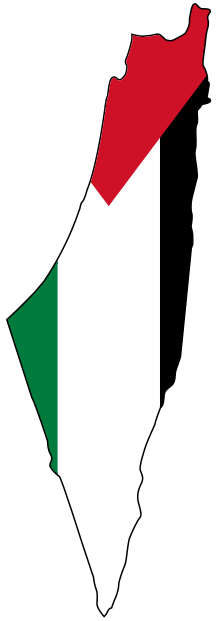
The Founding of the Palestine Liberation Organization in 1964: Rebuilding a Palestinian Political Framework
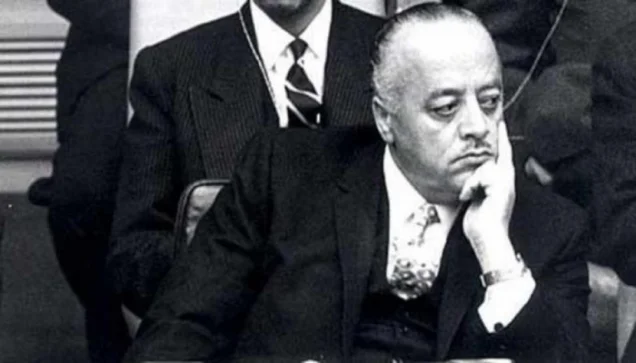
The establishment of the Palestine Liberation Organization (PLO) in 1964 marked a major turning point in modern Palestinian history. It restored to Palestinians a political and institutional framework carrying their name and cause after sixteen years of the Nakba and the fragmentation of the Palestinian people between the homeland, refugee communities, and the wider diaspora.
Between May 28 and June 2, 1964, the First Palestinian National Congress was held in Jerusalem with the participation of more than four hundred Palestinian figures from the West Bank, the Gaza Strip, several Arab countries, and diaspora communities. The congress announced the establishment of the Palestine Liberation Organization as a framework representing the Palestinian people and leading their struggle for the liberation of their homeland.
The congress adopted the Palestinian National Covenant, the Basic Law of the PLO, and the Basic Law of the Palestine National Fund, and elected Ahmad al-Shuqayri as chairman of the first Executive Committee of the Palestine Liberation Organization. The congress also constituted itself, in its entirety, as the first Palestinian National Council of the organization.
Palestine After the Nakba and the Absence of an Independent Political Entity
The establishment of the PLO came within a political context shaped by the Palestinian Nakba of 1948, which led to the displacement of approximately three-quarters of a million Palestinians from their cities and villages and the establishment of Israel over most of historic Palestine.
The West Bank, including East Jerusalem, came under Jordanian rule, while the Gaza Strip was placed under Egyptian administration. Palestinians who remained in the territories on which Israel was established lived under Israeli military rule until 1966.
No independent Palestinian state emerged after the 1948 war, and Palestinians lacked a unified political framework with independent national institutions capable of representing their communities both in Palestine and across the diaspora.
The All-Palestine Government, proclaimed in Gaza in 1948, gradually lost most of its political and executive capacity, while during the 1950s and early 1960s the Palestine question was handled to a large extent within the official Arab political system and through the League of Arab States.
Preserving Palestinian Identity After 1948
Despite the loss of the homeland and geographic dispersion, Palestinian national identity did not disappear after the Nakba.
In refugee camps, universities, and Arab cities, student unions, professional associations, political organizations, and new Palestinian frameworks emerged. A new generation of Palestinians increasingly argued that the Palestinian people had to regain the initiative rather than wait for Arab governments and armies alone to resolve the Palestine question.
Among the movements that emerged during this period was the Palestinian National Liberation Movement, Fatah, in the late 1950s, alongside the Arab Nationalist Movement and other Palestinian political currents and organizations that would later become major components of the Palestinian national movement and the PLO itself.
The Jordan River Water Crisis and the First Arab Summit
One of the immediate factors accelerating the creation of a new Palestinian framework was the dispute over the waters of the Jordan River and Israel’s plans to divert part of its waters.
Egyptian President Gamal Abdel Nasser called for the first Arab Summit Conference, held in Cairo between January 13 and 17, 1964, to discuss the Israeli water project and the wider political and military challenges related to Palestine.
The summit adopted decisions concerning the organization of the Palestinian people and enabling them to assume their role in liberating their homeland and determining their destiny. It tasked Ahmad al-Shuqayri, who represented Palestine in the League of Arab States, with contacting Arab governments and Palestinians to establish the foundations required for organizing the Palestinian people.
The summit resolution did not explicitly order the creation of an organization named the “Palestine Liberation Organization.” However, in the months that followed, al-Shuqayri moved toward establishing an institutional Palestinian entity and conducted extensive consultations with Palestinian communities, prominent figures, and Arab governments.
Ahmad al-Shuqayri and Preparations for the Palestinian Congress
Ahmad al-Shuqayri had become Palestine’s representative to the Council of the League of Arab States in 1963 and also headed the Palestinian delegation to the United Nations General Assembly that year.
Following the mandate given to him by the Arab summit, al-Shuqayri toured Arab countries and Palestinian communities to discuss the structure of the new entity and select representatives for the proposed national congress.
Preparatory committees were established to compile lists of participants. Most members of the congress were prominent Palestinian public figures, members of parliaments and municipal councils, trade unionists, professionals, and businesspeople, alongside a limited number of individuals associated with Palestinian political movements who participated in personal capacities.
Why Jerusalem Was Chosen
Holding the founding congress in Jerusalem carried major national and political significance.
The city was then under Jordanian rule and hosted the congress under the patronage of King Hussein, with the meetings beginning on May 28, 1964.
More than four hundred Palestinian figures participated, representing communities in the West Bank, East Jordan, the Gaza Strip, Syria, Lebanon, Kuwait, Iraq, Egypt, Qatar, Libya, Algeria, and elsewhere.
The objective was to establish a framework capable of politically uniting Palestinians despite their dispersion across multiple states and the fact that the remaining Palestinian territories were under different political administrations.
May 28, 1964: The First Palestinian National Congress Opens
The First Palestinian National Congress opened in Jerusalem on May 28, 1964, and continued until June 2.
At the conclusion of its work, the congress announced the establishment of the Palestine Liberation Organization and constituted itself as the organization’s first Palestinian National Council.
The founding resolution described the organization as representing the Palestinian people and leading their struggle to liberate their homeland. This gave Palestinians, for the first time since the Nakba, a political institution formally carrying the name of Palestine and acting in the name of its people on both the Arab and international levels.
The Palestinian National Covenant of 1964
The adoption of the Palestinian National Covenant was among the congress’s most important decisions.
The Covenant affirmed that Palestine, within the borders that existed during the British Mandate, constituted an indivisible territorial unit, and it linked the Palestine question to Arab identity and the broader Arab nationalist struggle.
It also regarded the Balfour Declaration, the Mandate, the partition of Palestine, and the establishment of Israel as invalid from the perspective adopted by the Covenant, and affirmed the right of the Palestinian people to recover their homeland, freedom, and right to self-determination.
One of the principal characteristics of the first Covenant was its combination of Palestinian identity and Arab nationalism, presenting the liberation of Palestine and Arab unity as complementary objectives that would reinforce one another.
Did the 1964 Covenant Declare Armed Struggle the “Only Way”?
The 1964 Covenant was not identical to the document later known as the Palestinian National Charter.
The first Covenant used the language of struggle, liberation, and mobilization, but it did not include the explicit formulation that “armed struggle is the only way to liberate Palestine.”
This wording appeared clearly in the amended Charter adopted by the Palestinian National Council in Cairo in July 1968, following the 1967 occupation and the rise of the armed resistance factions and their increasing influence over the institutions of the PLO.
This distinction is essential to understanding the development of the organization: the PLO began in 1964 within a framework closely linked to the official Arab system, but after 1967 it increasingly became an organization led by Palestinian resistance factions themselves.
The Basic Law of the PLO
Alongside the Covenant, the congress adopted the Basic Law of the Palestine Liberation Organization, establishing the institutional structure of the new entity.
The PLO was built around several principal institutions, including:
- The Palestinian National Council: the highest representative body responsible for adopting the organization’s general policies and programs.
- The Executive Committee: the executive body responsible for managing the organization’s affairs and implementing the decisions of the National Council.
- The Palestine National Fund: the financial institution created to finance PLO activities.
The Basic Law of the Palestine National Fund provided for the creation of a special fund to finance the organization, administered by a body appointed by the executive leadership, in an effort to establish an independent financial base for the new Palestinian institutions.
The Election of Ahmad al-Shuqayri
The congress elected Ahmad al-Shuqayri chairman of the first Executive Committee of the Palestine Liberation Organization and authorized him to choose twelve members to serve alongside him.
Al-Shuqayri thus became the organization’s first effective leader and oversaw the initial phase of institution-building, the opening of PLO offices in several countries, and efforts to establish its presence within the League of Arab States and on the international stage.
The Palestine Liberation Army
The creation of a Palestinian military force was among the major projects associated with the establishment of the organization.
At the second Arab summit, held in Alexandria from September 5 to 11, 1964, Arab governments welcomed the creation of the PLO as a representative of the Palestinian people in pursuing their cause on the Arab and international levels.
The summit also approved the establishment of the Palestine Liberation Army, which was to be organized, armed, and trained under a plan developed by the Unified Arab Command in cooperation with the Palestine Liberation Organization.
In its early years, however, the army was not fully independent of Arab governments. Its units were mainly based in Egypt, Syria, and Iraq and remained linked to varying degrees to the military establishments of the states hosting them.
Arab Recognition of the PLO
The creation of the organization was not free from disagreements within the Arab political system.
Some Arab governments were concerned that the new Palestinian entity might develop into an independent authority that conflicted with their sovereignty or political interests. Particular sensitivities surrounded the West Bank, which was then linked to the Hashemite Kingdom of Jordan.
Nevertheless, the PLO secured important Arab recognition during the Second Arab Summit in Alexandria in September 1964, which welcomed its establishment as representing the Palestinian people in assuming responsibility for the Palestine question on both Arab and international levels.
However, the designation of the PLO as the “sole legitimate representative of the Palestinian people” was not adopted by Arab governments in 1964. That recognition came later, at the Rabat Summit in 1974.
The Complex Relationship with Jordan
The relationship with Jordan was one of the most sensitive issues surrounding the establishment of the PLO because the West Bank and East Jerusalem were then under Jordanian rule, and a large number of Palestinians held Jordanian citizenship.
Historical sources indicate that Jordanian authorities imposed conditions before the congress, including that it should not discuss organizing and arming Palestinians inside Jordan and that the establishment of the new Palestinian entity should not lead to claims of separate sovereignty over the West Bank.
These conditions reflected an early tension between the effort to build an independent Palestinian national entity and the interests and policies of the Arab states within whose borders Palestinians lived.
Was the PLO an Independent Popular Movement from the Beginning?
Despite the historical importance of establishing the PLO, its original structure did not enjoy complete consensus within the Palestinian national movement.
Some Palestinian forces criticized the top-down method through which the Palestinian National Council had been formed, its heavy reliance on selected public figures, and the new leadership’s close relationship with the official Arab political system and Arab government pressures.
Fatah, which had been developing independently since the late 1950s, was among the most prominent movements arguing that Palestinians themselves should take the initiative in their struggle rather than depend on official Arab decisions.
The establishment of the PLO therefore did not complete the process of building the Palestinian national movement. Instead, it opened a new phase of political and organizational struggle over who would represent the Palestinians and how the struggle for liberation should be conducted.
Fatah Begins Military Operations in 1965
Only months after the creation of the PLO, Fatah announced the beginning of military operations by its armed wing, al-Asifa, in early January 1965.
The emergence of independent guerrilla action gradually challenged the more official character of the PLO during its first phase.
Historical studies indicate that the creation of the PLO also encouraged Fatah to accelerate the development of its own military and political institutions in order to preserve its project of independent Palestinian decision-making outside the control of Arab governments.
The 1967 Occupation of the Rest of Palestine
Israel’s occupation of the rest of Palestine in June 1967, including the West Bank, East Jerusalem, and the Gaza Strip, fundamentally changed the political environment in which the PLO operated.
Jordanian rule in the West Bank and Egyptian administration of the Gaza Strip came to an end, and Palestinians across historic Palestine now faced a new reality shaped by direct Israeli occupation or by the continuing consequences of the Nakba and displacement.
At the same time, the defeat of Arab armies strengthened the belief among many Palestinians that dependence on Arab governments and armies alone would not bring about the liberation of Palestine, increasing the influence of independent armed Palestinian resistance movements.
The Resignation of Ahmad al-Shuqayri
As Fatah and the guerrilla factions grew in influence and criticism of the PLO leadership increased, Ahmad al-Shuqayri entered into growing disputes with several Palestinian and Arab actors.
On December 24, 1967, al-Shuqayri resigned as chairman of the Executive Committee of the Palestine Liberation Organization and was temporarily succeeded by Yahya Hammuda.
This opened the way for a new phase in which Palestinian resistance factions would become the dominant force within the organization’s institutions.
The Battle of Karama and the Rise of the Palestinian Factions
The Battle of Karama on March 21, 1968 was a decisive moment in this transformation.
The confrontation between Palestinian fighters and the Jordanian army on one side and Israeli forces on the other significantly increased the popularity of Fatah and Palestinian guerrilla action, and thousands of Palestinians and Arabs joined resistance organizations after the battle.
This rise paved the way for the internal restructuring of the PLO, gradually transforming it from a framework established under the sponsorship of the official Arab system into one increasingly controlled by Palestinian organizations themselves.
The New Palestinian National Charter of 1968
Between July 10 and 17, 1968, the fourth session of the Palestinian National Council was held in Cairo.
The session witnessed stronger participation by Palestinian resistance factions and adopted a new document known as the Palestinian National Charter, replacing the earlier Palestinian National Covenant.
The amended Charter emphasized Palestinian national identity more explicitly, placed armed struggle at the center of the liberation strategy, and stated directly that “armed struggle is the only way to liberate Palestine.”
The change therefore went beyond terminology. It reflected a broader shift in the center of political gravity from official Arab nationalism toward a Palestinian national movement that increasingly saw itself as the principal actor responsible for the liberation of Palestine.
Yasser Arafat Takes Leadership of the PLO
This transformation was completed during the fifth session of the Palestinian National Council, held in Cairo between February 1 and 4, 1969.
Palestinian resistance organizations gained broad influence within the Council, and Fatah leader Yasser Arafat was elected chairman of the Executive Committee of the Palestine Liberation Organization.
From that point onward, the PLO became much more directly associated with the Palestinian guerrilla movement. Fatah became its largest force, while the PLO remained the broader national framework incorporating a wide range of Palestinian factions, unions, institutions, and political figures.
From an Arab-Sponsored Entity to a Palestinian National Framework
The importance of the period from 1964 to 1969 lies in the fact that the PLO passed through two distinct phases.
In the first phase, the organization emerged from an initiative closely connected to the Arab summit system and the official Arab political order, and was led by Ahmad al-Shuqayri within limits shaped by inter-Arab relations.
After 1967 and the rise of the resistance movements, however, the PLO’s institutions were reshaped from within, and Palestinian factions became the principal forces determining its policies and leadership.
The founding of 1964 can therefore be understood as creating the institutional framework, while the transformations of 1967–1969 gave that framework a more independent Palestinian national character.
The PLO and the Political Restoration of the Name Palestine
The significance of establishing the PLO extended beyond the creation of a new political institution.
After the Nakba and efforts to treat Palestinians primarily as a refugee population dispersed among several states, the organization reaffirmed the existence of a Palestinian people with a political cause and national rights, rather than merely refugee communities requiring humanitarian assistance.
The Palestinian National Council, the Executive Committee, the Palestine National Fund, and the organization’s other institutions became tools for building a Palestinian political life that transcended the geographic boundaries imposed by displacement and occupation.
The PLO also provided a framework that later incorporated most of the major Palestinian political forces and became the principal address for Palestinian political representation in the Arab world and internationally.
From the Founding of the PLO to Arab and International Recognition
The recognition received by the PLO at the Second Arab Summit in Alexandria in 1964 marked the beginning of a long process of consolidating its claim to represent the Palestinian people.
After its leadership passed to the Palestinian resistance factions and Yasser Arafat rose to the chairmanship, the organization’s political and diplomatic presence expanded rapidly.
At the Rabat Summit in 1974, Arab states recognized the Palestine Liberation Organization as the sole legitimate representative of the Palestinian people.
That same year, Yasser Arafat delivered his historic address before the United Nations General Assembly, and the General Assembly granted the PLO observer status, marking a major transformation in which the Palestine question increasingly came to be represented internationally by Palestinians through their own national institution.
The Historical Importance of the Founding of the PLO
The establishment of the Palestine Liberation Organization in 1964 represented the institutional restoration of Palestinian national identity after the fragmentation that followed the Nakba.
At its founding, the PLO was not completely independent from the official Arab political system, and not all Palestinian forces were satisfied with its structure or the manner in which it had been formed. Nevertheless, it created, for the first time since 1948, a council, leadership, national fund, and institutions that carried the name of Palestine and operated in the name of the Palestinian people.
The organization then changed profoundly after the 1967 occupation and the rise of the armed resistance factions, and within only a few years its leadership passed from Ahmad al-Shuqayri to the Palestinian resistance movement under Yasser Arafat.
From that point onward, the Palestine Liberation Organization became the central institutional framework of the Palestinian national movement, leading successive phases of armed struggle, diplomatic action, international representation, and the declaration of the State of Palestine.
For this reason, May 28, 1964 represents more than the opening date of a Palestinian congress. It marks the beginning of the construction of a national institution that restored to Palestinians, after the Nakba and dispersion, a unified political framework carrying the name of Palestine and its cause into the decades that followed.
More from the archive


 Download Our Palestine App
The whole archive in the palm of your hand: depopulated villages, the Nakba, the massacres and Al-Aqsa — free, with no ads to erase the story.
Download Our Palestine App
The whole archive in the palm of your hand: depopulated villages, the Nakba, the massacres and Al-Aqsa — free, with no ads to erase the story.


Comments
No comments yet — be the first to write one.
Add your comment
Name and email are optional. Comments appear after review.