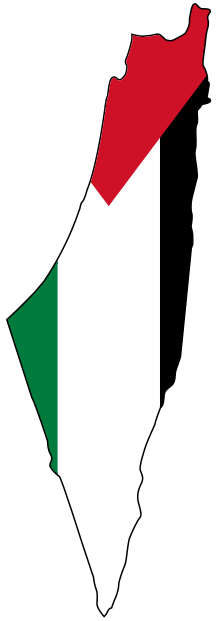
Black September in Jordan: The Palestinian Resistance and the Jordanian State, 1970–1971
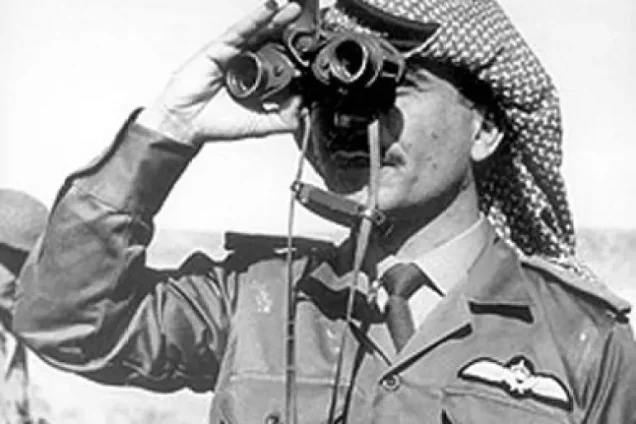
Black September in Jordan: The Palestinian Resistance and the Jordanian State, 1970–1971
The term “Black September” refers to the violent confrontation that erupted between the Jordanian state and Palestinian resistance organizations, reaching its bloodiest stage in September 1970 before continuing in different forms until most of the independent Palestinian armed presence in Jordan was eliminated in July 1971.
The confrontation developed within the profound political and military transformations that followed Israel’s occupation of the remaining parts of Palestine in 1967.
After the occupation of the West Bank, including East Jerusalem, and the Gaza Strip, Palestinian resistance organizations expanded their presence in Jordan, which became the principal base for armed operations across the Jordan River toward the occupied Palestinian territories.
The influence of the Palestinian fedayeen increased dramatically after the Battle of al-Karama on March 21, 1968, when Palestinian resistance fighters and part of the Jordanian army confronted a major attack launched by Israeli occupation forces against the al-Karama area in the Jordan Valley.
The outcome of the battle raised the political and popular standing of the Palestinian resistance, and thousands of volunteers joined resistance organizations, particularly Fatah.
Yet the same expansion that strengthened the Palestinian national movement gradually generated a growing conflict over sovereignty, weapons, political authority, and the limits of the Palestinian organizations’ freedom to operate independently inside Jordan.
After the Occupation of Palestine in 1967
Jordan’s political and demographic situation changed profoundly after the 1967 occupation.
The occupation of the West Bank produced a new wave of Palestinian displacement toward the East Bank.
At the same time, Palestinian resistance organizations transferred a large part of their bases and military activity to Jordan and began carrying out operations toward the occupied West Bank.
The Jordan Valley became one of the principal fronts of Palestinian armed struggle against the Israeli occupation.
Fatah, the Popular Front for the Liberation of Palestine, the Democratic Front for the Liberation of Palestine, al-Sa‘iqa, the Palestine Liberation Army, and other organizations established headquarters, training camps, military units, and political and organizational structures inside the kingdom.
Al-Karama Changes the Balance
The Battle of al-Karama gave the Palestinian fedayeen a level of prestige they had not previously enjoyed.
After the battle, volunteers joined resistance organizations from among Palestinians and from different Arab countries.
Fatah’s influence expanded rapidly, and in February 1969, Yasser Arafat was elected chairman of the Executive Committee of the Palestine Liberation Organization.
The organization began transforming from a framework originally established under strong official Arab influence into an organization dominated by Palestinian resistance forces.
Jordan consequently became an exceptionally important military and political center for the Palestinian national movement.
The Palestinian Resistance Between a Base for Liberation and Jordanian State Sovereignty
From a Palestinian perspective, the armed presence of the resistance in Jordan did not emerge as a project to establish an alternative state in place of the Jordanian state. Rather, it arose directly from the occupation of the West Bank in 1967 and the closure of much of the space available for organized Palestinian armed activity inside it.
This role was greatly strengthened after the Battle of al-Karama in March 1968, which elevated the standing of the Palestinian resistance and transformed the fedayeen, in the eyes of broad sectors of Palestinians and Arabs, into a force seeking to regain the initiative after the defeat of the Arab armies and the occupation of the remaining parts of Palestine in 1967.
From the perspective of the resistance leadership, this independence was necessary to protect Palestinian national decision-making and prevent the armed struggle from being subordinated to official Arab policies, particularly at a time when the PLO rejected United Nations Security Council Resolution 242 and the Rogers Plan and feared that regional settlements would once again reduce the Palestinians to a refugee issue rather than recognize them as a people engaged in a struggle for national liberation.
The Jordanian leadership viewed this phenomenon as a threat to state sovereignty and authority, while many Palestinians saw attempts to disarm the resistance or restrict its movement as a threat to the principal remaining base of armed struggle against the Israeli occupation.
At its core, the conflict was therefore between two competing political and security projects: a Jordanian state determined to maintain exclusive control over military decision-making within its territory and preserve the stability of the kingdom, and a Palestinian national liberation movement that regarded the independence of its arms and political decision-making as essential to continuing the confrontation with the Israeli occupation.
A Growing Conflict Over Strategy
The dispute was not solely about the carrying of weapons in Jordanian streets.
It also reflected a profound difference between two political strategies.
King Hussein’s government sought to preserve Jordanian sovereignty and prevent Jordan from becoming an open battlefield with Israel that could threaten the stability of the kingdom itself.
Palestinian resistance organizations, particularly the more militant factions, insisted on maintaining the freedom to carry out operations against the Israeli occupation from Jordanian territory.
At the same time, many fedayeen viewed Jordanian attempts to regulate or restrict such operations as an effort to contain and weaken the Palestinian resistance.
The Rogers Plan and Palestinian Rejection
The political dispute widened during the summer of 1970.
The United States introduced a diplomatic initiative associated with Secretary of State William Rogers and based on United Nations Security Council Resolution 242.
Egypt and Jordan accepted the initiative and a temporary ceasefire with Israel.
The PLO and the major Palestinian factions rejected the Rogers Plan.
Palestinians feared that a settlement based on Resolution 242 would once again reduce the Palestine question to a refugee problem while marginalizing Palestinian national rights and the role of the armed resistance.
On August 27–28, 1970, the Palestine National Council held an extraordinary session in Amman in which it explicitly rejected the Rogers Plan and reaffirmed its opposition to Resolution 242.
This widened the political distance between the Jordanian government and the Palestinian national movement.
The PFLP Aircraft Hijackings
The crisis entered a more dangerous phase in September.
Between September 6 and 12, 1970, the Popular Front for the Liberation of Palestine carried out a series of international aircraft hijackings.
Three hijacked aircraft were eventually taken to Dawson’s Field, a desert airstrip near Zarqa in Jordan.
After the passengers were removed, the PFLP blew up the empty aircraft on September 12 before the international media.
The operations generated enormous international attention and a major diplomatic crisis.
For King Hussein, they also demonstrated that an armed Palestinian organization could carry out a major international operation from Jordanian territory without the approval of the Jordanian government.
The hijackings did not create the underlying Jordanian-Palestinian conflict, but they accelerated the explosion of a crisis that had been intensifying for months.
September 16: The Breakdown of the Understandings
By mid-September, clashes had resumed between Jordanian forces and Palestinian fighters.
On September 16, 1970, King Hussein formed a military government headed by Brigadier General Muhammad Daoud al-Abbasi.
Martial law was declared throughout Jordan.
Field Marshal Habis al-Majali was appointed commander-in-chief of the armed forces and military governor-general.
The Jordanian state thereby moved toward the use of military force to restore its full authority.
On the Palestinian side, Yasser Arafat moved to coordinate the positions of the organizations and their armed forces in anticipation of the expected assault.
September 17: The Major Military Assault Begins
On the morning of September 17, Jordanian army units launched large-scale military operations against Palestinian resistance positions in Amman, Zarqa, Irbid, and other areas.
Tanks and artillery were used in fighting inside urban areas, around refugee camps, and against positions where Palestinian organizations were concentrated.
Parts of Amman became scenes of intense fighting.
Palestinian fighters resisted from refugee camps, neighborhoods, and fortified positions.
At the same time, large numbers of civilians found themselves trapped between the opposing forces.
Palestinian Refugee Camps Under Fire
Some of the most intense fighting took place inside and around Palestinian refugee camps.
These camps were not merely military positions used by the fedayeen.
They were densely populated communities inhabited by refugees and their families, children, and elderly residents, many of whom had already experienced displacement during the Nakba of 1948 or the displacement that followed the occupation of the remaining parts of Palestine in 1967.
The use of artillery and tanks in these areas caused large numbers of civilian casualties and extensive destruction in the camps and surrounding neighborhoods.
UNRWA later recorded that Wihdat refugee camp and its surroundings suffered severe damage and that casualties and destruction also occurred in Jabal al-Hussein camp and the refugee camps of Irbid.
For this reason, Palestinian memory preserves Black September not only as a military confrontation between the Jordanian army and the fedayeen, but also as a catastrophe that struck refugee communities caught in the fighting.
How Many Palestinians Were Killed?
There is no single universally accepted casualty figure for Black September.
Estimates differ considerably depending on the period being counted, whether they include only the principal days of fighting in September or the broader confrontations of 1970–1971, and whether they distinguish between combatants and civilians.
The Interactive Encyclopedia of the Palestine Question (PalQuest) estimates that approximately 5,000 to 10,000 Palestinians were killed during the ten principal days associated with Black September.
Other historical studies provide lower estimates, however, and this range therefore cannot be regarded as a final universally accepted figure.
What is clear is that, according to several sources, the fighting produced thousands of Palestinian dead and wounded, including large numbers of civilians alongside combatants.
Several Palestinian refugee camps and neighborhoods also suffered severe damage.
Syrian Intervention
The confrontation quickly developed into a regional crisis.
On September 20, Syrian armored forces entered northern Jordan in support of the Palestinian resistance.
The tanks advanced toward Irbid, where Palestinian organizations had a strong presence.
Contemporary American documents indicate that hundreds of tanks were involved in the force that crossed into Jordan at the height of the crisis.
The Jordanian army responded with ground and air attacks against the advancing forces.
The intervention increased the possibility that the internal Jordanian-Palestinian conflict could develop into a broader regional military confrontation.
The United States and Israel Consider Possible Intervention
The Syrian intervention caused deep concern within the U.S. administration.
President Richard Nixon’s administration regarded the survival of King Hussein’s government and the stability of Jordan as an important regional strategic interest.
The United States raised the readiness level of some of its forces and moved naval and air assets toward the region.
Washington also opened intensive consultations with Israel over possible military intervention against Syrian forces if the Jordanian army proved unable to stop their advance.
Declassified American documents show that Jordan urgently requested external air support as Syrian forces advanced.
Washington passed the request to Israel and discussed possible Israeli air strikes or ground action if the position of the Jordanian army became critical.
The United States and Jordan also benefited from Israeli intelligence and reconnaissance in assessing the Syrian deployment.
Ultimately, however, no direct Israeli military intervention took place, as Jordanian forces succeeded in stopping the Syrian advance.
The Syrian Withdrawal
Jordanian forces launched a counterattack against the Syrian armored units.
Jordanian aircraft attacked Syrian forces in the north.
By September 22, the Syrian intervention was rapidly collapsing.
Syrian forces began withdrawing from Jordan.
The withdrawal resulted from a combination of factors, including Jordanian military resistance, the absence of effective Syrian air support for the advancing forces, regional and international pressure, and the possibility of American or Israeli intervention if the advance continued.
The failure of the Syrian intervention significantly weakened the Palestinian military position.
Iraqi Forces Do Not Enter the Battle
Another major Arab military force was already present on Jordanian territory.
Thousands of Iraqi troops had remained in Jordan since the confrontations that followed the 1967 occupation.
Some Palestinian leaders hoped these forces would intervene on the side of the resistance.
However, the Iraqi forces did not take part in a large-scale confrontation with the Jordanian army and remained effectively outside the principal fighting.
This position was an important factor affecting the balance of forces during the crisis.
The Palestinian Military Position Weakens
Between September 23 and 25, the Jordanian army had regained control over large parts of Amman and other strategic areas.
The Palestinian organizations remained armed, but their ability to resist a concentrated offensive by a regular army had been severely weakened.
Palestinian fighters began withdrawing from the major cities toward northern Jordan.
The principal phase of the September confrontation was approaching its end.
The Emergency Arab Summit in Cairo
Arab governments moved to stop the bloodshed and prevent the situation from collapsing completely.
An emergency Arab summit was convened in Cairo during the final days of September.
Egyptian President Gamal Abdel Nasser played a major role in mediation.
Yasser Arafat and King Hussein were brought together under intense Arab pressure to reach a ceasefire.
On September 27, 1970, Hussein and Arafat signed a ceasefire agreement in Cairo.
The Cairo Ceasefire Agreement – September 1970
The agreement called for an end to the fighting, the release of detainees, and new arrangements to regulate relations between the Jordanian authorities and the Palestinian organizations.
It also called for armed forces to be removed from the cities, for internal security responsibilities to be returned primarily to civilian authorities, and for Arab mechanisms to supervise implementation of the agreement.
Palestinian armed formations were expected to withdraw from the cities and move more toward areas directly connected with confrontation against the Israeli occupation.
The agreement temporarily brought the principal fighting to a halt.
But it did not resolve the fundamental struggle over the existence of an independent Palestinian armed force inside the Jordanian state.
Gamal Abdel Nasser Dies the Following Day
On September 28, 1970, one day after the agreement between Hussein and Arafat, Egyptian President Gamal Abdel Nasser died suddenly of a heart attack.
His death shocked the Arab world.
Nasser had spent his final days attempting to mediate an end to the Jordanian-Palestinian confrontation.
His death therefore became symbolically intertwined with Black September and, for many, marked the end of an entire era in modern Arab political history.
The Fighting Had Not Truly Ended
The Cairo agreement ended the major battles of September, but it did not end the Palestinian armed presence in Jordan.
Large numbers of fedayeen withdrew from Amman and other urban centers toward Jerash and Ajlun and the forests and highlands of northern Jordan.
From there, Palestinian organizations attempted to preserve their military infrastructure and continue their activities.
The Jordanian state, meanwhile, continued gradually tightening its control and restricting the organizations’ ability to operate independently.
From October 1970 to July 1971
The following months witnessed intermittent confrontations, arrests, restrictions, and political and military pressure on the Palestinian factions.
New agreements were reached, but they did not last.
Most of the remaining Palestinian armed formations gradually became concentrated in northern Jordan.
By mid-1971, the Jordanian government had decided to eliminate the remaining independent fedayeen bases once and for all.
The Final Battles in Jerash and Ajlun
In July 1971, the Jordanian army launched its final major military campaign against Palestinian resistance positions in the north.
The fighting centered on the forests and mountainous areas around Jerash and Ajlun.
Palestinian units were surrounded and fragmented; some fighters were captured, while others were forced to withdraw across the borders.
By late July 1971, the organized and independent Palestinian armed presence that had expanded in Jordan since 1967 had largely come to an end.
The Palestinian resistance thereby lost its most important military base directly adjacent to the occupied West Bank.
The PLO Shifts Its Center of Gravity to Lebanon
After leaving Jordan, Palestinian forces and institutions dispersed through Syria and Lebanon.
Lebanon gradually became the principal political and military base of the Palestine Liberation Organization.
Beirut became an increasingly important center for Palestinian political, media, diplomatic, and organizational activity.
Palestinian armed organizations also expanded their presence in the refugee camps and in southern Lebanon, from where operations against the Israeli occupation continued.
The transfer from Jordan to Lebanon therefore opened a new phase in the history of the Palestinian resistance.
Why Was Black September a Turning Point?
Black September represented one of the harshest blows suffered by the Palestinian resistance after its rapid rise following the Battle of al-Karama.
The organizations lost a base adjoining one of the longest frontiers with the occupied Palestinian territories.
Thousands of Palestinians were killed or wounded according to differing estimates.
Refugee camps once again became battlefields.
A national movement that had expanded dramatically between 1968 and 1970 was forced to rebuild its political and military center in another Arab country.
A Palestinian-Jordanian Tragedy
Black September left a deep wound in Palestinian-Jordanian relations.
Palestinian memory preserves the shelling of the refugee camps, the large numbers of casualties, and the destruction of the resistance’s military presence that had expanded after the 1967 occupation.
In contrast, the official Jordanian narrative emphasizes the breakdown of state authority in some areas, the spread of weapons outside official institutions, factional checkpoints, aircraft hijackings, and what the kingdom regarded as a direct threat to Jordanian sovereignty and the survival of the state.
These two different historical memories continued to shape interpretations of the events.
Understanding Black September historically requires recognition of both the struggle over sovereignty and armed authority inside Jordan and the enormous Palestinian civilian and military losses produced by the confrontation.
The Role of the Palestinian Resistance
The Palestinian organizations were not a single political or military bloc.
Fatah generally sought to preserve the freedom of action of the resistance without declaring the overthrow of the Jordanian monarchy as a direct objective.
More radical organizations, particularly the Popular Front for the Liberation of Palestine, adopted a broader revolutionary vision that regarded confrontation with some conservative Arab regimes as part of a political project extending beyond the direct struggle against the Israeli occupation.
These differences made it more difficult to formulate a unified Palestinian position during the crisis.
For example, the aircraft hijackings were carried out by the PFLP and were not a decision taken collectively by all factions of the PLO.
Their political and military consequences, however, affected all Palestinian organizations operating in Jordan.
The International Dimension of Black September
Black September was not merely an internal confrontation between the Jordanian state and the Palestinians.
It unfolded at the height of the Cold War and within the broader Arab-Israeli confrontation.
The United States supported the survival of King Hussein’s government and prepared for the possibility of intervention if the crisis expanded.
Israel considered the possibility of assisting Jordan militarily if Syrian intervention threatened the Jordanian regime.
Syria intervened militarily in northern Jordan in support of the Palestinian resistance.
Meanwhile, the large Iraqi forces already present in Jordan remained outside the principal fighting.
Egypt, particularly President Gamal Abdel Nasser, attempted to mediate an end to the confrontation.
The crisis therefore became a point at which Palestinian, Jordanian, Arab, Israeli, American, Soviet, and broader Cold War interests intersected.
The Emergence of the Black September Organization
The name “Black September” acquired another meaning in the years following the confrontation.
After the Palestinian resistance was expelled from Jordan, a clandestine Palestinian organization appeared under the name “Black September Organization.”
The organization was associated with members and networks close to Fatah, while the precise organizational relationship between it and the Fatah leadership remained deliberately obscure and historically disputed.
On November 28, 1971, members of the organization assassinated Jordanian Prime Minister Wasfi al-Tal in Cairo.
In 1972, the organization became internationally known after the operation targeting members of the Israeli Olympic team in Munich, which ended with the deaths of eleven members of the Israeli team, one German police officer, and five of the operation’s perpetrators.
The Black September Organization should not be confused with the original Black September events, which refer to the Jordanian-Palestinian confrontation of 1970 and the subsequent elimination of the Palestinian armed presence in Jordan during 1971.
From Jordan to Lebanon
The military defeat in Jordan did not bring the Palestine Liberation Organization to an end.
It did, however, change its geographical and political center.
During the 1970s, the PLO built an extensive political, military, cultural, media, and diplomatic presence in Lebanon.
Beirut became one of the principal centers of the Palestinian national movement.
Southern Lebanon also became a major front for armed operations against the Israeli occupation.
Yet some of the tensions that had emerged in Jordan, connected to the presence of an armed Palestinian movement operating within the territory of another Arab state, later reappeared in a different and more complex form during the Lebanese Civil War.
The Historical Legacy of Black September
Black September marked the end of the period in which Jordan served as the principal regional base of the Palestinian armed resistance.
The Palestinian movement that had risen dramatically after the Battle of al-Karama was forced to leave the country in which that rise had taken place.
A large number of Palestinians were killed or wounded during the confrontation, while others were imprisoned or displaced.
The political and military center of gravity of the PLO shifted to Lebanon.
Relations between the Palestinian national movement and the Jordanian monarchy were also deeply damaged for years.
But the Palestine Liberation Organization itself did not disappear.
It preserved its institutions, rebuilt its capabilities, and expanded its political and diplomatic presence across the Arab world and internationally during the following years.
From a Palestinian historical perspective, Black September therefore represents both a profound internal Arab tragedy and one of the harshest stages experienced by the Palestinian resistance after the occupation of the remaining parts of Palestine in 1967.
It ended one stage of the Palestinian armed struggle and opened another.
The resistance left Jordan, but the Palestinian national movement continued, with Lebanon becoming its principal political and military base.
More from the archive


 Download Our Palestine App
The whole archive in the palm of your hand: depopulated villages, the Nakba, the massacres and Al-Aqsa — free, with no ads to erase the story.
Download Our Palestine App
The whole archive in the palm of your hand: depopulated villages, the Nakba, the massacres and Al-Aqsa — free, with no ads to erase the story.


Comments
No comments yet — be the first to write one.
Add your comment
Name and email are optional. Comments appear after review.