UN Security Council Resolution 338 After the October 1973 War
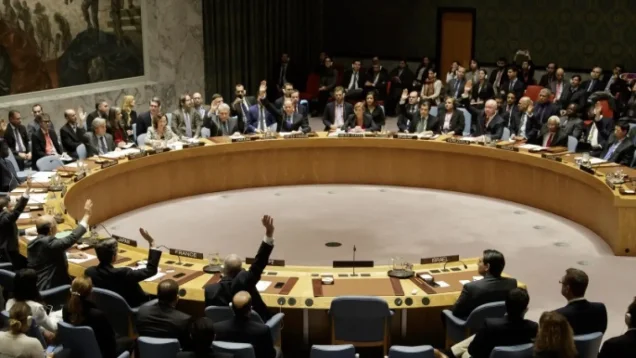
On October 22, 1973, while the October War was still raging on the Egyptian and Syrian fronts, the United Nations Security Council adopted Resolution 338.
The resolution was introduced jointly by the United States and the Soviet Union after intense negotiations between the two superpowers as fighting between Egypt and Syria on one side and Israel on the other entered a dangerous final phase.
Resolution 338 called for an immediate ceasefire, demanded implementation of Security Council Resolution 242 of 1967 in all of its parts, and required negotiations to begin between the parties concerned with the aim of establishing a just and durable peace in the Middle East.
In only three short paragraphs, Resolution 338 transformed Resolution 242 from a largely unimplemented diplomatic framework into the central reference point for the negotiations that followed the October confrontation.
The October 1973 Context
Resolution 338 was adopted during the final and most dangerous stage of the October 1973 confrontation.
On October 6, Egypt and Syria had launched coordinated attacks against the Israeli occupation forces in the Sinai Peninsula and the occupied Syrian Golan Heights.
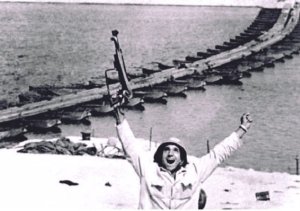
Egyptian forces successfully crossed the Suez Canal, breached the Israeli Bar Lev defensive system, and established bridgeheads on the eastern bank.
Syrian forces simultaneously advanced into areas of the occupied Golan Heights.
During the following two weeks, however, the military balance changed.
The Israeli occupation forces counterattacked on both fronts.
In Sinai, they crossed the Suez Canal near Deversoir during the night of October 15–16, established a bridgehead west of the canal, and eventually threatened the rear of Egypt's Third Army.
On the Syrian front, Israeli occupation forces had pushed Syrian troops back and advanced beyond the 1967 ceasefire line into additional Syrian territory.
A Superpower Crisis
The confrontation had also become deeply entangled in Cold War rivalry.
The Soviet Union was resupplying Egypt and Syria, while the United States had established a major military airlift supplying Israel.
Washington and Moscow increasingly feared that continued fighting could draw them into a more direct confrontation.
These circumstances pushed the two powers toward a joint ceasefire initiative at the Security Council.
The United States and Soviet Union Draft Resolution 338
Resolution 338 was not imposed by one superpower against the other.
It was introduced as a joint United States–Soviet draft.
U.S. Secretary of State Henry Kissinger and Soviet leader Leonid Brezhnev had negotiated the basic formula during urgent diplomatic contacts in Moscow.
Their agreement linked three elements:
- An immediate ceasefire.
- Implementation of Resolution 242 in all its parts.
- The beginning of negotiations for a just and durable settlement.
This formula was then presented to the Security Council.
The Text of Resolution 338
Resolution 338 consisted of only three operative paragraphs.
In substance, the Security Council:
- Called upon all parties to stop all firing and terminate all military activity within 12 hours of the resolution's adoption, while remaining in the positions they then occupied.
- Called upon the parties concerned to begin implementing Security Council Resolution 242 in all of its parts immediately after the ceasefire.
- Decided that, simultaneously with the ceasefire, negotiations should begin between the parties concerned under appropriate auspices with the objective of establishing a just and durable peace in the Middle East.
The Vote
Resolution 338 was adopted at the Security Council's 1747th meeting on October 22, 1973.
The vote was:
- 14 votes in favor.
- No votes against.
- China did not participate in the voting.
The Soviet Union voted in favor because it had jointly sponsored the resolution with the United States.
The Ceasefire Was Not Immediate in Practice
Although Resolution 338 demanded the termination of military activity within twelve hours, the fighting did not stop immediately.
Both Egypt and Israel accused the other side of violating the ceasefire.
Israeli occupation forces continued expanding their positions west of the Suez Canal and tightened the encirclement of Egypt's Third Army.
The military situation consequently remained extremely dangerous.
Resolution 339
On October 23, only one day after Resolution 338, the Security Council adopted Resolution 339.
It reaffirmed the demand for an immediate ceasefire and called upon the forces of the parties to return to the positions they occupied at the moment the original ceasefire was supposed to take effect.
Resolution 339 therefore sought to prevent either side from using continuing fighting to improve its military position after the ceasefire deadline.
Resolution 340 and the International Emergency Force
Fighting and ceasefire violations nevertheless continued.
On October 25, the Security Council adopted Resolution 340.
The resolution demanded the immediate and complete observance of the ceasefire and created the second United Nations Emergency Force, UNEF II, to supervise the ceasefire on the Egyptian front.
The deployment of the international force helped bring the major military confrontation to an end.
Resolution 338 Revived Resolution 242
The most important long-term feature of Resolution 338 was its explicit incorporation of Resolution 242.
Resolution 242 had been adopted on November 22, 1967, after Israel occupied the West Bank, including East Jerusalem, the Gaza Strip, the Sinai Peninsula, and the Golan Heights.
It emphasized the inadmissibility of acquiring territory through war and linked Israeli withdrawal from territories occupied in 1967 with the establishment of peaceful and secure relations in the region.
But during the six years between 1967 and 1973, Resolution 242 had not produced a comprehensive settlement or ended the occupation.
Resolution 338 gave it renewed diplomatic force by calling for its implementation “in all of its parts.”
Did Resolution 338 Establish “Land for Peace”?
Resolution 338 does not itself contain the expression “land for peace.”
Nor does Resolution 242 use that phrase.
Instead, the concept emerged as a diplomatic summary of the relationship between the principles established in Resolution 242 and renewed through Resolution 338.
Israel would withdraw from territory occupied in 1967 while the Arab parties would move toward ending belligerency and establishing peaceful relations.
The two resolutions consequently became closely associated with the principle later known internationally as land for peace.
The Palestinian Limitation of the 242–338 Framework
For Palestinians, however, Resolution 338 reproduced one of the central limitations of Resolution 242.
It did not explicitly recognize the Palestinian people as an independent political party possessing national rights.
Resolution 242 had referred only to the need for a “just settlement of the refugee problem.”
Resolution 338 called for implementation of 242 without adding recognition of Palestinian self-determination or an independent Palestinian state.
At the time, the Palestine Liberation Organization therefore did not accept the 242–338 diplomatic framework as an adequate solution to the Palestine question.
The Road to the Geneva Peace Conference
Resolution 338 also created the immediate diplomatic basis for a new negotiating process.
Its third paragraph called for negotiations between the parties concerned under “appropriate auspices.”
It did not specify that negotiations had to be bilateral, direct, or exclusively supervised by the United Nations.
The practical interpretation of that provision emerged over the following weeks.
The United States and Soviet Union worked toward convening an international peace conference in Geneva.
The Geneva Peace Conference of December 1973
On December 21, 1973, the Middle East Peace Conference opened in Geneva.
Egypt, Jordan, Israel, the United States, and the Soviet Union participated, while the United Nations Secretary-General was also involved.
Syria did not participate in the opening session.
The PLO was not formally represented.
The conference was convened pursuant to the diplomatic process created by Resolution 338 and under United Nations auspices, with the United States and Soviet Union playing central roles.
Although Geneva itself produced limited substantive progress, it opened the way for subsequent military disengagement negotiations.
The Egyptian–Israeli Disengagement Agreement
On January 18, 1974, Egypt and Israel signed their first disengagement agreement.
Israeli occupation forces withdrew from the territory they had occupied west of the Suez Canal during the final phase of the October confrontation and pulled back farther east in Sinai.
Egyptian forces remained established on the eastern bank.
UNEF II deployed between the two sides.
This was one of the first tangible territorial consequences of the diplomatic process generated by the October confrontation and Resolution 338.
The Syrian–Israeli Disengagement Agreement
A separate agreement between Syria and Israel followed on May 31, 1974.
Israeli occupation forces withdrew from the area around Quneitra and from additional Syrian territory seized during the October confrontation.
A separation zone supervised by the United Nations Disengagement Observer Force was established.
Most of the Syrian Golan Heights occupied in 1967 nevertheless remained under Israeli occupation.
From Resolution 338 to Camp David
The diplomatic process initiated after October continued through the 1970s.
Egypt and Israel signed a second Sinai interim agreement in 1975.
President Anwar al-Sadat's visit to Jerusalem in November 1977 opened a new phase of direct Egyptian-Israeli diplomacy.
The Camp David Accords of September 1978 were negotiated within a diplomatic environment in which Resolutions 242 and 338 had become the accepted framework for Arab-Israeli negotiations.
The accords led to the Egyptian–Israeli Peace Treaty of March 1979 and the eventual withdrawal of Israeli occupation forces and settlements from Sinai.
The Palestinian Question at Camp David
Camp David also addressed the West Bank and Gaza Strip through a proposed framework for Palestinian self-government.
Yet the agreement did not establish an independent Palestinian state or immediately end the Israeli occupation of the Palestinian territories.
The PLO rejected the Camp David framework.
The Palestinian national movement continued to demand recognition as an independent political party rather than being treated primarily through arrangements negotiated between Arab states and Israel.
The PLO's Changing Position
The Palestinian position toward Resolutions 242 and 338 changed significantly during the 1980s.
The First Intifada, the internationalization of Palestinian diplomacy, and the PLO's increasing movement toward accepting a Palestinian state in the territories occupied in 1967 created the conditions for a major policy shift.
In November 1988, the Nineteenth Palestine National Council adopted a political program accepting Resolutions 242 and 338 as a basis for an international peace conference, while also insisting upon Palestinian national rights and self-determination.
This represented a fundamental transformation from the PLO's earlier rejection of the two-resolution framework.
The 1988 Palestinian Diplomatic Initiative
The Palestinian initiative was clarified further in December 1988.
Yasser Arafat addressed the United Nations General Assembly in Geneva and subsequently stated explicitly that the PLO accepted Security Council Resolutions 242 and 338.
On December 14, 1988, U.S. President Ronald Reagan announced that the United States would open a substantive dialogue with the PLO.
Reagan explicitly stated that the organization's acceptance of Resolutions 242 and 338 was one of the conditions Washington had required for that dialogue.
Resolution 338 had thus evolved from a ceasefire measure adopted during the final days of the October confrontation into one of the principal diplomatic references of the Palestinian-Israeli political process.
Resolution 338 and the Madrid Conference
The framework returned to the center of diplomacy at the Madrid Peace Conference of 1991.
Madrid was sponsored by the United States and the Soviet Union and sought to launch direct negotiations between Israel and its Arab neighbors, including Palestinian representatives.
Resolutions 242 and 338 formed the diplomatic basis of the negotiations.
Palestinians participated within a joint Jordanian-Palestinian delegation rather than through formal PLO representation, although the delegation coordinated closely with the PLO leadership.
Madrid subsequently led to bilateral negotiating tracks that helped prepare the broader political environment in which the Oslo process emerged.
Resolution 338 and Oslo
In 1993, Israel and the PLO exchanged letters of mutual recognition.
In his letter to Israeli Prime Minister Yitzhak Rabin, Yasser Arafat again confirmed that the PLO accepted Security Council Resolutions 242 and 338.
The Oslo Declaration of Principles subsequently incorporated the two resolutions into the framework for negotiations toward a permanent settlement.
Resolution 338 therefore remained embedded in the diplomatic architecture of Palestinian-Israeli negotiations decades after the battlefield circumstances that had produced it.
The Political Importance of Resolution 338
Resolution 338's importance lies partly in what it added to Resolution 242.
Resolution 242 had established principles.
Resolution 338 demanded their implementation and linked them to an active negotiating process.
It therefore helped transform the question of the territories occupied in 1967 from a largely frozen postwar dispute into an ongoing diplomatic process.
The October confrontation had shown that the territorial status quo created in 1967 could not be assumed to remain permanently stable.
Resolution 338 translated that military change into a diplomatic framework.
Its Limitations for Palestinians
From a Palestinian historical perspective, however, the resolution remained incomplete.
Like Resolution 242, it did not explicitly recognize the Palestinian people's right to self-determination.
It did not call for an independent Palestinian state.
It did not identify the PLO as the representative of the Palestinian people.
Nor did it specify how the Israeli occupation of the West Bank, East Jerusalem, and Gaza Strip was to be ended.
These shortcomings explain why Palestinian acceptance came only much later and only within a broader political program asserting national rights that the original resolutions themselves had not explicitly recognized.
From an Arab-Israeli Framework to a Palestinian Diplomatic Reference
Resolution 338 was originally drafted primarily to stop the October fighting between states.
Egypt, Syria, and Israel were the immediate military parties.
The Palestinian people were not directly represented in the Security Council framework that produced the resolution.
Over time, however, 338 became inseparable from the political struggle over the Palestinian territories occupied in 1967.
Together with Resolution 242, it became a standard reference in proposals for Israeli withdrawal, negotiations, Palestinian self-government, and eventually Palestinian statehood.
The Historical Legacy of Resolution 338
Resolution 338 began as an emergency measure intended to stop a major regional military confrontation.
Its text was remarkably brief.
Yet its consequences extended across decades.
It helped bring the October confrontation toward a ceasefire.
It restored Resolution 242 to the center of international diplomacy.
It initiated the process that led to the Geneva Peace Conference.
It became part of the foundation for subsequent disengagement agreements, Camp David, Madrid, and later Palestinian-Israeli negotiations.
For Palestinians, its history also illustrates the evolution of the national movement's diplomatic strategy.
The PLO initially rejected a framework that failed to recognize Palestinian national rights.
By 1988, it had accepted Resolutions 242 and 338 as part of a strategy seeking Israeli withdrawal from the territories occupied in 1967 and recognition of Palestinian self-determination.
Resolution 338 therefore became more than a ceasefire resolution.
It became one of the principal diplomatic bridges connecting the October 1973 confrontation with the decades-long struggle over occupation, withdrawal, negotiations, and the unresolved political future of Palestine.
More from the archive


 Download Our Palestine App
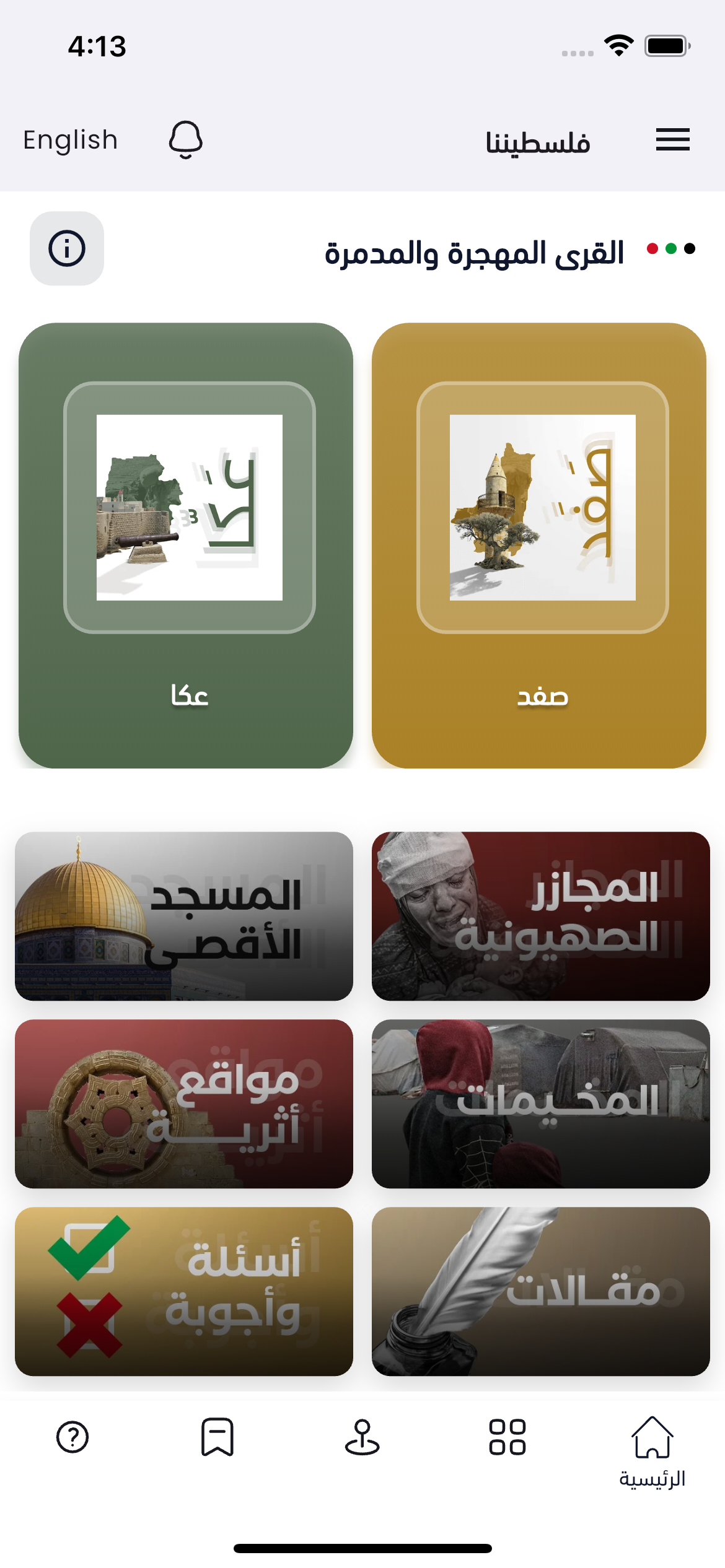
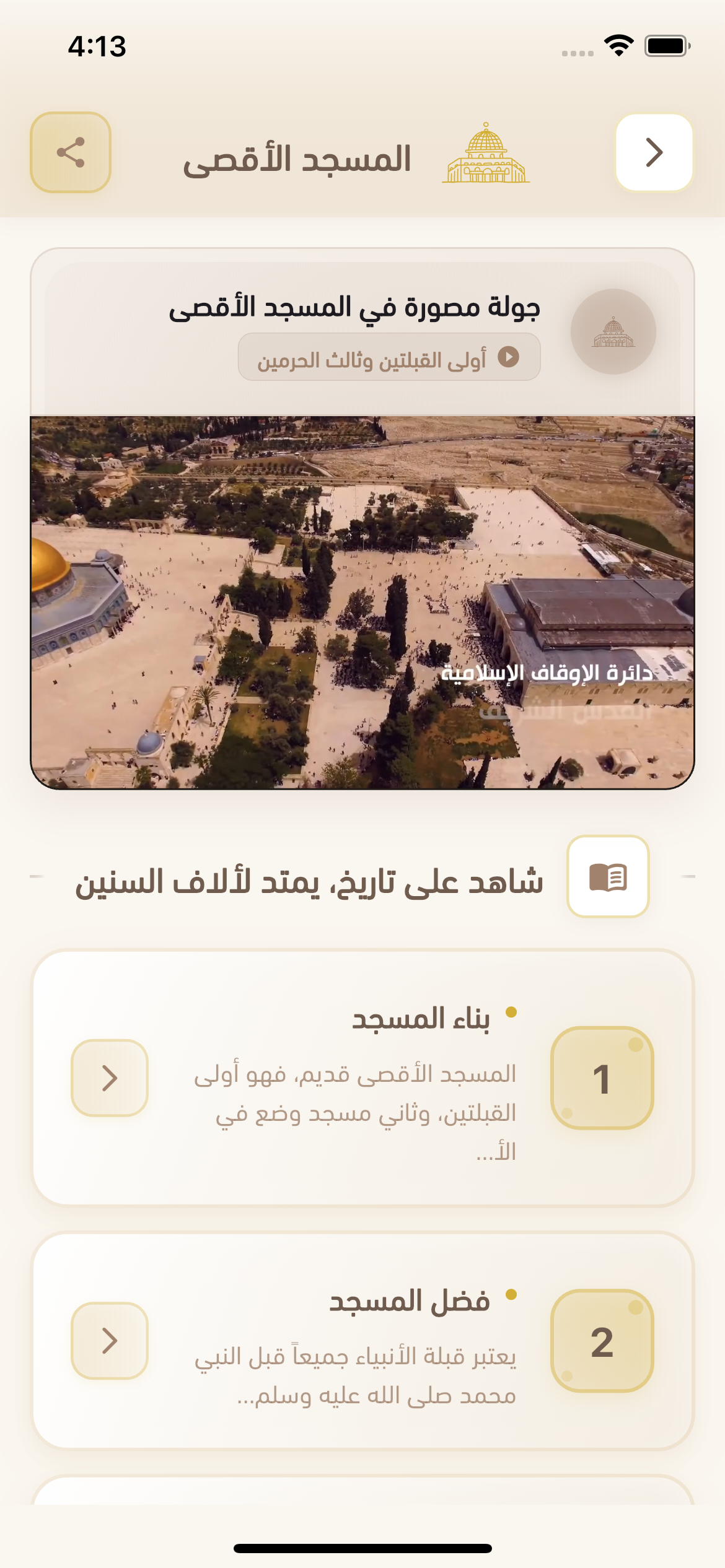
The whole archive in the palm of your hand: depopulated villages, the Nakba, the massacres and Al-Aqsa — free, with no ads to erase the story.
Download Our Palestine App
The whole archive in the palm of your hand: depopulated villages, the Nakba, the massacres and Al-Aqsa — free, with no ads to erase the story.
Comments
No comments yet — be the first to write one.
Add your comment
Name and email are optional. Comments appear after review.