
Arab League Recognizes the PLO as the Sole Legitimate Representative of the Palestinian People
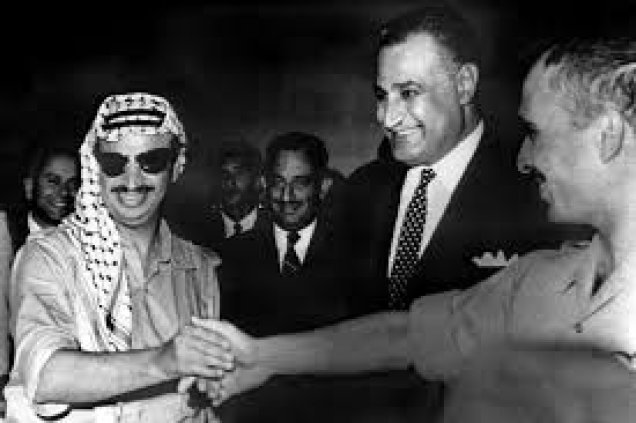
In October 1974, the Arab states took one of the most consequential political decisions in the modern history of the Palestinian national movement when they formally recognized the Palestine Liberation Organization (PLO) as the sole legitimate representative of the Palestinian people.
The decision was adopted at the Seventh Arab Summit Conference, held in Rabat, Morocco, from October 26 to 29, 1974. It consolidated the PLO's position as the principal Palestinian national representative at the Arab level and strengthened its growing international diplomatic standing.
From a Palestinian historical perspective, the Rabat decision marked an important assertion that Palestinians would be represented politically by a Palestinian national institution rather than by neighboring Arab governments speaking on their behalf.
The Establishment of the Palestine Liberation Organization
The origins of the PLO can be traced to the first Arab summit held in Cairo in January 1964, where Arab leaders supported the creation of an organized Palestinian political entity.
The organization itself was formally established later that year at the First Palestinian National Council, which met in Jerusalem at the end of May and beginning of June 1964.
Ahmad al-Shuqayri became the organization's first chairman, and the new institution adopted the Palestinian National Charter and established bodies intended to provide Palestinians with an organized national political framework.
In its early years, however, the PLO remained heavily influenced by Arab governments and had not yet achieved the degree of independent Palestinian decision-making that it would acquire later in the decade.
From 1967 to the Rise of the Palestinian Resistance
The Arab defeat in the June 1967 war transformed Palestinian politics.
Israel occupied the West Bank, including East Jerusalem, as well as the Gaza Strip, Sinai Peninsula, and Syrian Golan Heights. For many Palestinians, the defeat reinforced the belief that the Palestinian national movement could no longer depend primarily on Arab governments to recover Palestinian rights.
Armed Palestinian organizations, particularly Fatah, consequently gained growing political and popular influence.
An important moment came with the Battle of Karameh on March 21, 1968, when Palestinian fighters and the Jordanian army confronted a major Israeli military operation in the Jordanian town of Karameh.
Although the military outcome was contested and both sides presented different narratives of the battle, Karameh had a major political and symbolic impact. It greatly increased the prestige of Fatah and encouraged thousands of Palestinians and Arabs to support or join the Palestinian resistance movement.
Later in 1968, Fatah and other resistance organizations gained greater influence within the PLO. In February 1969, Yasser Arafat, the leader of Fatah, became chairman of the PLO Executive Committee.
The organization increasingly developed from an institution originally shaped by the Arab state system into a more autonomous Palestinian national movement.
The Road to the Rabat Summit
During the early 1970s, the PLO expanded its diplomatic relationships and gained recognition among states and international organizations, particularly within the Arab world, Africa, Asia, the Non-Aligned Movement, and other anti-colonial political forums.
At the same time, an important political dispute remained unresolved: who had the authority to represent the Palestinian people?
This question was particularly sensitive in relation to Jordan.
Jordan had administered the West Bank and East Jerusalem between 1948 and 1967, and the Hashemite monarchy had historically claimed a political role in representing Palestinians living there.
The growing strength of the PLO challenged that position and insisted that Palestinians possessed an independent national identity and the right to represent themselves through their own institutions.
By 1974, this question had become central to Arab diplomacy, particularly as discussions intensified over possible negotiations following the October 1973 Arab-Israeli war.
The Rabat Summit of 1974
Arab kings, presidents, and heads of government gathered in Rabat, Morocco, from October 26 to 29, 1974.
Both King Hussein of Jordan and Yasser Arafat presented their positions regarding Palestinian representation and the political future of Palestinian territories occupied by Israel in 1967.
On October 28, 1974, the summit adopted a five-point resolution on Palestine that fundamentally reshaped the Arab political position toward Palestinian representation.
The resolution affirmed:
- The right of the Palestinian people to self-determination and to return to their homeland.
- The right of the Palestinian people to establish an independent national authority on any Palestinian territory that was liberated.
- That this authority would be established under the leadership of the Palestine Liberation Organization.
- Recognition of the PLO as the “sole legitimate representative of the Palestinian people.”
- Arab support for the PLO in exercising its national and international responsibilities.
- A commitment by Arab states to preserve Palestinian national unity and refrain from interfering in internal Palestinian affairs.
A Turning Point in Palestinian Political Representation
The significance of the Rabat decision extended far beyond diplomatic terminology.
It established an Arab consensus that the Palestinian people possessed an independent national identity and should be represented by their own national organization.
This substantially reduced Jordan's ability to claim exclusive political representation of Palestinians in the West Bank and strengthened the PLO's position in any future Arab or international discussion concerning Palestine.
For the Palestinian national movement, the decision was an important political victory. Palestinians were increasingly recognized not merely as refugees created by the Nakba of 1948, but as a people claiming national rights, self-determination, return, and political representation.
The United Nations and the PLO in 1974
The PLO's international diplomatic breakthrough in 1974 was not the result of a single decision, but of a rapid sequence of developments.
On October 14, 1974—shortly before the Rabat Summit—the United Nations General Assembly adopted Resolution 3210, recognizing that the Palestinian people were a principal party to the question of Palestine and inviting the PLO, described as the representative of the Palestinian people, to participate in the General Assembly's deliberations on Palestine.
The Rabat decision later that month strengthened the PLO's political position by establishing unanimous Arab recognition of the organization as the sole legitimate representative of the Palestinian people.
On November 13, 1974, Yasser Arafat addressed the United Nations General Assembly in New York in one of the most significant diplomatic moments in modern Palestinian history.
His appearance brought the Palestinian question back before the international community not simply as a refugee or humanitarian issue, but as a question involving a people demanding national and political rights.
Recognition of Palestinian National Rights
On November 22, 1974, the General Assembly adopted Resolution 3236.
The resolution reaffirmed the inalienable rights of the Palestinian people, including:
- The right to self-determination without external interference.
- The right to national independence and sovereignty.
- The right of Palestinians displaced from their homes and property to return.
The resolution also requested that the United Nations Secretary-General establish contacts with the PLO on matters concerning the question of Palestine.
The PLO Gains Observer Status at the United Nations
On the same day, the General Assembly adopted Resolution 3237, granting the Palestine Liberation Organization observer status at the United Nations.
The PLO was invited to participate as an observer in sessions and work of the General Assembly and in international conferences convened under United Nations auspices.
This represented an extraordinary diplomatic advance for a national liberation organization that did not govern a sovereign UN member state.
The organization subsequently established a permanent observer mission at the United Nations, expanding its diplomatic presence and its ability to represent the Palestinian cause internationally.
What the United Nations Recognition Meant
An important distinction should be made between the language used by the Arab Summit and that used by the United Nations.
The Rabat Summit explicitly recognized the PLO as the “sole legitimate representative of the Palestinian people.”
United Nations resolutions in 1974 referred to the PLO as the representative of the Palestinian people and granted it observer status, but did not reproduce the exact Rabat formulation of “sole legitimate representative” in Resolution 3237.
Nevertheless, taken together, the UN decisions of 1974 substantially strengthened the international position of both the Palestinian people and the PLO.
Political Consequences of the Rabat Decision
Recognition at Rabat fundamentally changed the PLO's position within Arab diplomacy.
It strengthened the organization's claim to speak for Palestinians in regional and international political forums and made it increasingly difficult to discuss a political settlement concerning Palestine while excluding Palestinian representatives.
The decision also reinforced the idea that Palestinians constituted a distinct national people whose political future could not simply be determined through agreements between Israel and neighboring Arab states.
For Palestinians living under Israeli occupation, in refugee camps, in neighboring Arab countries, and throughout the diaspora, the PLO increasingly functioned as a common national political framework despite the wide ideological differences among the organizations and communities contained within it.
From Refugee Question to National Question
One of the most important consequences of the political developments of 1974 was a change in the international language surrounding Palestine.
For many years after the Nakba of 1948, international diplomacy had often approached Palestinians primarily through the question of refugees and humanitarian relief.
The rise of the PLO and its diplomatic recognition helped restore the political and national dimension of the Palestinian question to international debate.
Palestinians were increasingly represented internationally as a people possessing rights to self-determination, national independence, sovereignty, and return.
From a Palestinian historical perspective, this transformation was central: the Palestinian people had survived dispossession, dispersion, military occupation, and repeated attempts to reduce their cause to a humanitarian refugee problem, yet had rebuilt a political framework capable of asserting their national existence internationally.
The Historical Significance of the Rabat Summit
The 1974 Rabat Summit marked one of the defining milestones in the institutional history of the Palestinian national movement.
It did not create the PLO's legitimacy by itself, nor did it mean that every Palestinian political organization or individual agreed with all of the PLO's policies. Its significance was that the Arab states collectively recognized the organization as the sole legitimate Palestinian representative at the regional diplomatic level.
The decision strengthened the principle of independent Palestinian political representation and affirmed that decisions concerning the future of Palestine required Palestinian participation.
Combined with the PLO's entry into the United Nations system later that year, the Rabat decision helped transform the organization from a primarily regional liberation movement into an internationally recognized diplomatic actor.
For Palestinians, 1974 therefore represented an important stage in recovering a political voice that had been severely disrupted by the Nakba: the Palestinian question was increasingly presented before the world not simply as the fate of displaced individuals, but as the struggle of a people seeking national rights, return, self-determination, and sovereignty.
More from the archive



 Download Our Palestine App
The whole archive in the palm of your hand: depopulated villages, the Nakba, the massacres and Al-Aqsa — free, with no ads to erase the story.
Download Our Palestine App
The whole archive in the palm of your hand: depopulated villages, the Nakba, the massacres and Al-Aqsa — free, with no ads to erase the story.


Comments
No comments yet — be the first to write one.
Add your comment
Name and email are optional. Comments appear after review.