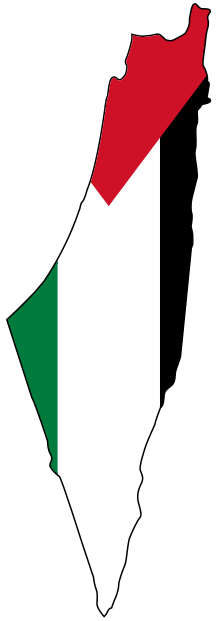
The Martyrdom of President of the State of Palestine Yasser Arafat: From Revolution to Siege and Martyrdom
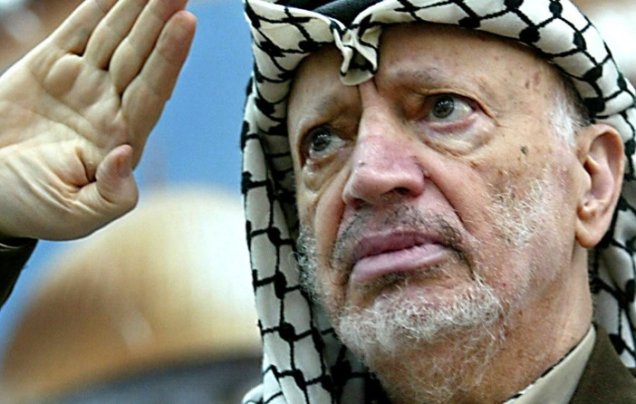
Yasser Arafat – Abu Ammar was one of the most influential figures in modern Palestinian history. For more than four decades, his name was closely associated with the rise of the Palestinian national movement, the founding of Fatah, the leadership of the Palestine Liberation Organization, armed struggle, and later the transition toward diplomatic action and the declaration of the State of Palestine, followed by the Oslo Accords, the establishment of the Palestinian Authority, the Al-Aqsa Intifada, and his siege at the Muqata'a compound in Ramallah.
Mohammed Abdel Rahman Abdel Raouf al-Qudwa al-Husseini, known as Yasser Arafat, was born on August 24, 1929, in Cairo to a Palestinian family. His father was from Gaza, while his mother came from a Jerusalemite family.
Arafat spent part of his childhood in Jerusalem after the death of his mother before returning to Cairo, and the city remained deeply present in his personal and political memory from his earliest years.
From Jerusalem and Cairo to the Palestine Question
Arafat grew up during a period in which Palestine was witnessing an escalating confrontation with the British Mandate and the Zionist project, followed by the Palestinian Nakba of 1948.
After completing secondary school, he enrolled in the Faculty of Engineering at King Fuad I University, later renamed Cairo University, and during the 1948 War participated for a period in the ranks of the Army of the Holy Jihad in the Gaza area.
During his university years, he became increasingly involved in Palestinian student activism. In 1951, he participated in establishing the General Union of Palestinian Students and was elected its president the following year.
Arafat graduated as a civil engineer in 1956.
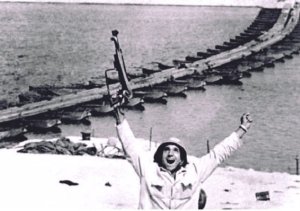
When the Tripartite Aggression against Egypt began in October of that year, he joined the Egyptian army as a reserve officer in the engineering corps and served in the Port Said area.
The Founding of Fatah
After moving to Kuwait in the late 1950s, Arafat met a group of Palestinian activists who were seeking to establish an independent national framework that would restore Palestinian initiative in their own cause rather than relying entirely on Arab governments.
Among his most prominent comrades was Khalil al-Wazir “Abu Jihad”, alongside Salah Khalaf “Abu Iyad” and other activists who would later become leading figures in the Palestinian revolution.
The movement’s early nucleus took shape between 1957 and 1959, and on October 10, 1959, Arafat participated in a meeting in Kuwait that became one of the principal founding milestones of the Palestinian National Liberation Movement – Fatah.
The movement adopted the principle that the liberation of Palestine should be an independent Palestinian project led by a Palestinian national movement, with armed struggle serving as one of its principal tools.
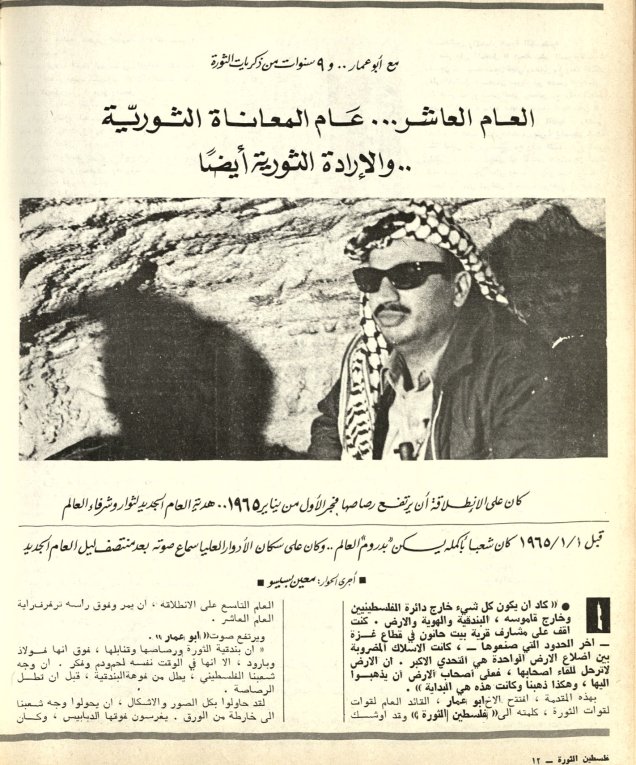
At the end of 1964 and the beginning of 1965, Fatah announced the launch of its military operations, and January 1, 1965, became known in Fatah and Palestinian memory as the beginning of the contemporary Palestinian revolution.
The Battle of Karama and Arafat’s Rise
Following Israel’s occupation of the rest of Palestine in June 1967, including East Jerusalem, the West Bank, and the Gaza Strip, Arafat attempted to enter the occupied territory and organize resistance cells.
The major turning point in his political and popular standing, however, came after the Battle of Karama on March 21, 1968, when Palestinian fighters and the Jordanian army confronted a large-scale Israeli attack on the town of Karama in the Jordan Valley.
The battle gave tremendous momentum to the Palestinian resistance and significantly increased the popularity of Fatah and Arafat throughout the Arab world and among Palestinians.
In February 1969, the Palestinian National Council elected him Chairman of the Executive Committee of the Palestine Liberation Organization, making him the central figure in the Palestinian national leadership from that point until his martyrdom in 2004.
From Jordan to Lebanon
Arafat led the Palestine Liberation Organization through an extremely turbulent period that began with the resistance bases in Jordan and ended with the departure of Palestinian factions from the kingdom following the events of September 1970 and their aftermath.
The Palestinian leadership subsequently moved to Lebanon, which became the main political and military center of the Palestine Liberation Organization.
During the 1970s, the organization gradually evolved from a movement that relied primarily on armed struggle into a political and diplomatic entity with broad international presence, while the Palestine question gained greater independence from official Arab tutelage.
The PLO as the Representative of the Palestinian People
The year 1974 marked one of the most important transformations in the international standing of the Palestine Liberation Organization.
At the Arab Summit in Rabat in October, the PLO was recognized as the sole legitimate representative of the Palestinian people.
On November 13, 1974, Yasser Arafat addressed the United Nations General Assembly in New York and delivered one of his most famous speeches, declaring:
“I have come bearing an olive branch in one hand and a freedom fighter’s gun in the other. Do not let the olive branch fall from my hand.”
Days later, the General Assembly adopted Resolution 3236, affirming the inalienable rights of the Palestinian people, foremost among them the rights to self-determination, national independence, and sovereignty. Resolution 3237 also granted the Palestine Liberation Organization observer status at the United Nations.
The Palestine question, under the leadership of the PLO, had thus gained an independent and formal presence within the international system.
The Siege of Beirut and Departure to Tunis
In the summer of 1982, Israeli occupation forces invaded Lebanon with the objective of striking the military and political infrastructure of the Palestine Liberation Organization.
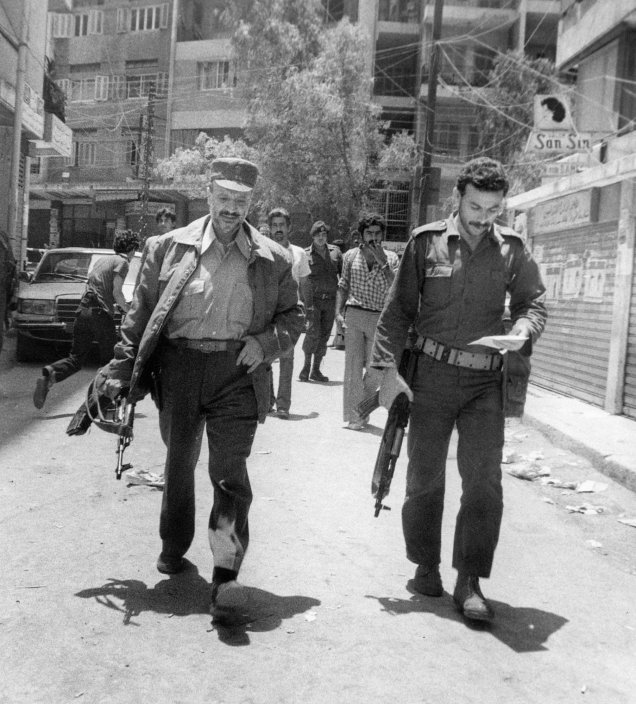
Beirut was besieged for weeks and subjected to intensive bombardment, while Arafat and the PLO leadership remained in the city throughout the siege.
At the end of August 1982, following an international agreement to evacuate Palestinian fighters, Arafat left Beirut and the PLO leadership relocated to Tunis.
The organization’s departure from Lebanon did not end its political role. A few years later, the Palestine question returned to the center of regional and international attention with the outbreak of the First Palestinian Intifada in December 1987.
The Declaration of the State of Palestine
The First Intifada marked a major turning point in the Palestinian political trajectory.
On November 15, 1988, during its session in Algiers, the Palestinian National Council adopted the Palestinian Declaration of Independence.
In the name of the Palestinian Arab people, the Council proclaimed the establishment of the State of Palestine on Palestinian land, with Jerusalem as its capital.
The declaration was not merely symbolic. It was accompanied by a broader transformation in the PLO’s political program toward accepting a political settlement based on international legitimacy and the establishment of a Palestinian state in the territories occupied in 1967.
During meetings of the PLO Central Council in Tunis between March 31 and April 2, 1989, Yasser Arafat was elected President of the State of Palestine.
From Madrid to Oslo
Following the Gulf War of 1991 and the regional and international transformations that accompanied it, the Madrid peace process began. The Palestine Liberation Organization, however, remained formally excluded from the participating Palestinian delegation because of Israel’s refusal to negotiate with it directly.
The Palestinian delegation nevertheless coordinated its positions with the PLO leadership in Tunis, headed by Arafat.
As the Washington negotiations stalled, a secret negotiating channel between the PLO and Israel began in Norway in early 1993, later becoming known as the Oslo Channel.
The Oslo Accord and the Return to Palestine
On September 9, 1993, Yasser Arafat and Israeli Prime Minister Yitzhak Rabin exchanged letters of mutual recognition between the Palestine Liberation Organization and Israel.
Four days later, on September 13, 1993, the Declaration of Principles on Interim Self-Government Arrangements, known as the Oslo I Accord, was signed at the White House in Washington.
The official signatories were Mahmoud Abbas on behalf of the Palestine Liberation Organization and Shimon Peres on behalf of Israel.
The agreement opened the way for the establishment of the Palestinian National Authority and the return of the PLO leadership to parts of the Occupied Palestinian Territory. However, it postponed the fundamental issues—including Jerusalem, refugees, settlements, borders, and sovereignty—to permanent-status negotiations.
Arafat Returns to Palestine
On July 1, 1994, Yasser Arafat returned to the Gaza Strip after decades spent outside Palestine.
His return was a historic moment for hundreds of thousands of Palestinians who received him as the leader of the national movement, President of the State of Palestine, and Chairman of the Palestine Liberation Organization.
That same year, Arafat was awarded the Nobel Peace Prize alongside Yitzhak Rabin and Shimon Peres in connection with the Oslo Accords.
On January 20, 1996, Arafat was elected President of the Palestinian National Authority in the first Palestinian general elections for the presidency and Legislative Council, receiving approximately 88 percent of the vote against his opponent Samiha Khalil.
Oslo Between Hope and Disappointment
The Oslo process did not proceed in the manner many Palestinians had expected.
The transitional period that was supposed to culminate in a permanent agreement within five years expired in May 1999 without the establishment of an independent Palestinian state, while settlement expansion continued and the occupation retained control over East Jerusalem, large areas of the West Bank, crossings, and borders.
Disputes accumulated over implementation of the agreements, redeployment, settlements, prisoners, Jerusalem, and refugees.
Camp David in 2000
In July 2000, Arafat joined Israeli Prime Minister Ehud Barak at the Camp David summit convened by U.S. President Bill Clinton.
The summit failed to produce a final agreement on the core issues, particularly Jerusalem, refugees, borders, settlements, and sovereignty.
Israeli and American narratives accused Arafat of rejecting what had been offered at the summit, while Palestinians rejected the characterization of the negotiations as a “generous final offer” that had simply been turned down. They argued that the proposals did not provide full Palestinian sovereignty or an acceptable solution to the questions of Jerusalem and the refugees.
Negotiations continued afterward, including the Clinton Parameters and the Taba talks in early 2001, but the two sides did not reach a final agreement.
The Al-Aqsa Intifada and the Collapse of the Political Phase
In September 2000, the Al-Aqsa Intifada erupted, and Palestinian-Israeli relations entered a period of widespread military confrontation.
Following Ariel Sharon’s election as Israeli Prime Minister in February 2001, military incursions, assassinations, closures, and sieges intensified.
Relations between the Palestinian leadership and the U.S. administration of George W. Bush also deteriorated, as Washington increased pressure on Arafat and called for changes in the structure of the Palestinian leadership.
The Siege of the Muqata’a
At the end of March 2002, with the launch of Operation “Defensive Shield,” Israeli occupation forces invaded Ramallah and surrounded the Palestinian president’s headquarters at the Muqata’a.
Israeli forces destroyed large parts of the complex, leaving Arafat confined to a limited section of the remaining buildings together with a number of aides and guards.
Even after the first siege ended, Israeli restrictions on Arafat’s movement continued, and he remained effectively besieged and confined to Ramallah for most of the period until his health deteriorated in 2004.
The image of Arafat inside the devastated Muqata’a became one of the defining symbols of the final years of the Second Intifada.
Was Israel Threatening to Remove Arafat?
During this period, Israeli rhetoric against Arafat escalated sharply, and the Sharon government described him as an obstacle to a political settlement.
Ideas concerning his expulsion or the elimination of his political role were also discussed publicly within Israel’s political and security establishment, increasing Palestinian fears for his life.
Arafat had previously faced assassination threats and direct danger on several occasions, most notably during the siege of Beirut in 1982 and the Israeli bombing of the PLO headquarters in Tunis on October 1, 1985.
The Sudden Deterioration of His Health
In early October 2004, while Arafat was still living inside the besieged Muqata’a compound, he began experiencing sudden symptoms that the doctors around him were unable to diagnose clearly.
His condition deteriorated over the following weeks, and Arab medical teams were called in to examine him.
As his condition became increasingly serious, he was transferred on October 29, 2004, to Percy Military Hospital in Clamart near Paris for treatment.
His condition continued to deteriorate, and he eventually fell into a coma from which he never regained consciousness.
The Martyrdom of Yasser Arafat
On November 11, 2004, Percy Military Hospital announced the death of Yasser Arafat at the age of 75.
At the time, doctors did not provide a definitive explanation for the illness that caused his death, and a full autopsy was not performed.
The uncertainty surrounding his illness and the rapid deterioration of his health, combined with the circumstances of his siege and the political threats that had preceded his death, led to a widespread belief within Palestinian society that Arafat had been assassinated.
The Poisoning Hypothesis
The question surrounding the cause of Arafat’s death remained open for years.
In 2012, Al Jazeera broadcast an investigation based on tests conducted by the Institute of Radiation Physics in Lausanne on personal belongings used by Arafat during his final days.
The analyses detected unusual levels of radioactive polonium-210 on some of the items, reviving the hypothesis that he had been poisoned.
These findings, however, did not by themselves constitute definitive proof of the cause of death, and further examinations of his remains were therefore authorized.
The Exhumation of Arafat’s Remains
On November 27, 2012, Yasser Arafat’s tomb in Ramallah was opened, and samples were taken from his remains and from the surrounding soil.
Scientific teams from Switzerland, France, and Russia participated in the analyses.
In 2013, the Swiss team announced that its findings moderately supported the hypothesis that Arafat’s death resulted from poisoning with polonium-210.
The researchers detected levels of radioactive substances that they considered more consistent with a poisoning scenario than with a scenario in which no exposure had occurred.
Conflicting Investigation Results
Not all investigative teams reached the same conclusion.
Russian experts concluded that they had found no evidence confirming radioactive poisoning, while French experts argued that the polonium levels detected could be explained by environmental factors. The French judicial investigation later ended without establishing that a poisoning crime had occurred.
For this reason, there remains no international scientific or judicial consensus conclusively establishing that Yasser Arafat died as a result of deliberate polonium poisoning.
The Swiss findings nevertheless kept the poisoning hypothesis strongly alive and provided it with a scientific basis that Palestinians regarded as important evidence in the investigation into the circumstances of his martyrdom.
The Funeral and His Final Return to Palestine
Following the announcement of his martyrdom, Arafat was given a military ceremony in France before his body was flown to Cairo, where an official funeral was attended by leaders and officials from numerous countries.
From Egypt, his body was transported to Ramallah, where tens of thousands of Palestinians gathered to receive their leader.
Arafat had been closely connected to Jerusalem throughout his life and had wished to be buried there, but Israel refused to allow his burial in the city.
He was therefore buried at the Muqata’a compound in Ramallah in what Palestinians regarded as a temporary burial, with Palestinian leaders emphasizing at the time the hope that his remains would eventually be transferred to Jerusalem after the establishment of the Palestinian state and the end of the occupation.
Arafat and Jerusalem
Jerusalem remained central to Arafat’s political journey from his childhood until his final years.
He spent part of his childhood there, and it later became one of the central pillars of the national project he led.
The 1988 Palestinian Declaration of Independence affirmed Jerusalem as the capital of the State of Palestine, while sovereignty over the city remained one of the major points of dispute in the Oslo, Camp David, and Taba negotiations.
Israel’s refusal to allow Arafat to be buried in Jerusalem therefore carried profound political symbolism for Palestinians: the President of the State of Palestine was buried in Ramallah, while the capital proclaimed by his people for their state remained under occupation.
From Leader of the Revolution to President of the State of Palestine
Yasser Arafat’s political career spanned stages that in many ways reflected the main transformations of the Palestinian national movement during the second half of the twentieth century.
He was one of the founders of Fatah, a leader of the armed resistance, Chairman of the Palestine Liberation Organization, the voice of the Palestine question before the United Nations, a leader during the siege of Beirut, President of the State of Palestine after the Declaration of Independence, a partner in the Oslo process, and the first elected President of the Palestinian Authority.
Arafat also embodied the transformation of the PLO from a project centered on the liberation of all of Palestine through armed struggle toward acceptance of a Palestinian state in the territories occupied in 1967 and the use of diplomacy and negotiations to achieve it.
The Legacy of Yasser Arafat’s Martyrdom
The martyrdom of Yasser Arafat in November 2004 did not close the file surrounding the final years of his life.
Questions concerning his sudden illness, his siege at the Muqata’a, the threats that preceded his death, and the later radiological findings remained part of Palestinian political memory.
The hypothesis that he was assassinated by poisoning has likewise remained one of the most controversial issues in modern Palestinian history. It is supported by the official Palestinian narrative and by Swiss scientific findings that described polonium poisoning as a moderately supported possibility, while other investigations did not confirm it conclusively.
Regardless of the dispute surrounding the final medical cause of his martyrdom, Arafat’s death marked the end of an entire era in the history of the Palestinian national movement.
The man whose name had been associated since the late 1950s with building an independent Palestinian national movement, who led the PLO from armed struggle to international recognition and the declaration of the State of Palestine, returned to his homeland and spent the final years of his life besieged inside the Muqata’a in Ramallah.
His image in the Palestinian keffiyeh, the symbol of the olive branch and the freedom fighter’s gun, the besieged Muqata’a, and the Jerusalem in which he was not allowed to be buried have remained enduring elements of Palestinian national memory associated with the name Yasser Arafat – Abu Ammar.
Photo gallery
More from the archive


 Download Our Palestine App
The whole archive in the palm of your hand: depopulated villages, the Nakba, the massacres and Al-Aqsa — free, with no ads to erase the story.
Download Our Palestine App
The whole archive in the palm of your hand: depopulated villages, the Nakba, the massacres and Al-Aqsa — free, with no ads to erase the story.


Comments
No comments yet — be the first to write one.
Add your comment
Name and email are optional. Comments appear after review.