
The Battle of Jenin 1948: When the Iraqi Army and Palestinian Fighters Liberated the Town
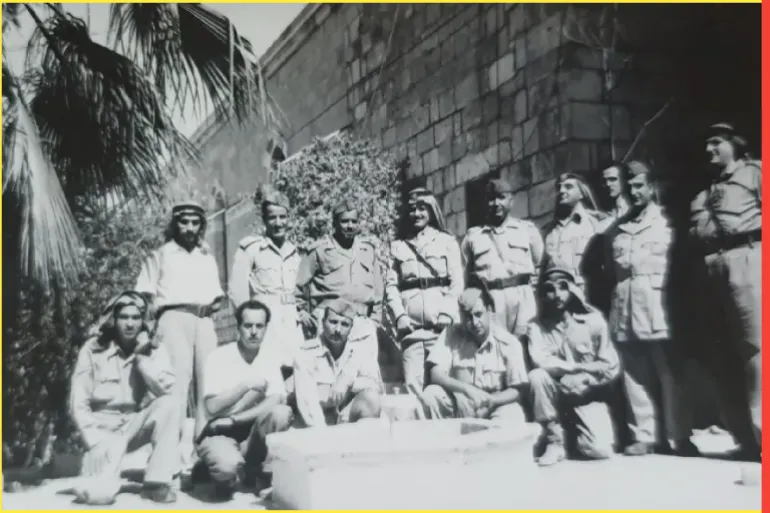
In early June 1948 the Zionist militias advanced from Afula on Jenin with thousands of fighters, occupying the villages to its north, encircling the town and entering most of its quarters, and besieging its small Iraqi garrison, together with civilians, in the town’s fortress. But the Iraqi army and Palestinian fighters from Jenin and its villages turned the battle round within a day and a night, breaking the siege and pursuing the attackers until they withdrew on the morning of Friday 4 June 1948, leaving some 350 dead on the field. [1][2]
The Battle of Jenin is the most famous battle fought by Iraqis in Palestine and a symbol of their courage alongside Palestinian volunteers; without it, Jenin and many of its villages might today be counted among the depopulated towns and villages. The cemetery of the Iraqi army’s martyrs in Jenin still bears witness to the blood that mingled with its soil. [3][4]
Contents
- At a glance
- The Iraqi army comes to Palestine
- Jenin before the battle
- The attack and the siege
- Omar Ali breaks the siege
- The liberation of the town
- The martyrs
- The second phase: retaking the villages
- The men of the battle
- Between the accounts
- Timeline
- Frequently asked questions about the Battle of Jenin 1948
At a glance
| Item | Details |
|---|---|
| Date | Night of 2–3 June to the morning of 4 June 1948, with a second phase in July 1948 |
| Place | Jenin town and fortress, Khirba bridge, the Burqin hills and the villages north of the town |
| Arab forces | An Iraqi garrison under Lt Col Nuh Abdullah al-Jalabi, the 2nd Battalion of the 5th Infantry Brigade under Lt Col Omar Ali, a second battalion from Nablus, and the fighters of Jenin and its villages |
| Palestinian commander | Fawzi Jarrar, with local leaders from Rummana, Umm al-Fahm, al-Yamun and Jenin |
| Enemy forces | 4,000–5,000 fighters in four groups advancing from Afula |
| Enemy losses | About 350 dead left on the field, by Omar Ali’s count, including the commander of the attack |
| Martyrs | 50–56 Iraqi martyrs, 20–37 Palestinian fighters and 46 civilians |
| Booty | Mortars, machine guns, rifles, mines and thousands of rounds |
| Outcome | Jenin liberated, the siege of its fortress lifted, and the town kept Arab |
The Iraqi army comes to Palestine
The Iraqi army’s operations began in earnest on 15 May 1948, when it crossed the Jordan River and attacked the fortified Gesher fort, built by the British during the Second World War as part of the “Eden” defence line; it reached the walls and blew the gate, before orders came to move on Nablus and al-Jiftlik. Iraqi forces then deployed in Nablus, Tulkarm and Qalqilya. [3][2]
The battalion that liberated Jenin – the 2nd Battalion of the 5th Infantry Brigade under Lt Col Omar Ali – set out late from northern Iraq, from Aqra to Kirkuk and Mosul, boarding the train on the evening of 26 May, crossing the western desert in four stages, reaching Mafraq at midday on 31 May and crossing the Jordan on 1 June to arrive at Nablus, a journey that left its soldiers exhausted. [3][5]
Jenin before the battle
From mid-May Arab leaders met in Jenin and its villages to organise its defence, and the townspeople bought arms from neighbouring Arab countries. From 16 May the Zionist militias began preparing to advance on the town; their aircraft bombed it daily, and they attacked the villages to its north and occupied several of them, including Zir’in, Sandala and al-Jalama. [1][2]
On 28 May an Iraqi garrison under Lt Col Nuh Abdullah al-Jalabi of Mosul reached Jenin and began organising its defences together with Palestinian volunteers, setting up its headquarters in the town’s fortress, the police post. [3][1]
The attack and the siege
The Zionist militias massed at Afula, some 12 kilometres north of Jenin, between four and five thousand fighters in four groups, three for the assault and one in reserve. On the night of 1–2 June a force was sent to seize Arrana, al-Muqaybila and al-Jalama, and they then advanced on three axes: a right wing through Wadi Burqin west of the town, a left wing from the direction of Arrabuna and al-Mazar, and a centre along the main road that halted at the Khirba bridge. [1][2][6]
The Iraqi guards at the bridge held out for over an hour, delaying the advance, and Palestinian fighters – among them Muhammad al-Mithqal at the town’s entrances – fought street by street and house by house, while villagers rushed in with reinforcements that held up the advance for about two hours. But by the night of 2–3 June the militias had taken most of the surrounding hills and entered most of the quarters, some of them disguised in Arab and military dress to deceive the inhabitants. [1][6]
The Iraqi garrison fell back into the fortress, where the elderly, women and children took refuge with it; with its ammunition nearly gone, Lt Col Nuh called for help from every Iraqi force in Palestine. When Omar Ali later suggested withdrawing, he refused, because there were civilians in the fortress who could not be abandoned. [3][2]
Omar Ali breaks the siege
At dawn on 3 June Omar Ali set out from the Deir Sharaf area with three rifle companies, mortars and Vickers machine guns, gathering fighters from Nablus, Jenin, Arraba, Burqin, Rummana, Silat al-Dhahr and Sanur. His column was bombed from the air on the way but did not stop, advancing through Arraba and Qabatiya and defeating a Zionist force near Qabatiya, three kilometres from Jenin. [5][4][2]
Rather than charging down the open road, Omar Ali took the heights overlooking Jenin, outflanked the enemy and struck it from behind, while Iraqis pushed along the main road and Palestinian fighters descended from the surrounding hills. Iraqi artillery shelled the militia positions, the eastern and western heights and the Burqin hills were retaken, and some of the fighting was with the bayonet. [3][1]
The same day a second Iraqi battalion arrived from Nablus to cover the flanks, and after nightfall about a hundred Palestinian volunteers from Wadi Burqin joined the fight. At around three in the morning of 4 June a night assault was launched after a mortar and machine-gun barrage, and by six the fortress gate was open and the siege of its garrison lifted. [3][5][2]
The liberation of the town
The militias began to withdraw at about 3:30 on the morning of Friday 4 June; the fighters cleared the town house by house, and its liberation was complete before Friday prayers. Omar Ali counted some 350 bodies left by the attackers on the field, among them that of the attack’s commander, on whom papers were found revealing a plan to push on beyond Jenin to Deir Sharaf, Tulkarm and the Wadi al-Badhan–Nablus road. [1][2]
The Iraqis and fighters captured heavy, medium and light mortars, assorted machine guns, rifles and grenade launchers, mines, steel helmets and thousands of rounds; the historian Jabbar al-Shammari puts the booty at 300 rifles, 10 mortars, 20 machine guns and 4 wireless sets. [5][3]
The martyrs
Jenin and those who defended it paid dearly. Between 50 and 56 Iraqi servicemen were martyred – according to the Palestinian Encyclopedia, 19 at the Khirba bridge, 15 inside the fortress, 13 in retaking the northern villages and the rest in the Jenin hills. The register of Iraqi martyrs on WAFA preserves the names of 26 who fell in Jenin on 3 June 1948 alone, among them First Lieutenant Abd al-Latif Sabri of the 1st Mechanised Battalion and soldiers of the 2nd Battalion, 5th Brigade, and of the artillery. [1][2][7]
Between 20 and 37 Palestinian fighters were martyred, along with 46 civilians, including women and children. The Iraqi martyrs were buried in the “Iraqi Army Martyrs’ Cemetery” at the Jenin–Qabatiya–Nablus junction, and before withdrawing the Iraqi army and Jenin municipality erected a memorial in the town centre to the martyrs of Jenin and its villages. [1][4]
The second phase: retaking the villages
After the first truce ended on 9 July 1948, the Iraqis and the fighters attacked militia positions in the villages north of Jenin and within two days retook seven villages: Qafu’a, Arrana, Sandala, al-Jalama, Arrabuna, Deir Ghazala and al-Muqaybila. On the night of 11 July some 400 fighters under Fawzi Jarrar moved on Zir’in and al-Mazar to retake them, but that same day the Iraqi forces received orders to withdraw from Jenin towards Nablus. [1]
The men of the battle
Omar Ali: born in 1910 in Kirkuk to a Turkmen family of the Bayraqdar line, he graduated from the Military College in Baghdad in 1928 and then the Staff College, becoming a staff colonel in 1946. His name became bound up with the liberation of Jenin; he died in 1974. [4]
Nuh Abdullah al-Jalabi: commander of the Iraqi garrison in Jenin, from Mosul, who held out in the besieged fortress and refused to withdraw in order to protect the civilians. [2]
The Palestinian fighters: led by Fawzi Jarrar, their organisers included Najib al-Ahmad of Rummana, Mustafa al-Asmar of Umm al-Fahm, Abd al-Rahman Abd al-Hamid of al-Yamun, Abd al-Ghani Sinan of Jenin, and Muhammad al-Mithqal. The Iraqi army granted several of them the honorary rank of first lieutenant, among them Fawzi Jarrar, Najib al-Ahmad, Mustafa al-Asmar, Muhammad al-Mithqal, Muhammad Salim al-Shanar, Sami al-Ahmad and Abd al-Rahman Abd al-Hamid. [1]
Between the accounts
Date of the battle: Al Jazeera Net (2021) dates it to 31 May 1948, while the other sources agree that the main assault came on the night of 2–3 June and ended with the militias’ withdrawal on the morning of 4 June. [3][1][5]
Iraqi martyrs: 50 according to the Palestinian Encyclopedia, 56 according to Al Jazeera Net (2023), 20 soldiers and officers according to Arabi Post, while al-Shammari puts combined Iraqi and Palestinian losses at about a hundred killed and wounded. [1][2][4][3]
Enemy losses: about 350 dead according to Omar Ali’s count as relayed by Aref al-Aref, and about 300 killed and wounded according to al-Shammari. [2][3]
Name of the garrison commander: given variously as Nuh Abdullah, Nuh al-Jalabi and Nuh al-Halabi. [1][3][6]
Timeline
| Date | Event |
|---|---|
| 15 May 1948 | The Iraqi army crosses the Jordan and attacks the Gesher fort [3] |
| 16 May 1948 | Daily air raids on Jenin begin; attacks on its northern villages [1] |
| 26 May 1948 | Omar Ali’s battalion leaves Mosul by train [5] |
| 28 May 1948 | Iraqi garrison under Nuh al-Jalabi reaches Jenin [3] |
| 1–2 June 1948 | The militias seize Arrana, al-Muqaybila and al-Jalama [6] |
| 2–3 June 1948 | Assault on Jenin; the garrison besieged in the fortress [1] |
| 3 June 1948 | Omar Ali’s battalion advances via Qabatiya and outflanks the enemy [5] |
| 4 June 1948 | Siege of the fortress lifted; militias withdraw; town liberated [1] |
| 9–11 July 1948 | Seven villages north of Jenin retaken [1] |
| 11 July 1948 | Iraqi forces withdraw from Jenin towards Nablus [1] |
Frequently asked questions about the Battle of Jenin 1948
When was the Battle of Jenin 1948?
It peaked on the night of 2–3 June 1948 and ended with the withdrawal of the Zionist militias on the morning of 4 June. [1][5]
Who led the liberation of Jenin?
Lt Col Omar Ali, commander of the 2nd Battalion of the Iraqi 5th Infantry Brigade, together with Lt Col Nuh al-Jalabi, commander of the garrison, and the Palestinian fighters under Fawzi Jarrar. [3][1]
What were the Zionist militias’ losses?
Omar Ali counted some 350 dead left on the field, including the commander of the attack. [2][1]
How many Iraqi martyrs fell at Jenin?
Between 50 and 56 according to the sources; they are buried in the Iraqi Army Martyrs’ Cemetery in Jenin. [1][2]
Why does the Battle of Jenin matter?
Because it saved Jenin and many of its villages from occupation and expulsion in 1948, and became a symbol of Iraqi and Palestinian blood shed together. [3]
Did the northern villages stay liberated?
Seven villages were retaken in July 1948, but the Iraqi forces were ordered to withdraw towards Nablus on 11 July. [1]
Read also on Palestinuna
Sources and references
- “Jenin (battle of),” Palestinian Encyclopedia, after Husni Jarrar, Nakbat Filastin; Aref al-Aref, Nakbat Bayt al-Maqdis; and Mustafa al-Dabbagh, Biladuna Filastin (in Arabic).
- Mohammed Shaaban Ayoub, “The Battle of Jenin: when Iraqis and Palestinians drove back the Zionist militias,” Al Jazeera Net, 2 December 2023 (in Arabic).
- Taha al-Ani, “The most famous battle of the Iraqis in Palestine: the full story of the Battle of Jenin,” Al Jazeera Net, 31 May 2021 (in Arabic).
- Arabi Post, “The Iraqi officer who liberated Jenin during the Nakba: Omar Ali,” 21 July 2022 (in Arabic).
- Subhi Nazim Tawfiq, “On the 73rd anniversary of the 1948 Palestine war: the Battle of Jenin in the words of its commander,” Adhwaa Centre, 2021 (in Arabic).
- Duha Adkidak, “Jenin: a story of continuing heroism,” Noon Post, 7 September 2021 (in Arabic).
- WAFA – Palestinian National Information Centre, “Iraqi martyrs who fell in the Palestine war of 1948” (in Arabic).
More from the archive
 Download Our Palestine App
The whole archive in the palm of your hand: depopulated villages, the Nakba, the massacres and Al-Aqsa — free, with no ads to erase the story.



Comments
No comments yet — be the first to write one.
Add your comment
Name and email are optional. Comments appear after review.