
Qasr al-Basha

Qasr al-Basha in Gaza: Seven Centuries of History and a Museum Looted in the Genocide War
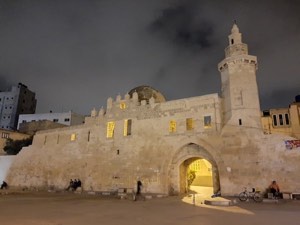
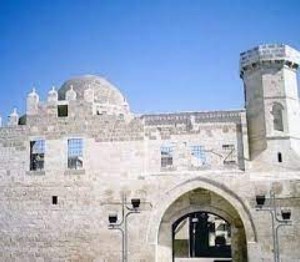
Qasr al-Basha (the Pasha's Palace), in the al-Daraj quarter of Gaza's Old City, is one of the finest Mamluk and Ottoman monuments in Palestine. It dates from the Mamluk era in the time of al-Zahir Baybars and bears his blazon on its gate: two facing lions. It has carried many names and functions. It was the "Dar al-Sa'ada" of the Mamluk governors, then the "Palace of the Radwan family" under the Ottomans, and "Napoleon's Castle" after Napoleon spent three nights there in 1799. It later became a British police station, a girls' school and finally a national museum holding more than 20,000 artefacts. In December 2023, during the genocide war on Gaza, the palace suffered extensive destruction affecting more than 70% of its area, and its collection disappeared after Israeli forces took control of the area. This guide covers the palace's history, architecture and museum, and what befell it.
Quick facts
| Arabic name | قصر الباشا |
|---|---|
| Location | Al-Daraj quarter, Old City of Gaza |
| Period | Mamluk (time of al-Zahir Baybars), with Ottoman additions |
| Age | About seven to eight centuries |
| Blazon | Two facing lions over the gate, the emblem of Baybars |
| Names | Qasr al-Na'ib, Dar al-Sa'ada, Palace of the Radwan family, Napoleon's Castle |
| Museum | National museum since 2010; more than 20,000 artefacts |
| Visitors | About 70,000 a year before the war |
| Destruction | December 2023; damage to more than 70% of its area |
| UNESCO | Among the sites in Gaza with verified damage |
Names through the ages
- Qasr al-Na'ib / Dar al-Sa'ada: in the Mamluk era, when it was the seat of the sultanate's governors in Gaza.
- Qasr al-Basha / Palace of the Radwan family: under the Ottomans, after the pashas who governed Gaza, above all the Radwan family.
- Napoleon's Castle: after Napoleon Bonaparte spent three nights there in 1799 during his campaign in Egypt and Syria.
- "Al-Dibuya": under the British Mandate, when it became a police station.
Location
The palace stands in the al-Daraj quarter of the Old City of Gaza, near al-Wahda Street, close to the Great Omari Mosque and the Sayed Hashim Mosque. Next to it are the Sabil of Sultan Abdul Hamid and al-Zahraa Secondary School for Girls.
History
- Mamluk era (1250–1517): the building dates from the time of al-Zahir Baybars, who is said to have used it as his headquarters before confronting the Mongols, and it became the seat of the sultanate's governors in Gaza.
- Ottoman period: it was home to the pashas who governed Gaza, foremost among them the Radwan family, who added to it.
- 1799: Napoleon spent three nights there during his Syrian campaign, and it became known as Napoleon's Castle.
- British Mandate: it became a police station and the headquarters of the military commander.
- Egyptian administration: it was turned into a girls' school.
- Before 1994: it was damaged during Israeli military operations before the withdrawal from Gaza City.
- 2005–2014: the Ministry of Tourism and Antiquities restored it in three phases (2005, 2010 and 2014) with funding from the UN Development Programme and turned it into a government museum.
- December 2023: it suffered extensive destruction during the genocide war on Gaza.
Architecture
The palace consists of two separate two-storey buildings around a central courtyard. The northern building was the seat of government, with star-shaped entrances and geometric and floral decoration in limestone and coloured marble. On its upper floor a room is crowned by a fine conical dome above a marble staircase leading to a roof overlooking Gaza. The southern building housed the guards and soldiers, with two rooms, a roof and a prison room, above a basement buried over the years. The complex once also included a harem building, a palace mosque, and underground cells with windows that let in daylight. The façade is decorated with ornament and the blazon of Baybars, the two facing lions over the gate, and the palace blends Mamluk and Ottoman styles.
The Qasr al-Basha Museum
In 2010 the palace became a national museum, regarded as the most important archaeological museum in the Gaza Strip, with five halls named after Palestinian cities: Haifa, Jaffa, Jerusalem, Acre and Ramla. According to official figures it held more than 20,000 rare artefacts, ranging from before the Common Era to the Ottoman period, including Roman, Byzantine and Ottoman pieces. Before the war it received some 70,000 visitors a year.
Destruction and looting in the genocide war
Qasr al-Basha suffered extensive destruction in December 2023, after Israeli forces stormed Gaza's Old City. According to Palestinian heritage experts, the damage affected more than 70% of the palace's area, and its artefacts were destroyed or stolen. The Government Media Office in Gaza said the artefacts disappeared after the occupation took control of the site, pointing to looting and smuggling, and the museum's director confirmed that it had been destroyed and its contents stolen. The museum lost some 70% of its collection.
Part of the destruction of Gaza's heritage
- The Old City: the Great Omari Mosque was destroyed on 8 December 2023, and nearby landmarks including the Sayed Hashim Mosque, Hammam al-Samra and the old market were damaged.
- Museums: the Qarara Museum was destroyed, leaving more than 3,500 artefacts under its rubble, and Israeli forces took control of Gaza's antiquities storehouse.
- UNESCO: by March 2026 it had verified damage at 164 sites in Gaza, including the "Pasha Palace Museum", while the Ministry of Tourism and Antiquities counts 226 of 316 sites destroyed or significantly damaged.
- Other landmarks: Barquq Castle in Khan Younis was severely damaged, and the Church of Saint Porphyrius was struck.
The palace today (2026)
Qasr al-Basha stands largely destroyed today. Heritage teams are running an emergency rescue project for what remains, and academic initiatives are working to recover what they can of its collection and to rebuild Gaza's museums. Full restoration, however, depends on materials and expertise being allowed into the Strip, and the fate of thousands of missing artefacts remains unknown.
International law
The 1954 Hague Convention and its First Protocol protect cultural property in armed conflict and prohibit its theft, pillage and removal from occupied territory. The Rome Statute (Article 8) classifies intentional attacks on historic monuments as a war crime, and UN Security Council Resolution 2347 (2017) condemns the destruction of cultural heritage and the illicit trafficking of cultural property in armed conflict.
Frequently asked questions
Where is Qasr al-Basha?
In the al-Daraj quarter of Gaza's Old City, near al-Wahda Street and the Great Omari Mosque.
What period does Qasr al-Basha date from?
The Mamluk era, in the time of al-Zahir Baybars, whose blazon is on its gate, with additions from the Ottoman period.
Why is it called Napoleon's Castle?
Because Napoleon Bonaparte spent three nights there in 1799 during his campaign in Egypt and Syria.
What happened to the Qasr al-Basha Museum in the war?
The palace suffered extensive destruction in December 2023 affecting more than 70% of its area, and its collection of more than 20,000 artefacts disappeared after Israeli forces took control of the site.
Is Qasr al-Basha being restored?
Heritage teams are running an emergency rescue project, but full restoration depends on materials and expertise being allowed into Gaza.
Conclusion
From a residence of Mamluk governors to a palace of pashas, from a castle where Napoleon stayed to a museum that kept Gaza's memory, Qasr al-Basha lived through seven centuries. In the genocide war it was destroyed and its treasures looted, but the lions of Baybars on its gate and what remains of its stones bear witness that Gaza's history runs too deep to be erased.
More from the archive
 Download Our Palestine App
The whole archive in the palm of your hand: depopulated villages, the Nakba, the massacres and Al-Aqsa — free, with no ads to erase the story.



Comments
No comments yet — be the first to write one.
Add your comment
Name and email are optional. Comments appear after review.