
Wavel (al-Jalil) Refugee Camp
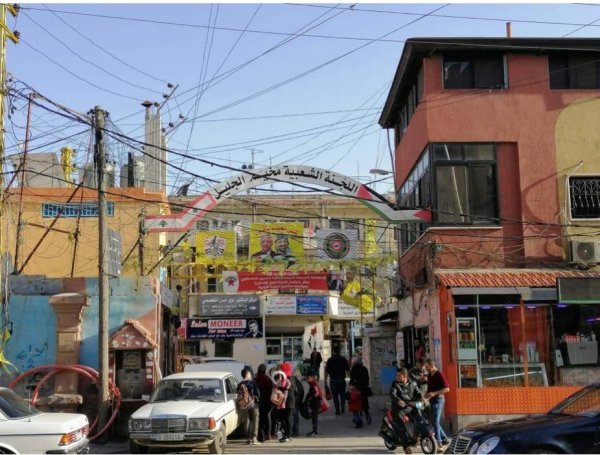
Wavel (al-Jalil) Refugee Camp
Wavel (al-Jalil) Refugee Camp in Baalbek: History, Galilee Villages and Life Today
Wavel Camp, known to Palestinians as al-Jalil ("the Galilee"), lies at the southern entrance of Baalbek in Lebanon's Bekaa Valley, about 90 km from Beirut. It occupies former French Mandate army barracks where refugees from the Galilee were housed from 1948–1949, and many still live in the old barrack buildings, without daylight and through snowy winters. Its families come from Lubya, Hittin, Saffuriyya and other villages of the Galilee. So many have emigrated to Scandinavia that it is nicknamed "the Denmark Camp". This guide covers its history, origins, population, services and situation today.
Quick Facts About Wavel Camp
| Arabic name | مخيم ويفل / مخيم الجليل |
|---|---|
| Other names | Wavell Camp; "the Denmark Camp" |
| Country | Lebanon |
| Location | Southern entrance of Baalbek, Bekaa Valley, about 90 km from Beirut |
| Established | , in former French army barracks; UNRWA services from 1952 |
| Area | About 42,300 m² (some sources give up to 0.4 km²) |
| Registered refugees (UNRWA) | About 8,250 (about 950 families) |
| Origin of residents | The Galilee: Tiberias, Safed, Acre, Nazareth and Haifa districts |
| UNRWA facilities | Schools including al-Qastal Secondary, 1 health centre, women's centre |
| Climate | Cold, snowy winters |
The Nakba: Why Wavel Camp Exists
Wavel was born from the Nakba (Arabic for "catastrophe"): the mass expulsion of Palestinians during the occupation of Palestine in , when roughly 750,000 Palestinians were driven from their homes. The villages of the Lower and Upper Galilee, among them Lubya, Hittin and Saffuriyya, were occupied in 1948, and their people fled north into Lebanon.
The Lebanese state gave the refugees a former French Mandate military barracks at the entrance of Baalbek. The Red Cross first registered them there; UNRWA took over services in the early 1950s and opened its clinic in 1952. Families first lived in the barrack dormitories, separated only by blankets and sheets, and later built concrete partition walls. In the camp's first years, hundreds of people are said to have died from the cold.
The Right of Return
The camp took the name of the region its people came from, al-Jalil, the Galilee, and it marks its martyrs each year at a memorial in its cemetery. The right of return rests on several foundations in international law:
- UN General Assembly Resolution 194 (), paragraph 11, resolved that refugees wishing to return to their homes and live at peace with their neighbours should be permitted to do so at the earliest practicable date, and that compensation should be paid to those choosing not to return and for loss of or damage to property.
- The Universal Declaration of Human Rights (Article 13) affirms everyone's right to leave any country, including their own, and to return to it.
- UN General Assembly Resolution 3236 () reaffirmed the "inalienable right" of Palestinians to return to their homes and property.
History of the Camp
The barracks consisted of twelve buildings within a wall. Because Lebanese rules banned new construction in the camps, families built upwards inside and around the old structures. Emigration grew sharply after the War of the Camps in the mid-1980s, mostly to Denmark and other Scandinavian countries, giving the camp its nickname. After 2011 it took in Syrians and Palestinian refugees from Syria, including families from Yarmouk camp. After the November 2024 ceasefire, an Israeli strike hit a building in the Baalbek orchards about 400 metres from the camp, in a mainly Palestinian neighbourhood, killing two people, according to local media; it was described as the first strike on the camp's surroundings since 2024.
The Current Situation (2026)
The camp remains one of the poorest and most isolated in Lebanon. Water has been a chronic problem since 2008: the main well dug in 2010 was poorly sealed and became contaminated with sewage, and families buy drinking water. Electricity cuts are frequent, many families cannot afford heating oil for winter, and seasonal farm and construction work stops for months when the snow comes. Most households depend on remittances from relatives abroad. Israel's intensified war on Lebanon since and UNRWA's funding crisis have added to the pressure. Palestinians in Lebanon remain barred from more than 70 professions.
Origin of the Name
UNRWA's official name, Wavel (or Wavell), comes from the barracks the camp occupies; sources differ on the origin of the barracks' name, with the Mokhayyam encyclopedia linking it to a French official in the Baalbek area. The name al-Jalil ("the Galilee"), after the refugees' homeland, came into use in the 1970s. Palestinians also call it "the Denmark Camp" because of the large number of residents who have emigrated there.
Location and Geography
The camp lies at the southern entrance of Baalbek in the Bekaa Valley, about 90 km north-east of Beirut and more than 120 km from the Palestinian border. It is the only UNRWA camp in the Bekaa. At over 1,100 metres above sea level, Baalbek has harsh winters with snow, frost and floods.
Area and Layout
The camp covers about 42,300 m², according to Al-Quds Al-Arabi, while the Mokhayyam encyclopedia gives about 0.4 km². At its heart are the twelve old barrack buildings inside a perimeter wall, surrounded by newer concrete homes built upwards. It has a main entrance and side entrances, and its roads are narrow and poorly paved.
Villages and Cities of Origin
More than 95% of residents come from northern Palestine, from the districts of Tiberias, Safed, Acre, Nazareth and Haifa, and from Jaffa. Among the villages named in the sources:
- Tiberias district: Lubya and Hittin
- Nazareth district: Saffuriyya
- Safed district: al-Farradiyya
- Haifa district: Yajur
- Acre district: Deir al-Asad and Ein al-Asad (towns still inhabited)
Population and Emigration
The gap between registered refugees and actual residents is especially wide in Wavel because of emigration. Some estimates say about 7,000 people have left, and men make up only about 35% of those who remain.
Population of Wavel Camp
- 20037,478 registeredUNRWA, via Mokhayyam
- 2008About 8,000 registeredMokhayyam
- 20107,560 registeredMokhayyam
- 2023About 8,250 registered refugees (about 950 families)UNRWA, via Al-Quds Al-Arabi
- EstimateAbout 3,000 actually living in the campCivil-society estimate, via Mokhayyam
Housing and Infrastructure
Many residents still live in the original barracks, which lack daylight and adequate ventilation; inner rooms are dark and stuffy, especially during power cuts. Damp housing contributes to high rates of asthma and respiratory illness. About 100 homes need urgent repair, but only 25 were allocated for rehabilitation, according to Mokhayyam. The water, sewage and drainage systems were rehabilitated in 2004–2005, but clean drinking water remains a persistent problem, and the electricity network is old and overloaded.
Economic Life
Most residents work as day labourers in agriculture and construction around Baalbek. The work is seasonal and can stop for up to five months in winter. The camp has only small shops, and residents shop in Baalbek and at its twice-weekly market. Each family needs several barrels of heating oil to get through the winter, a cost many cannot meet, and most households rely on money sent by relatives in Europe.
Health Services
UNRWA runs one health centre with general medicine, a laboratory and dental care, visited by medical officers and specialists; it sees about 170 patients a day, including Syrians. There is also a Palestinian Red Crescent clinic and the low-cost al-Shifa dispensary. Because of the camp's remote location, hospital care is difficult and expensive.
Education and Community
UNRWA runs schools for the camp, including Tabariya (Tiberias) school and al-Qastal Secondary School, which UNRWA says has about 960 students. Classes are crowded, results in the intermediate exams are weak, and many students drop out to support their families. Two kindergartens are run by local organisations, and Beit Atfal Assumoud, active in the camp since 1987, runs social and educational programmes. Popular Committees represent residents, alongside a UNRWA women's centre, a library and a home for the elderly.
Frequently Asked Questions About Wavel Camp
Where is Wavel (al-Jalil) camp located?
At the southern entrance of Baalbek in Lebanon's Bekaa Valley, about 90 km from Beirut. It is the only UNRWA camp in the Bekaa.
Why does the camp have two names?
Wavel is UNRWA's official name, taken from the barracks the camp occupies. Al-Jalil, "the Galilee", is the name residents adopted in the 1970s after their homeland.
Why is it called "the Denmark Camp"?
Because so many residents have emigrated to Denmark and other Scandinavian countries, especially since the mid-1980s.
Where do the camp's refugees come from?
From the Galilee, mainly the Tiberias, Safed, Acre, Nazareth and Haifa districts, including Lubya, Hittin and Saffuriyya.
How many people live in Wavel camp?
UNRWA counts about 8,250 registered refugees, but civil-society estimates suggest only about 3,000 actually live in the camp because of emigration.
Conclusion
Wavel is a camp of barracks and snow, far from the sea and far from the Galilee whose name it carries. Its families from Lubya, Hittin and Saffuriyya have spent more than seventy years in buildings meant for soldiers, and many of their children now live in Denmark. Those who stay face cold, contaminated water and seasonal work, and keep the name al-Jalil as a promise of return.
Wavel (al-Jalil) Refugee Camp in Baalbek: History, Galilee Villages and Life Today
Wavel Camp, known to Palestinians as al-Jalil ("the Galilee"), lies at the southern entrance of Baalbek in Lebanon's Bekaa Valley, about 90 km from Beirut. It occupies former French Mandate army barracks where refugees from the Galilee were housed from 1948–1949, and many still live in the old barrack buildings, without daylight and through snowy winters. Its families come from Lubya, Hittin, Saffuriyya and other villages of the Galilee. So many have emigrated to Scandinavia that it is nicknamed "the Denmark Camp". This guide covers its history, origins, population, services and situation today.
Quick Facts About Wavel Camp
| Arabic name | مخيم ويفل / مخيم الجليل |
|---|---|
| Other names | Wavell Camp; "the Denmark Camp" |
| Country | Lebanon |
| Location | Southern entrance of Baalbek, Bekaa Valley, about 90 km from Beirut |
| Established | , in former French army barracks; UNRWA services from 1952 |
| Area | About 42,300 m² (some sources give up to 0.4 km²) |
| Registered refugees (UNRWA) | About 8,250 (about 950 families) |
| Origin of residents | The Galilee: Tiberias, Safed, Acre, Nazareth and Haifa districts |
| UNRWA facilities | Schools including al-Qastal Secondary, 1 health centre, women's centre |
| Climate | Cold, snowy winters |
The Nakba: Why Wavel Camp Exists
Wavel was born from the Nakba (Arabic for "catastrophe"): the mass expulsion of Palestinians during the occupation of Palestine in , when roughly 750,000 Palestinians were driven from their homes. The villages of the Lower and Upper Galilee, among them Lubya, Hittin and Saffuriyya, were occupied in 1948, and their people fled north into Lebanon.
The Lebanese state gave the refugees a former French Mandate military barracks at the entrance of Baalbek. The Red Cross first registered them there; UNRWA took over services in the early 1950s and opened its clinic in 1952. Families first lived in the barrack dormitories, separated only by blankets and sheets, and later built concrete partition walls. In the camp's first years, hundreds of people are said to have died from the cold.
The Right of Return
The camp took the name of the region its people came from, al-Jalil, the Galilee, and it marks its martyrs each year at a memorial in its cemetery. The right of return rests on several foundations in international law:
- UN General Assembly Resolution 194 (), paragraph 11, resolved that refugees wishing to return to their homes and live at peace with their neighbours should be permitted to do so at the earliest practicable date, and that compensation should be paid to those choosing not to return and for loss of or damage to property.
- The Universal Declaration of Human Rights (Article 13) affirms everyone's right to leave any country, including their own, and to return to it.
- UN General Assembly Resolution 3236 () reaffirmed the "inalienable right" of Palestinians to return to their homes and property.
History of the Camp
The barracks consisted of twelve buildings within a wall. Because Lebanese rules banned new construction in the camps, families built upwards inside and around the old structures. Emigration grew sharply after the War of the Camps in the mid-1980s, mostly to Denmark and other Scandinavian countries, giving the camp its nickname. After 2011 it took in Syrians and Palestinian refugees from Syria, including families from Yarmouk camp. After the November 2024 ceasefire, an Israeli strike hit a building in the Baalbek orchards about 400 metres from the camp, in a mainly Palestinian neighbourhood, killing two people, according to local media; it was described as the first strike on the camp's surroundings since 2024.
The Current Situation (2026)
The camp remains one of the poorest and most isolated in Lebanon. Water has been a chronic problem since 2008: the main well dug in 2010 was poorly sealed and became contaminated with sewage, and families buy drinking water. Electricity cuts are frequent, many families cannot afford heating oil for winter, and seasonal farm and construction work stops for months when the snow comes. Most households depend on remittances from relatives abroad. Israel's intensified war on Lebanon since and UNRWA's funding crisis have added to the pressure. Palestinians in Lebanon remain barred from more than 70 professions.
Origin of the Name
UNRWA's official name, Wavel (or Wavell), comes from the barracks the camp occupies; sources differ on the origin of the barracks' name, with the Mokhayyam encyclopedia linking it to a French official in the Baalbek area. The name al-Jalil ("the Galilee"), after the refugees' homeland, came into use in the 1970s. Palestinians also call it "the Denmark Camp" because of the large number of residents who have emigrated there.
Location and Geography
The camp lies at the southern entrance of Baalbek in the Bekaa Valley, about 90 km north-east of Beirut and more than 120 km from the Palestinian border. It is the only UNRWA camp in the Bekaa. At over 1,100 metres above sea level, Baalbek has harsh winters with snow, frost and floods.
Area and Layout
The camp covers about 42,300 m², according to Al-Quds Al-Arabi, while the Mokhayyam encyclopedia gives about 0.4 km². At its heart are the twelve old barrack buildings inside a perimeter wall, surrounded by newer concrete homes built upwards. It has a main entrance and side entrances, and its roads are narrow and poorly paved.
Villages and Cities of Origin
More than 95% of residents come from northern Palestine, from the districts of Tiberias, Safed, Acre, Nazareth and Haifa, and from Jaffa. Among the villages named in the sources:
- Tiberias district: Lubya and Hittin
- Nazareth district: Saffuriyya
- Safed district: al-Farradiyya
- Haifa district: Yajur
- Acre district: Deir al-Asad and Ein al-Asad (towns still inhabited)
Population and Emigration
The gap between registered refugees and actual residents is especially wide in Wavel because of emigration. Some estimates say about 7,000 people have left, and men make up only about 35% of those who remain.
Population of Wavel Camp
- 20037,478 registeredUNRWA, via Mokhayyam
- 2008About 8,000 registeredMokhayyam
- 20107,560 registeredMokhayyam
- 2023About 8,250 registered refugees (about 950 families)UNRWA, via Al-Quds Al-Arabi
- EstimateAbout 3,000 actually living in the campCivil-society estimate, via Mokhayyam
Housing and Infrastructure
Many residents still live in the original barracks, which lack daylight and adequate ventilation; inner rooms are dark and stuffy, especially during power cuts. Damp housing contributes to high rates of asthma and respiratory illness. About 100 homes need urgent repair, but only 25 were allocated for rehabilitation, according to Mokhayyam. The water, sewage and drainage systems were rehabilitated in 2004–2005, but clean drinking water remains a persistent problem, and the electricity network is old and overloaded.
Economic Life
Most residents work as day labourers in agriculture and construction around Baalbek. The work is seasonal and can stop for up to five months in winter. The camp has only small shops, and residents shop in Baalbek and at its twice-weekly market. Each family needs several barrels of heating oil to get through the winter, a cost many cannot meet, and most households rely on money sent by relatives in Europe.
Health Services
UNRWA runs one health centre with general medicine, a laboratory and dental care, visited by medical officers and specialists; it sees about 170 patients a day, including Syrians. There is also a Palestinian Red Crescent clinic and the low-cost al-Shifa dispensary. Because of the camp's remote location, hospital care is difficult and expensive.
Education and Community
UNRWA runs schools for the camp, including Tabariya (Tiberias) school and al-Qastal Secondary School, which UNRWA says has about 960 students. Classes are crowded, results in the intermediate exams are weak, and many students drop out to support their families. Two kindergartens are run by local organisations, and Beit Atfal Assumoud, active in the camp since 1987, runs social and educational programmes. Popular Committees represent residents, alongside a UNRWA women's centre, a library and a home for the elderly.
Frequently Asked Questions About Wavel Camp
Where is Wavel (al-Jalil) camp located?
At the southern entrance of Baalbek in Lebanon's Bekaa Valley, about 90 km from Beirut. It is the only UNRWA camp in the Bekaa.
Why does the camp have two names?
Wavel is UNRWA's official name, taken from the barracks the camp occupies. Al-Jalil, "the Galilee", is the name residents adopted in the 1970s after their homeland.
Why is it called "the Denmark Camp"?
Because so many residents have emigrated to Denmark and other Scandinavian countries, especially since the mid-1980s.
Where do the camp's refugees come from?
From the Galilee, mainly the Tiberias, Safed, Acre, Nazareth and Haifa districts, including Lubya, Hittin and Saffuriyya.
How many people live in Wavel camp?
UNRWA counts about 8,250 registered refugees, but civil-society estimates suggest only about 3,000 actually live in the camp because of emigration.
Conclusion
Wavel is a camp of barracks and snow, far from the sea and far from the Galilee whose name it carries. Its families from Lubya, Hittin and Saffuriyya have spent more than seventy years in buildings meant for soldiers, and many of their children now live in Denmark. Those who stay face cold, contaminated water and seasonal work, and keep the name al-Jalil as a promise of return.
More from the archive



 Download Our Palestine App
The whole archive in the palm of your hand: depopulated villages, the Nakba, the massacres and Al-Aqsa — free, with no ads to erase the story.
Download Our Palestine App
The whole archive in the palm of your hand: depopulated villages, the Nakba, the massacres and Al-Aqsa — free, with no ads to erase the story.



Comments
No comments yet — be the first to write one.
Add your comment
Name and email are optional. Comments appear after review.