
Husn Camp
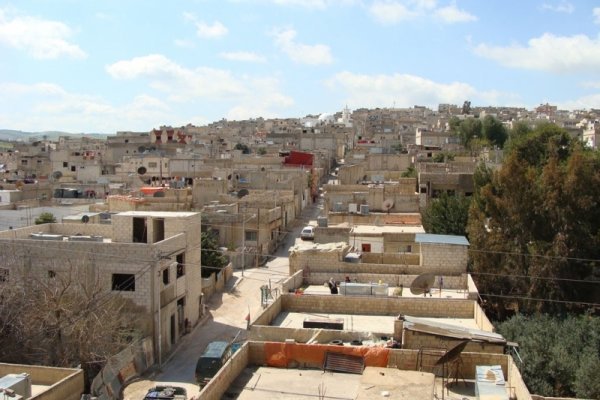
Husn Camp
Husn Camp (Martyr Azmi al-Mufti Camp), Jordan: History, Location, Population and Living Conditions
Husn Camp, officially known as Martyr Azmi al-Mufti Camp, is a Palestine refugee camp in northern Jordan, near the town of al-Husn in Irbid Governorate. It was set up in as one of six "emergency" camps for Palestinians displaced by the occupation of the West Bank and Gaza Strip in 1967. Many of its families, especially those from Beisan and Haifa, had already been made refugees once before, during the occupation of Palestine in 1948. This guide covers the camp's history, its names, location, population, and its health, economic, social and educational situation.
Quick Facts About Husn Camp
| Official name | Martyr Azmi al-Mufti Camp (since 1984) |
|---|---|
| Common name | Husn Camp (al-Husn Camp) |
| Host country | Jordan |
| Location | About 2 km south of al-Husn, about 10–15 km south of Irbid and 80 km north of Amman, Irbid Governorate |
| Year established | |
| Type | One of six "emergency" camps set up after 1967 |
| Area | About 0.77 km² (about 760 dunums) |
| Original population | About 12,500 refugees and displaced persons |
| Current population | About 27,918 people in 6,348 families (Jordan's Department of Palestinian Affairs) |
| Schools | 4 UNRWA schools (double shifts) and 2 government schools |
| Health facilities | 1 UNRWA health centre, plus private and charitable clinics |
| Origin of residents | Mainly Beisan (about 36.5%), Nablus (20%), Haifa (12%) and Jenin (11%), as well as Tubas and Beersheba |
From the Nakba to the Naksa: Why Husn Camp Exists
Husn Camp brings together two waves of exile. During the Nakba, the occupation of Palestine in , roughly 750,000 Palestinians were driven from their homes. Among them were the Bedouin and farming communities of the Beisan valley and the villages around Haifa and Marj Ibn Amer, many of whom took refuge in the West Bank, especially in the Jordan Valley and around Jenin and Nablus.
In , the occupation of the West Bank and Gaza Strip, known to Palestinians as the Naksa ("setback"), uprooted around 300,000 Palestinians, many of them 1948 refugees forced to flee a second time. They crossed the Jordan River and were first housed in temporary tent camps in the Jordan Valley. When those camps came under heavy fire in early 1968, six "emergency" camps were set up further inland, and Husn was one of them.
The Right of Return
The families of Husn Camp hold a right of return grounded in several sources of international law:
- UN General Assembly Resolution 194 (), paragraph 11, resolved that refugees wishing to return to their homes and live at peace with their neighbours should be permitted to do so at the earliest practicable date, and that compensation should be paid to those choosing not to return.
- UN Security Council Resolution 237 () called for facilitating the return of the inhabitants who had fled the areas of military operations in 1967.
- The Universal Declaration of Human Rights (Article 13) affirms everyone's right to return to their own country.
- UN General Assembly Resolution 3236 () reaffirmed the "inalienable right" of Palestinians to return to their homes and property.
Researchers have noted that the camp's families chose to settle as close as possible to their original homes in northern Palestine, and that many still keep the keys and land deeds of the houses and fields they lost.
History: A Camp That Moved Three Times
First site: the Jordan Valley (1967–1968)
The camp was first set up in the al-Sulaykhat area of the northern Jordan Valley, where it was known as al-Wahadneh Camp, after the lands of Khirbet al-Wahadneh on which it stood. Before and around the Battle of Karameh in March 1968, the area came under heavy shelling for more than two months, and the Jordanian government decided to move the camp.
Second site: al-Nu'ayma (1968)
The camp was moved to a site near the al-Nu'ayma junction in the Bani Obeid district of Irbid and became known for a time as al-Nu'ayma Camp.
Third and final site: al-Husn (1969)
In early 1969, at the residents' own request, the camp was moved to its current location on a hillside near the town of al-Husn, on land leased by the Jordanian government from local landowners. It was originally right next to the main Amman–Irbid road, but after a series of traffic accidents it was moved about 1 km away from it.
From tents to permanent homes
Each family was given a plot of about 96–100 square metres, with a single tent and no facilities. UNRWA had planned to supply stronger tents to withstand the harsh winters, but between and it built 2,990 prefabricated shelters instead, some of zinc sheeting and some of asbestos. Over the following decades, residents gradually replaced these with concrete homes. Electricity arrived in the early 1970s, first from a small local generator and then from the national grid in 1975, and homes were connected to the public water network around 1980. The camp was divided into four blocks separated by main streets.
Later developments
During the 1990–1991 Gulf War, families returning from Kuwait added to the camp's population and overcrowding. A sewage network project began in 2013 and now covers most homes, although residents have reported serious technical problems with it.
Origin of the Camp's Names
- Husn Camp: the name it took in 1969 after the nearby town of al-Husn, and still the name used by UNRWA and most people.
- Martyr Azmi al-Mufti Camp: its official name since 1984, when the Jordanian government renamed it in honour of a Jordanian diplomat assassinated abroad that year.
- Earlier names, reflecting its previous locations, were al-Wahadneh Camp and al-Nu'ayma Camp.
Location and Geography
Husn Camp lies in the Irbid Governorate of northern Jordan, in the Bani Obeid district. Key features of its location:
- About 2 km south of the town of al-Husn
- About 10–15 km south of Irbid
- About 80 km north of Amman, east of the main Amman–Irbid highway
- In a rural, open area on a hillside, surrounded by agricultural land
The area has a Mediterranean highland climate, with cold, rainy winters and warm, dry summers. A dangerous road junction near the camp's entrance, used by heavy trucks from nearby quarries, has been the site of many accidents, and residents call it the "triangle of death".
Area and Land
The camp covers about 0.77 square kilometres, or roughly 760 dunums. The land belongs to families from al-Husn and is leased by the Jordanian government; UNRWA does not own it. Because the camp lies in an open area without surrounding buildings, it has been able to spread somewhat as its population grew, and its population density is moderate compared with urban camps.
Places of Origin
According to a social study of the camp, the roots of most residents lie in four areas: Beisan (about 36.5%), Nablus (20%), Haifa (12%) and Jenin (11%). The main communities include:
- Bedouin of the Beisan valley, the largest group, from encampments and villages depopulated in 1948, including Arab al-Saqr (Khirbat Umm Sabuna), Al-Hamra, Al-Sakhina, Arab al-Arida, Arab al-Safa and Yubla
- Families from Tubas, displaced in 1967
- Turkmen Arab tribes from villages around Haifa and Marj Ibn Amer, including Al-Mansi, Lid al-Awadin and Abu Zurayq
- Bedouin tribes of Beersheba and the Naqab
- Smaller numbers of families from many other parts of Palestine
Most of the camp's families come from rural backgrounds, as farmers or herders. In the early years they lived grouped by village of origin, but as the camp expanded the neighbourhoods became mixed.
Population and Demographics
Jordan's Department of Palestinian Affairs estimates the camp's population at about 27,918 people in 6,348 families, living in some 2,314 housing units.
Population of Husn Camp over time
- 1968About 12,500 refugees and displaced personsUNRWA
- 201017,971 residents, of whom 12,616 registered refugeesUNRWA registration survey
- 2015More than 22,000 registered refugeesUNRWA
- 201725,776 people in 5,939 familiesUNRWA records
- Recent estimateAbout 27,918 people in 6,348 familiesDepartment of Palestinian Affairs (Jordan)
Population characteristics
- A young population: about 38% of residents are under 15.
- Average family size of about 5 people.
- Born in exile: about 29% of heads of household were born in the camp itself.
- Emigration: many young graduates work abroad, in the Gulf and elsewhere, and their remittances support families in the camp.
Housing and Infrastructure
- Poor housing: a social study found that around three in four homes had structural problems, and about 11% still had roofs of temporary materials such as zinc or asbestos.
- Sewage: around 95% of homes are now connected to a sewage network built from 2013, but residents report frequent overflows into streets, attracting rodents and insects.
- Water: about 95% of homes are connected to the water network, but more than half have reported problems with the supply.
- Streets and lighting: residents complain of damaged roads, poor street lighting and accumulated waste.
- Services: the camp has a Department of Palestinian Affairs office, a Camp Services Committee, a post office, a police station, a civil defence centre, mosques, bakeries and around 200 shops.
Health Situation
The camp has one UNRWA health centre offering general medicine, dental care and maternal and child health, alongside a charitable medical centre, several private clinics and pharmacies. A community-based rehabilitation centre for people with disabilities, founded in 1987, serves both the camp and surrounding areas of Bani Obeid.
Key health challenges
- Lack of health insurance: about 49% of refugees in the camp have no health insurance.
- Chronic disease: about 30% of heads of household have a chronic illness, and a majority of women suffer from at least one chronic condition.
- Pressure on the UNRWA clinic: overcrowding, short opening hours and medicine shortages linked to service cuts.
- Environmental health risks from sewage overflows and waste.
- Disability linked in part to poverty and close-kin marriage.
Economic Situation
Husn Camp faces serious economic hardship. According to a 2013 Fafo study cited by UNRWA:
- Unemployment is the highest of Jordan's ten camps, at about 18% of refugees in the camp.
- Female unemployment is also the highest, at about 25%.
- About 23% of refugees live below Jordan's national poverty line.
Average household spending exceeds average income, and many families rely on borrowing. The camp's isolation from major cities limits job opportunities and business activity. Many young people work at the nearby al-Hassan Industrial Estate for low wages, while others work in agriculture, livestock, construction, small trade, the military and security services, or abroad. Historically, many families rented land from al-Husn landowners to grow vegetables, and the camp became known for its onion crops.
Several hundred families receive assistance from UNRWA, Jordan's National Aid Fund and local charities.
Education
UNRWA runs four schools in the camp, for boys and girls, operating on a double-shift system, with average class sizes reaching around 50 pupils. In 2015, with German funding, a new UNRWA school for grades 1–3 was opened so that these grades could study in a single shift, and the boys' preparatory school was expanded. The camp also has two government schools, including a girls' secondary school opened in 1989, which spared girls the journey to al-Husn and Irbid, as well as several kindergartens.
Educational indicators and challenges
- About 90% of children aged 6–18 are enrolled in school, and illiteracy is about 5.8%.
- Overcrowded classrooms and double shifts affect achievement.
- High failure rates in the secondary school exam (Tawjihi) have been reported.
- The high cost of university education limits access to higher degrees.
Sports: Al-Karmel Club
Al-Karmel Club, founded in the camp in 1969, whose name recalls Mount Carmel near Haifa, is a source of great pride for residents. Its volleyball team is one of the strongest in northern Jordan and won the national championship in 2016, its football team has played in Jordan's top divisions, and it also has a strong boxing team. In 2015, a new stadium and sports hall were opened with German support.
Frequently Asked Questions About Husn Camp
Where is Husn camp located?
Husn Camp is in Irbid Governorate in northern Jordan, about 2 km south of al-Husn, 10–15 km south of Irbid and 80 km north of Amman.
What is the other name of Husn camp?
Since 1984 its official name has been Martyr Azmi al-Mufti Camp. Earlier, in its first locations, it was known as al-Wahadneh Camp and al-Nu'ayma Camp.
When was Husn camp established?
It was established in 1968 as one of six emergency camps for Palestinians displaced by the occupation of the West Bank and Gaza Strip in 1967, and moved to its current site near al-Husn in 1969.
What is the population of Husn camp?
Jordan's Department of Palestinian Affairs estimates the population at about 27,918 people in 6,348 families.
Where do Husn camp's residents come from?
Mainly from Beisan (about 36.5%), Nablus (20%), Haifa (12%) and Jenin (11%), as well as Tubas and the Beersheba area.
What are the main problems in Husn camp?
Unemployment (the highest of Jordan's ten camps), poverty, lack of health insurance, poor housing, sewage problems and overcrowded double-shift schools.
Conclusion
Husn Camp is the story of people uprooted from the Beisan valley, Haifa and the northern West Bank, who moved three times in two years before settling on a hillside near al-Husn, as close as they could get to the land they had lost. Over half a century, tents became zinc rooms and then concrete homes, and the camp grew into a community of nearly 28,000 people. It still faces high unemployment, poverty and poor services, yet its families remain bound by strong social ties, proud of their club and their schools, and committed to their right of return.
More from the archive



 Download Our Palestine App
The whole archive in the palm of your hand: depopulated villages, the Nakba, the massacres and Al-Aqsa — free, with no ads to erase the story.
Download Our Palestine App
The whole archive in the palm of your hand: depopulated villages, the Nakba, the massacres and Al-Aqsa — free, with no ads to erase the story.



Comments
No comments yet — be the first to write one.
Add your comment
Name and email are optional. Comments appear after review.
Social Situation and Community Life
Because many families fled together from neighbouring villages and share rural traditions, the camp has close social ties, and neighbours support each other in times of need. Organisations active in the camp include:
Social challenges