
Bilata, Jenin, Sabra and New Shatila Massacre
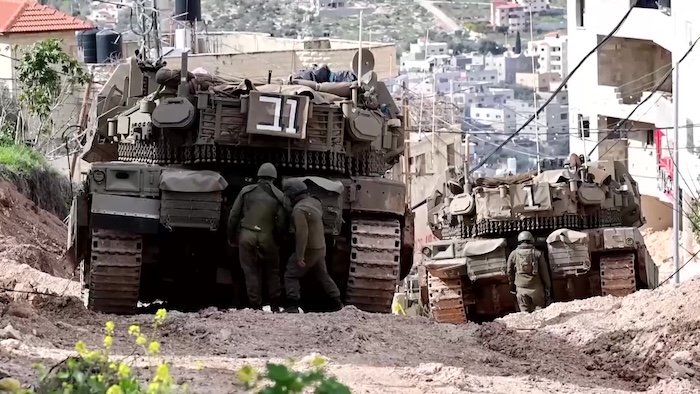
At dawn on 28 February 2002, Israeli occupation forces stormed Balata camp near Nablus and Jenin camp simultaneously, with hundreds of tanks, Apache helicopters and paratroopers. Over five days 32 Palestinians were killed, 20 of them civilians, including a girl of nine and a mentally disabled young man; hundreds were wounded, and the infrastructure of both camps was destroyed. Hussam Khader, a Legislative Council member and son of Balata camp, said what was happening “portends a massacre like Sabra and Shatila.” [1] [2]
The Balata and Jenin incursion was the first large-scale assault on refugee camps in the Second Intifada, and a prelude to the great battle of Jenin camp a month later. This article tells what happened in the two camps, the story of Mohammed Mufid Salama, and the toll of those five days.
The Balata and Jenin massacre at a glance
| Item | Details |
|---|---|
| Date | 28 February – 2 March 2002; the occupation returned to Jenin on 4 March [1] [2] |
| Place | Balata camp east of Nablus, and Jenin camp and city [1] |
| Forces | More than 70 tanks in Balata and about 130 in Jenin, with Apache helicopters and paratroopers [1] [2] |
| Killed | 32 Palestinians in five days, 20 of them civilians [2] |
| Wounded | 82 in Balata on the first day alone, and dozens in Jenin [2] [3] |
| Among the dead | Maria Abu Sirriya, a girl of nine, and Mohammed Mufid Salama, a mentally disabled young man of 24 [2] |
| Significance | The first time large numbers of occupation troops took up positions inside the camps since the start of the Second Intifada [4] |
Why the camps?
After some 17 months of incursions into Palestinian towns since the start of the Second Intifada, this was the first time large numbers of occupation troops took up positions inside the refugee camps. [4] The Israeli military spokesman claimed that the Nablus and Jenin camps had become “rear bases for terrorist groups,” making the camps themselves the target of the operation. [1]
The incursion came the day after the Saudi peace initiative was presented to the United Nations. [4] Nabil Abu Rudeineh, an adviser to President Yasser Arafat, held the Israeli government responsible for the escalation, calling it “a serious threat.” [1]
Balata: seventy tanks and an UNRWA school
After a ten-day siege, occupation forces advanced into Balata camp, the largest camp in the West Bank, on the morning of 28 February, with more than 70 tanks backed by warplanes, according to Hussam Khader. Apache helicopters fired missiles at positions inside the camp. [1] Fighters, mostly from the Al-Aqsa Martyrs’ Brigades, resisted with light weapons and explosive devices, and Palestinian sources spoke of 12 to 14 special-forces soldiers besieged inside a school in the camp. [1]
Contrary to accounts claiming that occupation soldiers never set foot in the camp, paratroopers took up positions in an UNRWA school, and by evening the forces had seized a number of buildings in the camp. [2] [4] Helicopters fired missiles at houses and completely destroyed the camp’s main electricity generator, and houses were shelled and demolished. [2]
On the first day alone six Palestinians were killed in Balata, three of them civilians, and 82 were wounded, four seriously. Among the dead were the camp’s Al-Aqsa Brigades commander, Kaab Abu Mustafa, and an unarmed young man hit by a tank shell. [1] [2] On 1 March an elderly man died of a heart attack and nine civilians were wounded; on 2 March Tayseer Kamal Ja’ara, 18, was killed; and Hakam Abu Eisha, 29, and 15-year-old Ahmed Fakhri Hashash later died of their wounds. [2]
Jenin: street-to-street war
The same morning occupation forces entered Jenin from two directions and surrounded the city and the camp, with at least 130 tanks according to Qadoura Musa, Fatah’s secretary in Jenin. [1] The forces seized and shelled the al-Jabriyat neighborhood, turning the house of Brigadier Lu’ai Jadallah and a commercial building into military positions. [2]
The camp saw a real street-to-street war between the fighters and occupation forces. Circulating testimonies from the camp’s residents relate that tanks destroyed the camp’s infrastructure: sewage networks, telephone and electricity poles, water lines, and the walls of schools and homes, demolishing everything that obstructed their movement, while Apache helicopters kept up the bombardment for three days.
On the first day seven Palestinians were killed in Jenin, six of them police officers, along with a 64-year-old man shot by a sniper inside his home. [1] [3] On 1 March seven more were killed, among them nine-year-old Maria Ezzeddin Abu Sirriya and the brothers Eyad and Yasser Hassan Mohammed Sayes, and twenty were wounded, two of them left clinically dead. [2]
Mohammed Mufid Salama
Among those killed in Jenin on 1 March 2002 was Mohammed Mufid Salama, 24, who was mentally disabled. He was killed by tank shelling and hit by several heavy-caliber bullets. [2]
Circulating testimonies from the camp’s residents relate that occupation soldiers left his body on the ground, and that the next morning residents found parts of his brain scattered at the spot. Mohammed Mufid became a symbol of what the camp’s unarmed civilians, who had no part in the fighting, were subjected to.
The toll
| Camp | Killed (according to the Palestinian Centre for Human Rights) | Among them |
|---|---|---|
| Balata | 6 on the first day, then more killed up to 4 March | Al-Aqsa Brigades commander Kaab Abu Mustafa, and 15-year-old Ahmed Hashash [2] [1] |
| Jenin | 7 on the first day, and 7 on 1 March | Nine-year-old Maria Abu Sirriya, and Mohammed Mufid Salama, 24 [2] |
| Total | 32 in five days, 20 of them civilians | [2] |
The circulating text gives 31 killed and more than 300 wounded in the two camps, close to the toll of the Palestinian Centre for Human Rights. [2]
After the incursion: the road to April
The withdrawal of the tanks was not the end of the assault. On 4 March, at about 4 a.m., occupation forces returned to Jenin; more residents were killed by helicopter fire, and a tank fired on a Red Crescent ambulance heading to the camp, killing physician Khalil Suleiman, 45, and critically wounding the driver. The day before, on 3 March, the Patient’s Friends Society hospital in Jenin was shelled and severely damaged. [2]
Just a month later, in April 2002, the occupation returned to Jenin camp in Operation “Defensive Shield,” destroying about a tenth of the camp and displacing more than four thousand of its people. [5] The February–March incursion was thus a prelude to the great battle of Jenin camp.
Read about Jenin, Nablus and the Zionist massacres against the Palestinian people.
Conclusion
In five winter days of 2002, tanks drove into the alleys of Balata and Jenin, destroying sewers, electricity poles and walls, and 32 Palestinians were killed, among them a girl of nine and a mentally disabled young man who knew nothing of war. It was not “a new Sabra and Shatila” in the number of its victims, but it was in its meaning: an army storming refugee camps and making all their people its target. A month later it returned to Jenin to finish what it had begun.
Frequently asked questions about the Balata and Jenin massacre
When did the incursion into Balata and Jenin camps take place?
It took place between 28 February and 2 March 2002, and occupation forces returned to Jenin on 4 March.
How many people were killed in the Balata and Jenin incursion?
According to the Palestinian Centre for Human Rights, 32 Palestinians were killed in five days, 20 of them civilians.
Who was Mohammed Mufid?
Mohammed Mufid Salama was a 24-year-old young man from Jenin camp, mentally disabled, killed by tank shells and heavy-caliber fire on 1 March 2002.
Why was the Balata and Jenin incursion called “a new Sabra and Shatila”?
Because Legislative Council member Hussam Khader, a son of Balata camp, said on the day of the incursion that what was happening in the camp “portends a massacre like Sabra and Shatila,” referring to the targeting of refugee camps.
What is the difference between this incursion and the battle of Jenin in 2002?
The February–March 2002 incursion came a month before the battle of Jenin camp, which took place in April 2002 during Operation “Defensive Shield.”
Sources and references
Arabic-language sources are listed with translated titles.
- “Palestinian Fighters Besiege 14 Soldiers in Balata,” Al Jazeera Net, 28 February 2002.
- “Weekly Report on Israeli Human Rights Violations, 28 February – 6 March 2002,” Palestinian Centre for Human Rights.
- “Weekly Report on Israeli Human Rights Violations, 21–27 February 2002,” Palestinian Centre for Human Rights.
- “Middle East, 28 February 2002,” PBS NewsHour.
- “Jenin,” Palestinina.
More from the archive
 Download Our Palestine App
The whole archive in the palm of your hand: depopulated villages, the Nakba, the massacres and Al-Aqsa — free, with no ads to erase the story.



Comments
No comments yet — be the first to write one.
Add your comment
Name and email are optional. Comments appear after review.